
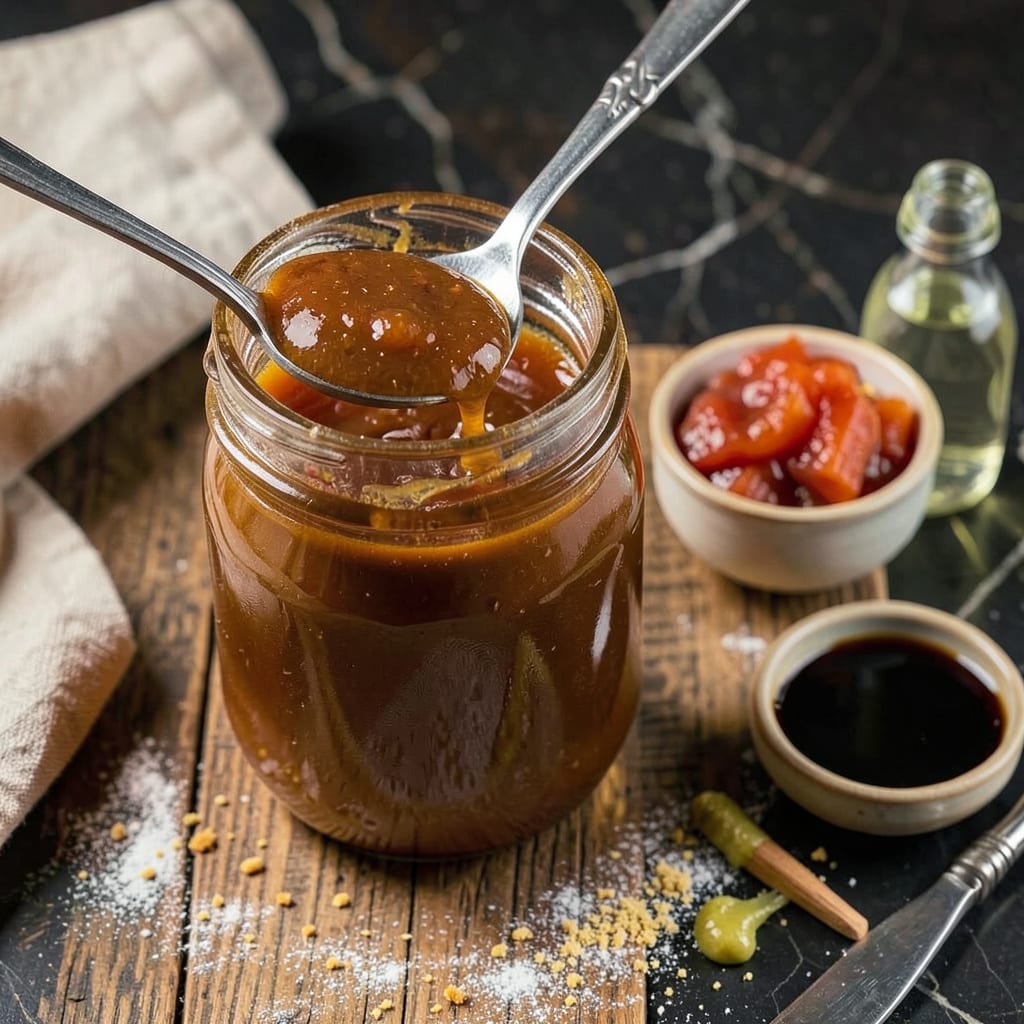
This New England duck sauce delivers the perfect balance of sweet and tangy flavors that elevate everything from egg rolls to roasted meats. Developed through careful testing, the recipe combines apricot preserves with vinegar and soy sauce to create a versatile condiment that captures the essence of classic takeout flavor.
What makes this sauce special is its simplicity and adaptability. Ready in minutes with pantry staples, it stores beautifully in the refrigerator for up to two weeks. Use it as a dipping sauce for appetizers, a glaze for meats, or even as a creative sandwich spread—its bright, complex flavor works across countless dishes.
Ingredients for New England Duck Sauce
Eight pantry-friendly ingredients transform into this iconic sweet-tangy condiment with minimal effort.
| Ingredient | Amount | Notes |
|---|---|---|
| Apricot Preserves 🍑 | 1 cup | Smooth, no fruit chunks preferred |
| Distilled White Vinegar 💧 | ¼ cup | Standard 5% acidity |
| Soy Sauce 🫙 | 2 tbsp | Low-sodium for balance control |
| Granulated Sugar 🍬 | 2 tbsp | Adjust to taste preference |
| Dijon Mustard 🟡 | 1 tsp | Smooth, not whole grain |
| Garlic Powder 🧄 | ½ tsp | Fresh minced works too |
| Ground Ginger 🌿 | ¼ tsp | Fresh grated for stronger flavor |
| Red Pepper Flakes 🌶️ | 0.125 tsp | Optional for subtle heat |
[recipeingredientscaler]
The apricot preserves are critical for authentic flavor. Smucker’s or Bonne Maman brands offer consistent quality without artificial aftertaste. Standard grocery store vinegar (like Heinz) works perfectly—no need for specialty brands. For soy sauce, Kikkoman low-sodium provides the cleanest flavor base without overwhelming saltiness. The sugar balances acidity; standard granulated works best for even dissolving.
No apricot preserves? Peach or orange marmalade can substitute at a 1:1 ratio, though flavor will vary slightly. Apple cider vinegar replaces white vinegar at equal measure, adding mild fruit notes. For gluten-free versions, tamari replaces soy sauce directly. The ginger and garlic are flexible—fresh versions at double the quantity (1/2 tsp fresh ginger, 1 tsp fresh minced garlic) intensify flavor beautifully.
This sauce keeps exceptionally well. Store in an airtight container for up to 2 weeks refrigerated. For longer storage, freeze in ice cube trays for 3 months—thaw individual portions as needed. The flavors actually improve after 24 hours as ingredients meld. Always stir before using as natural separation may occur.
Why You’ll Love This Recipe
- No Cooking Required: I just stir everything together in a saucepan—no chopping, no fancy techniques. The apricot preserves melt into the vinegar and soy sauce while you barely lift a finger.
- Sweet-Tangy Magic: That first taste where the sugar caramelizes just slightly with the Dijon’s sharpness? It’s the reason I double the batch. The soy sauce adds this umami depth that makes it way more interesting than store-bought.
- Dipping Sauce MVP: I’ve slathered this on egg rolls, used it as a glaze for meatballs, and even stirred it into fried rice when I needed a flavor boost. Honestly, it’s my secret for making takeout leftovers taste intentional.
- Fridge Stays Stocked: A small batch lasts me two weeks, and the flavors get even better after a day. Between us, I’ve stretched one jar into three meals—once as a dip, once as a sandwich spread, and once thinned with vinegar for a quick salad dressing.
Step-by-Step Instructions for New England Duck Sauce
This straightforward process combines sweet, tangy, and savory elements into a perfectly balanced condiment.
Step 1: Combine Preserves and Vinegar
In a medium saucepan, combine the 1 cup apricot preserves and 0.25 cup distilled white vinegar. Use a whisk to break up any large clumps in the preserves, creating a smooth base. The vinegar will immediately begin cutting through the sweetness, creating that signature tangy backbone.
Heat the mixture over medium-low heat, stirring frequently. You’ll notice the preserves start to liquefy within 2-3 minutes. This gentle heating prevents scorching while allowing the flavors to meld. The mixture should bubble lightly around the edges but not boil vigorously.
Step 2: Incorporate Soy Sauce and Sugar
Add the 2 tbsp soy sauce and 2 tbsp granulated sugar to the warmed preserve mixture. The soy sauce will darken the color slightly and add umami depth, while the sugar balances the acidity. Whisk vigorously for 1-2 minutes until the sugar completely dissolves.
At this stage, the sauce will appear glossy and slightly thickened. Taste and adjust the sweetness level if needed – the sugar quantity can be increased by 1 additional tablespoon for those preferring a sweeter profile. Maintain the medium-low heat to prevent separation.
Step 3: Add Aromatic Elements
Stir in the 1 tsp Dijon mustard, 0.5 tsp garlic powder, and 0.25 tsp ground ginger. The mustard adds subtle sharpness, while the garlic and ginger provide warm, aromatic notes. Whisk continuously for 30-45 seconds until fully incorporated.
The sauce will take on a more complex aroma at this point. For enhanced flavor, you can substitute fresh minced garlic and grated ginger using the same proportions. Be cautious with fresh ginger as it contains more moisture – cook an additional 30 seconds to compensate.
Step 4: Develop Flavor and Thicken
Add the 0.125 tsp red pepper flakes if using, then reduce heat to low. Let the sauce simmer gently for 8-10 minutes, stirring occasionally. The mixture will darken slightly and thicken to a syrupy consistency that coats the back of a spoon.
Watch for the sauce to reduce by about 10-15% in volume. It should glisten with a slight sheen when stirred. Remove from heat immediately once it reaches the desired thickness – over-reduction will make it too sticky. The finished sauce will continue to thicken slightly as it cools.
Step 5: Cool and Store
Transfer the sauce to a clean glass jar or airtight container. Let it cool to room temperature, which typically takes 30-45 minutes. The flavors will intensify as it cools, with the vinegar mellowing and the spices becoming more pronounced.
Store in the refrigerator for up to 3 weeks. The sauce may separate slightly upon storage – simply stir before using. For best results, make this at least 24 hours before serving to allow the flavors to fully develop and harmonize.
Storing and Reheating This new england duck sauce
Refrigerator Storage
Once completely cooled, transfer your duck sauce to a clean glass jar or airtight container. I prefer wide-mouth mason jars for easy scooping. The sauce will keep beautifully in the fridge for up to 3 weeks, though I’ve found the flavors peak around 5-7 days as everything melds together. 🥫
Freezer Storage
For longer storage, portion the sauce into ice cube trays and freeze for up to 3 months. Once frozen, transfer cubes to a freezer bag. This method lets you thaw just what you need—2-3 cubes typically equals about ¼ cup. Thaw overnight in the fridge or microwave individual cubes at 30-second intervals.
Reheating Methods
Gently warm refrigerated sauce in a small pot over low heat for 3-5 minutes, stirring occasionally. Avoid boiling, which can alter the texture. For microwave reheating, use 15-second bursts at 50% power, stirring between each. The sauce should reach 140°F for optimal flavor without becoming too thin.
Natural Separation
Don’t worry if your sauce separates during storage—this is completely normal. Simply give it a good stir before using. If it’s particularly thick after refrigeration, thin with 1-2 tsp warm water or a splash of vinegar. The consistency should be smooth but still cling to a spoon when stirred.
Flavor Development
The sauce actually improves with time as the ingredients marry. I recommend making it at least 24 hours before serving for maximum flavor impact. The vinegar’s sharpness will mellow, while the spices become more pronounced. Taste and adjust seasoning if needed after the initial resting period.
Container Tips
Use glass containers rather than plastic to prevent any flavor absorption. My go-to is Ball Mason jars with their airtight seals. Label with the date so you can track freshness. For frequent use, keep a small squeeze bottle in the fridge door for easy dipping and drizzling. 🧤
Frequently Asked Questions
What’s the best substitute for apricot preserves?
Peach or orange marmalade work best at a 1:1 ratio. Both maintain the sweet-tangy balance, though orange marmalade adds subtle citrus notes. For a smoother texture, blend preserves before using to eliminate fruit chunks.
Can I make this without soy sauce?
Yes! Use tamari for gluten-free or coconut aminos for soy-free versions. Both substitute 1:1, though tamari has a stronger umami punch. Add 1/4 tsp salt if using coconut aminos to balance sweetness.
How do I fix a sauce that’s too sweet?
Add 1 tsp vinegar or 1/2 tsp soy sauce at a time, tasting between additions. A pinch of salt (1/8 tsp) can also help neutralize sweetness without thinning the sauce.
What’s the ideal consistency for duck sauce?
It should coat the back of a spoon but still drip slowly. If too thick, thin with 1-2 tsp warm water. For thicker sauce, simmer uncovered for 2-3 extra minutes to reduce further.
Can I use this as a marinade?
Its sweet-tangy profile works beautifully on chicken or pork. Marinate for 2-4 hours max—the vinegar can start “cooking” meat if left longer. Brush on during grilling for a sticky glaze.

- 6 Egg Cake Recipe with Oil: Light as Air With Buttery Moisture - October 4, 2026
- 4 Bean Casserole Recipe: One-Pan Heartiness With Smoky Paprika Depth - October 4, 2026
- 3-Ingredient Keto Mug Cake Recipe: Microwave Magic in 2 Minutes - October 4, 2026