
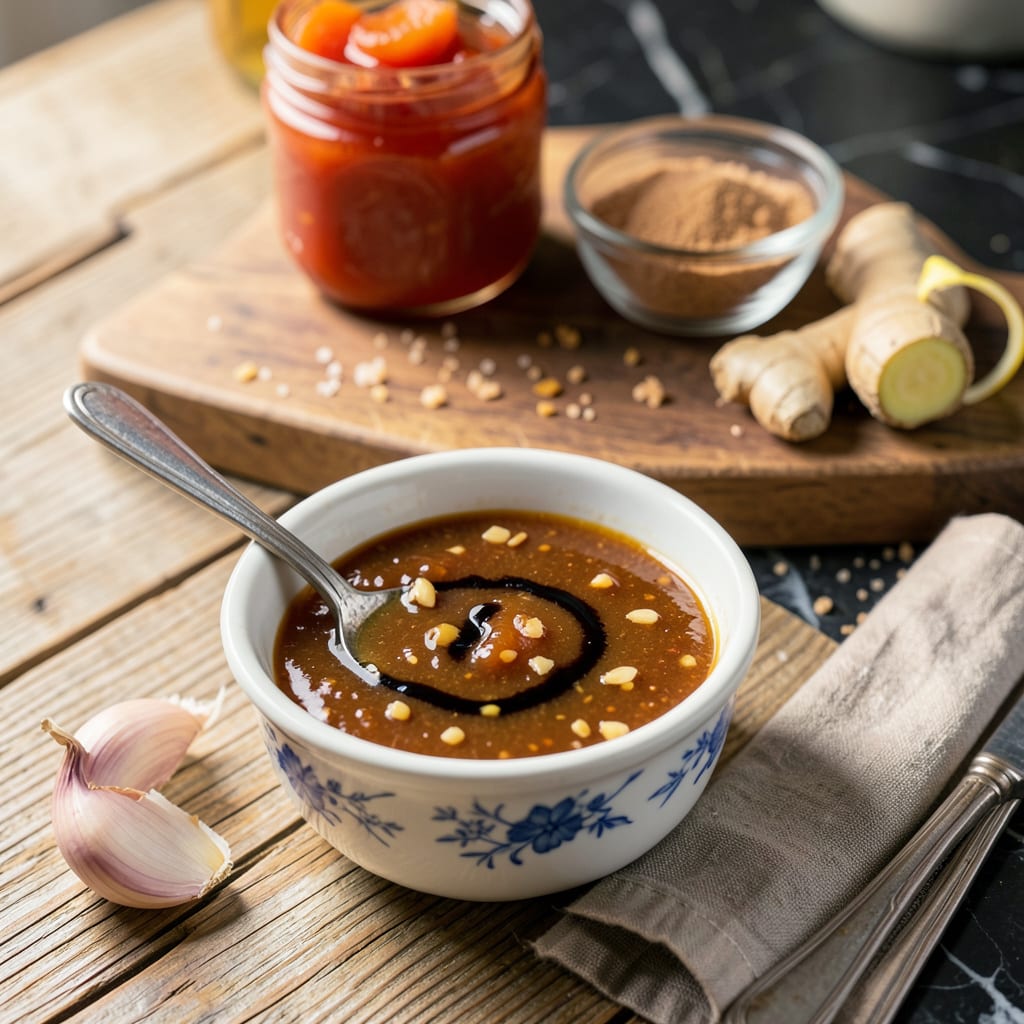
This sweet-tangy condiment is the secret to elevating your favorite takeout-inspired meals at home. Developed through years of perfecting the classic New England flavor profile, this duck sauce balances apricot sweetness with vinegar brightness and subtle ginger-garlic warmth. The result is a versatile sauce that transforms ordinary dishes into restaurant-quality creations.
What makes this recipe special is its simplicity and storage potential. A quick simmer of pantry staples yields a thick, glossy sauce that keeps for weeks in the refrigerator. Use it as a dipping sauce for egg rolls, a glaze for roasted meats, or a flavorful drizzle over rice bowls. The balanced sweet-sour profile makes it infinitely adaptable to your favorite Asian-inspired dishes.
Ingredients for New England Duck Sauce
Nine pantry staples transform into this iconic sweet-tangy sauce you’ll want on everything.
| Ingredient | Amount | Notes |
|---|---|---|
| Apricot Preserves 🍑 | 1 cup | High-quality for best flavor |
| Distilled White Vinegar 💧 | ½ cup | Balances sweetness perfectly |
| Light Brown Sugar 🍚 | ¼ cup | Packed for rich caramel notes |
| Fresh Ginger Root 🌿 | 1 tbsp | Finely grated for zesty warmth |
| Garlic Cloves 🧄 | 2 cloves | Minced for aromatic depth |
| Soy Sauce 🫙 | 1 tbsp | Low-sodium preferred for balance |
| Dijon Mustard 🧂 | 1 tsp | Adds subtle tangy complexity |
| Ground White Pepper 🌶️ | ¼ tsp | Milder than black pepper |
| Kosher Salt 🧂 | ½ tsp | Diamond Crystal preferred |
The apricot preserves are the foundation here—Smucker’s or Bonne Maman work perfectly (avoid the sugar-free versions). Fresh ginger makes all the difference; look for plump, smooth roots at the store (skip anything wrinkled or dried out). For the vinegar, basic distilled white is ideal, but if you’ve got apple cider vinegar on hand, it adds a nice fruitiness. The soy sauce should be low-sodium to keep the flavor balanced—Kikkoman is my go-to brand for consistency.
No apricot preserves? Peach or orange marmalade can substitute in a pinch, though the flavor will shift slightly. Out of fresh ginger? Ground ginger at half the amount works, but fresh is worth the effort. If you’re avoiding soy, coconut aminos make a decent swap (use the same amount). The Dijon mustard isn’t just for tang—it helps emulsify the sauce. Skip it, and you might end up with a slightly separated texture.
This sauce keeps beautifully in an airtight container for 3-4 weeks in the fridge. The flavors actually deepen after a day or two, so make it ahead if you can. For longer storage, freeze in ice cube trays, then transfer to a bag—good for 6 months. Always give it a quick stir before using, as the ingredients may settle slightly over time.
Why You’ll Love This Recipe
- I’ll be real: I always have apricot jam lurking in the back of my fridge, and the rest are staples I grab for pennies. One small batch costs less than a jar of store-bought, and the homemade version actually tastes like ginger and garlic, not just sugar.
- 5-Minute Simmer: I toss everything—apricot preserves, vinegar, the whole gang—into one pot and let it bubble while I prep the rest of dinner. No babysitting, no fancy techniques, just a quick stir and you’re done.
- Sweet-Tangy Kick: That first taste where the brown sugar caramelizes just slightly with the ginger’s bite? It’s the reason I double the batch. The garlic mellows into the background, leaving this addictive balance that’s somehow both bright and rich.
- My Takeout Fakeout: Between us, this is my secret for making weeknight egg rolls or crispy chicken feel like a Friday treat. It keeps for two weeks in the fridge, so I drizzle it on everything from pork chops to roasted veggies (yes, even Brussels sprouts).
Step-by-Step Instructions for New England Duck Sauce
This simple process transforms everyday ingredients into that signature sweet-tangy condiment you crave with crispy appetizers.
Step 1: Bloom the Aromatics
In a medium saucepan, combine the 1 tablespoon soy sauce, 1 tablespoon fresh ginger root, and 2 cloves garlic cloves (both finely minced). Cook over medium heat for 2-3 minutes, stirring constantly, until the garlic turns fragile and golden at the edges and the mixture becomes intensely aromatic.
This blooming step is crucial – it mellows the raw bite of garlic and ginger while amplifying their complex flavors. Watch the heat carefully; you want gentle sizzling, not aggressive bubbling that could burn the aromatics. The soy sauce helps conduct heat evenly and prevents scorching.
Step 2: Build the Sweet-Tangy Base
Add the 1 cup apricot preserves, 0.5 cup distilled white vinegar, and 0.25 cup light brown sugar to the pan. Stir well to dissolve the sugar completely, then bring the mixture to a gentle simmer over medium-high heat. This should take about 3-4 minutes.
As the preserves melt, they’ll transform from chunky to smooth. You’ll notice the vinegar’s sharpness softens while the brown sugar adds caramel depth. The mixture should bubble gently around the edges – what I call a “lazy simmer” – where you see consistent but not vigorous movement.
Step 3: Develop Complexity and Balance
Reduce heat to low and stir in the 1 teaspoon Dijon mustard, 0.25 teaspoon ground white pepper, and 0.5 teaspoon kosher salt. Let the sauce simmer uncovered for 8-10 minutes, stirring occasionally, until it reduces by about one-third and develops a glossy sheen.
The mustard adds subtle depth without overpowering, while the white pepper contributes warmth without the visual specks of black pepper. You’re looking for the sauce to coat the back of a spoon and leave a clean trail when you run your finger through it. This reduction concentrates flavors and achieves that perfect clingy consistency.
Step 4: Cool and Mature the Flavors
Remove the sauce from heat and let it cool to room temperature, about 30 minutes. As it cools, the sauce will thicken slightly and the flavors will harmonize. I always taste at this stage – the balance should be sweet first, then tangy, with a warm ginger-garlic finish.
Transfer to a clean glass jar or airtight container. The sauce keeps beautifully in the refrigerator for up to 3 weeks, and I’ve found the flavors actually improve after 24 hours as the ingredients meld. For best texture, let it come to room temperature before serving – cold straight from the fridge mutes the vibrant flavors.
Regional Styles of This Recipe
Classic Boston Style
The Boston version leans slightly sweeter with a smoother texture. I use peach preserves instead of apricot and reduce the vinegar to ⅓ cup. The result is a golden sauce that’s perfect for dipping crispy crab rangoon or drizzling over scallion pancakes. This was my first introduction to duck sauce at a North End restaurant. 🍑
For that authentic Boston touch, I add 1 teaspoon orange zest during the final simmer. It brightens the flavor profile without overpowering the sweetness. The sauce should have a velvety consistency that clings beautifully to fried foods.
Rhode Island Variation
In Rhode Island, they prefer a chunkier texture with more tang. I keep the apricot base but add 2 tablespoons finely diced red bell pepper and increase the vinegar to ⅔ cup. This version pairs exceptionally well with clams casino or stuffed quahogs—classic Ocean State appetizers.
The key here is to simmer just until the peppers soften but still retain some texture. I’ve found this version works particularly well as a glaze for grilled shrimp skewers, adding that perfect sweet-spicy contrast.
Connecticut’s Spiced Version
Connecticut cooks often add warm spices to their duck sauce. My version includes ¼ teaspoon cinnamon and ⅛ teaspoon cloves along with the standard ingredients. This creates a complex flavor that works beautifully with apple cider donuts or as a dip for fried chicken tenders.
I discovered this variation at a Hartford diner where they served it with their famous hot apple fritters. The spices make it feel almost like a holiday condiment, perfect for fall gatherings.
Maine’s Blueberry Twist
Up in Maine, they incorporate local blueberries for a unique regional take. I blend ½ cup blueberry preserves with the apricot and reduce the brown sugar to 2 tablespoons. The result is a stunning purple-hued sauce that’s fantastic with lobster rolls or fried clams.
The blueberries add antioxidant benefits while creating a beautiful color contrast on seafood platters. I first tried this at a Portland waterfront restaurant and was amazed by how well the berry notes complemented the ginger.
Vermont Maple Version
Vermont’s version naturally incorporates their famous maple syrup. I replace the brown sugar with ¼ cup pure Vermont maple syrup and add 1 tablespoon apple cider vinegar for depth. This creates a richer, more caramelized sauce that’s incredible on breakfast sausages or pancakes.
The maple adds wonderful complexity while keeping the sauce’s signature sweet-tangy balance. I love making this version in early spring when the new maple syrup harvest comes in—it’s like liquid gold for your condiment collection. 🍁
New Hampshire’s Citrus Bright
New Hampshire cooks often brighten their duck sauce with citrus. My version adds 2 tablespoons fresh orange juice and 1 teaspoon lemon zest to the standard recipe. This creates a zesty sauce that cuts through rich fried foods like mozzarella sticks or onion rings.
The citrus notes make this version particularly refreshing during summer cookouts. I first encountered this style at a lakeside diner where they served it with their famous fried haddock sandwiches—the perfect balance of crispy and bright flavors.
Nutrition Facts

- 6 Egg Cake Recipe with Oil: Light as Air With Buttery Moisture - October 4, 2026
- 4 Bean Casserole Recipe: One-Pan Heartiness With Smoky Paprika Depth - October 4, 2026
- 3-Ingredient Keto Mug Cake Recipe: Microwave Magic in 2 Minutes - October 4, 2026