
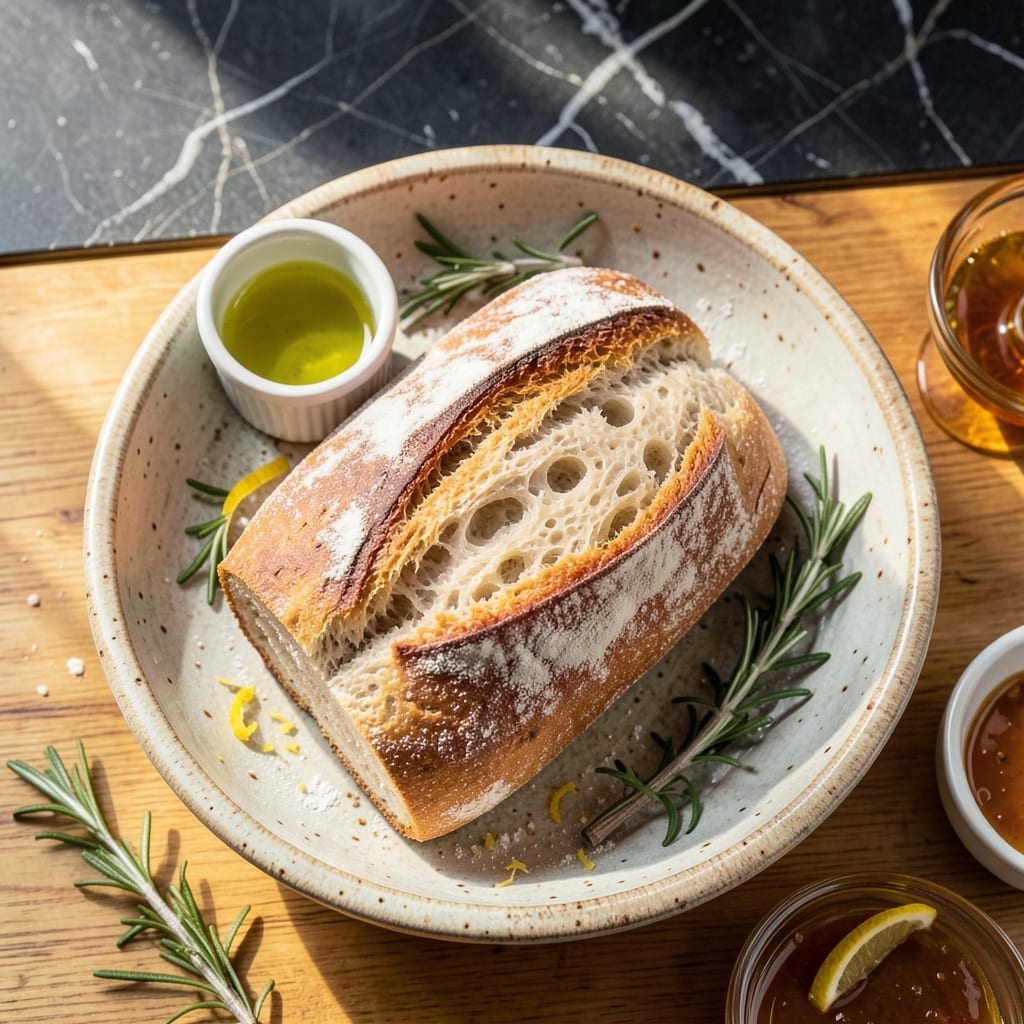
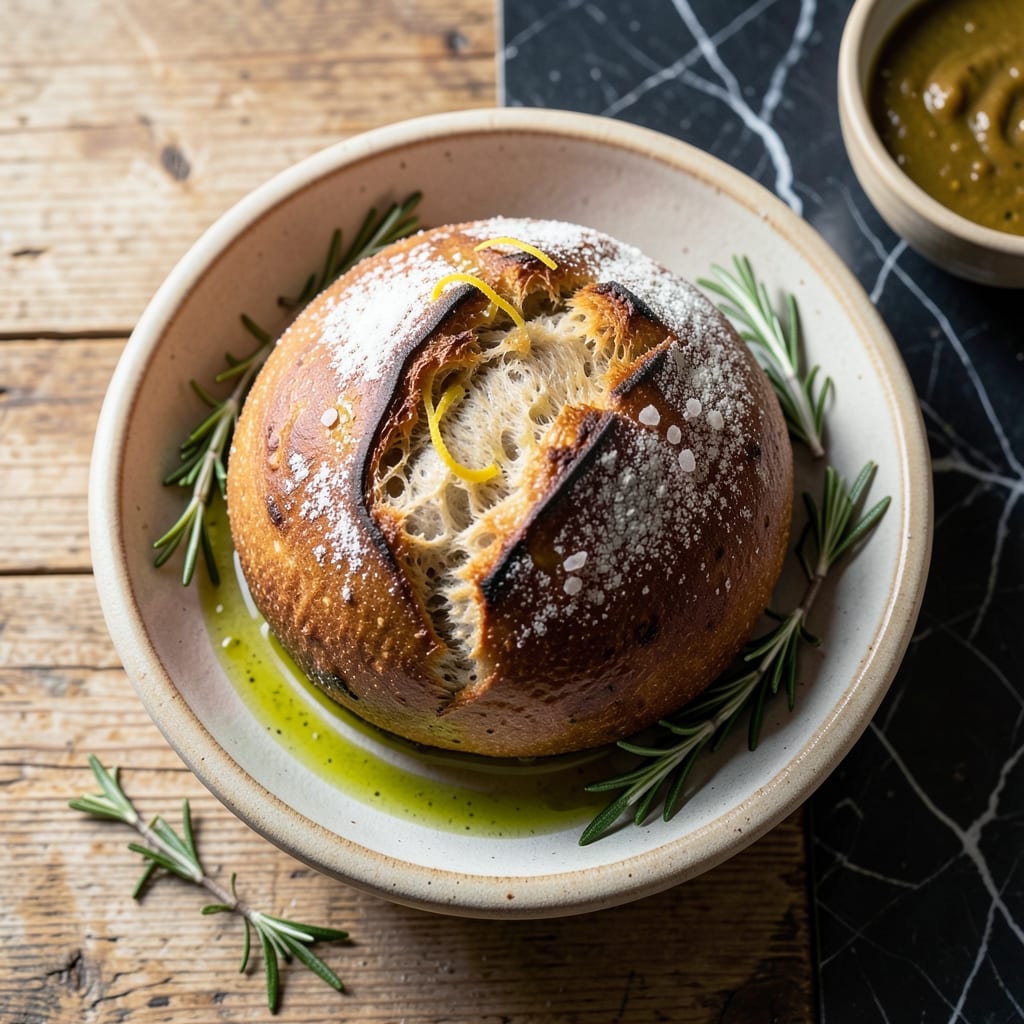
There’s an art to Italian nonna bread that goes beyond ingredients. This rustic loaf relies on time-honored techniques, patience, and the richness of quality olive oil to achieve its signature texture and flavor.
With a crisp crust and tender crumb, it embodies the simplicity and warmth of traditional Italian baking. The process is straightforward, but the results are anything but ordinary.
Ingredients for Nonna Bread Recipe Italian Agenda
Ten ingredients. Time-honored technique. Rustic Italian perfection in every loaf.
| Ingredient | Amount | Notes |
|---|---|---|
| Bread Flour 🌾 | 4 cups | High-protein for structure |
| Warm Water 💧 | 1 ½ cups | 110°F, not hotter |
| Active Dry Yeast 🍞 | 2 ¼ tsp | One standard packet |
| Extra-Virgin Olive Oil 🫒 | ½ cup | High-quality for richness |
| Sea Salt 🧂 | 2 tsp | Fine grain preferred |
| Granulated Sugar 🍚 | 1 tsp | Activates the yeast |
| All-Purpose Flour 🌾 | 1 cup | For dusting work surface |
| Cornmeal 🌽 | ¼ cup | For baking sheet dusting |
| Fresh Rosemary 🌿 | 1 tbsp | Chopped, optional for flavor |
| Garlic Powder 🧄 | 1 tsp | Enhances olive oil notes |
The flour is critical here. King Arthur Bread Flour is ideal for its high protein content, which gives this loaf its signature chew. The olive oil must be extra-virgin—look for cold-pressed, single-origin options at Whole Foods or Eataly. Avoid anything labeled ‘light’ or ‘refined,’ as the flavor depth comes from the oil’s purity. Sea salt should be fine-grained for even distribution throughout the dough.
No bread flour? Use all-purpose in a pinch, but expect a slightly less chewy texture. Swap rosemary for thyme or oregano if that’s what’s in your pantry. Garlic powder can be replaced with half the amount of onion powder. For a richer flavor, toast the garlic powder lightly in a dry pan before mixing. The cornmeal prevents sticking, but parchment paper works too.
Store the baked loaf wrapped in a clean kitchen towel at room temperature for up to 3 days. For longer storage, slice and freeze in an airtight container for up to 3 months. Reheat frozen slices in a 350°F oven for 5-10 minutes to revive the crust.
Why You’ll Love This Recipe
- No-Fuss Dough: I mix flour, water, yeast, olive oil, and salt—no fancy steps, just hands and a bowl.
- Crusty Outside, Soft Inside: That golden crust with a chewy center? The olive oil makes it irresistible.
- Feeds a Crowd: One loaf disappears fast at dinner, but it’s just as good for sandwiches the next day.
Step-by-Step Instructions for Nonna Bread
This traditional method yields a rustic loaf with a crisp crust and tender, olive oil-enriched crumb.
Step 1: Activate the Yeast and Begin the Dough
In a large mixing bowl, dissolve the 1 tsp Granulated Sugar in the 1.5 cups Warm Water. Sprinkle the 2.25 tsp Active Dry Yeast over the surface and let it stand for 5-10 minutes until foamy. This proofing step confirms the yeast is alive and active.
Once foamy, stir in the 0.5 cup Extra-Virgin Olive Oil, 2 tsp Sea Salt, and 1 tsp Garlic Powder. Gradually add the 4 cups Bread Flour, mixing with a wooden spoon until a shaggy dough forms. The dough will be sticky but should pull away from the sides of the bowl.
Step 2: Knead and Develop the Gluten
Turn the dough out onto a surface lightly dusted with the 1 cup All-Purpose Flour. Knead for 8-10 minutes by hand, adding just enough all-purpose flour to prevent sticking. The dough should become smooth and elastic, springing back when pressed.
If using a stand mixer, switch to the dough hook attachment and knead on medium speed for 6-8 minutes. The dough is ready when it passes the windowpane test—stretch a small piece thinly; it should be translucent without tearing. Avoid over-flouring, as this can make the loaf dense.
Step 3: First Rise Until Doubled
Place the kneaded dough in a lightly oiled bowl, turning once to coat all sides. Cover with a damp kitchen towel or plastic wrap and let it rise in a warm, draft-free place for 1.5 to 2 hours, or until doubled in volume. The ideal rising temperature is around 75-80°F.
You’ll know it’s ready when the dough has visibly expanded and a finger pressed gently into the surface leaves a slight indentation that slowly springs back. If your kitchen is cool, the rise may take slightly longer—patience ensures proper flavor development.
Step 4: Shape, Second Rise, and Prepare for Baking
Punch down the risen dough to release the air, then turn it out onto the floured surface again. Shape it into a round loaf or oval by folding the edges under toward the center, creating surface tension. This step develops structure for the final bake.
Place the shaped dough on a baking sheet dusted with the 0.25 cup Cornmeal. If using, sprinkle the 1 tbsp Fresh Rosemary over the top and press lightly into the dough. Cover and let it rise for another 45-60 minutes until puffy and nearly doubled in size.
Step 5: Bake to Golden Perfection
Preheat your oven to 400°F. Once preheated, use a sharp knife or razor to score the top of the loaf in a decorative pattern—this allows the bread to expand properly during baking. Bake on the middle rack for 30-35 minutes, or until the crust is deep golden brown and the internal temperature reaches 190-200°F.
Halfway through baking, tent the loaf loosely with aluminum foil to prevent over-browning. The bread is done when it sounds hollow when tapped on the bottom. Transfer to a wire rack and let it cool for at least 30 minutes before slicing to allow the crumb to set fully.
Pro Tips For Making Nonna Bread Recipe Italian Agenda
- Proof the Yeast: I learned this the hard way—always bloom your active dry yeast in the warm water with a pinch of sugar first. If it doesn’t bubble within 5-10 minutes, your bread won’t rise, no matter how long you wait.
- Use Quality Flour: My grandmother swore by this, and she was right: bread flour with at least 12% protein makes a real difference. Skip the all-purpose if you want that chewy, rustic texture.
- Don’t Rush the Rise: After burning three loaves by cutting the first rise short, I finally figured out it needs at least 1-2 hours in a warm spot. Yes, even if you’re impatient like me.
- Salt Last: Sounds weird, but it works: add the sea salt after the yeast has started activating. Salt can inhibit yeast growth if mixed in too early, and your dough won’t rise properly.
Best Sauces and Condiments for These Flavors
Spicy Options 🔥
For those who love a kick, pair your nonna bread with a bold arrbbiata sauce—a fiery Italian tomato-based condiment with garlic and chili flakes. Homemade versions let you control the heat, but store-bought options like Rao’s Arrabbiata deliver authentic flavor without the fuss. A drizzle of spicy olive oil, infused with crushed red pepper, also adds a simple yet punchy twist.
Sweet and Tangy
Balance the bread’s olive oil richness with a sweet-tangy twist. A classic balsamic glaze reduction, simmered with honey or fig jam, creates a luxurious topping. For a quick fix, try Colavita Balsamic Glaze. Alternatively, a homemade sun-dried tomato pesto—blending tomatoes, basil, and parmesan—adds depth with a touch of sweetness.
Herb-Infused Spreads
Elevate your loaf with herbaceous flavors. A rosemary-garlic butter is a crowd-pleaser—whip softened butter with fresh herbs and minced garlic. Store-bought Tuscan Herb Olive Oil from brands like Filippo Berio works in a pinch. For a Mediterranean flair, mix crushed olives, capers, and oregano into a chunky tapenade.
Pro tip 💡: Toast the bread lightly before spreading to enhance the flavors!
Nutrition Facts

- 6 Egg Cake Recipe with Oil: Light as Air With Buttery Moisture - October 4, 2026
- 4 Bean Casserole Recipe: One-Pan Heartiness With Smoky Paprika Depth - October 4, 2026
- 3-Ingredient Keto Mug Cake Recipe: Microwave Magic in 2 Minutes - October 4, 2026