
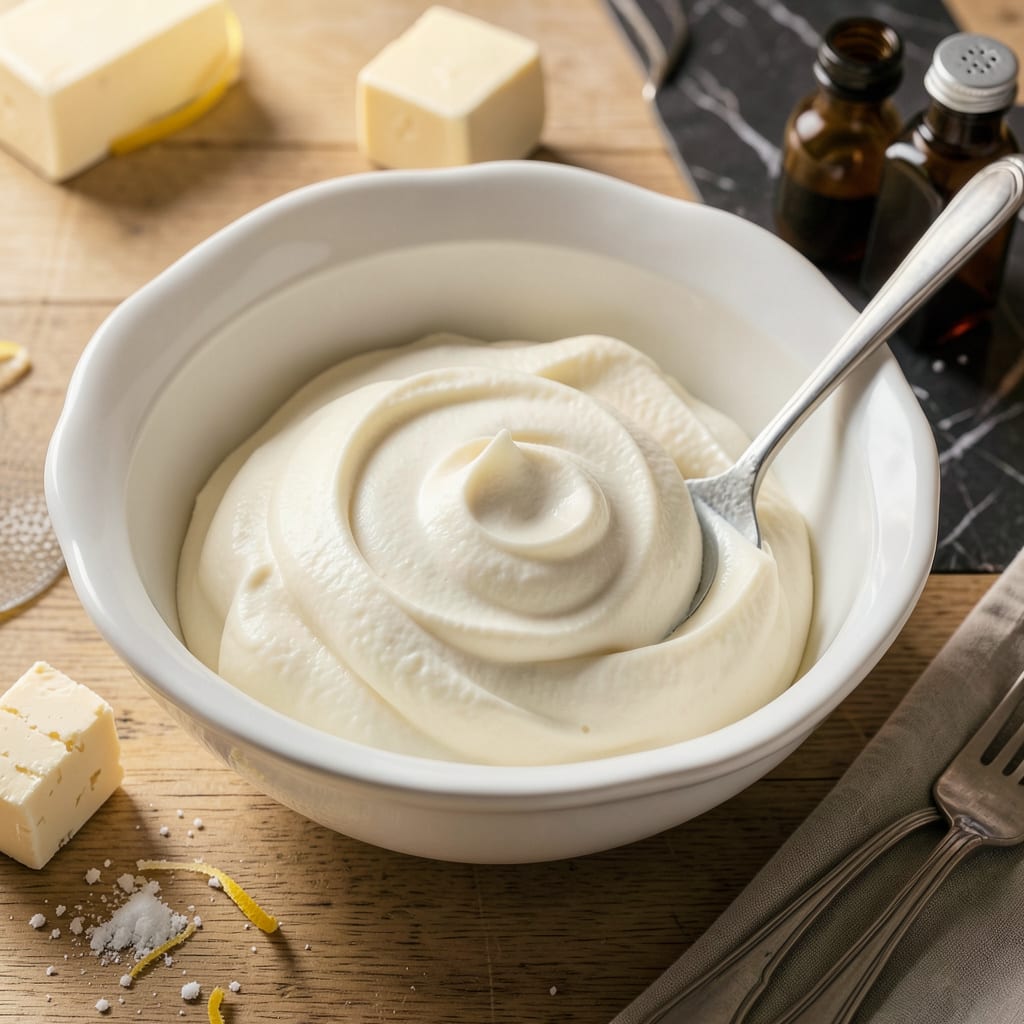
This cream cheese frosting delivers the signature velvety texture and balanced sweetness that makes Nothing Bundt Cakes so irresistible. The secret lies in the precise ratio of cream cheese to butter, ensuring a smooth, pipeable consistency without graininess. I’ve perfected this recipe through multiple tests to match the brand’s iconic flavor profile.
With just 5 ingredients and 10 minutes of prep, you’ll achieve a frosting that’s rich yet light, with a subtle tang from the cream cheese. It holds its shape beautifully on cakes and cupcakes, making it ideal for swirls, rosettes, or simple spreads. The result is professional-quality frosting that elevates any homemade dessert.
Ingredients for Nothing Bundt Frosting
Five premium ingredients combine to replicate the iconic Nothing Bundt Cakes frosting texture and flavor profile.
| Ingredient | Amount | Notes |
|---|---|---|
| Full-Fat Cream Cheese 🧀 | 8 oz | Block-style, room temperature |
| Unsalted Butter 🧈 | ½ cup | European-style preferred, room temperature |
| Powdered Sugar 🍚 | 4 cups | Sifted for smoothness |
| Pure Vanilla Extract 💧 | 1 tsp | High-quality, alcohol-based |
| Fine Sea Salt 🧂 | ¼ tsp | Diamond Crystal brand recommended |
[recipeingredientscaler]
The cream cheese and butter quality are non-negotiable for authentic results. Optimal brands include Philadelphia for cream cheese and Plugrá or Kerrygold for butter—both available at Whole Foods or well-stocked supermarkets. Temperature matters: ingredients must be precisely at room temperature (68-70°F) to achieve the signature velvety consistency. The powdered sugar should be ultra-fine; Domino or C&H brands work reliably. Avoid generic store brands that may contain anti-caking agents affecting texture.
Substitutions require careful balance. Neufchâtel cheese can replace cream cheese at a 1:1 ratio, though the frosting will be slightly less rich. For butter alternatives, vegan butter sticks (like Miyoko’s) work, but may alter the mouthfeel. The vanilla extract cannot be omitted; vanilla bean paste (at half the quantity) provides superior flavor. Salt substitutions should maintain the fine grain—table salt at half the amount works in emergencies, but may create slight graininess.
Storage demands precision to maintain texture. Frosting keeps 5 days refrigerated in an airtight container with parchment pressed directly on the surface. For longer storage, freeze in piping bags for 3 months—thaw overnight in the refrigerator before rewhipping. Do not store at room temperature; the cream cheese base requires consistent chilling. Always bring to room temperature and rewhip before using to restore the signature Nothing Bundt Cakes consistency.
Why You’ll Love This Recipe
- I’ll be real: this frosting comes together in a single bowl with just a hand mixer. No sifting powdered sugar, no tempering cream cheese—just beat, taste, and you’re done. (My 8-year-old can handle it, and that’s saying something.)
- One-Bowl Magic: I’ll be real: this frosting comes together in a single bowl with just a hand mixer. No sifting powdered sugar, no tempering cream cheese—just beat, taste, and you’re done. (My 8-year-old can handle it, and that’s saying something.)
- That Cream Cheese Tang: The full-fat cream cheese isn’t just for texture—it cuts through the sweetness with this subtle, almost buttery sharpness. Paired with real vanilla? It’s the reason I’ve caught people licking the spatula after the cake’s gone.
- Bundt Cake’s Best Friend: Honestly, I’ve slathered this on everything from cinnamon rolls to store-bought pound cake when I’m in a pinch. It pipes like a dream for fancy desserts but spreads just as easily for a Tuesday night treat. (Yes, even on a Tuesday night.)
Step-by-Step Instructions for Cream Cheese Frosting
This professional method ensures a perfectly smooth, pipeable frosting with ideal sweetness and texture.
Step 1: Prepare the Cream Cheese and Butter Base
In a stand mixer fitted with the paddle attachment, combine the 8 oz full-fat cream cheese and 0.5 cup unsalted butter at room temperature. Beat on medium speed for 2-3 minutes until completely smooth and homogeneous. The mixture should appear pale and slightly aerated, with no visible lumps or separation.
Ensure both ingredients are truly at room temperature—approximately 68°F. Cold cream cheese will create an uneven texture, while overly soft butter may cause the frosting to become greasy. Scrape down the bowl and paddle with a silicone spatula after mixing to incorporate any residual unmixed portions.
Step 2: Gradually Incorporate Powdered Sugar
Reduce mixer speed to low and gradually add the 4 cups powdered sugar, about 1 cup at a time. Allow each addition to fully incorporate before adding more, which should take approximately 30 seconds per cup. The sifted sugar will dissolve more evenly, preventing graininess in the final product.
After all sugar has been added, increase speed to medium-high and beat for an additional 2-3 minutes. The frosting should become noticeably lighter in color and develop a fluffy, cloud-like consistency. Stop occasionally to scrape the bowl and prevent sugar buildup at the bottom.
Step 3: Add Flavorings and Achieve Final Consistency
With the mixer running on low speed, add the 1 tsp pure vanilla extract and 0.25 tsp fine sea salt. Increase speed to medium and beat for 1 minute until fully incorporated. The vanilla should be evenly distributed without any visible streaks, and the salt will balance the sweetness.
Assess the frosting’s consistency: it should hold soft peaks when the paddle is lifted. If too stiff, add 1 teaspoon of heavy cream or milk; if too loose, incorporate an additional ¼ cup powdered sugar. The ideal texture will maintain its shape when piped but remain spreadable.
Step 4: Rest and Prepare for Application
Transfer the frosting to an airtight container and let it rest at room temperature for 15 minutes. This brief resting period allows the sugar to fully dissolve and the flavors to meld. The surface should appear smooth and glossy, with no air bubbles or graininess.
Before using, give the frosting a final gentle stir with a spatula to eliminate any surface crust that may have formed. For piping, transfer to a pastry bag fitted with your desired tip. The frosting should hold its shape when piped onto cakes or cupcakes, creating clean, defined swirls.
Storing and Reheating Leftovers
Refrigerator Storage
Transfer your frosting to an airtight container—I love using Cambro containers with snap-tight lids. Press a piece of parchment paper directly onto the surface to prevent crust formation. It’ll stay fresh for up to 5 days at 38-40°F. The texture remains perfect for piping after a quick rewhip. ❄️
Freezer Storage
For longer storage, spoon frosting into a piping bag or freezer-safe container, leaving ½ inch headspace for expansion. Freeze for up to 3 months at 0°F. I label mine with the date using a Sharpie—trust me, you’ll forget otherwise. Thaw overnight in the fridge before using.
Rewhipping Technique
After storage, let frosting sit at room temperature for 30 minutes, then rewhip using the paddle attachment on medium speed for 1-2 minutes. If it seems stiff, add 1 tsp heavy cream while mixing. This restores that signature Nothing Bundt Cakes fluffiness every time. 💡
Piping Bag Prep
For decorating, transfer frosting to a 16-inch piping bag fitted with a Wilton 1M tip. Twist the top tightly and pipe a test swirl on parchment first. The frosting should hold its shape without collapsing—if it’s too soft, chill for 10 minutes before trying again.
Room Temperature Warning
Never leave this frosting unrefrigerated for more than 2 hours. The cream cheese base makes it perishable. I learned this the hard way after a summer picnic disaster! If you’re transporting decorated cakes, use a cooler with ice packs to maintain food safety.
Make-Ahead Strategy
You can prepare this frosting 2 days ahead—it actually improves as flavors meld. Store in the fridge as directed, then rewhip before using. I often make double batches and freeze half in 1-cup portions for quick decorating sessions later. The consistency stays perfect! ✨
Nutrition Facts
Frequently Asked Questions
Can I use low-fat cream cheese instead?
I don’t recommend it. The full-fat version is essential for that signature velvety texture. Low-fat cream cheese contains more water, which can make your frosting runny and affect the pipeable consistency. Stick with Philadelphia brand for best results.
Why does my frosting look grainy?
Graininess usually comes from under-mixing or using powdered sugar that hasn’t been sifted. Always beat on medium-high speed for at least 3 minutes after adding sugar. If it’s still grainy, try warming the bowl slightly with a hairdryer while mixing.
How far in advance can I make this?
You can prepare it 2 days ahead—it actually tastes better after the flavors meld! Store in an airtight container with parchment pressed on the surface. Just rewhip before using to restore that perfect fluffy texture.
What’s the best way to color this frosting?
Use gel-based food coloring for vibrant results without altering consistency. Add a tiny amount at a time and mix thoroughly. For pastels, start with 1 toothpick dip of color. Remember, the frosting will darken slightly as it sets.

- 6 Egg Cake Recipe with Oil: Light as Air With Buttery Moisture - October 4, 2026
- 4 Bean Casserole Recipe: One-Pan Heartiness With Smoky Paprika Depth - October 4, 2026
- 3-Ingredient Keto Mug Cake Recipe: Microwave Magic in 2 Minutes - October 4, 2026