
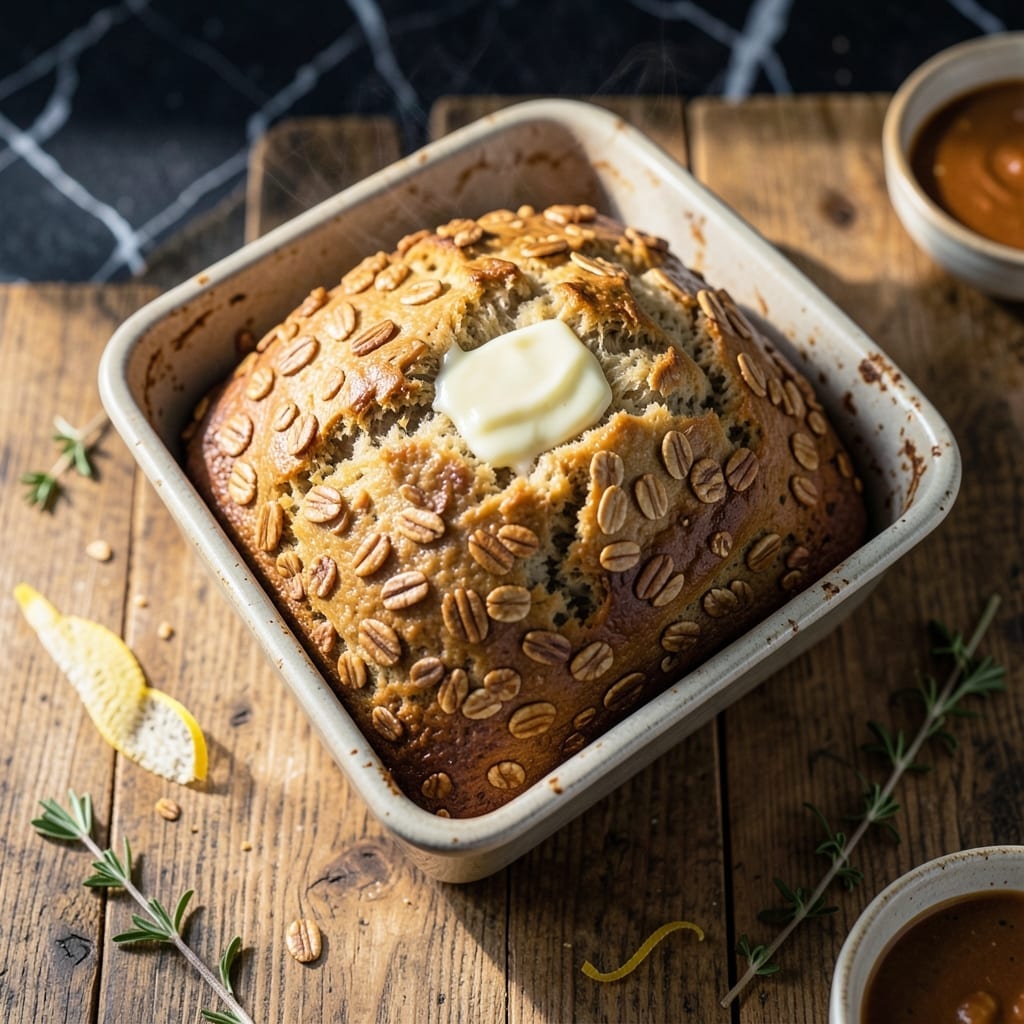
There’s something deeply satisfying about pulling a warm, hearty loaf from your bread machine. This recipe delivers a nutty, slightly sweet oatmeal bread with a tender crumb and perfect texture.
With minimal effort and 5 ingredients, you’ll have a fresh-baked loaf ready in 3 hours. The oats add richness and depth, making it ideal for sandwiches or toast.
Ingredients for Oatmeal Bread Recipe for Bread Machine
Nine simple ingredients transform into a hearty, nutty loaf with perfect texture.
| Ingredient | Amount | Notes |
|---|---|---|
| Rolled Oats 🌾 | 1 cup | Old-fashioned or quick, not steel-cut |
| Bread Flour 🌾 | 3 cups | All-purpose works in a pinch |
| Warm Water 💧 | 1 ¼ cups | 110°F to activate yeast |
| Active Dry Yeast 🍞 | 2 ¼ tsp | Or one packet, 7g |
| Brown Sugar 🍚 | 3 tbsp | Light or dark, packed |
| Unsalted Butter 🧈 | 2 tbsp | Melted and cooled |
| Salt 🧂 | 1 ½ tsp | Fine sea salt preferred |
| Honey 🍯 | 2 tbsp | Adds moisture and sweetness |
| Whole Milk 🥛 | ¼ cup | Warm, 110°F |
The oats are non-negotiable for that signature texture—old-fashioned or quick oats work, but avoid steel-cut. King Arthur Flour is my go-to for bread flour (higher protein = better rise). Yeast freshness matters: check the expiration date, and store unopened packets in the freezer. The butter should be unsalted so you control the salt content. Land O’Lakes or Kerrygold are reliable choices.
No brown sugar? Maple syrup or white sugar works at the same amount. Swap honey for agave if vegan is needed. The milk can be any dairy milk—whole adds richness, but 2% works fine. For a lighter loaf, replace 1 cup bread flour with all-purpose. Need it faster? Instant yeast can reduce rise time by 30 minutes.
Store oats and flour in airtight containers in a cool, dark place—they’ll keep for 6-12 months. The baked loaf stays fresh for 3 days at room temperature or freezes beautifully for 1 month. Slice before freezing for easy toast.
Why You’ll Love This Recipe
- Set and Forget: Just dump the oats, flour, water, yeast, and brown sugar in the machine and let it do the work—I’ve got better things to do than knead dough.
- Warm, Homey Sweetness: That hint of brown sugar with the hearty rolled oats gives every slice a cozy, lightly sweet flavor. Honestly, it’s my new toast obsession.
- Meal Prep Hero: I bake a loaf on Sunday and it fuels breakfasts, sandwiches, and midnight snacks all week long.
- Budget Stretcher: Rolled oats and bread flour cost pennies, yet this loaf tastes like it came from a fancy bakery. Between us, it’s my frugal little secret.
Step-by-Step Instructions for Oatmeal Bread
This hands-off method ensures a perfectly textured loaf with minimal effort on your part.
Step 1: Prepare the Wet Ingredients
Begin by combining the 1.25 cups Warm Water, 0.25 cup Whole Milk, 2 tbsp Unsalted Butter, 3 tbsp Brown Sugar, and 2 tbsp Honey in a small bowl. The liquids should feel warm to the touch (around 110°F)—this temperature activates the yeast without killing it.
Whisk the mixture until the brown sugar dissolves completely and the butter is fully incorporated. You’ll notice the honey and sugar create a slightly thick, glossy liquid. This ensures even distribution of sweetness and moisture throughout your loaf.
Step 2: Layer Ingredients in the Bread Machine
Add the wet ingredients mixture to the bread machine pan first. Then, sprinkle the 2.25 tsp Active Dry Yeast evenly over the surface of the liquid. Avoid letting the yeast touch the sides of the pan, as residual heat or moisture could activate it prematurely.
Next, add the 3 cups Bread Flour, spreading it evenly to cover the yeast completely. Finally, sprinkle the 1.5 tsp Salt over the flour and add the 1 cup Rolled Oats on top. The salt should not come into direct contact with the yeast, as it can inhibit activation.
Step 3: Select and Start the Bread Machine Cycle
Place the pan securely into the bread machine and close the lid. Select the basic or whole wheat cycle (if your machine has a setting for whole grains, use it—the oats behave similarly). Set the crust to medium for a balanced texture that’s neither too soft nor too hard.
Press start and allow the machine to knead, rise, and bake the dough. The kneading phase should last about 10-15 minutes, during which the dough will form a smooth, elastic ball. If it appears too sticky, add 1 tablespoon of bread flour at a time; if too dry, add 1 tablespoon of warm water. However, resist the urge to adjust unless absolutely necessary—this recipe is calibrated for the bread machine environment.
Step 4: Monitor the Rising and Baking Phases
After kneading, the dough will enter the rising phase. Check through the window after 30 minutes—the dough should have doubled in size and look puffy. If it hasn’t risen sufficiently by the 1-hour mark, your yeast may be old or the environment too cold. In that case, restart the cycle with fresh yeast.
The baking phase will take approximately 30-40 minutes. You’ll know it’s done when the loaf is golden brown on top and sounds hollow when tapped lightly. The internal temperature should read 190-200°F if you use a thermometer to confirm doneness.
Step 5: Cool Before Slicing
Once the cycle completes, carefully remove the pan from the machine using oven mitts—the pan and loaf will be extremely hot. Turn the loaf out onto a wire rack and let it cool for at least 15-20 minutes. Slicing too early traps steam inside, resulting in a gummy texture.
The crust will firm up as it cools, and the interior will set properly. You’ll notice the oats create a subtle, hearty texture with a nutty depth, while the honey and brown sugar add a gentle sweetness. Serve warm for the best experience, with the loaf holding its shape beautifully when sliced.
Pro Tips For Making Oatmeal Bread Recipe For Bread Machine
- Soak the Oats: I learned this the hard way—toss rolled oats in warm water for 10 minutes before adding to the bread machine, or you’ll get a dense, crumbly loaf.
- Check Yeast Freshness: After a failed rise left me with a brick, I now test yeast in 1/4 cup warm water with a pinch of sugar first—if it doesn’t foam in 5 minutes, skip it and grab a new packet.
- Measure Flour Right: Scooping flour straight from the bag packs it down—spoon it into the measuring cup and level off, or your bread will turn out dry and tough.
- Add Sugar Last: Sounds weird, but it works: hold the brown sugar until the final layer in the pan so the yeast activates at the right time, not too early.
Serving Suggestions for oatmeal bread recipe for bread machine
🍽️ Plating Styles
For a casual brunch, slice your oatmeal bread thick and serve it on a rustic wooden board with butter and jam. For a formal gathering, use a bread basket lined with a linen cloth to add elegance. If serving buffet-style, pre-slice the loaf and arrange it on a tiered stand for easy access.
🎨 Garnishing Techniques
Enhance the bread’s appearance with herb-infused butter or a drizzle of honey. For a festive touch, sprinkle rolled oats and seeds on top before baking, or dust the sliced loaf with powdered sugar for a sweet finish. Fresh herbs like rosemary or thyme can also add a pop of color.
🍞 Portion Sizes
For individual servings, slice the bread into ½-inch thick pieces to pair with soups or salads. For family-style meals, offer the whole loaf with a serrated knife for guests to serve themselves. Smaller, bite-sized pieces work well for appetizers or charcuterie boards.
🌡️ Serving Temperature
Let the bread cool on a wire rack for 10-15 minutes after baking to set the texture. Serve warm for maximum softness, or at room temperature for a firmer slice. For toasted slices, use a toaster or oven to revive the bread’s warmth and crispness.
Nutrition Facts

- 6 Egg Cake Recipe with Oil: Light as Air With Buttery Moisture - October 4, 2026
- 4 Bean Casserole Recipe: One-Pan Heartiness With Smoky Paprika Depth - October 4, 2026
- 3-Ingredient Keto Mug Cake Recipe: Microwave Magic in 2 Minutes - October 4, 2026