
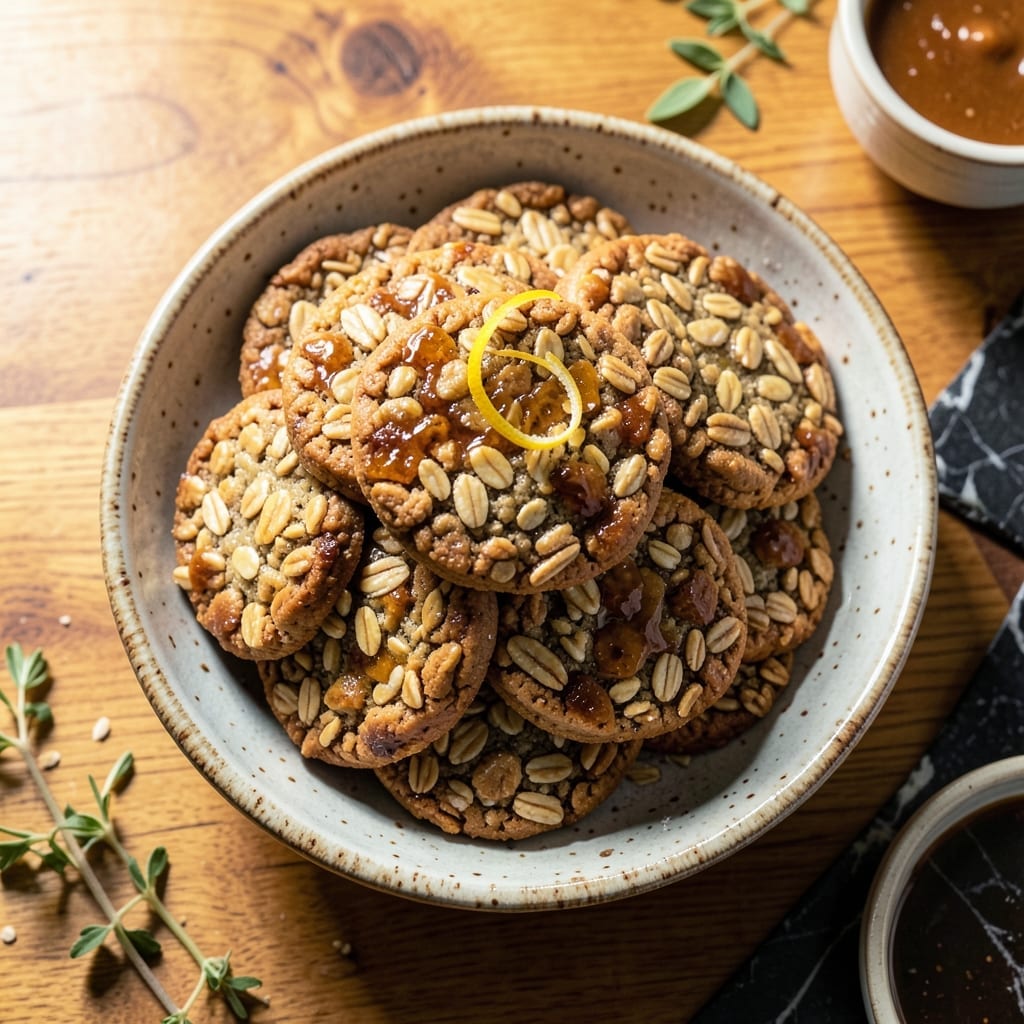
This eggless oats cookie recipe delivers chewy edges and soft centers without compromising texture or flavor. A simple method transforms basic ingredients into bakery-quality treats.
Perfect for vegan diets or egg allergies, this recipe proves you don’t need eggs for rich, satisfying cookies. The oats provide hearty texture while maintaining that classic cookie appeal.
Ingredients for Oats Cookies Recipe Eggless
Basic pantry staples transform into bakery-quality eggless oats cookies with perfect texture.
| Ingredient | Amount | Notes |
|---|---|---|
| Old-Fashioned Rolled Oats 🌾 | 2 cups | Certified gluten-free if needed |
| All-Purpose Flour 🌾 | 1 ¼ cups | Spoon and level method |
| Light Brown Sugar 🧈 | ¾ cup | Packed firmly into cup |
| Granulated Sugar 🧂 | ½ cup | Fine white sugar preferred |
| Coconut Oil 🥥 | ½ cup | Solid, not melted yet |
| Flaxseed Meal 🌿 | 1 tbsp | Mixed with 3 tbsp water |
| Vanilla Extract 💧 | 1 tsp | Pure vanilla, not imitation |
| Baking Soda 🧂 | ½ tsp | Ensures proper rise |
| Ground Cinnamon 🌿 | 1 tsp | Freshly ground if possible |
| Salt 🧂 | ½ tsp | Fine sea salt preferred |
| Chopped Walnuts 🌰 | ½ cup | Toasted for extra flavor |
| Raisins 🍇 | ½ cup | Plump in warm water first |
The oats are non-negotiable for texture—old-fashioned rolled oats give that signature chew. Bob’s Red Mill is my go-to, but any brand works if they’re not instant. The coconut oil replaces butter beautifully (no dairy, no problem). Trader Joe’s organic is cost-effective and reliable. For the flax egg, make sure it thickens for 5 minutes before adding—it should be gelatinous, not watery.
No flaxseed? Chia seeds at the same ratio work identically. Swap walnuts for pecans or almonds if preferred. Brown sugar can be coconut sugar at 1:1, though the flavor deepens slightly. Out of raisins? Chopped dates or chocolate chips (vegan, of course) add great texture. The vanilla extract is worth splurging on—Nielsen-Massey is the gold standard.
Dough keeps 3 days refrigerated or freeze it raw in balls for 3 months. Baked cookies stay fresh 5 days in an airtight container. For extra crisp edges, flatten the dough balls slightly before baking (don’t overdo it).
Why You’ll Love This Recipe
- One Bowl Wonder: I mix everything in a single bowl—no beaters, no fuss, just oats, coconut oil, and sugars ready in minutes.
- Caramelized Crunch: The brown sugar and coconut oil give these cookies a deep, buttery flavor with a perfectly crisp edge.
- Breakfast or Dessert: I pack them for lunchboxes or serve warm with tea—honestly, they work any time of day.
- Pantry Staples: All the ingredients are already in my kitchen, and the batch costs pennies compared to store-bought.
Step-by-Step Instructions for Oats Cookies
Master the technique for perfectly textured eggless cookies with this precise method.
Step 1: Prepare the Flaxseed Egg Substitute
Combine 1 tbsp Flaxseed Meal with 3 tbsp water in a small bowl. Stir vigorously and let the mixture rest for 5 minutes to thicken into a gel-like consistency. This flax “egg” provides the binding power that would normally come from chicken eggs.
I’ve found that using a fork to whisk creates the best texture. The mixture is ready when it has the viscosity of a raw egg and doesn’t separate when you stop stirring. This step is non-negotiable for proper structure in your cookies.
Step 2: Cream the Coconut Oil and Sugars
In a large mixing bowl, beat together 0.5 cup Coconut Oil with 0.75 cup Light Brown Sugar and 0.5 cup Granulated Sugar until light and fluffy. Use an electric mixer on medium speed for 3-4 minutes—this aerates the mixture for better texture.
The coconut oil should be solid but soft enough to cream easily. If it’s melted, chill the mixture for 10 minutes before proceeding. You want to see the mixture pale in color and increase in volume, which indicates proper incorporation of air.
Step 3: Combine Wet and Dry Ingredients
Add the prepared flaxseed mixture and 1 tsp Vanilla Extract to the creamed oil and sugars. Beat for 30 seconds until fully incorporated. In a separate bowl, whisk together 1.25 cups All-Purpose Flour, 0.5 tsp Baking Soda, 1 tsp Ground Cinnamon, and 0.5 tsp Salt.
Gradually add the dry ingredients to the wet mixture, mixing on low speed just until combined. Overmixing develops gluten, which would make your cookies tough rather than tender. The dough should be thick but pliable.
Step 4: Fold in the Add-Ins
Using a wooden spoon or spatula, fold in 2 cups Old-Fashioned Rolled Oats, 0.5 cup Chopped Walnuts, and 0.5 cup Raisins by hand. This ensures even distribution without overworking the dough.
I always toast the walnuts first for deeper flavor, but this is optional. The raisins should be plump—if they seem dry, soak them in warm water for 5 minutes and drain well before adding. The dough will be slightly sticky but should hold together when pressed.
Step 5: Bake to Golden Perfection
Preheat your oven to 350°F and line two baking sheets with parchment paper. Scoop the dough into 2-tablespoon portions and place them 2 inches apart on the prepared sheets. These cookies spread moderately, so proper spacing prevents merging.
Bake for 12-15 minutes until the edges are golden brown but the centers still look slightly underdone. They’ll continue setting as they cool on the baking sheet. Let them rest for 5 minutes before transferring to a wire rack to cool completely.
The finished cookies should have crisp edges with soft, chewy centers. The cinnamon will be fragrant, the walnuts toasty, and the raisins plump and sweet. Store in an airtight container for up to 5 days.
Pro Tips For Making Oats Cookies Recipe Eggless
- Chill the Dough: After mixing, refrigerate the dough for 20-30 minutes—coconut oil firms up and prevents flat, greasy cookies. I learned this the hard way after my first batch spread like pancakes.
- Toast the Oats: Spread the rolled oats on a baking sheet and toast at 350°F for 8-10 minutes until fragrant. Sounds weird, but it adds a nutty depth that raw oats just can’t match.
- Watch the Sugar: Use slightly more brown sugar than granulated (about 2:1 ratio) for chewier cookies. After burning three batches, I finally figured out that white sugar alone makes them crispier than ideal.
- Press Before Baking: Gently flatten each dough ball with a fork before baking—oat cookies don’t spread much on their own, and this guarantees even baking. My grandmother swore by this, and she was right.
Troubleshooting Perfect Results
🔥 Too Dry or Tough?
This usually happens if you overbake the cookies or use too much flour. Oats absorb moisture, so excess flour can make them dense.
Quick Fix: Reduce baking time by 1-2 minutes and measure flour accurately. Add a tablespoon of milk if the dough feels dry.
🥘 Cookies Spread Too Much?
If your cookies flatten out, the dough may be too warm or the butter too soft. Chilling the dough for 30 minutes helps maintain shape.
Quick Fix: Refrigerate the dough before baking. Use slightly firmer butter and ensure your baking sheet isn’t too hot.
🎯 Not Sweet Enough?
Oats have a mild flavor, so under-sweetening can make cookies taste bland. Check your sugar measurements and ingredient quality.
Quick Fix: Increase sugar by 1-2 tablespoons or drizzle melted chocolate on top after baking for extra sweetness.
⏰ Cookies Brown Too Fast?
Hot spots in the oven or overly thin dough can cause uneven browning. Rotate the tray halfway through baking for consistency.
Quick Fix: Lower the oven temperature by 25°F and bake a minute longer. Use parchment paper for even heat distribution.
Nutrition Facts

- 6 Egg Cake Recipe with Oil: Light as Air With Buttery Moisture - October 4, 2026
- 4 Bean Casserole Recipe: One-Pan Heartiness With Smoky Paprika Depth - October 4, 2026
- 3-Ingredient Keto Mug Cake Recipe: Microwave Magic in 2 Minutes - October 4, 2026