
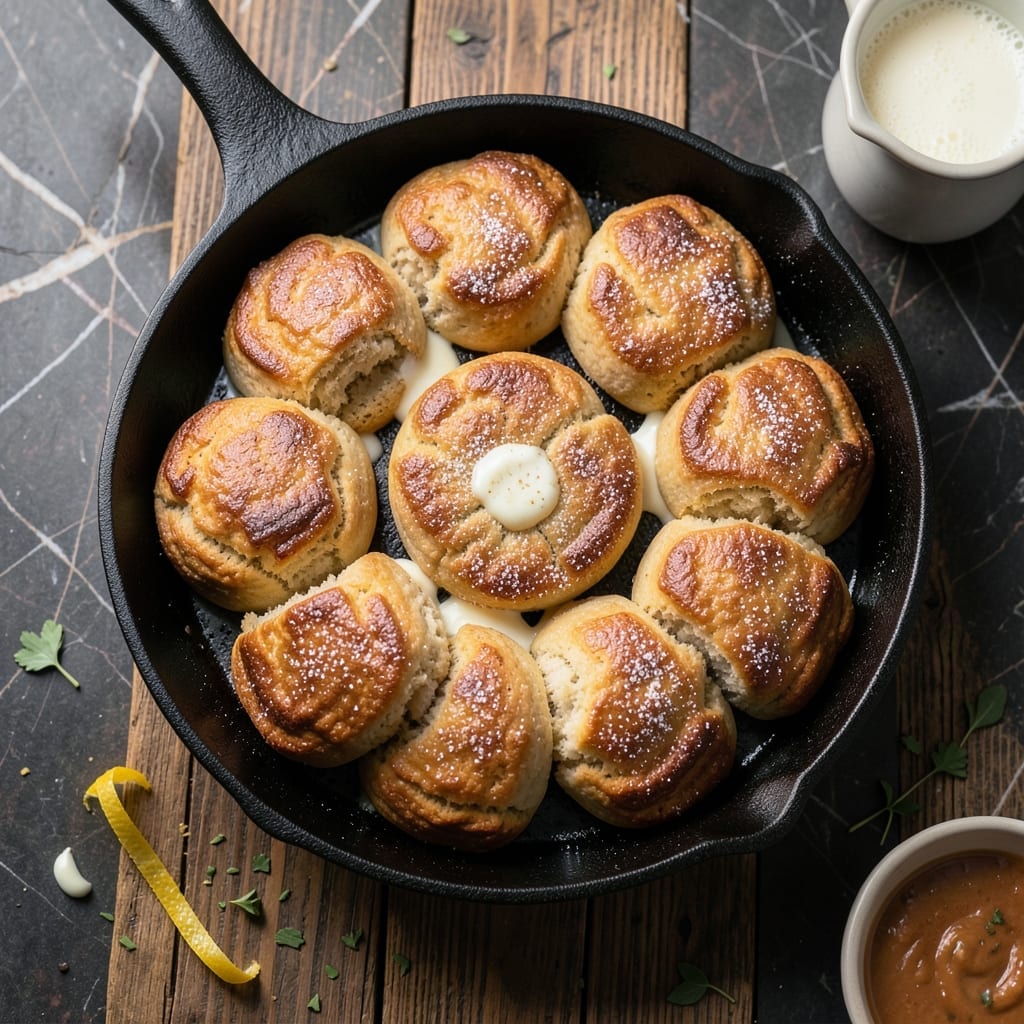
There’s a reason these biscuits have been a Savannah staple for generations. This recipe captures the Olde Pink House’s signature flaky layers and rich, buttery depth that keeps guests coming back for more.
The secret lies in cold ingredients and a gentle touch—overworking the dough is the fastest way to ruin that tender texture. A high butter-to-flour ratio ensures each bite melts in your mouth, while a quick bake at high heat creates golden, towering layers.
What you get is a biscuit that’s crisp on the outside, soft on the inside, and packed with that unmistakable Southern charm. The aroma alone will transport you to a historic Georgia kitchen.
Serve warm with honey or gravy, and watch them disappear. Here’s how to bring this classic to your table.
Ingredients for Olde Pink House Biscuit
Cold butter, soft flour, and a handful of staples make these legendary layers.
| Ingredient | Amount | Notes |
|---|---|---|
| All-Purpose Flour 🌾 | 2 cups | Plus extra for dusting |
| Baking Powder 🧂 | 1 tbsp | Aluminum-free preferred |
| Granulated Sugar 🍚 | 1 tbsp | For subtle sweetness |
| Salt 🧂 | 1 tsp | Fine sea salt preferred |
| Unsalted Butter 🧈 | ¾ cup | Cold, cubed (1.5 sticks) |
| Whole Buttermilk 🥛 | ¾ cup | Full-fat for richness |
| Heavy Cream 🥛 | ¼ cup | For brushing (optional) |
| Baking Soda 🧂 | ¼ tsp | For extra lift |
| Freshly Ground Black Pepper 🌶️ | ¼ tsp | Optional for depth |
The butter is everything here. Use a high-quality brand like Plugrá or Kerrygold—it’s got the fat content (82%) that makes these biscuits flaky and rich. Buttermilk matters too: full-fat whole buttermilk (I grab it from Publix or Whole Foods) gives that tangy depth. Keep the butter ice-cold, and don’t skimp on the cubes—small, even pieces distribute better in the dough.
No buttermilk? Stir 1 tbsp lemon juice or vinegar into 3/4 cup whole milk and let sit 5 minutes. Out of cream for brushing? Melted butter works just as well. Need to make it ahead? Mix the dry ingredients the night before—just keep them chilled. The baking powder should be fresh (check the date) to ensure the rise.
Biscuits are best the day they’re made, but leftovers keep 2-3 days in an airtight container. Reheat wrapped in foil at 350°F for 10 minutes to revive the flakiness. Or freeze unbaked dough on a tray, then transfer to a bag for up to 1 month. Bake straight from frozen, adding a few extra minutes.
Why You’ll Love This Recipe
- One-Bowl Wonder: I mix everything right in the same bowl—flour, baking powder, sugar, salt, then cut in the cold butter. No fuss, no extra dishes.
- Buttery Layers: That unsalted butter folded into the dough? It creates the flakiest, most melt-in-your-mouth biscuits I’ve ever made.
- Breakfast to Dinner: I serve these with jam at sunrise or alongside stew for supper. They’re just as good warm or cold the next day.
- Pantry Staples: All-purpose flour, baking powder, sugar, salt—things I always have. I’ll be real: I’ve made these on a whim with zero grocery runs.
Step-by-Step Instructions for Fluffy Southern Layers
Here’s the method I’ve perfected for tall, tender biscuits with that signature Southern flake.
Step 1: Cut the Cold Butter into the Dry Ingredients
In a large bowl, whisk together the 2 cups All-Purpose Flour, 1 tbsp Baking Powder, 1 tbsp Granulated Sugar, 1 tsp Salt, 0.25 tsp Baking Soda, and 0.25 tsp Freshly Ground Black Pepper. I always add the baking powder last to ensure it stays active.
Cut in the 0.75 cup Unsalted Butter (cold and cubed) using a pastry cutter or your fingers until the mixture resembles coarse crumbs with pea-sized butter pieces visible. This is crucial—those butter pieces create the flaky layers we’re after. Work quickly to keep the butter cold.
Step 2: Add the Buttermilk and Form the Dough
Make a well in the center of the flour mixture and pour in the 0.75 cup Whole Buttermilk. Use a fork to gently stir until the dough just comes together. It will look shaggy and slightly sticky—that’s perfect.
Turn the dough out onto a lightly floured surface. I dust with just enough of the extra flour to prevent sticking, but don’t overwork it. Fold the dough over itself 2-3 times to create layers, then pat it into a 1-inch thick rectangle. This layering is what gives these biscuits their height and flakiness.
Step 3: Cut and Arrange the Biscuits for Baking
Use a 2.5-inch biscuit cutter to stamp out biscuits from the dough. Press straight down without twisting—twisting seals the edges and prevents rising. Gather the scraps, gently re-pat, and cut more biscuits until all dough is used.
Place the biscuits touching each other in a cast-iron skillet or on a baking sheet lined with parchment paper. This close arrangement helps them rise upward instead of spreading outward. For an extra-rich finish, brush the tops with the 0.25 cup Heavy Cream.
Step 4: Bake Until Golden and Towering
Preheat your oven to 450°F. Bake the biscuits for 12-15 minutes until the tops are golden brown and they’ve risen significantly. Rotate the pan halfway through if your oven has hot spots.
You’ll know they’re done when the biscuits are tall and the layers are visible on the sides. The internal temperature should reach 200°F if you’re checking with a thermometer. Don’t overbake—these should be tender, not dry.
Step 5: Serve Warm with Your Favorite Toppings
Remove the biscuits from the oven and let them cool in the pan for 2-3 minutes. This brief rest allows the structure to set slightly before serving. Transfer to a wire rack if not serving immediately.
Serve warm, split open to reveal those beautiful flaky layers inside. These are best enjoyed fresh from the oven, with just a pat of butter melting into the warm, tender crumb. The buttermilk and butter create a richness that’s distinctively Southern.
Pro Tips For Making Olde Pink House Biscuit
- Chill the Butter: Cut your unsalted butter into small cubes and chill for 15 minutes before mixing—this keeps the fat from melting too soon, which is what gives these biscuits their flaky layers.
- Don’t Overwork Dough: After adding the wet ingredients, stir just until the dough comes together. I learned this the hard way—overmixing makes the biscuits tough instead of tender.
- Use Fresh Baking Powder: If your baking powder is older than 6 months, swap it out. Old leavening agents lose their punch, and these biscuits rely on that lift to rise properly.
- Roll Thick, Not Thin: Aim for 3/4-inch thickness when cutting the dough. Sounds weird, but it works: thinner biscuits dry out faster, while this height ensures a soft, pillowy center.
Pro Cooking Tips for This Dish
Butter Temperature Control
The key to flaky layers is keeping the 0.75 cup Unsalted Butter ice cold until it hits the oven. I freeze my cubed butter for 15 minutes before cutting it in. Use a pastry cutter, not your hands, to avoid warming the butter with body heat.
Minimal Dough Handling
Overworking develops gluten, making biscuits tough. Stir the 0.75 cup Whole Buttermilk just until combined—lumpy is perfect. When folding, do it 2-3 times max. The shaggier the dough looks, the more tender your biscuits will be.
Perfect Cutting Technique
Use a 2.5-inch biscuit cutter and press straight down without twisting. Twisting seals the edges, preventing rise. I dip my cutter in flour between cuts to prevent sticking.
Oven Heat Management
Preheat your oven to 450°F for at least 20 minutes before baking. Place biscuits in the center rack for even heat distribution. If using a cast-iron skillet, preheat it in the oven for extra crisp bottoms. 🔥
Baking Time Precision
Bake for 12-15 minutes until golden brown. Rotate the pan halfway through for even browning. They’re done when the internal temperature hits 200°F and the layers are visible on the sides.
Resting Before Serving
Let biscuits rest in the pan for 2-3 minutes after baking. This allows the structure to set before serving. Serve warm—the flaky layers are most impressive when fresh from the oven.
Nutrition Facts
Frequently Asked Questions
What if I don’t have buttermilk?
Mix 1 tbsp lemon juice or vinegar with 3/4 cup whole milk and let sit for 5 minutes. This creates a perfect substitute with the same tangy richness.
Why use a cast-iron skillet?
A preheated skillet creates a crisp bottom and helps biscuits rise straight up. It also retains heat better than a baking sheet for even cooking.
Can I make these ahead of time?
Freeze unbaked dough on a tray, then transfer to a bag for up to 1 month. Bake straight from frozen, adding 2-3 extra minutes.
How do I store leftovers?
Keep in an airtight container for 2-3 days. Reheat wrapped in foil at 350°F for 10 minutes to restore flakiness.

- 6 Egg Cake Recipe with Oil: Light as Air With Buttery Moisture - October 4, 2026
- 4 Bean Casserole Recipe: One-Pan Heartiness With Smoky Paprika Depth - October 4, 2026
- 3-Ingredient Keto Mug Cake Recipe: Microwave Magic in 2 Minutes - October 4, 2026