
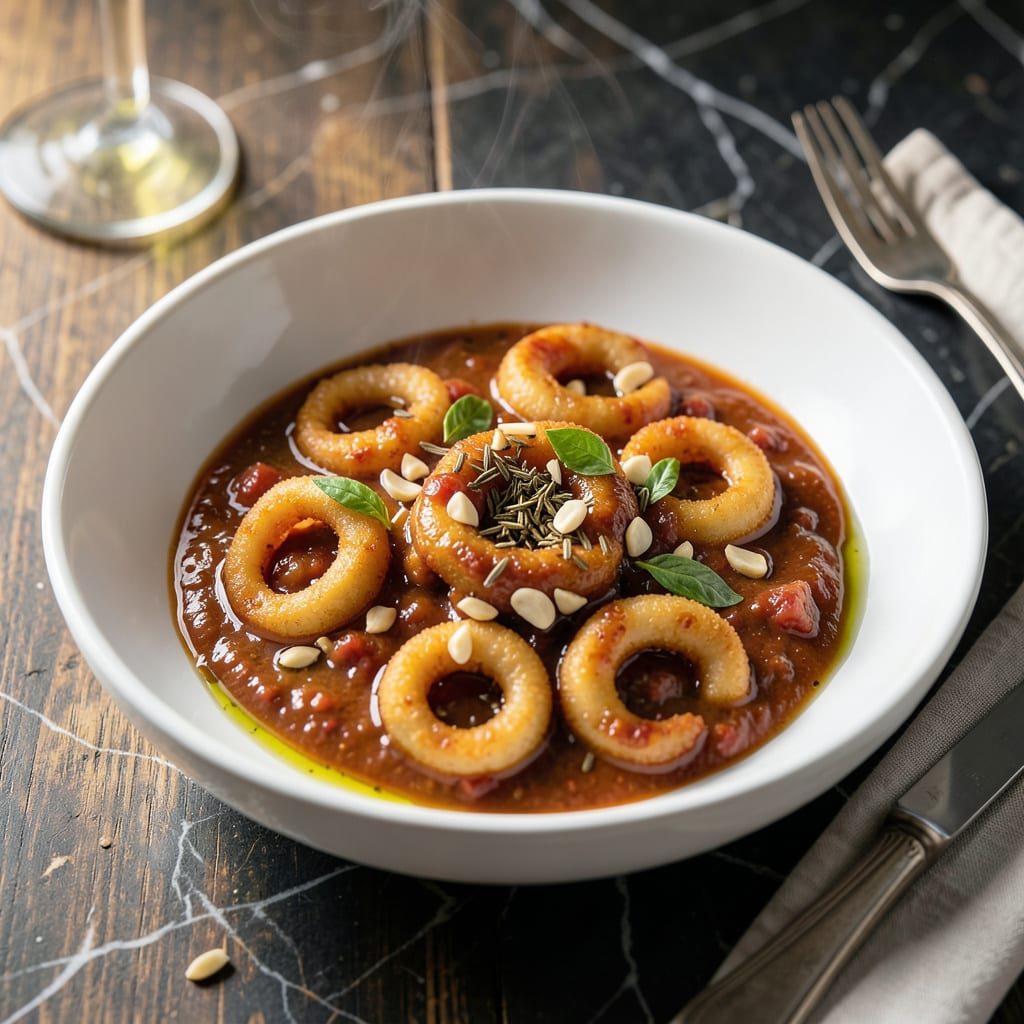
This restaurant-quality sauce brings Olive Garden’s signature calamari flavor home with a zesty marinara base and bold garlic kick.
With simple pantry ingredients and 15 minutes of simmering, you’ll have a rich, tangy dipping sauce that elevates fried foods to professional standards.
Ingredients for Olive Garden Calamari Sauce
Restaurant-quality dipping sauce starts with these pantry staples and fresh aromatics.
| Ingredient | Amount | Notes |
|---|---|---|
| Canned Crushed Tomatoes 🍅 | 2 cups | San Marzano preferred for sweetness |
| Tomato Paste 🍅 | 2 tbsp | Double-concentrated for depth |
| Extra-Virgin Olive Oil 🫒 | 3 tbsp | First cold-press for quality |
| Garlic Cloves 🧄 | 6 cloves | Freshly minced for bold flavor |
| Dried Oregano 🍃 | 1 tsp | Mediterranean variety preferred |
| Dried Basil 🌿 | 1 tsp | Crushed for better dispersion |
| Red Pepper Flakes 🌶️ | ½ tsp | Adjust for heat preference |
| Granulated Sugar 🧂 | 1 tsp | Balances acidity in tomatoes |
| Sea Salt 🧂 | 1 tsp | Fine grain for even distribution |
| Ground Black Pepper 🌶️ | ½ tsp | Freshly ground preferred |
The tomatoes are the foundation here. San Marzano canned tomatoes deliver the sweetness and low acidity that defines Olive Garden’s sauce. Most Italian markets carry them, or look for the DOP certification at Whole Foods. The tomato paste should be double-concentrated—Mutti or Amore brands are excellent. Fresh garlic is non-negotiable; the pre-minced stuff lacks the punch needed for this bold flavor profile.
No San Marzano tomatoes? High-quality crushed tomatoes like Muir Glen organic work fine. Fresh oregano can replace dried at a 1:3 ratio, but dried is more reliable for consistency. For a smokier depth, add half a teaspoon of smoked paprika. The sugar balances the acidity—honey or agave can substitute but may alter the flavor slightly.
This sauce keeps beautifully. Store in an airtight container in the fridge for up to 1 week, or freeze for 3 months. Portion into ice cube trays for easy single-serving use. Reheat gently on the stove—microwaving can separate the oils.
Why You’ll Love This Recipe
- Five-Minute Start: I dump crushed tomatoes, paste, oil, garlic, and oregano straight into the pan—no chopping, no fuss.
- Garlic-Oregano Punch: Honestly, the sizzle of garlic in olive oil with that oregano kick tastes just like Olive Garden’s version.
- Dips or Drowns: I slather it on calamari, toss it with pasta, or just serve it as a bread dip—it works every time.
- Pantry Staples: All five ingredients live in my cupboard, so I can make it on a whim without a grocery run.
Step-by-Step Instructions for Olive Garden Calamari Sauce
This professional method delivers authentic flavor with precise technique and timing.
Step 1: Sauté Aromatics in Quality Olive Oil
Heat the 3 tbsp Extra-Virgin Olive Oil in a medium saucepan over medium heat until it shimmers. Add the 6 cloves Garlic Cloves, minced, and sauté for 1-2 minutes until fragrant and just beginning to turn golden at the edges.
Watch carefully—garlic burns quickly. You want it to infuse the oil with its pungent aroma without developing any bitter notes. The oil should sizzle gently around the garlic, not smoke aggressively.
This foundation of garlicky oil creates the base flavor profile that defines this sauce, so take your time with this step. The aroma should be intoxicating but not acrid.
Step 2: Develop the Tomato Base with Paste
Add the 2 tbsp Tomato Paste to the garlic oil and cook for 2-3 minutes, stirring constantly. The paste should darken slightly and begin to caramelize at the edges of the pan, which intensifies its natural sweetness and umami depth.
This cooking step is crucial—it removes the raw, tinny flavor from the paste and creates a rich foundation. You’ll notice the color deepen from bright red to a more brick-like hue as the sugars concentrate.
Once the paste has cooked down, add the 2 cups Canned Crushed Tomatoes. Stir well to combine with the oil and paste mixture, breaking up any large tomato pieces with your spoon.
Step 3: Season and Simmer for Flavor Development
Stir in the 1 tsp Dried Oregano, 1 tsp Dried Basil, 0.5 tsp Red Pepper Flakes, 1 tsp Granulated Sugar, 1 tsp Sea Salt, and 0.5 tsp Ground Black Pepper. The sugar balances the natural acidity of the tomatoes, while the herbs and spice build complexity.
Bring the mixture to a gentle simmer, then reduce heat to low. Partially cover the saucepan and let it cook for 20-25 minutes, stirring occasionally to prevent sticking.
The sauce should reduce slightly, with the flavors melding together into a cohesive, aromatic blend. You’ll know it’s ready when the oil starts to separate slightly at the edges and the sauce has thickened enough to coat the back of a spoon.
Step 4: Adjust Consistency and Finish
After simmering, taste and adjust seasoning if needed. The flavors should be balanced—bright from the tomatoes, with a subtle heat from the red pepper flakes, and a deep garlicky undertone.
If the sauce seems too thick, thin it with a splash of water. If it’s too thin, simmer uncovered for an additional 5 minutes to achieve your desired consistency. The ideal texture should cling to calamari without being heavy or watery.
Remove from heat and let cool slightly before serving. The sauce will thicken further as it cools. For best results, make this at least 1 hour before serving to allow the flavors to fully develop and meld together.
Pro Tips For Making Olive Garden Calamari Sauce
- Bloom the Garlic: Sauté minced garlic in olive oil on medium-low for 30 seconds until fragrant—any longer and it turns bitter. I learned this the hard way after a few acrid batches.
- Reduce the Tomatoes: Simmer the crushed tomatoes and paste for at least 20 minutes to thicken. Sounds tedious, but it actually changes the outcome from watery to rich.
- Skip the Salt Early: Canned tomatoes vary wildly in saltiness, so taste before seasoning. My grandmother swore by this, and she was right.
- Toast the Oregano: Add dried oregano to the hot oil for 10 seconds before the garlic—it wakes up the flavor. I was skeptical until I tried it.
Common Mistakes When Making olive garden calamari sauce
Overcooking the Garlic
Garlic burns in seconds, especially in hot olive oil. I always mince mine just before cooking to prevent oxidation. Sauté for only 1-2 minutes until fragrant and golden, never brown. Burnt garlic turns bitter and ruins the sauce. 🌡️
Skipping Tomato Paste
The 2 tbsp Tomato Paste is non-negotiable for depth. Cook it until it darkens slightly—this removes the raw taste and builds umami. Skipping this step leaves your sauce tasting flat and one-dimensional.
Underseasoning Early
Add salt and spices with the tomatoes, not at the end. The 1 tsp Sea Salt and herbs need time to infuse. Taste as you go, but season boldly early. You can always adjust later, but you can’t fix underseasoned sauce.
Over-Reducing the Sauce
Simmer for 20-25 minutes, but watch the consistency. Too thick, and it won’t cling properly to calamari. If it reduces too much, add ¼ cup water and recheck. The perfect texture should coat a spoon lightly.
Using Low-Quality Tomatoes
San Marzano tomatoes are ideal, but any high-quality crushed tomato works. Avoid cheap brands with added preservatives—they’ll make your sauce taste metallic. I always check the label for 100% tomatoes. 🍅
Rushing the Cooling
This sauce tastes best after resting for at least 1 hour. The flavors meld and deepen as it cools. Serve it warm, but not piping hot—you’ll miss the full complexity if you rush it.
Nutrition Facts
Frequently Asked Questions
Can I use fresh tomatoes instead of canned?
Fresh tomatoes lack the concentrated flavor and consistency of canned. For best results, stick with San Marzano crushed tomatoes, as they provide the right sweetness and thickness. Fresh tomatoes may make the sauce watery.
How do I adjust the spice level?
Start with the ½ tsp red pepper flakes, then taste and add more in ¼ tsp increments. For milder heat, reduce or omit the flakes entirely. The spice builds as the sauce simmers, so adjust gradually.
What can I use if I don’t have tomato paste?
In a pinch, simmer ¼ cup additional crushed tomatoes until reduced by half to mimic the paste’s thickness. However, this won’t deliver the same depth, so use double-concentrated paste when possible.
How long does the sauce keep in the fridge?
Store in an airtight container for up to 1 week. For longer storage, freeze for up to 3 months. Reheat gently on the stove to maintain texture and flavor.

- 6 Egg Cake Recipe with Oil: Light as Air With Buttery Moisture - October 4, 2026
- 4 Bean Casserole Recipe: One-Pan Heartiness With Smoky Paprika Depth - October 4, 2026
- 3-Ingredient Keto Mug Cake Recipe: Microwave Magic in 2 Minutes - October 4, 2026