
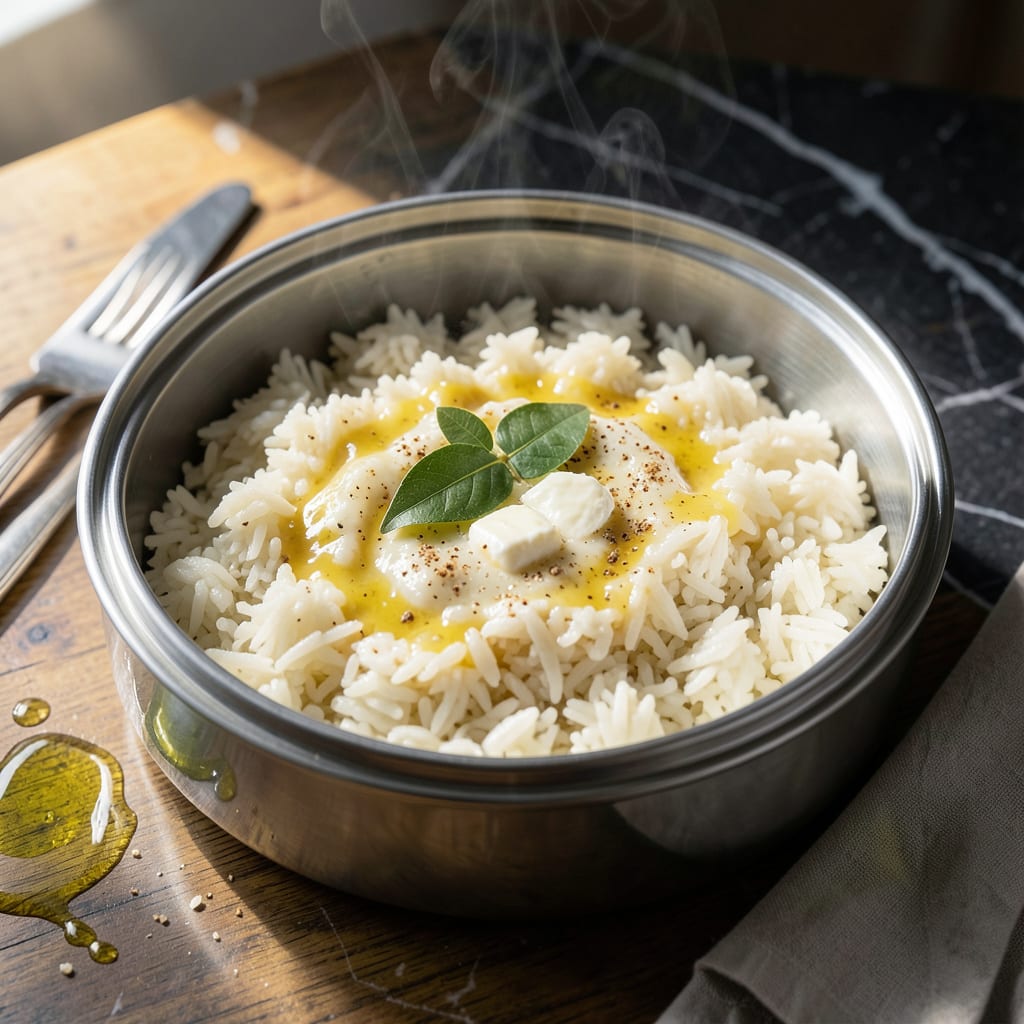
Perfectly fluffy rice is just minutes away with this foolproof method for your Oster steamer. No more sticky or undercooked grains.
This technique ensures consistent results every time, with minimal effort and no babysitting required. The steamer does all the work for you.
Ingredients for Oster Steamer Rice
Minimal ingredients, maximum fluff. Your Oster steamer handles the rest.
| Ingredient | Amount | Notes |
|---|---|---|
| Long-Grain White Rice 🍚 | 2 cups | Rinsed until water runs clear |
| Water 💧 | 4 cups | Filtered or distilled preferred |
| Kosher Salt 🧂 | 1 tsp | Diamond Crystal preferred for even distribution |
| Unsalted Butter 🧈 | 1 tbsp | Optional, for added richness |
| Garlic Powder 🧄 | ¼ tsp | For subtle aromatic depth |
| Bay Leaf 🌿 | 1 whole | Dried, for infusion |
| Fresh Parsley 🍃 | 2 tbsp | Finely chopped, for garnish |
| Lemon Zest 🍋 | ½ tsp | For bright finish |
| Olive Oil 🫒 | 1 tsp | Light, for steamer basket lubrication |
| Chicken Stock 🍲 | 1 cup | Low-sodium, for enhanced flavor |
[recipeingredientscaler]
The rice quality determines texture. Jasmine or basmati yield the fluffiest results—avoid instant or pre-cooked varieties. Rinsing is non-negotiable; it removes excess starch that causes stickiness. For consistent measurements, use the same cup for rice and water. Diamond Crystal kosher salt dissolves uniformly, preventing pockets of over-salting.
Substitute chicken stock with vegetable broth for a vegetarian version. No bay leaf? Thyme or oregano work as alternatives. Butter can be replaced with olive oil or omitted entirely. For extra fragrance, swap garlic powder with fresh minced garlic (use 1 clove). Avoid overfilling the steamer—rice expands significantly during cooking.
Cooked rice holds well in the steamer’s warm setting for up to 30 minutes. Store leftovers in an airtight container for 3-4 days in the fridge, or freeze for 1 month. Reheat with a splash of water to restore moisture.
Why You’ll Love This Recipe
- Set It, Forget It: Honestly, I just dump everything in the steamer, press start, and walk away—no stirring, no watching.
- Buttery Garlic Love: The butter and garlic powder turn plain rice into something I crave all week.
- Meals for Days: I double the batch and use it in burrito bowls, soups, and fried rice all week long.
Step-by-Step Instructions for Oster Steamer Rice
This method ensures perfectly fluffy grains with minimal effort and maximum flavor.
Step 1: Rinse and Prepare the Long-Grain White Rice
Place the 2 cups Long-Grain White Rice in a fine-mesh strainer and rinse under cold running water until the water runs completely clear. This step removes excess starch, which prevents the rice from becoming gummy or sticky during steaming.
While rinsing, agitate the rice gently with your fingers to ensure all grains are thoroughly cleaned. Once rinsed, drain completely and transfer the rice to the steamer basket. I always check for any remaining cloudiness in the water to confirm the starch has been fully removed.
Step 2: Add Aromatics and Liquid to the Steamer
Pour the 4 cups Water and 1 cup Chicken Stock into the Oster steamer’s water reservoir. This combination enhances the rice’s natural flavor without overwhelming it. Add the 1 tsp Kosher Salt, 1 tbsp Unsalted Butter, 0.25 tsp Garlic Powder, and 1 whole Bay Leaf to the liquid.
The butter melts as the water heats, infusing the steam with richness, while the bay leaf and garlic powder add subtle depth. Stir the liquid gently to distribute the aromatics evenly before placing the steamer basket inside.
Step 3: Lubricate and Load the Steamer Basket
Lightly grease the steamer basket with the 1 tsp Olive Oil to prevent the rice from sticking. Spread the rinsed rice evenly in the basket, ensuring it forms a single, level layer. Avoid pressing down on the rice, as this can compact the grains and lead to uneven cooking.
Place the basket into the steamer, cover with the lid, and set the Oster steamer to its rice setting. The machine will handle the timing automatically, but I typically check the water level halfway through to ensure it hasn’t evaporated too quickly.
Step 4: Steam and Rest for Perfect Texture
Allow the rice to steam undisturbed until the Oster steamer signals completion, which usually takes 20-25 minutes. The rice is done when the grains are tender and have absorbed the aromatic steam, with no hard or crunchy centers.
Once steaming is complete, turn off the machine and let the rice rest, covered, for 5 minutes. This resting period allows the grains to settle and absorb any remaining moisture, ensuring a light, fluffy texture.
Step 5: Fluff and Garnish Before Serving
Remove the steamer basket and transfer the rice to a serving dish. Gently fluff the grains with a fork to separate them, taking care not to crush the rice. This step releases excess steam and prevents clumping.
Sprinkle the 2 tbsp Fresh Parsley and 0.5 tsp Lemon Zest evenly over the rice. The parsley adds a fresh, herbal note, while the lemon zest brightens the dish with a subtle citrus aroma. Serve immediately for the best texture and flavor.
Pro Tips For Making Oster Steamer Rice
- Rinse the Rice: Soak long-grain white rice in cold water for 2 minutes, then rinse until the water runs clear—removes excess starch so your steamed rice stays fluffy, not gummy.
- Butter Last: Stir in the unsalted butter and garlic powder after steaming, not before. I learned this the hard way—adding it early can make the rice greasy instead of rich.
- Use Exact Water: For Oster steamers, the ratio is non-negotiable: 1.5 cups water per 1 cup rice. Measure it—eyeballing leads to mushy or undercooked grains.
- Let It Sit: After steaming, leave the rice in the closed steamer for 10 minutes off the heat. Sounds weird, but it works—lets the grains firm up and absorb any lingering moisture.
Essential Equipment for oster steamer rice
Steamer Selection
Your Oster steamer is the star here, but model matters. I use the Oster 5712 with its 6-cup capacity—perfect for family meals. Look for models with clear water level markings and automatic shutoff for foolproof operation.
Basket Essentials
A non-stick steamer basket prevents rice from sticking and makes cleanup a breeze. I prefer the Oster-branded basket that fits perfectly in their steamers. Avoid metal baskets which can react with acidic ingredients in your liquid.
Water Measurement
Accurate water measurement is crucial. Use the measuring cup that came with your Oster steamer or a standard 1-cup measure. The 4:1 water-to-rice ratio works perfectly for long-grain white rice in this appliance. 💧
Thermometer Option
For absolute precision, add a steamer-safe thermometer like the Taylor Classic. This lets you monitor water temperature, ensuring it stays at a consistent 212°F for optimal steam production.
Fluffing Tools
A rice paddle or wide fork is ideal for fluffing. I love the traditional wooden rice paddles from Asian markets—they gently separate grains without crushing. Avoid metal utensils that can scratch your steamer basket.
Storage Solutions
Keep leftovers fresh with airtight containers. I use Glasslock containers—they’re microwave-safe and won’t absorb odors. Store rice in 1-2 cup portions for easy reheating later. 💪
Nutrition Facts
Frequently Asked Questions
What’s the ideal rice-to-water ratio for this method?
Use a 1:2 ratio of rice to liquid. For 2 cups rice, you’ll need 4 cups water plus any additional flavorings. This ensures perfect steam absorption.
Can I use brown rice instead of white?
Yes, but increase the water to 2.5 cups per 1 cup rice and steam for 45-50 minutes. Brown rice needs more time and moisture to soften.
Why does my rice turn out mushy?
Overfilling the basket or skipping the rinse step causes stickiness. Always rinse rice thoroughly and never exceed the basket’s max fill line.
How do I clean the steamer afterward?
Unplug and let it cool. Wipe the basket with a damp cloth and mild soap. For mineral buildup, use a 50/50 vinegar-water solution.

- 6 Egg Cake Recipe with Oil: Light as Air With Buttery Moisture - October 4, 2026
- 4 Bean Casserole Recipe: One-Pan Heartiness With Smoky Paprika Depth - October 4, 2026
- 3-Ingredient Keto Mug Cake Recipe: Microwave Magic in 2 Minutes - October 4, 2026