
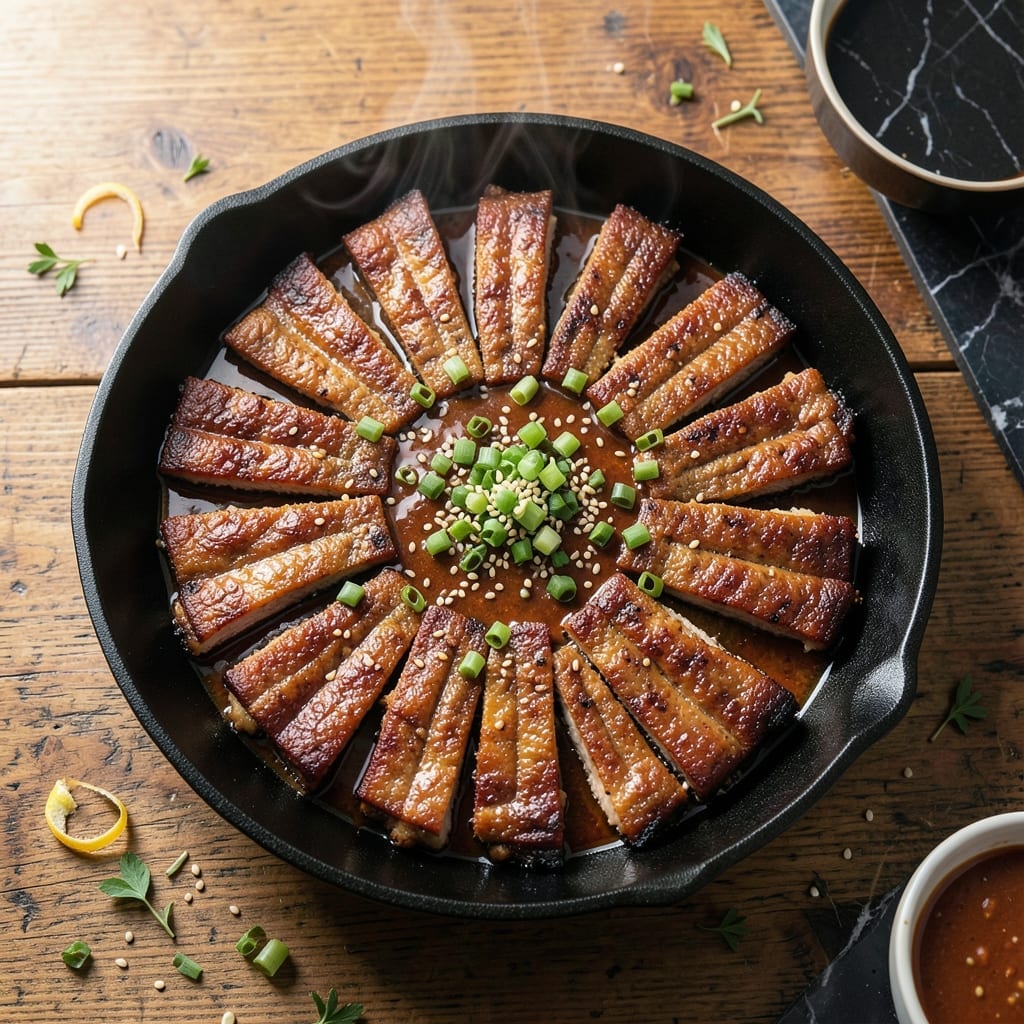
Achieving fall-off-the-bone St. Louis style ribs in your home oven is simpler than you think. This method delivers tender meat with a caramelized crust without needing a smoker.
The secret lies in a bold dry rub applied generously before slow-roasting. I’ve refined this technique to ensure every rack emerges with that signature bark and juicy interior.
Low and slow baking at 275°F allows the collagen to break down perfectly. A final broil step adds the finishing touch for maximum flavor.
These ribs will rival any barbecue joint’s offering, with minimal effort and maximum payoff.
Ingredients for Oven Baked St Louis Style Ribs
Bold spices and slow-roasting transform these ribs into a barbecue masterpiece.
| Ingredient | Amount | Notes |
|---|---|---|
| St. Louis Style Pork Ribs 🥩 | 4 lb | Membrane removed, trimmed of excess fat |
| Brown Sugar 🍚 | ½ cup | Light or dark variety |
| Paprika 🌶️ | 2 tbsp | Smoked for deeper flavor |
| Garlic Powder 🧄 | 1 tbsp | Fine grain preferred |
| Onion Powder 🧅 | 1 tbsp | Not onion salt |
| Ground Black Pepper 🌶️ | 1 tbsp | Freshly ground for best results |
| Kosher Salt 🧂 | 1 tbsp | Diamond Crystal preferred for texture |
| Chili Powder 🌶️ | 1 tbsp | Mild to medium heat |
| Ground Cumin 🌿 | 1 tsp | Toasted for enhanced aroma |
| Cayenne Pepper 🔥 | ½ tsp | Adjust for heat preference |
| Yellow Mustard 🟡 | ¼ cup | For binder, not flavor |
| Apple Cider Vinegar 🍏 | 2 tbsp | For tenderness and tang |
| Olive Oil 🫒 | 2 tbsp | For moisture in dry rub |
The ribs are the foundation—St. Louis style means meaty, rectangular cuts with the membrane removed. Source from Costco or a trusted butcher for consistent quality. The dry rub requires freshly opened spices for maximum potency. Smoked paprika is non-negotiable for that authentic bark. Diamond Crystal kosher salt dissolves evenly, ensuring the rub adheres properly to the meat.
Out of smoked paprika? Regular paprika plus a pinch of liquid smoke works in a pinch. No brown sugar? Coconut sugar or turbinado can substitute, though the flavor profile shifts slightly. Mustard haters can use olive oil or apple juice as a binder instead. The vinegar is flexible—white vinegar or lemon juice will do. Just don’t skip the acid; it tenderizes the meat during the long cook.
The dry rub keeps in an airtight container for up to 3 months, but the ribs are best cooked fresh. Leftovers? They reheat well—wrap in foil and warm at 300°F for 15 minutes. The flavor deepens overnight, making them perfect for meal prep.
Why You’ll Love This Recipe
- Set It and Forget: I toss the ribs with brown sugar and spices, pop them in the oven, and let the heat do all the work—no babysitting required.
- Smoky Sweet Crust: That brown sugar caramelizes with the paprika and garlic powder into a sticky, finger-licking glaze.
- Crowd-Pleasing Dish: I serve these at summer barbecues and weeknight dinners alike, and they vanish every single time.
- Budget-Friendly Feast: St. Louis ribs are cheaper than baby backs, and one rack stretches to feed four with leftovers for sandwiches the next day.
Step-by-Step Instructions for Oven Baked St Louis Style Ribs
This method delivers fall-off-the-bone ribs with a perfectly caramelized dry rub crust.
Step 1: Prepare the Ribs and Apply the Binder
Begin by patting the 4 lb St. Louis Style Pork Ribs completely dry with paper towels. The membrane should already be removed, but double-check and trim any excess fat. This step ensures the dry rub adheres properly and promotes even cooking.
In a small bowl, whisk together the 0.25 cup Yellow Mustard, 2 tbsp Apple Cider Vinegar, and 2 tbsp Olive Oil. Brush this mixture evenly over all surfaces of the ribs. The mustard acts as a binder for the rub while the vinegar tenderizes the meat, and the olive oil adds moisture to the dry rub.
Step 2: Create and Apply the Dry Rub
In a medium bowl, combine the 0.5 cup Brown Sugar, 2 tbsp Paprika, 1 tbsp Garlic Powder, 1 tbsp Onion Powder, 1 tbsp Ground Black Pepper, 1 tbsp Kosher Salt, 1 tbsp Chili Powder, 1 tsp Ground Cumin, and 0.5 tsp Cayenne Pepper. Mix thoroughly to ensure even distribution of all the spices.
Generously apply the dry rub to all surfaces of the ribs, pressing it firmly into the meat so it adheres well. The rub should form a thick, even crust on the ribs. Place the seasoned ribs on a large sheet of aluminum foil, meat-side down, and wrap tightly. This initial wrap helps the spices penetrate the meat during the first phase of cooking.
Step 3: Slow Cook the Ribs in the Oven
Preheat your oven to 275°F. Place the foil-wrapped ribs on a rimmed baking sheet and bake for 2.5 hours. This low-and-slow cooking method allows the collagen in the ribs to break down gradually, resulting in tender meat that pulls away from the bone.
After 2.5 hours, carefully unwrap the ribs and place them meat-side up on the baking sheet. The meat should be tender but not yet falling off the bone. Return the ribs to the oven, uncovered, and increase the temperature to 375°F to begin the caramelization process.
Step 4: Caramelize the Dry Rub and Finish
Bake the uncovered ribs at 375°F for an additional 30-45 minutes, or until the dry rub forms a dark, caramelized crust and the edges of the meat begin to pull back from the bones. Watch closely during this phase to prevent burning—the sugar in the rub can caramelize quickly.
The ribs are done when an instant-read thermometer inserted into the thickest part of the meat (avoiding the bone) reads 195-203°F and the meat is tender enough to pull apart with a gentle tug. The internal temperature is more reliable than time alone for determining doneness.
Step 5: Rest and Serve
Transfer the ribs to a cutting board and let them rest for 10-15 minutes before slicing. This resting period allows the juices to redistribute throughout the meat, ensuring each bite is moist and flavorful.
Slice the ribs between the bones and serve immediately. The exterior should have a dark, crispy crust from the caramelized dry rub, while the interior remains juicy and tender. The smoky, spicy, and slightly sweet flavors of the rub will be balanced perfectly with the rich pork.
Pro Tips For Making Oven Baked St Louis Style Ribs
- Preheat the Oven: Start with a 275°F oven—low and slow is the only way to get those ribs tender without drying them out. I learned this the hard way after pulling out tough, chewy ribs from a too-hot oven.
- Pat Ribs Dry: Blot the ribs with paper towels before seasoning so the brown sugar and spices stick instead of sliding off. Sounds weird, but it works.
- Don’t Skip the Rest: Let the ribs sit with the dry rub for at least 30 minutes before baking. My grandmother swore by this, and she was right: it makes a real difference in flavor penetration.
- Foil Then Uncover: Wrap the ribs in foil for the first 2 hours, then uncover to let the brown sugar caramelize. This isn’t the prettiest method, but it’s the tastiest—guarantees fall-off-the-bone ribs with a sticky crust.
Troubleshooting This Dish
Dry Rub Too Dry
If your rub isn’t sticking, the ribs likely need more binder. I’ve found brushing an extra 1 tbsp of mustard or olive oil on the meat before applying the rub creates a better base. Press the rub in firmly—it should form a visible crust.
Ribs Not Tender
Undercooked ribs usually mean the oven wasn’t hot enough or the cook time too short. Verify your oven hits 275°F with an oven thermometer. If needed, extend the wrapped cooking phase by 30-45 minutes. The collagen needs time to break down properly.
Burnt Rub Crust
The sugar in the rub can burn if exposed to high heat too long. Next time, reduce the uncovered baking time at 375°F to 20-30 minutes and watch closely. Tent with foil if the crust darkens too quickly. 🔥
Ribs Too Salty
This often happens with old spices or over-measuring. Use freshly opened spices and measure carefully—1 tbsp kosher salt is plenty for 4 lbs. If it’s already salty, serve with unsalted sides like corn or coleslaw to balance.
Meat Shrinking Too Much
Significant shrinkage usually means the ribs were cooked at too high a temperature. Stick to 275°F for the initial phase. Also, avoid over-trimming the fat cap, as a thin layer helps retain moisture during cooking.
Bland Flavor
If your ribs lack depth, the rub may need more bold spices. Increase the smoked paprika to 3 tbsp or add 1 tsp liquid smoke to the binder. Also, ensure the rub is applied generously—don’t be shy with the seasoning.
Nutrition Facts
Frequently Asked Questions
What temperature should the oven be for the initial cooking phase?
Set your oven to 275°F for the first 2.5 hours of cooking. This low temperature ensures the collagen breaks down slowly for tender meat.
Can I use a different type of vinegar in the binder?
Yes, you can substitute white vinegar or lemon juice for the apple cider vinegar. The acid helps tenderize the meat, so avoid skipping it entirely.
How do I know when the ribs are fully cooked?
Use an instant-read thermometer: the internal temperature should reach 195-203°F. The meat should also pull away from the bone with a gentle tug.
What if the dry rub burns during the final phase?
Reduce the uncovered baking time at 375°F to 20-30 minutes and tent with foil if the crust darkens too quickly. The sugar in the rub caramelizes fast.

- 6 Egg Cake Recipe with Oil: Light as Air With Buttery Moisture - October 4, 2026
- 4 Bean Casserole Recipe: One-Pan Heartiness With Smoky Paprika Depth - October 4, 2026
- 3-Ingredient Keto Mug Cake Recipe: Microwave Magic in 2 Minutes - October 4, 2026