
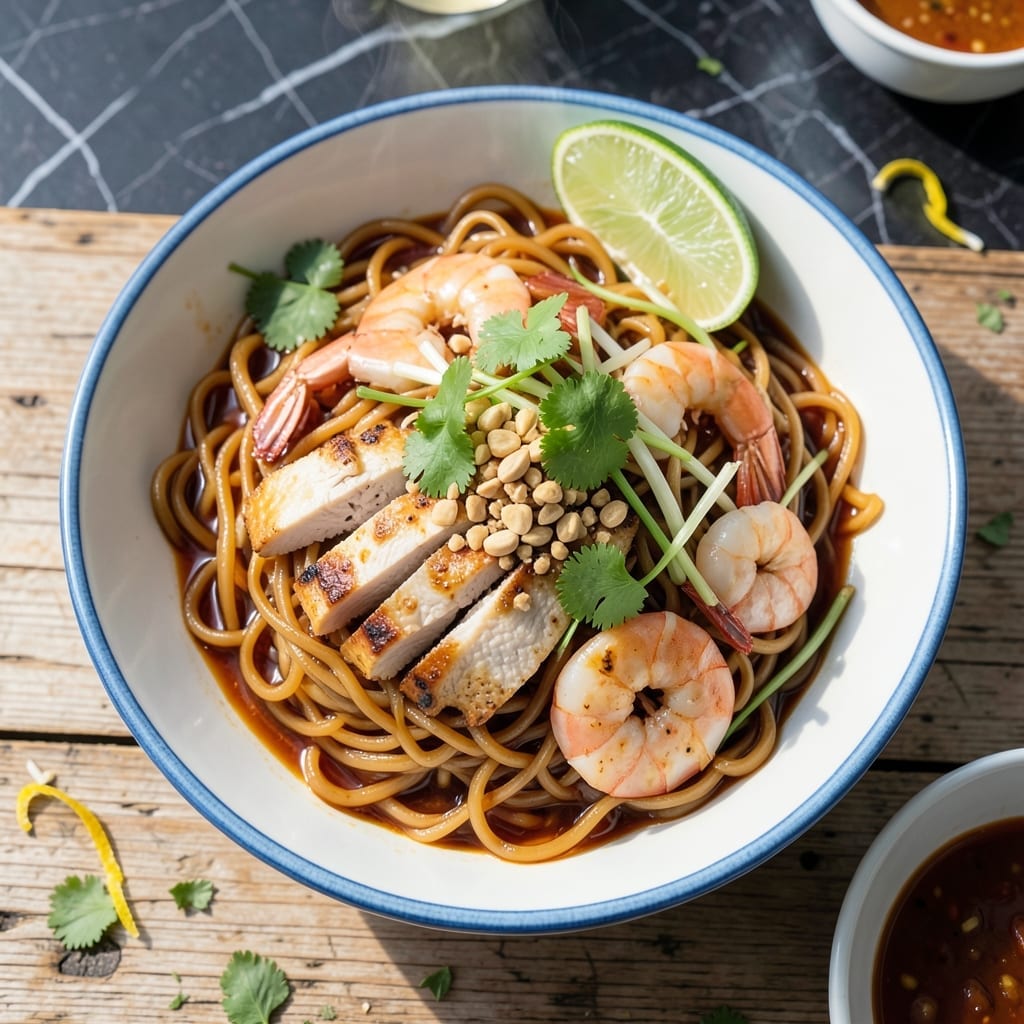
I’ve perfected this Pad Thai after years of testing, balancing the classic sweet-sour-tangy flavors that define the dish. The rice noodles soak up the tamarind-based sauce, while crushed peanuts add the signature crunch.
This version uses traditional ingredients like fish sauce and tamarind paste, with the option to add chicken, shrimp, or tofu. The sauce comes together quickly, and the noodles cook in just 5 minutes.
What sets it apart is the texture—chewy noodles, tender protein, and the contrast of crisp peanuts and fresh bean sprouts. Every bite delivers the authentic taste of Thailand.
Ready in under 30 minutes, this is a weeknight meal that feels like a restaurant special.
Ingredients for Padthai
Traditional Thai ingredients come together for that authentic sweet-sour-salty balance everyone loves in this dish.
| Ingredient | Amount | Notes |
|---|---|---|
| Rice Noodles 🍜 | 8 oz | Flat, medium-width preferred |
| Tamarind Paste 🌿 | 3 tbsp | Pure, no added sugar |
| Fish Sauce 🐟 | 3 tbsp | Thai variety preferred |
| Palm Sugar 🍚 | 3 tbsp | Or substitute brown sugar |
| Rice Vinegar 🍶 | 1 tbsp | Balances sweetness and salt |
| Soy Sauce 🫒 | 1 tbsp | Light or regular variety |
| Chicken Breast 🍗 | 1 lb | Boneless, skinless, thinly sliced |
| Shrimp 🍤 | ½ lb | Peeled, deveined, optional |
| Firm Tofu 🧈 | ¾ lb | Pressed, cubed, optional |
| Garlic Cloves 🧄 | 4 cloves | Minced finely |
| Shallot 🧅 | 1 whole | Thinly sliced |
| Dried Shrimp 🦐 | 2 tbsp | Optional, soaked and chopped |
| Bean Sprouts 🌱 | 2 cups | Fresh, rinsed |
| Crushed Peanuts 🥜 | ½ cup | Unsalted, lightly toasted |
| Lime 🍈 | 1 whole | Cut into wedges for serving |
| Fresh Cilantro 🌿 | ¼ cup | Chopped, for garnish |
| Dried Chili Flakes 🌶️ | 1 tsp | Adjust to taste |
| Vegetable Oil 🫒 | 2 tbsp | For stir-frying |
The tamarind paste is non-negotiable for authentic flavor—look for pure tamarind concentrate at Asian grocery stores or the international aisle. Fish sauce should be Thai Tip or Red Boat brands for the best quality (clear, amber color, no additives). Rice noodles must be flat and medium-width; avoid vermicelli (too thin) or udon (too thick). Palm sugar adds depth, but light brown sugar works if you can’t source it.
Swapping proteins? Extra-firm tofu holds up best for vegetarians—press it first to remove excess water. Shrimp can be replaced with chicken or pork if preferred. No fish sauce? Soy sauce plus a pinch of salt mimics the umami, though the flavor won’t be identical. For a gluten-free version, tamari replaces soy sauce one-for-one. Bean sprouts can be swapped for shredded cabbage in a pinch.
Store tamarind paste and fish sauce in the fridge after opening—they’ll keep for 6-12 months. Noodles stay fresh in the pantry for up to 1 year if unopened. Fresh garnishes like cilantro and lime are best used within 5 days. Toast peanuts just before serving to keep them crisp.
Why You’ll Love This Recipe
- One Pan Wonder: I soak the rice noodles while the sauce simmers—tamarind, fish sauce, and palm sugar come together in minutes.
- Flavor Bomb: That sweet-sour tang from tamarind and rice vinegar hits just right, with fish sauce adding the umami punch.
- Weeknight Hero: Honestly, I make this on busy Tuesdays and it still feels like a restaurant meal.
- Budget Stretcher: A handful of affordable ingredients feeds four, and leftovers taste even better the next day.
Step-by-Step Instructions for Tangy Tamarind Noodles With Crunchy Peanuts
Master the wok toss and layer flavors like a street food vendor.
Step 1: Soak the Rice Noodles and Prepare the Sauce
Cover the 8 oz Rice Noodles with warm water in a large bowl and soak for 20-25 minutes until pliable but still slightly firm. Meanwhile, whisk together the 3 tbsp Tamarind Paste, 3 tbsp Fish Sauce, 3 tbsp Palm Sugar, 1 tbsp Rice Vinegar, and 1 tbsp Soy Sauce in a small bowl until the palm sugar dissolves completely.
The sauce should be glossy with a balance of tangy, sweet, and umami. Taste and adjust the balance if needed—this is your foundation for authentic flavor. Drain the noodles and set aside, reserving the soaking water.
Step 2: Stir-Fry the Protein and Aromatics
Heat 1 tbsp Vegetable Oil in a wok or large skillet over high heat until shimmering. Add the 1 lb Chicken Breast, 0.5 lb Shrimp, and 0.75 lb Firm Tofu (if using) and stir-fry for 4-5 minutes until the chicken is cooked through and the shrimp turns pink. Remove and set aside.
In the same pan, add the remaining 1 tbsp Vegetable Oil and sauté the 4 cloves Garlic Cloves and 1 whole Shallot for 1-2 minutes until fragrant. Add the 2 tbsp Dried Shrimp and cook for another 30 seconds to deepen the flavor base.
Step 3: Combine Noodles and Sauce
Add the drained rice noodles to the wok along with the prepared sauce. Toss everything together over high heat for 2-3 minutes using tongs, lifting and folding the noodles to ensure even coating. If the mixture seems dry, add a splash of the reserved noodle soaking water.
You’ll notice the noodles soften and absorb the sauce quickly. Keep the heat high and the motion constant—this prevents sticking and ensures every strand gets coated in that signature tamarind glaze.
Step 4: Finish with Fresh Elements
Remove from heat and fold in the 2 cups Bean Sprouts and 0.5 cup Crushed Peanuts. The bean sprouts should retain a slight crunch, adding freshness to contrast the rich noodles. Sprinkle with 1 tsp Dried Chili Flakes for heat if desired.
Transfer to serving plates and garnish with 0.25 cup Fresh Cilantro and lime wedges. The cilantro adds a bright herbal note while the lime offers a final acidic lift that ties all the flavors together perfectly.
Pro Tips For Making Padthai
- Soak Noodles Right: Cover rice noodles in room temp water for 30-45 minutes until pliable but still firm—I learned this the hard way after ending up with mushy noodles that turned to paste in the wok.
- Balance the Sauce: Mix 3 tbsp tamarind paste, 2 tbsp fish sauce, 1 tbsp palm sugar, and 1 tbsp rice vinegar first, then adjust. Sounds weird, but it works: the vinegar cuts the sweetness and keeps the flavors bright.
- Skip the Overcooking: Stir-fry noodles for just 1-2 minutes over high heat after adding the sauce. After burning three batches, I finally figured out they only need to soften and absorb the flavor, not turn to mush.
- Use a Ripe Lime: Finish with a squeeze of fresh lime instead of more vinegar. My grandmother swore by this, and she was right: it adds a zing that bottled lime juice just can’t match.
Pro Cooking Tips for This Dish
Wok Mastery
Use a well-seasoned carbon steel wok for best heat distribution. I preheat mine over high heat for 2-3 minutes until it smokes slightly before adding oil. This creates the perfect surface for that restaurant-quality sear. 🔥
Noodle Prep
Soak rice noodles in warm water for exactly 20-25 minutes—they should bend but still have a white core. Over-soaking makes them mushy. Drain just before cooking and keep the soaking water for adjusting sauce consistency.
Sauce Balance
Taste your sauce before combining—it should be tangy, sweet, and salty in equal measure. I adjust with ½ tsp palm sugar or 1 tsp lime juice if needed. The sauce thickens slightly as it reduces in the wok.
Protein Timing
Cook proteins in batches to avoid steaming. Chicken takes 4-5 minutes, shrimp 2-3 minutes. Remove before they’re fully done—they’ll finish cooking when added back with the noodles.
The Toss Technique
Use long-handled tongs and a quick wrist motion to lift and flip the noodles. This prevents sticking and ensures even coating. I practice the motion with just oil in the wok to build confidence. ⚡
Final Texture
Add fresh bean sprouts and peanuts off-heat to preserve their crunch. The residual heat softens them just enough. Serve immediately—the noodles continue absorbing sauce even after plating.
Nutrition Facts
Frequently Asked Questions
Can I use a different type of noodle?
Stick to flat rice noodles for authenticity. Other noodles like udon or egg noodles won’t absorb the sauce the same way. If you must substitute, look for medium-width options.
How can I make this dish vegetarian?
Swap the fish sauce for soy sauce and use tofu or extra veggies like bell peppers. Ensure your tamarind paste and other ingredients are free of animal products.
Why is my sauce too runny or thick?
Too thin? Simmer for 1-2 minutes to reduce. Too thick? Thin with a splash of water or reserved noodle soaking liquid. Balance is key to that perfect glossy texture.
Can I prepare this ahead of time?
Prep ingredients in advance, but cook just before serving. The noodles lose their texture if left sitting. Store components separately and combine only when ready to eat.

- 6 Egg Cake Recipe with Oil: Light as Air With Buttery Moisture - October 4, 2026
- 4 Bean Casserole Recipe: One-Pan Heartiness With Smoky Paprika Depth - October 4, 2026
- 3-Ingredient Keto Mug Cake Recipe: Microwave Magic in 2 Minutes - October 4, 2026