
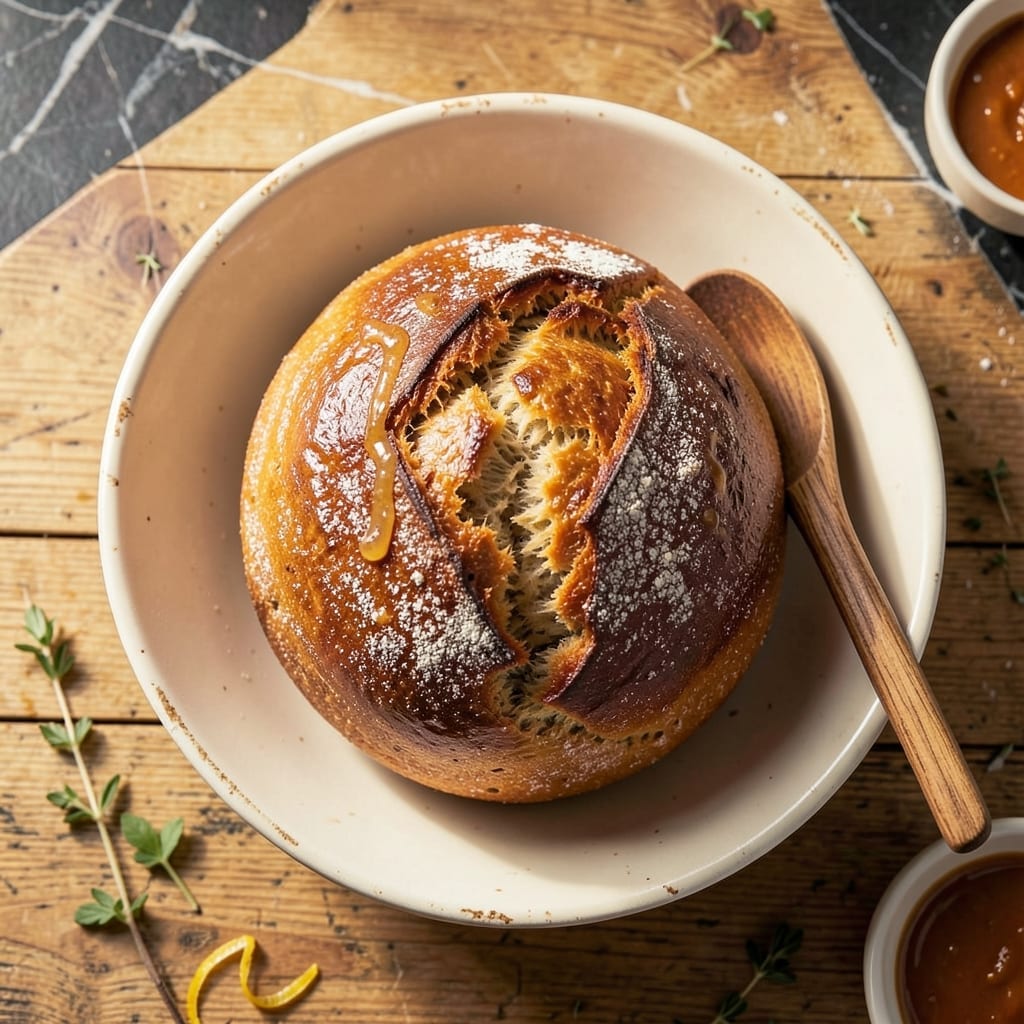
This yeast-free pan bread delivers a fluffy texture without the wait. Using simple baking powder and soda creates the lift traditional breads get from yeast.
The process is straightforward: mix dry ingredients, add wet, and cook in a pan. No proofing, no kneading, just minimal effort for warm, fresh bread in under an hour.
What emerges is a tender, slightly dense bread with a golden crust—perfect for serving with soups, stews, or as a side for any meal. The lack of yeast also makes it ideal for quick preparation when time is limited.
This method proves that delicious homemade bread doesn’t require special ingredients or hours of rising. The result is consistently reliable and ready when you need it.
Ingredients for Pan Bread Recipe No Yeast
Pantry staples come together for quick, yeast-free bread with a fluffy texture.
| Ingredient | Amount | Notes |
|---|---|---|
| All-Purpose Flour 🌾 | 3 cups | Unbleached preferred for texture |
| Baking Powder 🧂 | 2 tbsp | Aluminum-free for best rise |
| Baking Soda 🧂 | 1 tsp | Ensures proper chemical reaction |
| Salt 🧂 | 1 tsp | Fine sea salt for even distribution |
| Unsweetened Plant Milk 🥛 | 1 ¼ cups | Soy or almond milk recommended |
| Apple Cider Vinegar 🍏 | 1 tbsp | Creates necessary acidity for rise |
| Olive Oil 🫒 | 2 tbsp | Extra-virgin for richness |
| Maple Syrup 🍁 | 1 tbsp | Optional for slight sweetness |
| Vegan Butter 🧈 | 1 tbsp | Melted for brushing crust |
| Fresh Rosemary 🌿 | 1 tbsp | Finely chopped for flavor |
| Garlic Powder 🧄 | ½ tsp | Adds savory depth to dough |
The flour is the foundation here. King Arthur all-purpose is my go-to for consistent results, but any brand works as long as it’s fresh. Baking powder and soda need to be active—check expiration dates. For plant milk, unsweetened soy gives the best rise, but almond or oat milk work too. The vinegar is key for reacting with the baking soda, so don’t skip it.
No plant milk? Water plus 1 tbsp extra oil works in a pinch, though the bread will be slightly denser. Out of maple syrup? Skip it entirely or use agave at one-to-one ratio. For herbs, fresh thyme or sage can replace rosemary. If using dried herbs, cut the amount by half. The apple cider vinegar can be swapped for white vinegar or lemon juice.
Store dry ingredients in airtight containers to keep them fresh. The bread is best eaten the same day but keeps for 2-3 days wrapped tightly at room temperature. For longer storage, freeze slices for up to 1 month.
Why You’ll Love This Recipe
- No Yeast Needed: I love that I can skip the waiting around for dough to rise—just mix, shape, and bake.
- Warm and Buttery: Honestly, that golden crust with the soft, fluffy inside? It’s like a hug on a plate.
- Breakfast to Dinner: I’ve served this with jam at dawn and alongside stew at night—it works every time.
- Pantry Staples: Between us, I always have these ingredients on hand, so fresh bread is never more than 45 minutes away.
Step-by-Step Instructions for Pan Bread No Yeast
Here is the method. Straightforward, tested, works every time.
Step 1: Activate the Leavening Agents
In a large mixing bowl, whisk together the 3 cups All-Purpose Flour, 2 tbsp Baking Powder, 1 tsp Baking Soda, and 1 tsp Salt. I use a fine-mesh sieve to ensure there are no lumps in the dry ingredients, which guarantees even distribution in the final loaf.
In a separate small bowl, combine the 1.25 cups Unsweetened Plant Milk and 1 tbsp Apple Cider Vinegar. Let this mixture sit for 5 minutes to curdle slightly—this creates the acidity needed for the baking powder and baking soda to react properly, giving your bread lift.
Step 2: Combine Wet and Dry Ingredients
Pour the curdled plant milk mixture into the bowl with the dry ingredients. Add the 2 tbsp Olive Oil and 1 tbsp Maple Syrup. Using a wooden spoon or silicone spatula, mix until just combined. The batter will be thick and slightly sticky but should not be dry.
I find that stirring for about 1 minute is sufficient. Over-mixing can develop the gluten in the flour, which will make the bread tough instead of light and fluffy. Stop as soon as the flour is fully moistened and no dry spots remain.
Step 3: Incorporate Flavorings and Prepare for Baking
Finely chop the 1 tbsp Fresh Rosemary to release its aromatic oils. Add it to the batter along with the 0.5 tsp Garlic Powder. Gently fold these into the dough until evenly distributed. These ingredients add depth and a savory note that complements the bread’s texture.
Grease a 9×5-inch loaf pan with a small amount of the 1 tbsp Vegan Butter or line it with parchment paper to prevent sticking. Transfer the dough to the pan, smoothing the top with the back of a spoon or wet fingers for an even finish.
Step 4: Bake to Golden Perfection
Preheat your oven to 375°F. Once preheated, bake the bread for 40-45 minutes, or until the top is golden brown and a toothpick inserted into the center comes out clean. I check at the 40-minute mark to prevent over-baking.
If the top begins to darken too quickly, tent the pan loosely with aluminum foil. This ensures the bread cooks through without burning on the surface. The internal temperature should reach 200°F when fully baked.
Step 5: Finish and Cool
Remove the bread from the oven and let it cool in the pan for 5 minutes. This brief rest allows the structure to set slightly, making it easier to remove from the pan without breaking.
Melt the remaining vegan butter and brush it over the top of the loaf for a glossy, flavorful crust. Transfer the bread to a wire rack and let it cool for at least 30 minutes before slicing. This cooling period ensures clean slices and allows the flavors to meld together. Serve warm for the best texture and taste.
Pro Tips For Making Pan Bread Recipe No Yeast
- Preheat the Pan: I learned this the hard way—starting with a cold pan gives you dense, gummy bread instead of that golden crust. Crank the heat to medium-high and let it sit for 2-3 minutes before adding the batter.
- Measure Leaveners Right: Too much baking powder or soda leaves a bitter taste, and too little means flat bread. Use 2 tsp baking powder and ½ tsp baking soda per cup of flour—no eyeballing.
- Skip Overmixing: Stir just until the dry streaks disappear, even if the batter looks lumpy. Overmixing develops gluten, and you’ll end up with tough, chewy pan bread instead of tender.
- Add Vinegar: Sounds weird, but it works: a tablespoon of vinegar to the plant milk makes the baking soda react better. The bread rises higher and tastes richer, not flat or dull.
Regional Styles of These Flavors
Irish Soda Bread
This version swaps apple cider vinegar for buttermilk, a traditional Irish ingredient. Use 1.25 cups buttermilk instead of plant milk for a tangier flavor. The texture becomes slightly denser but wonderfully hearty. I love this with Irish stew on cold evenings. ❄️
Southern Cornbread
Add 1 cup cornmeal to the dry mix and reduce flour to 2 cups. Replace maple syrup with 2 tbsp sugar for a sweeter profile. Bake in a cast-iron skillet at 400°F for 20-25 minutes for a crispy edge.
Italian Focaccia Style
Increase olive oil to ¼ cup and add 1 tsp dried oregano and ½ tsp black pepper. Press dough into a 9×13-inch baking dish and dimple the top before baking. Drizzle with more oil after baking. 🌿
Mexican Pan de Elote
Replace 1 cup flour with fine cornmeal. Add 1 cup corn kernels (fresh or thawed) to the batter. Bake in a greased 8-inch square pan at 375°F for 30-35 minutes for a sweet, crumbly texture.
Indian Naan Style
Add ½ cup plain yogurt (vegan if needed) to the wet mix. Replace garlic powder with 1 tsp cumin and ½ tsp turmeric. Cook in a skillet on the stovetop over medium-high heat for 2-3 minutes per side.
Nutrition Facts
Frequently Asked Questions
Can I use regular milk instead of plant milk?
Yes, you can substitute with any milk you have. The recipe works with dairy or plant-based options. Just ensure it’s unsweetened to avoid altering the flavor.
Why does the recipe call for both baking powder and baking soda?
Both are needed for the best rise. Baking powder provides lift, while baking soda reacts with the vinegar for extra fluffiness. Using only one may result in a denser texture.
Can I bake this in a different pan?
A 9×5-inch loaf pan is ideal, but a 8×8-inch square pan works too. Adjust baking time to 35-40 minutes and check for doneness with a toothpick.
How do I store leftovers?
Wrap tightly and keep at room temperature for 2-3 days. For longer storage, freeze slices for up to 1 month. Reheat in a toaster or oven before serving.

- 6 Egg Cake Recipe with Oil: Light as Air With Buttery Moisture - October 4, 2026
- 4 Bean Casserole Recipe: One-Pan Heartiness With Smoky Paprika Depth - October 4, 2026
- 3-Ingredient Keto Mug Cake Recipe: Microwave Magic in 2 Minutes - October 4, 2026