
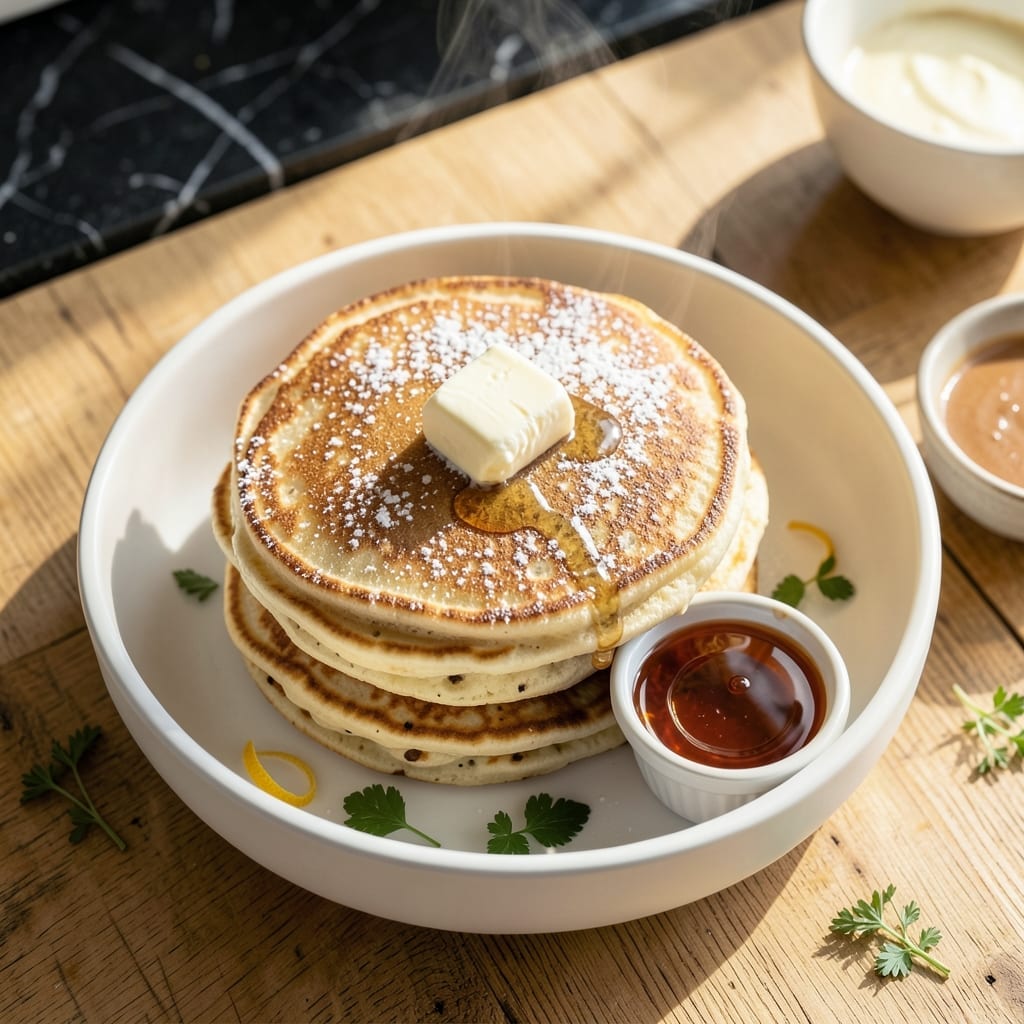
I discovered this method while out of baking powder, and the results surprised me. A simple chemical reaction between vinegar and baking soda creates the lift needed for tall, tender pancakes.
This approach uses pantry staples you likely already have on hand. The vinegar adds a subtle tang that balances the sweetness, while the baking soda provides the necessary rise without any metallic aftertaste.
You’ll achieve fluffy pancakes with golden edges and a light interior. The texture rivals traditional recipes, proving that great pancakes don’t require special ingredients.
Cook on medium heat until bubbles form, then flip for even browning. Serve warm with your favorite toppings for a satisfying breakfast.
Ingredients for Pancake Recipe Without Baking Powder
Pantry staples plus a quick chemical trick for perfect pancakes every time.
| Ingredient | Amount | Notes |
|---|---|---|
| All-Purpose Flour 🌾 | 2 cups | Sifted for lighter texture |
| White Vinegar 💧 | 1 tbsp | Distilled or apple cider works too |
| Baking Soda 🧂 | 1 tsp | Fresh for best rise |
| Granulated Sugar 🍚 | 2 tbsp | Adjust to taste preference |
| Salt 🧂 | ½ tsp | Fine sea salt preferred |
| Large Eggs 🥚 | 2 whole | Room temperature for best mixing |
| Whole Milk 🥛 | 1 ½ cups | Any percentage works |
| Unsalted Butter 🧈 | 4 tbsp | Melted, plus extra for cooking |
| Vanilla Extract 🌿 | 1 tsp | Pure for best flavor |
| Vegetable Oil 🫒 | 1 tbsp | For greasing pan |
The vinegar and baking soda combo is the magic here. Any white vinegar works, but I prefer distilled—it’s neutral and lets the other flavors shine. The baking soda needs to be fresh (check the expiration date) or your pancakes won’t rise. Flour is standard all-purpose, but if you’ve got cake flour lying around, it’ll make them even lighter. Most grocery stores carry these basics in the baking aisle.
No white vinegar? Apple cider vinegar at the same amount works in a pinch. Out of milk? Any plant-based milk at one-to-one keeps things fluffy. For dairy-free, swap the butter for coconut oil. The sugar can be reduced or swapped for maple syrup (use one-third less since it’s sweeter). Eggs are key for structure, but flax eggs can work if you’re in a bind.
Mix dry and wet ingredients separately before combining—prevents overworking. Leftover batter keeps in the fridge for 24 hours, but it’s best fresh. Cooked pancakes freeze beautifully for 1 month. Stack with parchment between layers to prevent sticking.
Why You’ll Love This Recipe
- No-Fuss Mixing: I just stir the vinegar and baking soda into the flour—no sifting, no waiting for leavening agents to activate.
- Subtle Tang: The white vinegar gives these pancakes a gentle brightness that pairs perfectly with the sugar’s sweetness.
- Breakfast or Dinner: Honestly, I’ve served these for Sunday brunch and as a quick weeknight dessert with fruit.
- Pantry Staples: All-purpose flour, vinegar, and baking soda mean I can make these even when my cabinets are nearly bare.
Step-by-Step Instructions for Pancakes Without Baking Powder
Here’s how to make light, fluffy stacks using the vinegar and baking soda reaction for lift.
Step 1: Combine Dry Ingredients and Create the Leavening Reaction
In a large bowl, whisk together the 2 cups All-Purpose Flour, 1 tsp Baking Soda, 2 tbsp Granulated Sugar, and 0.5 tsp Salt until evenly combined. I always sift the flour first for a lighter texture, but whisking well works too if you’re short on time.
In a small bowl, mix the 1 tbsp White Vinegar with the 1.5 cups Whole Milk. You’ll see it start to curdle slightly—that’s the reaction we want. Pour this mixture into the dry ingredients and stir just until combined. The batter will look slightly lumpy, and that’s perfect.
Step 2: Add Wet Ingredients for Richness and Flavor
Melt the 4 tbsp Unsalted Butter and let it cool slightly so it doesn’t cook the eggs. In a separate bowl, beat the 2 whole Large Eggs until smooth, then whisk in the melted butter and 1 tsp Vanilla Extract.
Pour this egg mixture into the batter and fold gently with a spatula. You want to combine everything without overmixing—overworking the batter develops gluten, which makes pancakes tough instead of tender. The batter should be thick but pourable.
Step 3: Let the Batter Rest and Heat Your Pan
Let the batter rest for 5-10 minutes while you heat your pan. This rest period allows the vinegar and baking soda to fully react, creating bubbles that will make your pancakes light and fluffy. You’ll notice the batter puff up slightly as it sits.
Place a griddle or nonstick skillet over medium heat and add 1 tbsp Vegetable Oil. The pan is ready when a drop of water sizzles and dances across the surface. I like to use a paper towel to wipe out any excess oil, leaving just enough to prevent sticking.
Step 4: Cook Pancakes Until Golden and Bubbly
Pour ¼ cup of batter onto the hot pan for each pancake. Cook until bubbles form on the surface and the edges look set, about 2-3 minutes. You’ll see the bubbles start to pop and leave little holes—that’s your cue to flip.
Flip each pancake and cook for another 1-2 minutes until golden brown on the bottom. Press down gently with your spatula if any spots need more contact with the pan. The pancakes should be light, airy, and slightly crisp at the edges.
Step 5: Serve Warm with Your Favorite Toppings
Transfer the cooked pancakes to a plate and cover loosely with a clean towel to keep them warm while you finish the batch. I always keep my oven on 200°F to hold finished pancakes if I’m cooking for a crowd.
Serve the pancakes warm with maple syrup, fresh fruit, or a dollop of whipped cream. The vinegar leaves no trace of flavor—just perfectly fluffy pancakes with a tender crumb. This recipe makes about 12 pancakes, enough for 4 servings of 3 pancakes each.
Pro Tips For Making Pancake Recipe Without Baking Powder
- Mix Vinegar First: Combine the white vinegar and baking soda right before adding to the batter—Sounds weird, but it works: the fizz gives your pancakes lift without baking powder.
- Rest the Batter: Let the batter sit for 5-10 minutes after mixing—I learned this the hard way—skipping this step leaves pancakes dense and flat.
- Medium-Low Heat: Cook on medium-low and resist the urge to flip early; high heat burns the outside before the inside sets, especially with this delicate batter.
- Measure Flour Right: Spoon flour into your measuring cup and level it off—scooping directly from the bag packs too much, and your pancakes turn out heavy and tough.
Essential Equipment for This Dish
Essential Mixing Tools
I always start with a large stainless steel mixing bowl—it’s durable and gives plenty of room for whisking. A wire whisk is perfect for combining dry ingredients evenly. For the wet ingredients, I use a medium bowl and a fork to beat the eggs smoothly.
Best Cooking Surface
A nonstick skillet with a heavy base prevents hot spots and makes flipping easier. I prefer 10-inch or 12-inch for cooking multiple pancakes at once. A cast iron griddle is my backup—it retains heat beautifully but needs good seasoning.
Measuring Accuracy
Precision matters here, so I use dry measuring cups for flour and liquid measures for milk and vinegar. A set of measuring spoons ensures the baking soda and salt are exact. This guarantees the chemical reaction works perfectly every time. 💡
Fliking and Serving
A thin, flexible spatula is key for flipping without tearing. I love the OXO Good Grips version—it glides right under each pancake. For serving, a large platter keeps them warm while you finish the batch.
Optional Upgrades
A batter dispenser makes portioning consistent and mess-free. I also keep a pastry brush handy to grease the pan between batches. These aren’t essential but make the process smoother. ✨
Cleanup Helpers
Have paper towels ready to wipe the pan between batches. A dough scraper helps get every last bit of batter from the bowl. These small tools save time and reduce waste.
Nutrition Facts
Frequently Asked Questions
Why use vinegar in pancake batter?
Vinegar reacts with baking soda to create carbon dioxide bubbles, which replace baking powder’s leavening power. This chemical reaction makes the pancakes light and airy. The vinegar taste disappears during cooking.
Can I use lemon juice instead of vinegar?
Yes! Use 1 tbsp lemon juice as a direct substitute for vinegar. The acidity works the same way with baking soda. Your pancakes may have a very subtle citrus note.
How do I fix flat pancakes?
If they’re not rising, your baking soda may be old or the batter wasn’t rested. Always check expiration dates and let the batter sit for 5-10 minutes before cooking. Fresh ingredients ensure the best lift.
What’s the best heat setting?
Cook on medium heat for even browning. Too high causes burning outside before cooking through; too low makes them dense. Test your pan with a drop of water—it should sizzle and dance.

- 6 Egg Cake Recipe with Oil: Light as Air With Buttery Moisture - October 4, 2026
- 4 Bean Casserole Recipe: One-Pan Heartiness With Smoky Paprika Depth - October 4, 2026
- 3-Ingredient Keto Mug Cake Recipe: Microwave Magic in 2 Minutes - October 4, 2026