
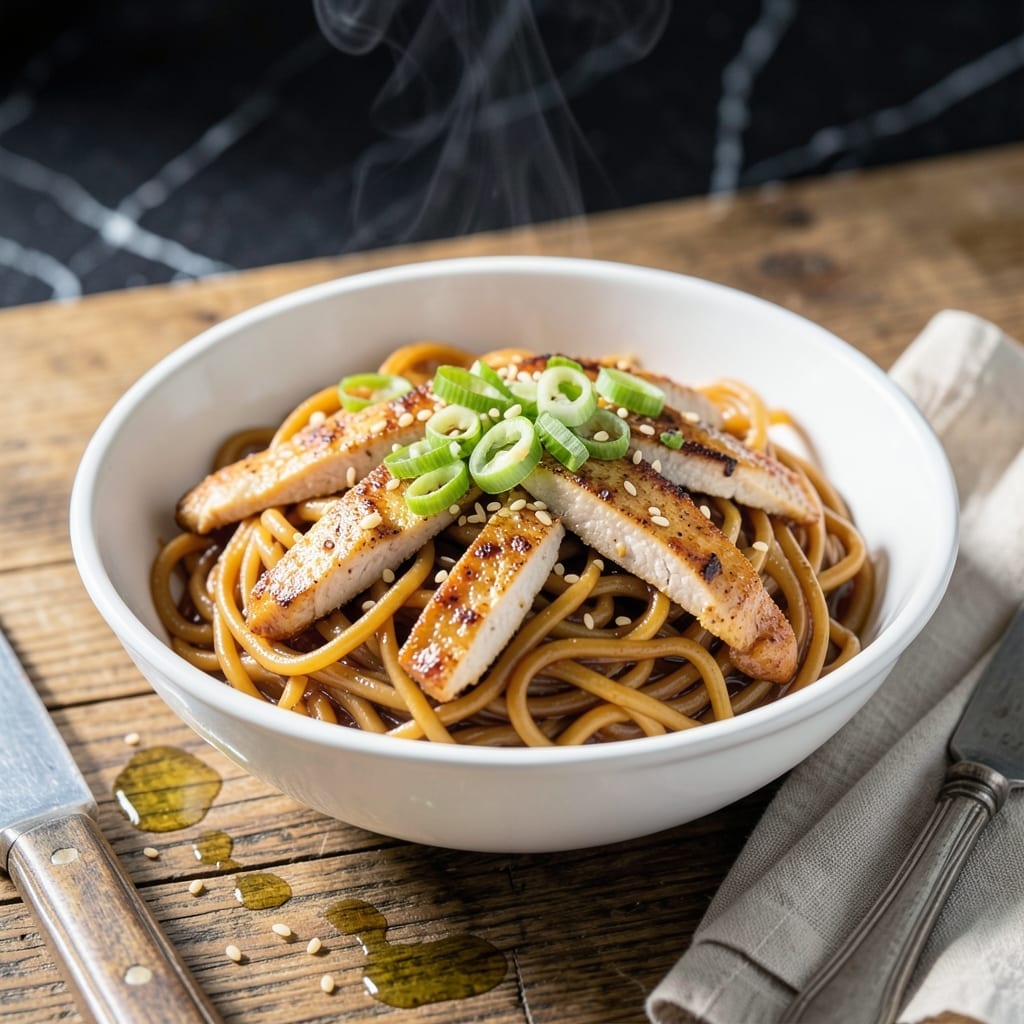
This recipe delivers the restaurant-quality lo mein you crave, right from your kitchen. I developed this version after countless attempts to replicate that signature wok-tossed texture and savory-sweet flavor.
The secret lies in pre-cooking the noodles and stir-frying at high heat to achieve that perfect tender-crisp consistency. A simple sauce of soy, oyster, and sesame oil creates authentic flavor without complicated ingredients.
You’ll end up with glossy, perfectly coated noodles loaded with vegetables and that familiar umami depth. The technique ensures each bite tastes as good as your favorite takeout, but better.
Ready in under 30 minutes, this dish proves homemade can outshine the original. The wok method makes all the difference.
Ingredients for Panda Express Lo Mein
Pantry staples meet fresh veggies for that takeout taste at home.
| Ingredient | Amount | Notes |
|---|---|---|
| Dried Lo Mein Noodles 🍜 | 12 oz | Or fresh egg noodles |
| Soy Sauce 🫙 | ⅓ cup | Low-sodium preferred |
| Oyster Sauce 🫙 | 2 tbsp | Vegan oyster sauce if needed |
| Sesame Oil 🫒 | 1 tbsp | Toasted for best flavor |
| Garlic Cloves 🧄 | 4 cloves | Minced finely |
| Fresh Ginger 🌿 | 1 tbsp | Grated or minced |
| Green Onions 🧅 | 4 whole | Thinly sliced, white and green parts separated |
| Carrots 🥕 | 2 whole | Julienned or thinly sliced |
| Cabbage 🥬 | 2 cups | Shredded, green or napa |
| Bean Sprouts 🌱 | 1 cup | Rinsed and drained |
| Vegetable Oil 🫒 | 2 tbsp | High smoke point for stir-frying |
| Granulated Sugar 🍚 | 1 tsp | Balances sauce flavors |
| Ground White Pepper 🌶️ | ¼ tsp | Authentic touch for depth |
| Chicken Breast 🍗 | 1 lb | Thinly sliced, optional protein |
The noodles are everything here. Look for dried lo mein noodles in the Asian aisle at your grocery store—Kame or Wel-Pac brands are solid. Fresh egg noodles work too, but dry gives you better texture control. For the oyster sauce, Lee Kum Kee is the gold standard. Don’t skip the sesame oil (the good stuff, not the pre-shredded kind)—it adds that signature aroma.
No oyster sauce? Hoisin or vegetarian oyster sauce works in a pinch. Swap the chicken for shrimp, tofu, or mushrooms—whatever you’ve got. The veggies are flexible too: bell peppers, snap peas, or broccoli all play nice. If you’re out of fresh ginger, ground ginger at one-third the amount gets the job done (not ideal, but doable).
Fresh noodles cook in 2 minutes, dried take 5-6 minutes. Store uncooked noodles in a cool, dry place for up to 1 year. Leftovers keep in the fridge for 3-4 days—reheat in a wok or skillet with a splash of water.
Why You’ll Love This Recipe
- 20-Minute Meal: I can have this on the table faster than the delivery guy shows up, and honestly, it tastes just as good.
- Umami Bomb: The soy and oyster sauce combo with garlic hits that savory-sweet spot Panda Express nailed.
- Feed the Crew: It stretches easily for leftovers or a crowd—my family of four is full and happy with one batch.
- Pantry Hero: Dried noodles and sauces I always have on hand mean I’m never stuck without dinner.
Step-by-Step Instructions for Wok-Tossed Noodles
Here’s the method I use to get that signature restaurant texture and flavor at home.
Step 1: Parboil the Noodles and Prep Vegetables
Cook the 12 oz Dried Lo Mein Noodles according to package instructions until just under al dente, about 3-4 minutes for dried. Drain and rinse with cold water to stop the cooking process—this prevents them from turning mushy when stir-fried later.
Meanwhile, thinly slice the 4 whole Green Onions, keeping white and green parts separated. Julienne the 2 whole Carrots, shred the 2 cups Cabbage, and rinse the 1 cup Bean Sprouts. Having everything prepped and within reach is crucial for the fast cooking that follows.
Step 2: Velvet the Chicken for Maximum Tenderness
Slice the 1 lb Chicken Breast into thin strips against the grain. Toss with 1 tbsp Soy Sauce (from the 0.33 cup Soy Sauce) and 1 tsp of the 2 tbsp Vegetable Oil. This simple velveting step keeps the chicken incredibly tender even after high-heat cooking.
Heat the remaining 1 tbsp Vegetable Oil in a wok or large skillet over high heat until shimmering. Add the chicken in a single layer and cook for 2-3 minutes until just cooked through and lightly browned. Remove to a plate and set aside.
Step 3: Stir-Fry Aromatics and Vegetables
In the same wok, add the minced 4 cloves Garlic Cloves and 1 tbsp Fresh Ginger. Stir-fry for 30 seconds until fragrant but not browned. Immediately add the carrots and cabbage, stir-frying for 2-3 minutes until the vegetables begin to soften but retain some crispness.
Add the bean sprouts and white parts of the green onions. Toss everything together for another 1 minute—you want the vegetables to be tender-crisp with vibrant color. The wok should be hot enough that ingredients sizzle when they hit the surface.
Step 4: Combine with Sauce and Noodles
Reduce heat to medium-high and add the remaining 0.33 cup Soy Sauce, 2 tbsp Oyster Sauce, 1 tbsp Sesame Oil, 1 tsp Granulated Sugar, and 0.25 tsp Ground White Pepper. Stir for 30 seconds until the sugar dissolves and the sauce begins to thicken slightly.
Add the cooked noodles and chicken back to the wok. Toss everything together for 2-3 minutes until the noodles are coated in the sauce and heated through. The noodles should be glossy and slightly chewy, not dry or sticky. Finish with the green onion tops for freshness.
Pro Tips For Making Panda Express Lo Mein
- Parboil the Noodles: Cook the dried lo mein noodles for 2 minutes less than the package says, then finish them in the wok—this keeps them from turning mushy when tossed with the sauce.
- Bloom the Garlic: I learned this the hard way—cook the minced garlic in sesame oil for just 10-15 seconds until fragrant, not brown, or it’ll turn bitter and overpower the dish.
- Skip the Over-Saucing: Start with 1 tablespoon each of soy and oyster sauce, taste, then add more as needed—too much upfront makes the noodles soggy instead of glossy.
- Use Day-Old Noodles: Sounds weird, but it works: if you have time, cook and refrigerate the noodles a day ahead—they’ll stay firmer and soak up the sauce better when stir-fried.
Storing and Reheating Leftovers
Refrigerator Storage
Let your lo mein cool completely before transferring to airtight containers. I use glass containers with locking lids to keep the noodles fresh. Store in the fridge for up to 3-4 days—the flavors actually deepen as they meld together. ❄️
Freezer Storage
For longer storage, freeze in single-serving portions in freezer-safe bags or containers. Squeeze out excess air to prevent freezer burn. Your lo mein will keep for up to 2 months without significant texture loss.
Stovetop Reheating
This method preserves texture best. Heat a wok or skillet over medium heat, add a splash of water or chicken broth, then toss in your noodles. Stir-fry for 3-4 minutes until heated through. The steam revives the noodles beautifully. 🔥
Microwave Reheating
Place a damp paper towel over your portion and microwave on 70% power for 1-2 minutes. Stir, then continue in 30-second intervals until reaching 165°F. This prevents rubbery noodles.
Reviving Texture
If your noodles seem dry after reheating, add a teaspoon of vegetable oil or a splash of the original sauce. Toss everything together over heat for 1 minute to restore that glossy finish. Fresh green onions on top bring back the vibrancy.
Nutrition Facts
Frequently Asked Questions
Can I use a different type of noodle?
Yes! Fresh egg noodles or even spaghetti work in a pinch. Dried noodles give the best texture control, but adjust cooking times—fresh noodles need just 2 minutes in boiling water.
Why velvet the chicken?
Velveting (marinating in soy and oil) keeps the chicken tender during high-heat cooking. Without it, the meat can dry out or turn tough. It’s a simple but crucial step for restaurant-quality results.
How do I prevent soggy noodles?
Rinse the noodles with cold water after parboiling to stop the cooking process. Stir-fry them last over high heat for just 2-3 minutes to maintain a firm, chewy texture.
Can I make this vegetarian?
Swap chicken for tofu, mushrooms, or extra veggies. Use vegetarian oyster sauce to keep the flavor authentic. The cooking method remains the same.

- 6 Egg Cake Recipe with Oil: Light as Air With Buttery Moisture - October 4, 2026
- 4 Bean Casserole Recipe: One-Pan Heartiness With Smoky Paprika Depth - October 4, 2026
- 3-Ingredient Keto Mug Cake Recipe: Microwave Magic in 2 Minutes - October 4, 2026