
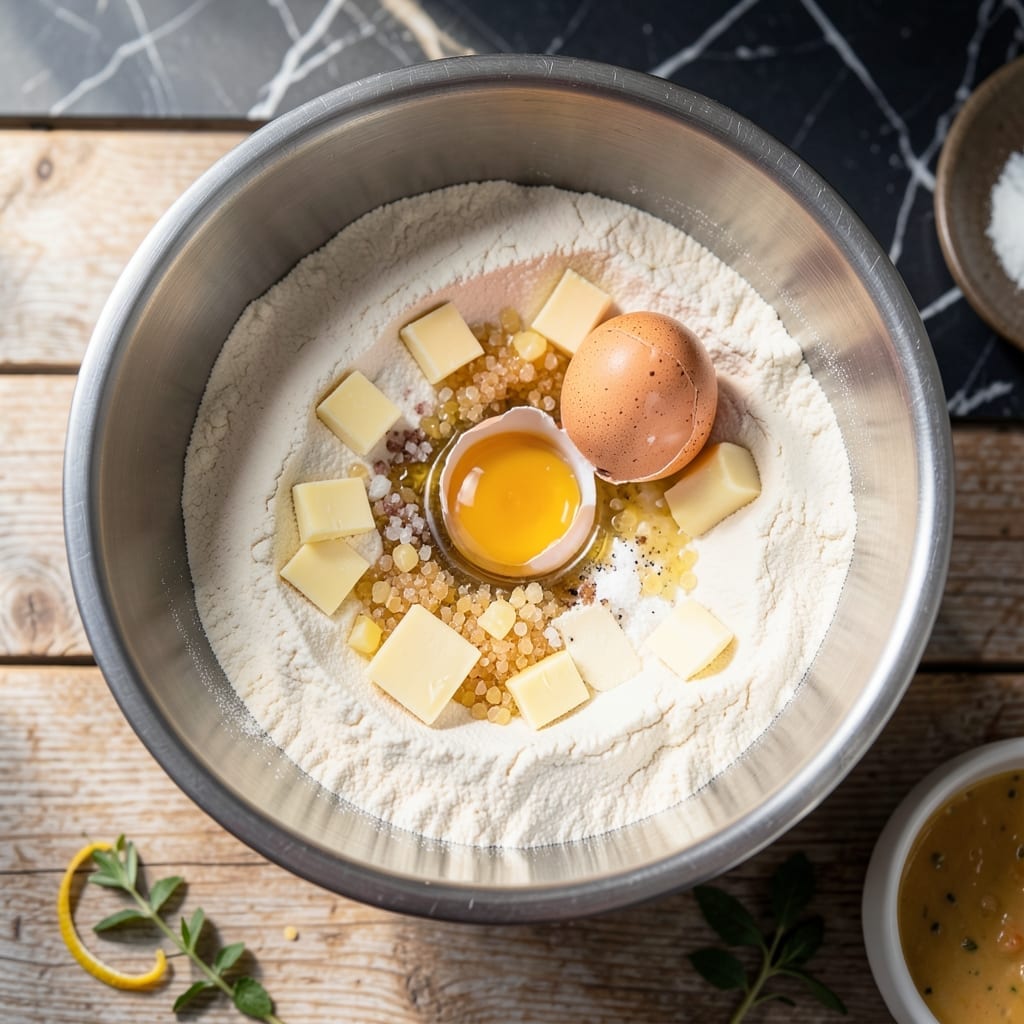
This Italian shortcrust pastry delivers a perfectly tender base for tarts, both sweet and savory. The method ensures a delicate crumb without compromising structure.
With just a few ingredients and proper resting time, you’ll achieve a buttery, flaky crust that holds its shape. Ideal for crostate, fruit tarts, or even quiches.
Ingredients for Pasta Frolla Recipe Perfect Method
Classic Italian shortcrust ingredients deliver tender, flaky perfection for any tart.
| Ingredient | Amount | Notes |
|---|---|---|
| All-Purpose Flour 🌾 | 2 cups | Sifted for even texture |
| Granulated Sugar 🍚 | ¼ cup | Fine granulated preferred |
| Salt 🧂 | ½ tsp | Fine sea salt recommended |
| Unsalted Butter 🧈 | 1 cup | Cold, cubed for flakiness |
| Large Egg 🥚 | 1 whole | Room temperature for binding |
| Vanilla Extract 🌿 | 1 tsp | Pure extract for depth |
| Lemon Zest 🍋 | 1 tsp | Finely grated for brightness |
| Ice Water 💧 | 2 tbsp | As needed for dough consistency |
| Baking Powder 🧂 | ½ tsp | Ensures delicate crumb structure |
| Powdered Sugar 🍚 | ¼ cup | For dusting finished crust |
The butter is paramount here. European-style unsalted butter with higher fat content (82% or more) yields superior flakiness and richness. Plugrá or Kerrygold are excellent choices available at most Whole Foods or well-stocked supermarkets. Ensure it’s ice-cold when incorporating—this prevents premature melting, which would compromise the crust’s delicate layers.
For a savory application, omit the sugar and vanilla, adding 1 additional tablespoon of flour to maintain structure. If avoiding eggs, 2 tablespoons of ice water plus 1 teaspoon of apple cider vinegar can substitute, though texture may vary slightly. The lemon zest enhances flavor but can be replaced with orange zest for a different citrus note.
The dough requires 30-60 minutes of resting in the refrigerator before rolling to relax the gluten and prevent shrinkage. Wrapped tightly, it keeps for 3 days refrigerated or 1 month frozen. Always bring to room temperature before shaping for optimal workability.
Why You’ll Love This Recipe
- One Bowl Wonder: I just dump flour, sugar, cold butter, an egg, and a pinch of salt in a bowl—no fancy gadgets, no fuss.
- Buttery Heaven: The butter and egg make it rich and flaky, with that melt-in-your-mouth texture I crave every time.
- Endless Possibilities: I use it for tarts, crostata, or even cookie sandwiches—works for breakfast, dessert, or a fancy dinner finish.
- Budget Friendly: Five basic ingredients I always have on hand, and it makes enough for two pies. Honestly, it’s my wallet’s best friend.
Step-by-Step Instructions for Pasta Frolla
This method ensures a tender, flaky crust with the perfect texture for Italian tarts.
Step 1: Combine Dry Ingredients for Even Distribution
In a large mixing bowl, whisk together the 2 cups All-Purpose Flour, 0.25 cup Granulated Sugar, 0.5 tsp Salt, and 0.5 tsp Baking Powder. Sifting the flour first, as noted, prevents lumps and guarantees a uniform crumb structure in the finished crust.
This dry mix creates the foundation of your dough. The baking powder ensures a delicate lift, while the fine sea salt enhances all the flavors without overpowering the subtle sweetness of the sugar.
Step 2: Cut in Cold Butter for Flaky Layers
Add the 1 cup Unsalted Butter, cold and cubed, to the dry ingredients. Using a pastry cutter or your fingertips, work the butter into the flour until the mixture resembles coarse crumbs with pea-sized butter pieces visible. The cold butter is critical—it creates steam during baking, which forms the flaky layers.
Be careful not to overwork the butter. You want distinct pieces remaining; if the butter melts or becomes fully incorporated, the crust will lose its flaky texture. The mixture should look shaggy and uneven at this stage.
Step 3: Bind the Dough with Wet Ingredients
Create a well in the center of the mixture. Add the 1 whole Large Egg, 1 tsp Vanilla Extract, and 1 tsp Lemon Zest. Using a fork, gradually incorporate the dry ingredients into the wet until the dough just begins to come together.
Drizzle in the 2 tbsp Ice Water, one tablespoon at a time, mixing gently after each addition. The dough should hold together when pressed but not feel sticky. If it crumbles, add a few drops more water. The lemon zest adds a bright, citrusy note that balances the richness of the butter.
Step 4: Rest the Dough for Optimal Texture
Turn the dough out onto a lightly floured surface and gently knead it just until smooth—no more than 30 seconds. Over-kneading develops gluten, which can make the crust tough. Shape the dough into a disk, wrap it in plastic wrap, and refrigerate for at least 1 hour (or up to 24 hours).
Chilling relaxes the gluten and allows the butter to firm up, making the dough easier to roll out. It also gives the flavors time to meld. This step is non-negotiable for achieving the perfect texture.
Step 5: Roll, Shape, and Blind-Bake the Crust
On a floured surface, roll the chilled dough into a circle about 12 inches in diameter, roughly ⅛ inch thick. Transfer it to a tart pan, pressing gently into the bottom and up the sides. Trim any excess dough, leaving a slight overhang for a neat edge.
Prick the bottom of the crust all over with a fork to prevent air bubbles. Line with parchment paper, fill with pie weights or dried beans, and blind-bake at 375°F for 15 minutes. Remove the weights and parchment, then bake for another 8-10 minutes until the edges are light golden brown. Cool completely before filling. Dust with 0.25 cup Powdered Sugar just before serving for a finishing touch.
Pro Tips For Making Pasta Frolla Recipe Perfect Method
- Chill the Butter: Cut the unsalted butter into small cubes and refrigerate for 15 minutes before mixing—I learned this the hard way after ending up with a greasy, spread-out dough more than once.
- Skip Warm Eggs: Use a cold large egg straight from the fridge; room temperature can make the dough too soft and harder to handle, especially when rolling.
- Rest the Dough: After mixing, wrap the dough and let it rest in the fridge for at least 30 minutes—this prevents shrinking during baking and makes rolling easier.
- Use Fine Sugar: Swap granulated sugar for superfine if you have it; it dissolves faster and creates a smoother texture in the finished crust.
Health Benefits of This pasta frolla recipe perfect method
Rich in Essential Nutrients 🥗
Pasta frolla, a buttery Italian shortcrust pastry, packs a surprising nutritional punch. Made with simple ingredients like flour, butter, and eggs, it provides a good dose of vitamins A and E from the butter, which support skin health and immune function. The eggs add high-quality protein and B vitamins, essential for energy metabolism and brain health.
Energy Boosting Carbohydrates 💪
The flour in pasta frolla serves as a primary source of complex carbohydrates, fueling your body with sustained energy. Unlike refined sugars, these carbs break down slowly, helping maintain steady blood sugar levels. This makes pasta frolla a great choice for a treat that keeps you energized without the crash.
Heart-Healthy Fats
Butter, a key ingredient, contains healthy fats that play a role in hormone production and cell function. While moderation is key, these fats can contribute to a balanced diet. Opting for high-quality butter can also provide conjugated linoleic acid (CLA), which some studies link to potential heart health benefits.
Versatile and Balanced
When paired with nutrient-rich fillings like fresh fruit or nuts, pasta frolla becomes part of a well-rounded dessert. The combination of fiber from fillings and the pastry’s nutrients can aid digestion and promote satiety. Enjoy it as a delightful way to indulge while still nourishing your body!
Nutrition Facts

- 6 Egg Cake Recipe with Oil: Light as Air With Buttery Moisture - October 4, 2026
- 4 Bean Casserole Recipe: One-Pan Heartiness With Smoky Paprika Depth - October 4, 2026
- 3-Ingredient Keto Mug Cake Recipe: Microwave Magic in 2 Minutes - October 4, 2026