
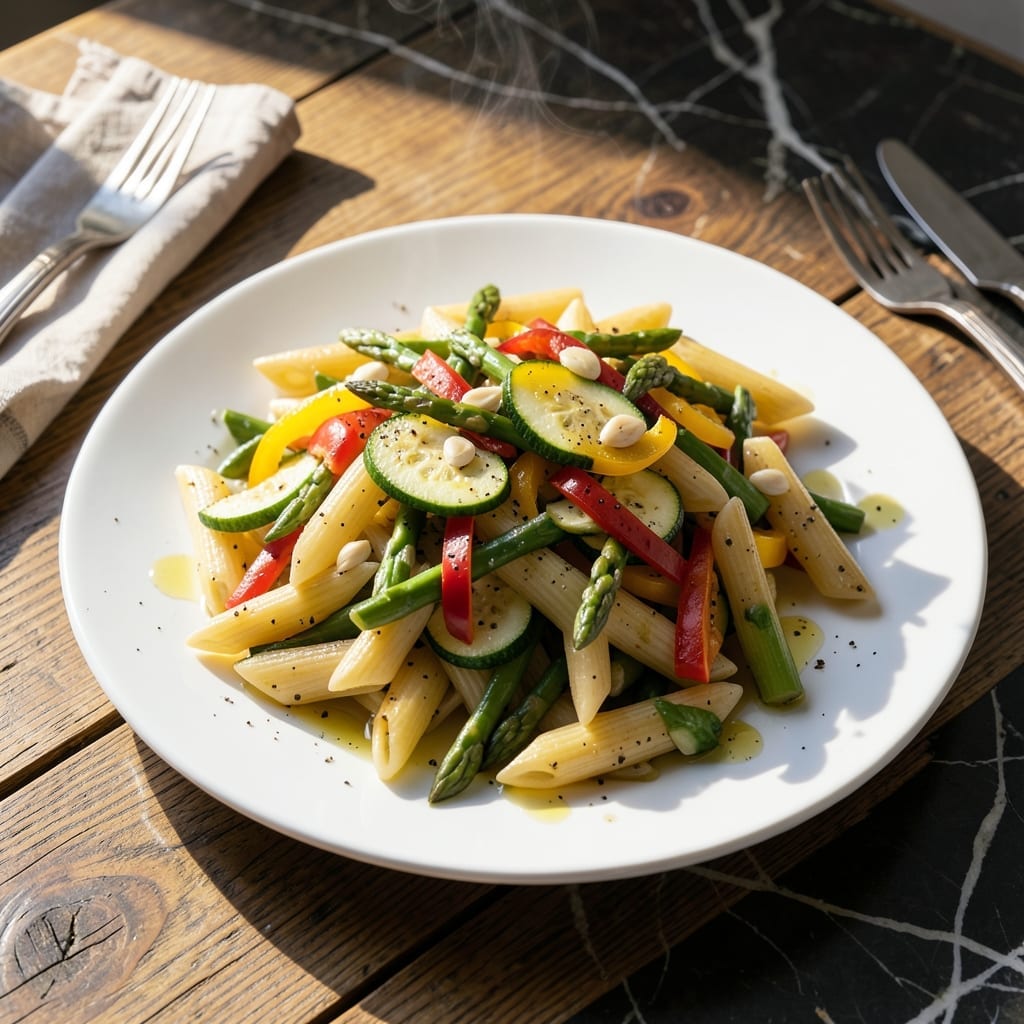
This pasta primavera celebrates the best of spring produce with a light garlic sauce that lets the vegetables shine. I developed this recipe to highlight seasonal ingredients without overpowering their natural flavors.
The beauty of this dish lies in its simplicity. Fresh vegetables like zucchini, bell peppers, and asparagus are quickly sautéed to retain their crisp texture. The garlic-infused olive oil base creates a delicate sauce that coats every strand of pasta.
You’ll end up with a vibrant, colorful dish that’s as pleasing to the eye as it is to the palate. The vegetables maintain their individual characteristics while harmonizing perfectly with the pasta.
Optional protein additions like grilled chicken or shrimp make this versatile for any preference. Here’s how to bring this spring classic to your table.
Ingredients for Pasta Primavera
Fresh pasta and spring veggies shine in this bright, garden-focused dish.
| Ingredient | Amount | Notes |
|---|---|---|
| Pasta 🍝 | 12 oz | Fettuccine or penne recommended |
| Zucchini 🥒 | 2 whole | Medium, sliced into half-moons |
| Red Bell Pepper 🌶️ | 1 whole | Thinly sliced into strips |
| Yellow Bell Pepper 🌶️ | 1 whole | Thinly sliced into strips |
| Asparagus 🥬 | 1 lb | Tough ends trimmed, cut into 2-inch pieces |
| Garlic Cloves 🧄 | 6 cloves | Minced for sauce |
| Extra-Virgin Olive Oil 🫒 | ½ cup | Divided for cooking and sauce |
| Unsalted Butter 🧈 | 2 tbsp | For richness in sauce |
| Vegetable Broth 💧 | ½ cup | Low-sodium preferred |
| Heavy Cream 🥛 | ¼ cup | For creamy finish |
| Parmesan Cheese 🧀 | ½ cup | Freshly grated from block |
| Fresh Basil Leaves 🌿 | ¼ cup | Chopped, for garnish |
| Fresh Parsley 🍃 | 2 tbsp | Chopped, for garnish |
| Salt 🧂 | 1 tsp | Diamond Crystal kosher preferred |
| Black Pepper 🌶️ | ½ tsp | Freshly ground |
The vegetables are the stars here. Farmers market asparagus and bell peppers have the best flavor and texture. Look for firm, vibrantly colored produce—no limp stalks or soft spots. Zucchini should feel heavy for its size. For the pasta, De Cecco or Barilla hold up well to the quick cooking. The Parmesan needs to be Parmigiano-Reggiano—pre-grated won’t melt the same way.
No asparagus? Broccoli florets or green beans work great—just adjust cooking time slightly. Out of fresh basil? Dried basil at one-third the amount (but fresh is better). Want to skip the cream? A splash of whole milk or half-and-half keeps it light. The bell peppers can be swapped for other seasonal veggies like snap peas or mushrooms. Don’t have vegetable broth? Chicken broth works too (just not vegan, obviously).
This tastes best fresh, but leftovers keep 3-4 days in the fridge. Store in an airtight container—reheat gently with a splash of water to loosen the sauce. The Parmesan wedge? Wrap in parchment, then foil. Keeps for weeks.
Why You’ll Love This Recipe
- One Pot Wonder: I toss everything in a single pan—pasta, zucchini, those sweet bell peppers—so cleanup’s a breeze.
- Sunshine in a Bowl: The asparagus and roasted peppers bring this fresh, bright flavor that just screams spring.
- Meal Prep Magic: Honestly, it reheats beautifully so I pack leftovers for lunch all week long.
- Budget-Friendly Feast: Those veggies stretch far, and I use whatever’s on sale—still tastes like a restaurant dish.
Step-by-Step Instructions for Pasta Primavera
This method highlights the freshness of spring vegetables with a light, creamy sauce.
Step 1: Prepare the Vegetables
Slice the 2 whole Zucchini into half-moons, about ¼-inch thick. Thinly slice the 1 whole Red Bell Pepper and 1 whole Yellow Bell Pepper into strips. Trim the tough ends from the 1 lb Asparagus and cut into 2-inch pieces.
I like to keep the slices uniform so everything cooks evenly. The peppers should be thin enough to soften quickly, while the asparagus pieces should hold their shape. Set all the vegetables aside in a large bowl—this keeps your workspace organized and makes the next steps smoother.
Step 2: Cook the Pasta and Sauté the Vegetables
Bring a large pot of salted water to a rolling boil. Add the 12 oz Pasta and cook according to package instructions until al dente. Reserve ½ cup of pasta water before draining. Meanwhile, heat 2 tablespoons of the 0.5 cup Extra-Virgin Olive Oil in a large skillet over medium-high heat.
Add the sliced zucchini, red bell pepper, yellow bell pepper, and asparagus to the skillet. Sauté for 5-6 minutes until the vegetables are tender-crisp and just beginning to caramelize at the edges. You want them to retain some bite—they’ll soften slightly more once combined with the pasta.
Step 3: Create the Garlic Cream Sauce
Reduce the heat to medium and add the remaining 0.5 cup Extra-Virgin Olive Oil (about 6 tablespoons) to the skillet along with the 6 cloves Garlic Cloves. Sauté for 30 seconds until the garlic is fragrant but not browned. Stir in the 2 tbsp Unsalted Butter until melted.
Pour in the 0.5 cup Vegetable Broth and 0.25 cup Heavy Cream, then sprinkle in the 1 tsp Salt and 0.5 tsp Black Pepper. Simmer for 2-3 minutes until the sauce begins to thicken slightly. The sauce should coat the back of a spoon but still be light enough to cling to the pasta and vegetables.
Step 4: Combine and Finish
Add the drained pasta to the skillet with the sauce and vegetables. Toss everything together, adding reserved pasta water 1 tablespoon at a time as needed to loosen the sauce. This helps the sauce cling beautifully to the pasta and veggies.
Remove from heat and stir in the 0.5 cup Parmesan Cheese until fully melted. The cheese should create a silky, cohesive sauce that ties all the elements together. Taste and adjust seasoning if needed—sometimes a little extra salt or pepper can elevate the flavors.
Step 5: Garnish and Serve
Transfer the pasta primavera to serving plates. Garnish with the 0.25 cup Fresh Basil Leaves and 2 tbsp Fresh Parsley, both finely chopped. The fresh herbs add a bright, aromatic finish that complements the creamy sauce and tender vegetables.
Serve immediately while the pasta is hot and the sauce is at its creamiest. The colors of the vegetables should pop against the pasta, making this dish as visually appealing as it is delicious.
Pro Tips For Making Pasta Primavera
- Blanch the Asparagus: Toss asparagus in boiling salted water for 2 minutes before adding other veggies—it keeps them crisp and bright green instead of mushy. I learned this the hard way after too many gray, limp spears.
- Cut Veggies Uniformly: Slice zucchini and bell peppers into ¼-inch strips so they cook evenly. Sounds fussy, but nothing ruins pasta primavera like half-raw peppers hiding in the mix.
- Skip Overcooked Pasta: Pull the pasta 1 minute before al dente—it’ll finish cooking in the sauce. After serving gluey noodles too many times, I now set a timer and taste early.
- Use Pasta Water: Save ½ cup of that starchy pasta water before draining. A splash or two loosens the sauce and helps it cling to the noodles and veggies—my grandmother swore by this, and she was right.
Pro Cooking Tips for Perfect Results
Perfect Pasta Cooking
Use a large pot with plenty of water—at least 4 quarts for 12 oz pasta. Add 1-2 tbsp salt to the water so it tastes like the sea. I always use De Cecco fettuccine for its texture. Test for al dente at 1 minute before package time. 💡
Veggie Prep Timing
Cut all vegetables to similar sizes for even cooking. Slice zucchini into ¼-inch half-moons and peppers into thin strips. The asparagus should be 2-inch pieces. Prep everything before starting to cook—this dish moves fast once you begin.
Sauce Consistency
After sautéing garlic in olive oil for 30 seconds, add broth and cream. Simmer just until it coats a spoon—about 2-3 minutes. I use a wooden spoon to test. If it’s too thick, a splash of pasta water loosens it perfectly.
Pasta Integration
Toss the pasta with vegetables and sauce off heat. Add reserved pasta water 1 tbsp at a time as needed. The starch in the water helps the sauce cling. I usually need about ¼ cup total. Stir in Parmigiano-Reggiano last for the creamiest finish.
Herb Garnish
Use fresh herbs right before serving. Chop ¼ cup basil and 2 tbsp parsley just before adding. The aromatic oils are most potent when freshly cut. This final touch makes the dish restaurant-quality. ✨
Nutrition Facts
Frequently Asked Questions
Can I use frozen vegetables instead?
Fresh is best for texture, but frozen works in a pinch. Thaw and pat dry first to prevent a watery sauce.
What pasta shapes work best?
Fettuccine or penne hold the sauce well, but any short pasta like farfalle or fusilli will do. Avoid long strands like spaghetti.
How do I make it vegan?
Skip the butter and Parmesan, use olive oil and nutritional yeast instead. Swap heavy cream for coconut milk or cashew cream.
Can I prepare it ahead?
Cook pasta al dente and undercook veggies slightly. Store separately and reheat with a splash of water to refresh.

- 6 Egg Cake Recipe with Oil: Light as Air With Buttery Moisture - October 4, 2026
- 4 Bean Casserole Recipe: One-Pan Heartiness With Smoky Paprika Depth - October 4, 2026
- 3-Ingredient Keto Mug Cake Recipe: Microwave Magic in 2 Minutes - October 4, 2026