
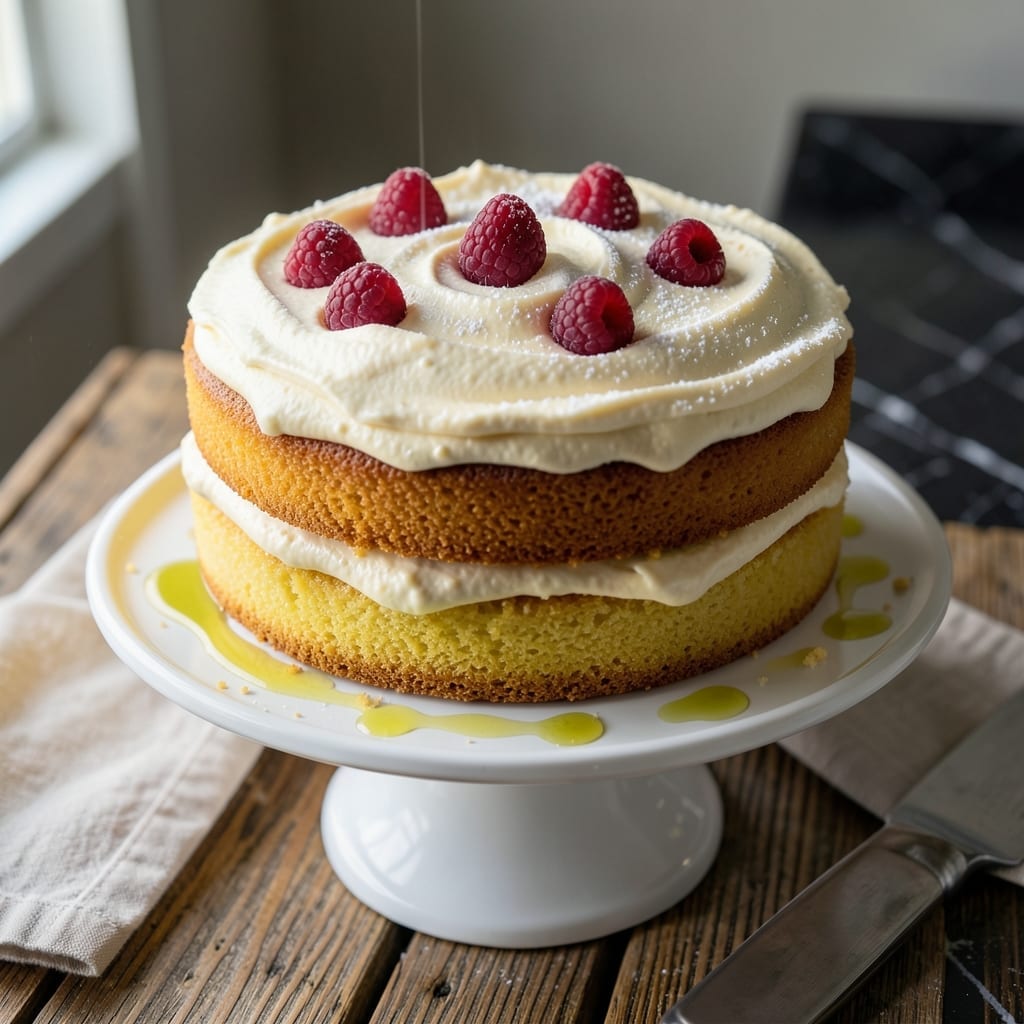
This classic Southern yellow cake stands as a testament to timeless baking traditions. Its tender crumb and golden hue capture the essence of homemade comfort, perfect for celebrations or quiet afternoons alike.
The recipe relies on simple, proven techniques—creaming butter and sugar just until fluffy, alternating dry and wet ingredients for even texture. Each step builds toward that signature moist, fine-grained result Paula Deen made famous.
What emerges from the oven are perfectly level layers ready for vanilla buttercream, the ideal pairing for this cake’s subtle vanilla flavor. The method ensures consistency every time, whether for a birthday or Sunday supper.
Expect a dessert that feels both nostalgic and freshly baked, with a texture so delicate it seems to dissolve with each bite. This is Southern baking at its most reliable.
Ingredients for Paula Deen Yellow Cake
Classic Southern ingredients deliver that signature moist, fine-grained cake texture every time.
| Ingredient | Amount | Notes |
|---|---|---|
| All-Purpose Flour 🌾 | 2 ½ cups | Sifted for even texture |
| Granulated Sugar 🍚 | 1 ¾ cups | Fine grain for creaming |
| Unsalted Butter 🧈 | 1 cup | Softened to room temperature |
| Large Eggs 🥚 | 4 whole | Room temperature preferred |
| Whole Milk 🥛 | 1 cup | Full-fat for richness |
| Baking Powder 🧂 | 1 tbsp | Ensures proper rise |
| Baking Soda 🧂 | ½ tsp | Balances acidity |
| Salt 🧂 | ½ tsp | Fine sea salt preferred |
| Pure Vanilla Extract 🌿 | 2 tsp | High-quality for best flavor |
| Vanilla Buttercream Frosting 🧁 | 4 cups | For layering and coating |
The butter and sugar creaming step is non-negotiable here. Land O’Lakes or Plugrá unsalted butter gives the best structure for that tender crumb. Room temperature is key—too cold and it won’t cream properly, too warm and your cake will collapse. For flour, King Arthur or Gold Medal all-purpose are reliable. Sift it first to avoid lumps in your batter.
No whole milk? 2% works in a pinch but full-fat is ideal for richness. Out of baking powder? Double the baking soda won’t cut it—this needs both for proper rise. Vanilla extract is worth the splurge: Nielsen-Massey or Rodelle for that deep, complex flavor. Eggs at room temperature emulsify better into the batter.
Baked layers keep 2-3 days wrapped at room temperature or 1 week refrigerated. For longer storage, freeze unfrosted layers for up to 3 months. Always bring to room temperature before frosting to prevent crumbs in your buttercream.
Why You’ll Love This Recipe
- No-Fuss Mixing: I just dump everything in one bowl—flour, sugar, butter, eggs, milk—and mix. Honestly, it’s the easiest cake batter I’ve ever made.
- Buttery Goodness: That rich, creamy butter taste shines through, and the sugar makes it just sweet enough without being overpowering.
- Crowd Pleaser: I’ve served this at birthdays, potlucks, and even random Tuesday dinners. Between us, it’s always the first to disappear.
- Budget Friendly: All-purpose flour and basic pantry staples keep the cost low. I’ll be real: it’s way cheaper than a box mix and tastes so much better.
Step-by-Step Instructions for Classic Southern Yellow Cake
Master this traditional technique for a tender crumb and rich vanilla flavor in every bite.
Step 1: Cream Butter and Sugar to Ribbon Stage
In a stand mixer fitted with the paddle attachment, beat the 1 cup Unsalted Butter on medium speed until smooth and creamy, about 1 minute. Gradually add the 1.75 cups Granulated Sugar and continue beating for 4-5 minutes until the mixture becomes pale yellow and fluffy.
You’ll know it’s ready when the mixture leaves a ribbon-like trail on the side of the bowl that holds its shape for 2-3 seconds before dissolving. This creaming process incorporates air, which creates a light, tender cake crumb. Stop the mixer occasionally to scrape down the sides and bottom of the bowl.
Step 2: Incorporate Eggs and Vanilla Gradually
Add the 4 whole Large Eggs one at a time, beating well after each addition for about 30 seconds per egg. This ensures each egg is fully emulsified into the butter mixture before adding the next. The batter will look slightly curdled after each egg—this is normal and will smooth out.
Once all eggs are incorporated, add the 2 tsp Pure Vanilla Extract and mix for an additional 15 seconds. I always use pure vanilla for its complex, warm flavor that shines through in this simple cake. The mixture should now be thick, pale, and slightly increased in volume.
Step 3: Alternate Dry and Wet Ingredients
In a separate bowl, whisk together the 2.5 cups All-Purpose Flour, 1 tbsp Baking Powder, 0.5 tsp Baking Soda, and 0.5 tsp Salt. With the mixer on low speed, add about one-third of the flour mixture to the butter mixture, mixing just until combined.
Pour in half of the 1 cup Whole Milk and mix until incorporated. Repeat, ending with the last third of flour mixture. Mix just until the batter is smooth and no flour streaks remain—overmixing will develop gluten and create a tough cake. The final batter should be thick but pourable.
Step 4: Bake in Prepared Pans
Divide the batter evenly between two greased and floured 9-inch round cake pans. Smooth the tops with a rubber spatula. Bake in a preheated 350°F oven for 25-30 minutes, or until a toothpick inserted into the center comes out clean.
The cakes are done when they spring back lightly when touched and the edges begin to pull away from the sides of the pan. Rotate the pans halfway through baking to ensure even browning. Allow the cakes to cool in the pans for 10 minutes, then transfer to a wire rack to cool completely before frosting.
Step 5: Frost and Serve
Place one cake layer on a serving plate and spread about 1 cup of the 4 cups Vanilla Buttercream Frosting evenly over the top. Add the second layer and spread the remaining frosting over the top and sides of the cake.
For a professional finish, use an offset spatula to create smooth sides and a slight swirl pattern on top. Let the cake sit for 15 minutes before slicing to allow the frosting to set slightly. This classic Southern yellow cake is best served at room temperature, where the flavors truly shine.
Pro Tips For Making Paula Deen Yellow Cake
- Room temp eggs: Pull your eggs out 30 minutes before mixing—I learned this the hard way after my first dense, tough cake.
- Cream butter longer: Beat the butter and sugar for a full 3-4 minutes until it’s pale and fluffy; this actually changes the outcome more than you’d think.
- Skip cold milk: Warm your whole milk slightly (just 10-15 seconds in the microwave) to prevent the butter from seizing up when combined.
- Check at 25 minutes: Start testing for doneness 5 minutes early—Paula’s recipe often finishes sooner than the stated time, especially in dark pans.
Pro Cooking Tips for Great paula deen yellow cake
Butter Temperature Matters
Your butter should be 65-68°F—soft enough to leave a slight indentation when pressed, but not greasy. I pull mine from the fridge 1-2 hours before starting. Too cold and it won’t cream properly; too warm and your cake will collapse in the oven. 💡
Proper Creaming Technique
Beat the butter and sugar on medium-high speed for a full 4-5 minutes until pale and fluffy. This isn’t just mixing—it’s incorporating air that creates that signature tender crumb. Stop to scrape the bowl every 1-2 minutes for even mixing.
Room Temperature Eggs
Cold eggs can cause the butter to seize up. I place my eggs in warm water for 5-10 minutes to bring them to room temp quickly. When added one at a time, each should fully emulsify before adding the next—about 30 seconds per egg on medium speed.
Pan Preparation
Grease your 9-inch round pans thoroughly with butter, then dust with flour. For extra insurance, I line the bottoms with parchment paper. This prevents sticking and helps the cakes release cleanly after baking. Tap out any excess flour before adding batter.
Even Layer Baking
Weigh your batter to divide evenly between pans. Rotate the pans 180° halfway through baking for uniform browning. The cakes are done when they pull slightly from the sides and a toothpick comes out clean—usually 25-30 minutes at 350°F. 🔥
Cooling Before Frosting
Let layers cool in pans for 10 minutes, then transfer to a rack. They must be completely cool before frosting—otherwise, your buttercream will melt and slide right off. I wait at least 2 hours for best results.
Nutrition Facts
Frequently Asked Questions
What if my butter isn’t room temperature?
Softening butter properly is key. If it’s too cold, microwave it in 5-second bursts at 50% power until it yields slightly when pressed. Too warm? Chill the mixing bowl for 10 minutes before starting.
Can I make this into cupcakes?
Fill lined muffin tins 2/3 full and bake at 350°F for 18-22 minutes. Check with a toothpick – they’re done when it comes out clean. Perfect for portion control!
Why did my cake sink in the middle?
This usually means underbaking or opening the oven too soon. Ensure your oven is fully preheated and avoid opening the door during the first 20 minutes. Also, check your baking powder’s freshness.

- 6 Egg Cake Recipe with Oil: Light as Air With Buttery Moisture - October 4, 2026
- 4 Bean Casserole Recipe: One-Pan Heartiness With Smoky Paprika Depth - October 4, 2026
- 3-Ingredient Keto Mug Cake Recipe: Microwave Magic in 2 Minutes - October 4, 2026