
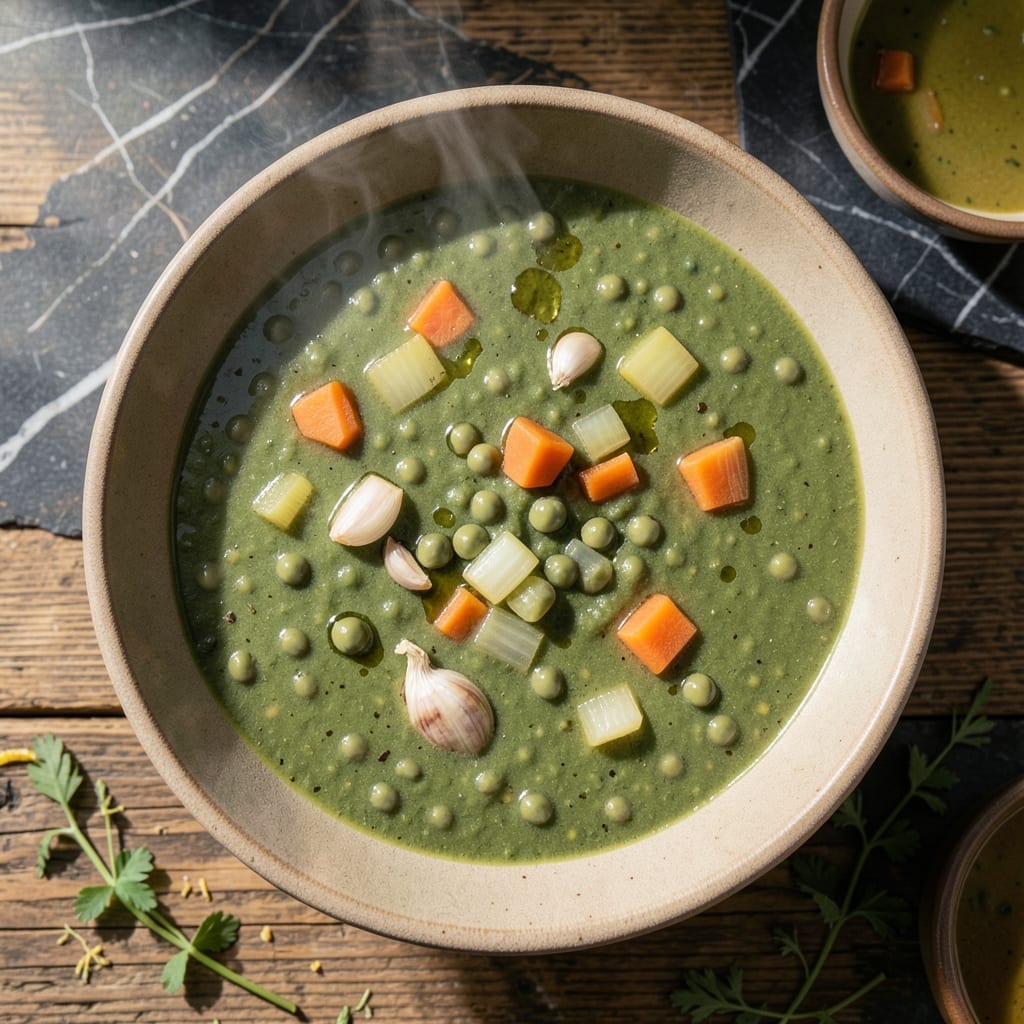
There’s something deeply comforting about a steaming bowl of hearty pea soup on a chilly day. This rustic recipe transforms simple ingredients into a rich, velvety dish that warms you from the inside out.
I’ve perfected this version over years of cold-weather cooking, focusing on balance—sweet peas, earthy herbs, and a touch of brightness to cut through the richness. The slow simmer coaxes out layers of flavor you won’t find in quicker methods.
What you’ll get is a soup so satisfying it feels like a hug in bowl form. The texture is smooth yet substantial, with just enough body to make it a meal on its own.
Serve with crusty bread for the ultimate comfort experience. Here’s how to make it.
Ingredients for Pea Soup
Simple, hearty ingredients for a bowl that warms the soul on cold days.
| Ingredient | Amount | Notes |
|---|---|---|
| Dried Green Split Peas 🌱 | 2 cups | Rinsed and picked over |
| Yellow Onion 🧅 | 1 whole | Medium, finely diced |
| Carrots 🥕 | 2 whole | Medium, diced |
| Celery Stalks 🌿 | 2 whole | Diced, including leaves |
| Garlic Cloves 🧄 | 3 cloves | Minced for depth |
| Vegetable Broth 🥣 | 6 cups | Low-sodium preferred |
| Bay Leaf 🍃 | 1 whole | Dried, for aroma |
| Dried Thyme 🌿 | 1 tsp | Crushed for release |
| Fresh Parsley 🍃 | ¼ cup | Chopped, for garnish |
| Olive Oil 🫒 | 2 tbsp | Extra-virgin for richness |
| Salt 🧂 | 1 tsp | Kosher or sea salt |
| Black Pepper 🌶️ | ½ tsp | Freshly ground preferred |
| Lemon Juice 🍋 | 1 tbsp | Freshly squeezed for brightness |
The peas are the heart of this. Look for bright green split peas—they’re not fancy, but quality varies. Whole Foods or any bulk bin section usually has the freshest stock. The broth matters too: vegetable broth (not chicken) keeps it vegetarian. I like Imagine Foods or Pacific brands for depth without salt overload. The onions and carrots should be fresh, not those pre-cut ones sitting in plastic for weeks.
No split peas? Yellow split peas work too—same texture, slightly sweeter. Out of fresh parsley? Dried at one-third the amount (but add it earlier). Vegetable broth can be swapped for water plus a bouillon cube, though broth’s richer. The celery leaves add a subtle bitterness that balances the sweetness—don’t toss them. And yes, the lemon at the end is non-negotiable (trust me on this).
Soup tastes even better the next day. Keeps 4-5 days in the fridge, freezes like a dream for 3 months. Reheat gently—it’ll thicken as it sits, so a splash of water might be needed. Perfect for meal prep or a cozy weekend project.
Why You’ll Love This Recipe
- Set It and Forget: I dump everything in the pot and let it simmer while I do laundry. Honestly, the house smells like comfort before I even lift a spoon.
- Rich and Hearty: The split peas break down into this creamy base, and the garlic and carrots add just the right sweetness to balance it.
- Feeds Everyone: I make a big batch on Sunday, and it’s lunch for the week—my picky nephew even goes back for seconds.
- Pantry Hero: Dried peas cost pennies, and I always have onions and carrots on hand. I’ll be real: it’s saved me from too many “what’s for dinner?” panics.
Step-by-Step Instructions for Pea Soup
This method builds layers of flavor while keeping the process simple and satisfying.
Step 1: Sauté the Aromatic Base
Heat the 2 tbsp Olive Oil in a large pot over medium heat. Add the finely diced Yellow Onion, diced Carrots, and diced Celery Stalks. Cook for 5-7 minutes, stirring occasionally, until the vegetables soften and the onion becomes translucent.
I like to keep the heat steady here—too high and the onions will brown before they soften. The goal is to build a sweet, fragrant base. When the mixture smells like it could be soup already, you’re ready for the next step.
Step 2: Toast the Peas and Add Garlic
Stir in the 2 cups Dried Green Split Peas and cook for 1-2 minutes to lightly toast them. This enhances their nutty flavor and prevents a starchy taste. Then add the minced Garlic Cloves and cook for 30 seconds until fragrant—just until you smell that unmistakable garlic aroma.
Don’t let the garlic burn; it turns bitter fast. The peas will start to absorb the oil and aromatics, which sets the stage for a rich, hearty soup. This step is small but mighty for depth of flavor.
Step 3: Simmer with Broth and Herbs
Pour in the 6 cups Vegetable Broth and add the Bay Leaf and 1 tsp Dried Thyme. Stir well to combine, then bring the mixture to a boil. Once boiling, reduce the heat to low, cover the pot, and let it simmer for 45-60 minutes.
The soup is done when the peas are completely tender and start to break down, thickening the broth naturally. Stir occasionally to prevent sticking, and add a splash of water if it gets too thick. The kitchen will smell incredible—like rustic comfort in a pot.
Step 4: Season and Finish
Remove the Bay Leaf and stir in the 1 tsp Salt and 0.5 tsp Black Pepper. Taste and adjust seasoning if needed—sometimes a pinch more salt brings out the flavors. Then, stir in the 1 tbsp Lemon Juice to brighten the soup and balance the earthy peas.
The lemon might seem subtle, but it lifts all the flavors. If the soup is too thick, thin it with a little water or extra broth. The texture should be creamy but still have some body—perfect for a cozy, comforting bowl.
Step 5: Garnish and Serve
Ladle the soup into bowls and garnish with the 0.25 cup Fresh Parsley. The parsley adds a pop of color and freshness that cuts through the richness. Serve hot with crusty bread for dipping, or enjoy it as is for a simple, satisfying meal.
This soup tastes even better the next day as the flavors meld. Store leftovers in the fridge for up to 5 days—they’ll thicken as they cool, so just add a splash of water when reheating.
Pro Tips For Making Pea Soup
- Soak the Peas: I learned this the hard way—give those dried split peas a quick 30-minute soak in hot water before cooking to cut the simmer time nearly in half and prevent that starchy, uneven texture.
- Sweat the Veggies: Cook the onion, carrots, and celery in the pot for at least 8-10 minutes until soft and just starting to brown—this builds a depth of flavor that raw veggies just can’t deliver.
- Skip the Salt Early: Resist the urge to salt the broth until the peas are fully tender, or they’ll toughen up and take forever to soften. I add mine in the last 15 minutes of cooking.
- Use a Ham Bone: Sounds old-school, but tossing in a leftover ham bone while simmering adds a rich, smoky depth that vegetable broth can’t match. No bone? A chunk of smoked sausage works too.
Essential Equipment for This Dish
The Right Pot
I always use a 5-6 quart Dutch oven for this recipe—it distributes heat evenly and has enough capacity for the soup to simmer without boiling over. My go-to is the Lodge enameled cast iron because it’s affordable and built to last. 🔥
Wooden Spoon Essential
A sturdy wooden spoon is your best friend here. It won’t scratch your pot and is perfect for stirring the thick soup as it simmers. I keep one dedicated to soups and stews—it’s absorbed so many flavors over the years.
Immersion Blender Option
For a smoother texture, I use an immersion blender right in the pot. The Cuisinart SmartStick handles the peas beautifully without needing to transfer hot liquid. Just pulse a few times—don’t overdo it if you like some texture.
Fine Mesh Strainer
If you prefer a silky finish, press the soup through a fine mesh strainer with the back of a ladle. This removes any stubborn pea skins. I use the OXO Good Grips strainer—its handles stay cool and it fits over my sink perfectly.
Thermometer for Precision
While not mandatory, an instant-read thermometer ensures your soup stays in the sweet spot between 185-200°F. This prevents scalding at the bottom while keeping the simmer gentle. I clip mine to the pot’s edge for constant monitoring.
Storage Containers
For leftovers, I swear by glass Pyrex containers with locking lids. They’re safe for fridge and freezer, and you can see exactly what’s inside. The 4-cup size is perfect for individual portions of this hearty soup.
Nutrition Facts
Frequently Asked Questions
Can I use fresh peas instead of dried?
Fresh peas will work but require adjustments. Use 6 cups and reduce broth to 4 cups. Simmer for only 20-25 minutes since they cook much faster than dried.
Why did my soup turn out bland?
Underseasoning is the most common issue. Taste before serving and adjust with more salt or lemon juice. Also, toasting the peas and using aromatic vegetables builds essential flavor layers.
How do I make it smoother?
Use an immersion blender for a creamy texture, or press through a fine mesh strainer. For ultra-smooth results, blend half the soup and mix it back in. This keeps some body while removing pea skins.
Can I add meat to this vegetarian recipe?
Yes! Brown 1/2 lb of diced ham or smoked sausage with the onions for added depth. This transforms it into a heartier main dish while keeping the rustic character.

- 6 Egg Cake Recipe with Oil: Light as Air With Buttery Moisture - October 4, 2026
- 4 Bean Casserole Recipe: One-Pan Heartiness With Smoky Paprika Depth - October 4, 2026
- 3-Ingredient Keto Mug Cake Recipe: Microwave Magic in 2 Minutes - October 4, 2026