
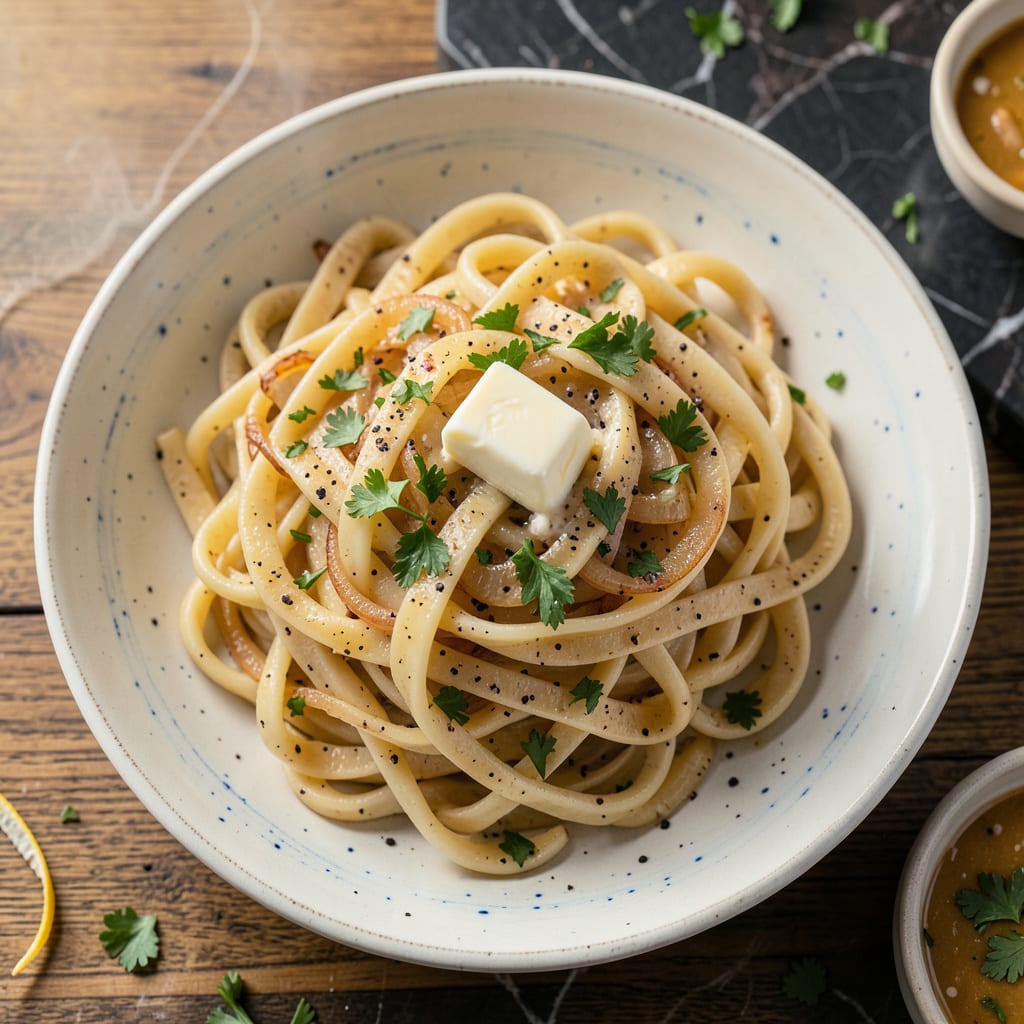
There’s something deeply comforting about homemade Pennsylvania Dutch egg noodles—tender, substantial, and carrying generations of Amish kitchen tradition. This recipe delivers the perfect balance of egg richness and flour structure, creating noodles that hold their shape in soups yet melt in your mouth when buttered.
The process is straightforward but precise: a simple dough of flour, eggs, and a touch of liquid, rolled thin to 1/16-inch, then cut into uniform strips. Whether you’re making chicken pot pie or a simple buttered side, these noodles transform everyday meals into something special. The secret lies in the resting time and proper drying before cooking.
Ingredients for Pennsylvania Dutch Egg Noodles
Simple pantry ingredients transform into these tender, egg-rich Pennsylvania Dutch noodles.
| Ingredient | Amount | Notes |
|---|---|---|
| All-Purpose Flour 🌾 | 2 ½ cups | Plus extra for dusting |
| Large Eggs 🥚 | 4 whole | Room temperature preferred |
| Whole Milk 🥛 | 2 tbsp | Or water for firmer dough |
| Kosher Salt 🧂 | 1 tsp | Diamond Crystal preferred |
| Unsalted Butter 🧈 | 1 tbsp | Melted, for dough enrichment |
| Egg Yolk 🥚 | 1 whole | For extra richness (optional) |
| Nutmeg 🌰 | 0.125 tsp | Freshly grated preferred |
| Black Pepper 🌶️ | ¼ tsp | Freshly ground |
The flour matters here—King Arthur or Gold Medal give the best texture (nothing fancy, just consistent quality). Eggs should be room temp for even mixing, and if you’ve got farm-fresh, use them. The extra yolk isn’t mandatory, but it’s the Amish trick for that melt-in-your-mouth richness. Nutmeg might seem odd, but it’s traditional—just a whisper (the good stuff, not pre-ground).
No whole milk? Half-and-half or water work fine (water makes firmer noodles). Out of butter? Olive oil adds richness too. For gluten-free, swap the flour for Cup4Cup—it’s the only blend I’ve tested that holds up. The dough should feel like Play-Doh (not sticky, not dry).
Fresh noodles keep 2 days in the fridge—dust with flour, wrap tightly. Freeze for 3 months on a tray first, then bag. Cook from frozen (no thawing needed). Drying time is key—let them sit 1-2 hours before cooking for that perfect bite.
Why You’ll Love This Recipe
- No Fancy Tools: I’ve made these with just a rolling pin and a knife—no pasta machine, no special gadgets. The dough comes together in one bowl with flour, eggs, and milk, then you cut the noodles freehand. Honestly, it’s harder to mess up than to get right.
- Buttery, Eggy Richness: That combo of whole milk, extra egg yolks, and a pat of butter cooked into the noodles? It’s like if homemade pasta and buttered toast had a lovechild. The edges get just slightly crisp in the pan while the centers stay tender—no bland, store-bought texture here.
- Soup to Casserole MVP: Toss them into chicken corn soup (the PA Dutch way), bake under a cheesy broiler for a quick casserole, or just butter them up as a side. I’ve served these at potlucks and weeknight dinners, and they disappear faster than the rolls.
- Dough Ahead, Stress Less: The uncooked noodles dry on a tray in 30 minutes, or freeze them in bags for up to a month. On busy nights, I pull out a handful, boil, and dinner’s half done. Between us, it’s saved me more last-minute grocery runs than I’ll admit.
Step-by-Step Instructions for Pennsylvania Dutch Egg Noodles
Here’s how to make these comforting homemade noodles—simple steps, perfect results every time.
Step 1: Mix the Dough Until Smooth
In a large bowl, whisk together the 2.5 cups all-purpose flour, 1 teaspoon kosher salt, 0.125 teaspoon nutmeg, and 0.25 teaspoon black pepper. Make a well in the center and add the 4 large eggs, 1 egg yolk, 2 tablespoons whole milk, and 1 tablespoon melted unsalted butter.
Using a wooden spoon, gradually incorporate the dry ingredients into the wet until a shaggy dough forms. Then, turn it out onto a lightly floured surface and knead for 5-7 minutes until smooth and elastic. The dough should feel slightly tacky but not sticky—if it’s too wet, add a sprinkle more flour; if too dry, a few drops of water will help.
Step 2: Rest the Dough for Best Texture
Shape the dough into a ball, wrap it tightly in plastic wrap, and let it rest at room temperature for 30 minutes. This resting period relaxes the gluten, making the dough easier to roll out and preventing it from shrinking when you cut the noodles.
While the dough rests, lightly dust your work surface and rolling pin with flour. I like to divide the dough into 4 equal pieces after resting—this makes rolling and cutting more manageable, especially if you’re working alone. Keep the pieces you’re not working with covered to prevent drying out.
Step 3: Roll and Cut the Noodles
Working with one piece at a time, roll the dough out on a floured surface until it’s about ⅛-inch thick. You want it thin enough to cook quickly but not so thin that it tears. If the dough resists rolling, let it rest for another 5 minutes before trying again.
Once rolled, dust the surface lightly with flour to prevent sticking, then fold the dough loosely into thirds like a letter. Using a sharp knife, cut the dough into ¼-inch wide strips for classic Pennsylvania Dutch-style noodles. Unfold the strips and gently separate them, tossing with a bit more flour to keep them from clumping.
Step 4: Cook the Noodles to Perfect Tenderness
Bring a large pot of salted water to a rolling boil. Add the fresh noodles and stir gently to prevent sticking. Cook for 2-3 minutes until they float to the surface and are just tender—these noodles cook faster than dried pasta, so keep an eye on them.
Drain the noodles in a colander and rinse briefly with warm water to remove excess starch. They’re now ready to use in soups, casseroles, or simply tossed with butter. For extra comfort, I like to serve them with a pat of butter and a sprinkle of fresh parsley.
Creative Variations of This Dish
Heritage Pot Pie Noodles
For the classic Pennsylvania Dutch chicken pot pie experience, roll your noodles slightly thicker—about 1/8-inch—and cut them into 1-inch squares instead of strips. These hearty squares hold up beautifully in the rich, creamy broth. I like to add 1/2 tsp dried thyme to the dough for extra depth. 💛
Buttered Parsley Noodles
Transform these into a simple side dish by tossing cooked noodles with 4 tbsp melted butter, 2 tbsp fresh parsley, and a pinch of flaky sea salt. The Amish often serve this with roasted chicken or pork. For extra richness, stir in 1/4 cup grated Parmesan just before serving.
Spinach & Cheese Variation
After rolling but before cutting, sprinkle the dough with 1/2 cup finely chopped spinach (squeezed dry) and 1/4 cup shredded Swiss cheese. Roll gently to press in, then cut as usual. These green-flecked noodles are perfect with cream sauces or in vegetable soups.
Sweet Cinnamon Noodles
For a dessert twist, add 1/2 tsp cinnamon and 1 tbsp sugar to the dough. After cooking, toss with 2 tbsp brown butter and a sprinkle of powdered sugar. Serve warm with vanilla ice cream—this was my grandmother’s favorite way to use leftover noodles.
Whole Wheat Option
Replace 1 cup all-purpose flour with whole wheat flour for nuttier flavor and extra fiber. The dough will be slightly denser, so add 1 extra tbsp milk if needed. These work beautifully in hearty beef stews or mushroom sauces.
Extra-Wide Cut
For a rustic presentation, cut noodles 1/2-inch wide instead of 1/4-inch. These broader noodles are perfect for baked casseroles or when you want a more substantial bite. They’ll need about 1 extra minute of cooking time to reach perfect tenderness. ✨
Nutrition Facts
Frequently Asked Questions
Why do my noodles turn out tough instead of tender?
Overworking the dough or skipping the 30-minute rest is usually the culprit. Knead just until smooth, then let it relax—this gives gluten time to soften. Also, rolling too thin (less than 1/16-inch) can make noodles dense. Aim for the thickness of a nickel.
Can I make these without a pasta machine?
A rolling pin works perfectly—just roll in small batches and rotate the dough often. Fold it letter-style before cutting for even strips. The Amish have made these by hand for generations, so don’t let equipment stop you.
How far ahead can I prepare the dough?
You can refrigerate the wrapped dough for up to 24 hours before rolling. Let it sit at room temp for 30 minutes before using. For longer storage, freeze the dough ball (thaw overnight in fridge). Cut noodles dry best when fresh.
What’s the secret to keeping them from sticking?
Generous flour dusting is key—toss cut noodles lightly as you work. Spread them on a baking sheet to dry for 1-2 hours before cooking. This step prevents the gumminess that plagues rushed noodles.
Why add nutmeg to egg noodles?
It’s the Pennsylvania Dutch “secret weapon”! Just 1/8 teaspoon adds warmth without tasting spiced. This tradition dates back to German settlers who used nutmeg in both sweet and savory dishes. Trust the process—it elevates the flavor subtly.

- 6 Egg Cake Recipe with Oil: Light as Air With Buttery Moisture - October 4, 2026
- 4 Bean Casserole Recipe: One-Pan Heartiness With Smoky Paprika Depth - October 4, 2026
- 3-Ingredient Keto Mug Cake Recipe: Microwave Magic in 2 Minutes - October 4, 2026