
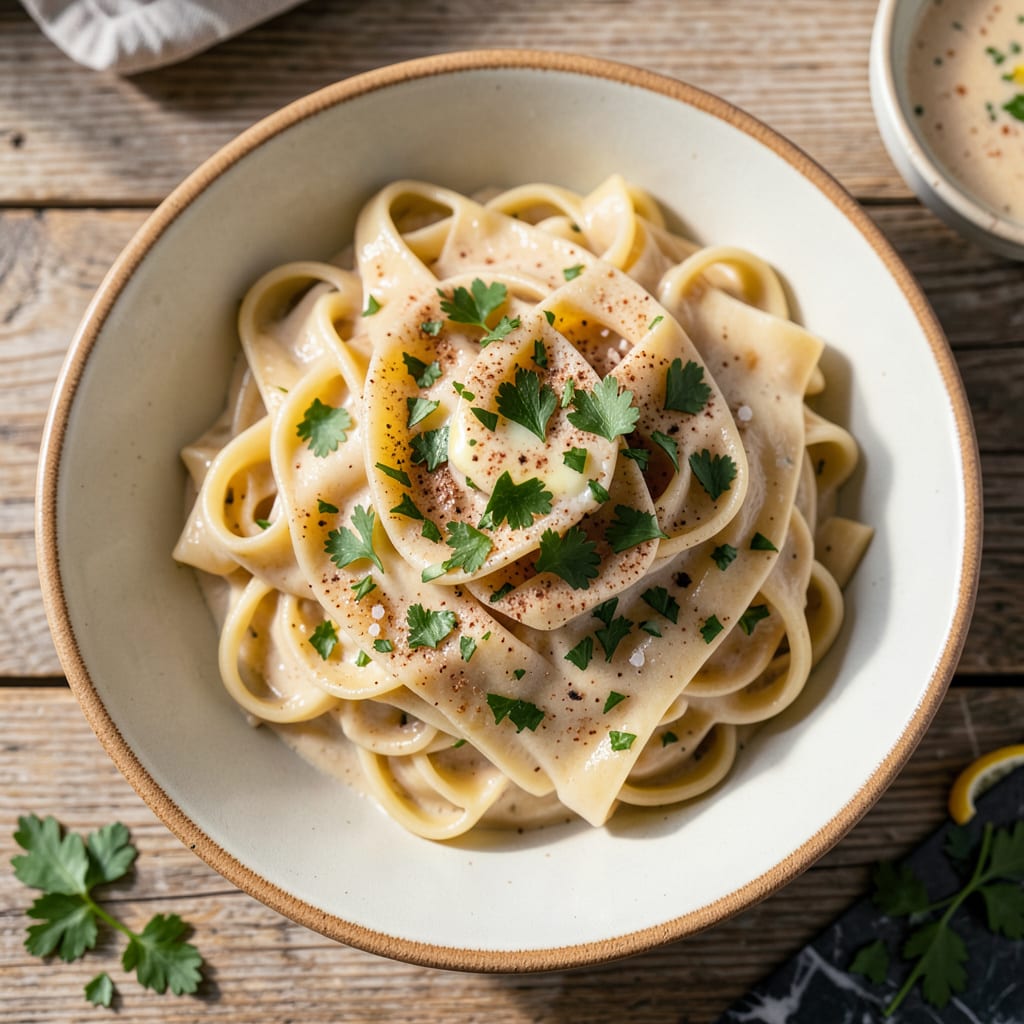
There’s something deeply satisfying about homemade egg noodles, especially when they carry the hearty tradition of Pennsylvania Dutch cooking. This recipe delivers the tender, chewy texture that makes these noodles a beloved staple in comfort food dishes. The simplicity of flour, eggs, and salt transforms into something extraordinary with just a little care and technique.
Perfect for everything from chicken pot pie to simple buttered noodles, these homemade egg noodles bring warmth and tradition to your table. The dough comes together quickly, and the rolling process is surprisingly therapeutic. You’ll taste the difference that fresh, handmade noodles make in every comforting bite.
Ingredients for Pennsylvania Dutch Egg Noodles
Seven foundational ingredients transform into Pennsylvania Dutch egg noodles with unmatched tenderness and tradition.
| Ingredient | Amount | Notes |
|---|---|---|
| All-Purpose Flour 🌾 | 2 ½ cups | Unbleached, sifted for lightness |
| Large Eggs 🥚 | 4 whole | Room temperature for optimal binding |
| Kosher Salt 🧂 | 1 tsp | Diamond Crystal preferred for consistency |
| Whole Milk 🥛 | 2 tbsp | Or substitute water for firmer dough |
| Unsalted Butter 🧈 | 1 tbsp | Melted, for enriching dough |
| Nutmeg 🌰 | ¼ tsp | Freshly grated for aromatic depth |
| Dried Parsley 🍃 | 1 tsp | Optional, for subtle herbal notes |
The flour quality directly impacts texture. King Arthur Unbleached All-Purpose yields optimal chew and structure, while generic brands may produce denser results. Eggs must be room temperature—cold eggs create uneven dough hydration. For salt, Diamond Crystal kosher salt dissolves evenly without overpowering; table salt requires halving the quantity. The milk addition softens the dough slightly, but water works equally well for those avoiding dairy (though the flavor profile shifts subtly).
For dietary adaptations, almond milk replaces dairy milk at a 1:1 ratio, though the dough may require slight flour adjustment. Nutmeg can be omitted for simplicity, though its warm undertone is traditional. If parsley isn’t available, dried chives offer a similar mild herbal note. The butter may be substituted with refined coconut oil for dairy-free versions, though flavor will differ. Always ensure eggs are fresh—older eggs weaken the dough’s structural integrity during rolling.
Store uncooked dough wrapped tightly in plastic for 24 hours refrigerated or 3 months frozen. Cooked noodles keep 3-4 days refrigerated in airtight containers, though they absorb moisture over time. For long-term storage, freeze cooked noodles on parchment-lined trays before bagging to prevent clumping. The dough benefits from 30-minute resting at room temperature before rolling to relax gluten strands.
Why You’ll Love This Recipe
- No Fancy Equipment: I make these with just a rolling pin and a knife—no pasta machine, no special gadgets. The dough comes together in one bowl, rolls out smooth, and cuts into ribbons faster than you’d think.
- Buttery, Egg-Rich Bite: Here’s what sold me—the eggs and whole milk give these noodles a tenderness store-bought can’t touch, while the butter folded in at the end adds this subtle richness. It’s the kind of comfort that makes you pause mid-bite.
- Soup to Casserole MVP: Toss them into chicken corn soup (the Pennsylvania Dutch way), bake under cheese for a quick casserole, or just butter and pan-fry with herbs. I’ve served these at potlucks and weeknight dinners—equally devoured both times.
- Dough Freezes Like a Dream: Honestly, I double the batch every time. The uncooked dough freezes flat in ziplocks for up to three months, so I pull out a sheet, thaw 10 minutes, and roll. Fresh noodles on demand, without the last-minute effort.
Step-by-Step Instructions for Pennsylvania Dutch Egg Noodles
This traditional method delivers tender, comforting noodles with the perfect bite—just like Grandma used to make.
Step 1: Prepare the Dough Base
In a large mixing bowl, combine the 2.5 cups All-Purpose Flour, 1 tsp Kosher Salt, 0.25 tsp Nutmeg, and 1 tsp Dried Parsley. Whisk these dry ingredients together until evenly distributed. The nutmeg adds a subtle warmth characteristic of Pennsylvania Dutch cooking, while the parsley provides a gentle herbal note.
Create a well in the center of the flour mixture. This traditional technique helps contain the wet ingredients as you incorporate them. The well should be about 4 inches in diameter, leaving a substantial flour border to prevent spills when you add the liquids.
Step 2: Incorporate Wet Ingredients
In a separate bowl, whisk together the 4 whole Large Eggs, 2 tbsp Whole Milk, and 1 tbsp Unsalted Butter until fully combined. The mixture should appear smooth and slightly frothy. Pour this egg mixture into the well you created in the dry ingredients.
Using a fork, gradually incorporate the flour from the edges of the well into the wet ingredients. Work in small circles, expanding outward until the dough begins to come together. The texture should resemble coarse crumbs before you transition to kneading. This method prevents overworking the gluten too early in the process.
Step 3: Knead and Rest the Dough
Turn the dough onto a lightly floured surface and knead for 8-10 minutes until smooth and elastic. The dough should feel slightly tacky but not sticky. If it adheres to your hands, dust with a small amount of additional flour, but avoid adding too much—this can make the noodles tough.
Form the dough into a ball and wrap it tightly in plastic wrap. Let it rest at room temperature for 30 minutes. This resting period allows the gluten to relax, making the dough easier to roll out thinly. You’ll notice the dough becomes more pliable and less resistant when you return to it after resting.
Step 4: Roll and Cut the Noodles
Divide the rested dough into 4 equal portions. Working with one portion at a time (keep the others covered), roll the dough on a floured surface until it’s 1/16-inch thick. For authentic Pennsylvania Dutch noodles, you want them thin but not translucent. The dough should be uniform in thickness to ensure even cooking.
Using a sharp knife or pasta cutter, slice the rolled dough into ¼-inch wide strips. As you cut, toss the noodles lightly in flour to prevent sticking. You can cut them to your preferred length—traditionally 2-3 inches for soup noodles or 4-6 inches for side dishes. Arrange the cut noodles on a floured baking sheet until ready to cook.
Step 5: Cook the Noodles to Perfection
Bring a large pot of salted water to a rolling boil. Add the fresh noodles and cook for 2-3 minutes until they float to the surface. Unlike dried pasta, fresh egg noodles cook quickly. They’re done when they’re tender but still offer a slight resistance to the bite—this al dente texture is ideal for absorbing sauces or broth.
Drain the noodles immediately in a colander, but don’t rinse them. The light starch coating helps sauces cling better. Serve immediately for the best texture, or toss with a small amount of oil if you need to hold them briefly before serving. These noodles pair beautifully with rich gravies, simple butter sauces, or in hearty soups.
Wine and Beer Pairings for pennsylvania dutch egg noodles
Local Pennsylvania Wines
For a true Pennsylvania Dutch experience, pair these noodles with a crisp Traminette from local wineries like Nissley Vineyards in Lancaster County. This aromatic white wine has floral notes that complement the nutmeg in the noodles beautifully. The slight sweetness balances the richness of buttered noodles or creamy sauces. 🍷
Classic German Beer Pairings
The Pennsylvania Dutch tradition has strong German roots, making a Helles Lager like Yuengling Traditional Lager a perfect match. Its clean, malty profile enhances the eggy richness without overpowering. For something darker, try Stoudt’s Oktoberfest—its caramel notes pair wonderfully with brown butter sauces.
Cider House Options
Local hard ciders like Big Hill Ciderworks’ Dry Hopped offer a refreshing contrast to rich noodle dishes. The crisp apple notes cut through butter while the hops add complexity. I love how the slight tartness cleanses the palate between bites. For a sweeter option, their Semi-Dry variety balances beautifully with savory gravies.
Light Lager Choices
When serving these noodles in chicken pot pie or with light sauces, reach for a Pilsner like Victory Prima Pils. Its crisp, slightly bitter finish prevents the meal from feeling too heavy. The effervescence also helps refresh your palate between bites of creamy or buttery noodles.
Dessert Wine Pairing
For a unique twist, try a Pennsylvania Ice Wine like Presque Isle’s Vidal Blanc with sweet noodle dishes. The honeyed apricot notes complement dishes where the noodles are served with fruit compotes or cinnamon-sugar. This pairing feels especially cozy during autumn harvest meals.
Non-Alcoholic Options
For those avoiding alcohol, Martin’s Apple Cider (non-alcoholic) from local orchards provides that same Pennsylvania Dutch authenticity. Serve it chilled or warm with cinnamon sticks—the natural sweetness enhances the nutmeg in the noodles. I keep a jug in my fridge all fall for quick pairings. 🥧
Nutrition Facts

- 6 Egg Cake Recipe with Oil: Light as Air With Buttery Moisture - October 4, 2026
- 4 Bean Casserole Recipe: One-Pan Heartiness With Smoky Paprika Depth - October 4, 2026
- 3-Ingredient Keto Mug Cake Recipe: Microwave Magic in 2 Minutes - October 4, 2026