
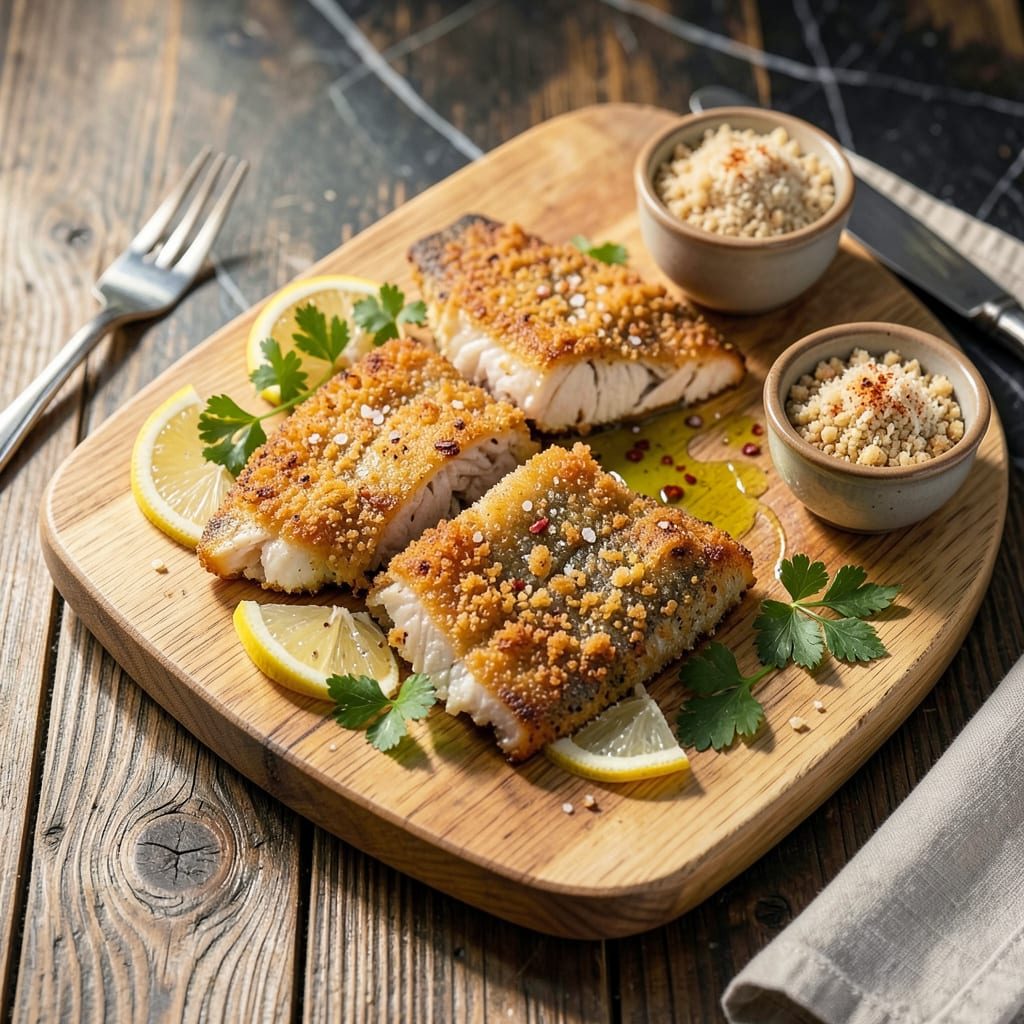
Oven-baked perch fillets deliver the perfect balance of flaky interior and golden crispy crust without the fuss of frying. This method transforms delicate white fish into a restaurant-quality dish using simple pantry staples and precise timing. The key lies in proper preparation and controlled oven heat to maintain moisture while achieving that desirable crunch.
By focusing on fresh fillets, a light seasoned coating, and careful temperature management, you’ll produce tender perch that separates easily with a fork. The technique ensures even cooking without drying out the fish, making it an ideal weeknight meal that’s both elegant and effortless. Serve with lemon wedges to enhance the natural sweetness of the perch.
Ingredients for Perch Fillet Recipe Oven
Fresh perch fillets and pantry essentials create this restaurant-quality oven-baked dish with minimal effort.
| Ingredient | Amount | Notes |
|---|---|---|
| Fresh perch fillets 🐟 | 1 ½ lb | Skin-on or skinless, about 1/2-inch thick |
| All-purpose flour 🌾 | ½ cup | For light dredging consistency |
| Fine dry breadcrumbs 🍞 | ¾ cup | Panko for extra crispiness |
| Grated Parmesan cheese 🧀 | ¼ cup | Freshly grated for optimal adhesion |
| Smoked paprika 🌶️ | 1 tsp | For depth of flavor and color |
| Garlic powder 🧄 | ½ tsp | Uniform distribution preferred |
| Kosher salt 🧂 | 1 tsp | Diamond Crystal brand recommended |
| Freshly ground black pepper 🌶️ | ½ tsp | Medium-coarse grind optimal |
| Large eggs 🥚 | 2 whole | For binding the coating |
| Extra-virgin olive oil 🫒 | 3 tbsp | Divided for brushing and drizzling |
| Unsalted butter 🧈 | 2 tbsp | Melted for golden finish |
| Fresh lemon wedges 🍋 | 4 slices | For serving and brightening |
| Fresh flat-leaf parsley 🌿 | 2 tbsp | Finely chopped for garnish |
| Dijon mustard 🟡 | 1 tbsp | For flavor enhancement in coating |
The perch fillets are paramount for success. Optimal quality requires fresh, never frozen fillets from reputable seafood markets or the fresh seafood counter at Whole Foods or Wegmans. Look for fillets with vibrant color and no fishy odor, approximately 1/2-inch thick for even cooking. The Parmesan should be freshly grated from a wedge—pre-shredded contains anti-caking agents that inhibit proper browning. Professional kitchens use Diamond Crystal kosher salt for its clean flavor and precise measurement properties.
For the breadcrumb coating, Japanese-style panko yields superior crispiness compared to standard breadcrumbs. If unavailable, pulse dried bread slices in a food processor until fine crumbs form. The smoked paprika can be substituted with regular paprika plus 1/8 tsp cayenne for similar depth. Egg substitutes like aquafaba (3 tbsp per egg) work for binding, though traditional eggs provide optimal adhesion. Standard practice is using room temperature eggs for smoother incorporation into the coating mixture.
Prepare all components just before assembly to maintain texture integrity. The coated fillets can rest 15 minutes before baking without compromising crispness. Store any uncooked fillets on ice for up to 12 hours, though immediate cooking yields best results. Leftover cooked perch keeps 2-3 days refrigerated in airtight containers, though the crust loses some crispness upon reheating. The lemon wedges and parsley garnish should be added immediately before serving to preserve their vibrant qualities.
Why You’ll Love This Recipe
- No-Fuss Breading: I skip the egg wash—just flour, breadcrumbs with Parmesan, and a quick press. The smoked paprika sticks right to the fillets without any messy dredging stations.
- That Golden Crunch: Honestly, the oven gives it a better texture than frying. The breadcrumbs toast up crisp while the perch stays flaky, and the Parmesan adds this salty, nutty bite that makes every forkful worth it.
- Weeknight Lifesaver: Between us, this is my 25-minute dinner when I’ve got nothing planned. It pairs just as well with a sad bagged salad as it does with roasted potatoes and lemon wedges.
- Leftovers? No Problem: Cold perch fillets hold their shape in lunch wraps or flake perfectly into pasta. I’ll be real: they’re even better the next day with a squeeze of fresh lemon to wake up the flavors.
Step-by-Step Instructions for Oven-Baked Perch Fillets
This method ensures perfectly crispy, golden fillets with tender, flaky interiors every time.
Step 1: Prepare the Breading Station
Set up three shallow dishes for dredging. In the first, combine the 0.5 cup all-purpose flour, 1 tsp kosher salt, 0.5 tsp freshly ground black pepper, 1 tsp smoked paprika, and 0.5 tsp garlic powder. Whisk until evenly distributed. The smoked paprika adds subtle depth while the garlic powder provides uniform flavor distribution.
In the second dish, whisk the 2 whole large eggs with the 1 tbsp Dijon mustard until fully emulsified. The mustard enhances adhesion and adds a subtle tang. For the third dish, mix the 0.75 cup fine dry breadcrumbs with the 0.25 cup grated Parmesan cheese, ensuring the cheese is freshly grated for optimal texture.
Step 2: Coat the Perch Fillets
Pat the 1.5 lb fresh perch fillets completely dry with paper towels—this is crucial for crispiness. Working one fillet at a time, dredge in the seasoned flour, shaking off excess. Dip into the egg mixture, allowing excess to drip off, then press firmly into the breadcrumb-Parmesan mixture. Apply gentle pressure to ensure the coating adheres evenly.
Place the coated fillets on a wire rack set over a baking sheet. This elevation prevents the bottoms from steaming during baking. For extra crispiness, let the coated fillets rest for 5 minutes before baking—this helps the coating set and adhere better during cooking.
Step 3: Bake to Golden Perfection
Position an oven rack in the upper-middle position and preheat to 425°F. Drizzle 2 tbsp extra-virgin olive oil over the fillets, then bake for 12-15 minutes until the coating is deep golden brown and the fish flakes easily with a fork. The high heat ensures rapid crisping without overcooking the delicate fish.
During the final 2 minutes of baking, melt the 2 tbsp unsalted butter and brush it over the fillets. This creates an irresistible golden sheen and adds rich flavor. Watch closely—you want the butter to sizzle but not burn when it hits the hot fillets.
Step 4: Finish and Serve
Remove the fillets from the oven when the internal temperature reaches 145°F and the coating is uniformly crisp. Transfer to a serving platter and let rest for 2 minutes—this brief rest maintains the crisp texture while allowing the fish to finish cooking gently.
Garnish with the 2 tbsp fresh flat-leaf parsley, finely chopped, and serve immediately with the 4 slices fresh lemon wedges. The bright acidity of the lemon cuts through the richness, while the parsley adds fresh contrast to the crisp, golden fillets.
Make-Ahead Tips for This Recipe
Prep Ahead Strategy
You can prepare the breading station up to 12 hours in advance. Mix the flour with spices in one container, whisk the eggs with Dijon in another, and combine breadcrumbs with Parmesan in a third. Store each component separately in airtight containers in the fridge. This saves precious time when you’re ready to cook. 💡
Coating in Advance
For maximum convenience, coat the fillets completely up to 4 hours before baking. Place them on a wire rack over a baking sheet, cover loosely with plastic wrap, and refrigerate. The cold helps the coating set firmly. Just
Freezing Uncooked Fillets
Uncooked, coated fillets freeze beautifully for up to 1 month. Arrange them on a parchment-lined tray, freeze until solid (2 hours), then transfer to a freezer bag. When ready to bake, add 3-4 minutes to the cooking time—no need to thaw. This is perfect for meal prep!
Pre-Baked Option
You can bake the fillets 90% of the way (about 10 minutes at 425°F), then cool and refrigerate for up to 24 hours. Finish baking at 375°F for 5-7 minutes until crisp and heated through. This method works great for dinner parties.
Lemon Prep Tip
Cut and store lemon wedges in a small container with a damp paper towel up to 2 days ahead. This keeps them juicy and fresh. I like to make extra—guests always appreciate having seconds! The bright acidity really makes the dish sing.
Parsley Storage
Wash and dry parsley, then wrap in a paper towel and store in a ziplock bag for up to 5 days. Chop just before serving to maintain its vibrant color and fresh flavor. This little prep step makes serving day so much smoother.
Nutrition Facts

- 6 Egg Cake Recipe with Oil: Light as Air With Buttery Moisture - October 4, 2026
- 4 Bean Casserole Recipe: One-Pan Heartiness With Smoky Paprika Depth - October 4, 2026
- 3-Ingredient Keto Mug Cake Recipe: Microwave Magic in 2 Minutes - October 4, 2026