
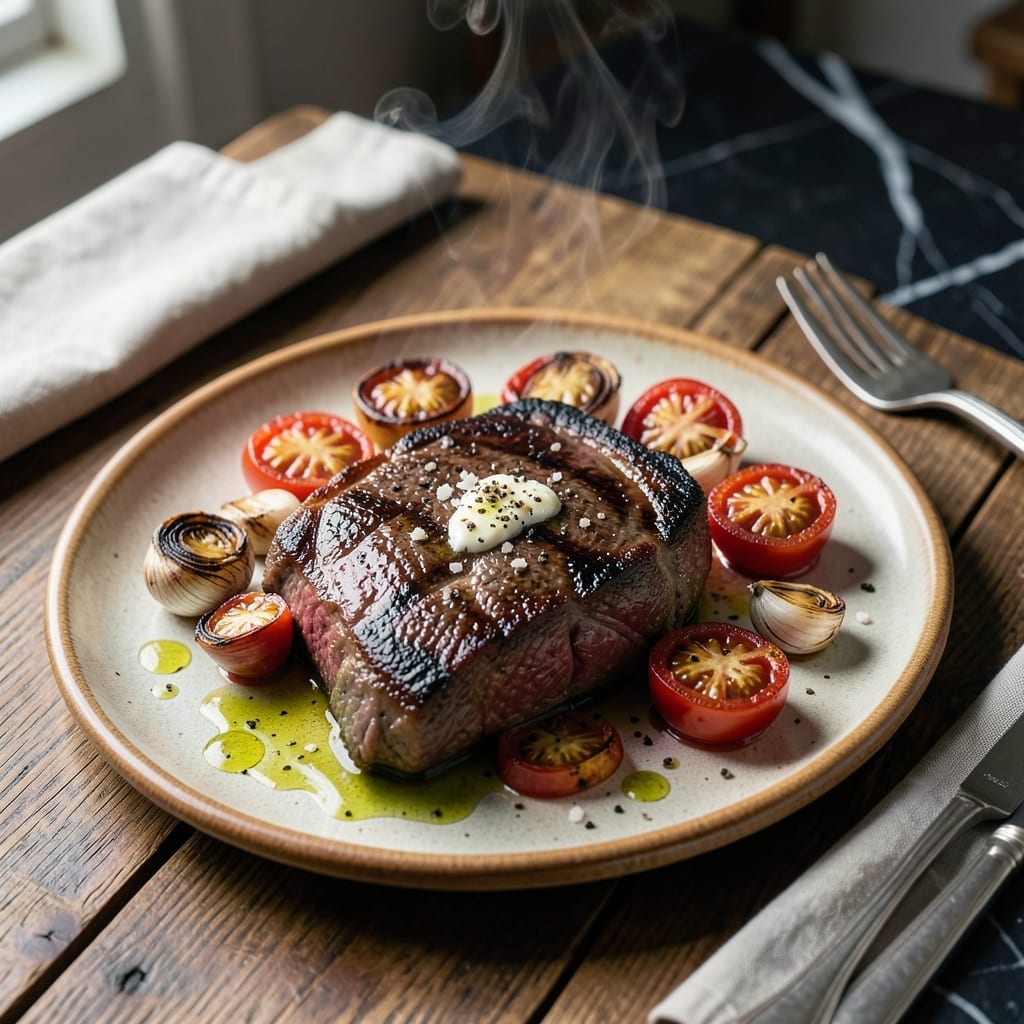
This is the steakhouse-quality method I’ve refined over years of testing. The secret lies in a high-heat sear that creates a deep, caramelized crust while keeping the inside perfectly medium-rare. No fancy equipment needed—just a heavy pan and good technique.
What sets this apart is the precision. I use a simple but foolproof approach: dry the steak thoroughly, season aggressively, and control the heat carefully. The result is a juicy center with a crust so crisp it shatters with each bite.
Timing is everything. A thick cut, a screaming-hot pan, and a 5-minute rest after cooking ensure even doneness from edge to edge. This method works for ribeye, strip, or filet—every time.
Serve it with compound butter or a sprinkle of flaky salt. The details matter, and this recipe delivers perfect results without fail.
Ingredients for Perfect Steak
Steakhouse quality starts with thick-cut ribeyes and a handful of precision ingredients.
| Ingredient | Amount | Notes |
|---|---|---|
| Ribeye Steaks 🥩 | 2 whole | 1.5 inches thick, bone-in preferred |
| Kosher Salt 🧂 | 1 ½ tbsp | Diamond Crystal brand recommended |
| Coarsely Ground Black Pepper 🌶️ | 1 tbsp | Freshly cracked for best texture |
| Grapeseed Oil 🫒 | 2 tbsp | High smoke point essential |
| Unsalted Butter 🧈 | 4 tbsp | European-style preferred for basting |
| Garlic Cloves 🧄 | 4 cloves | Lightly crushed, peeled |
| Fresh Thyme Sprigs 🌿 | 4 sprigs | Optional for aromatic basting |
| Fresh Rosemary Sprigs 🌿 | 2 sprigs | Optional for aromatic basting |
| Flaky Sea Salt 🧂 | ½ tsp | For finishing, Maldon recommended |
| Compound Butter 🧈 | ¼ cup | Optional for serving, room temperature |
The steak is paramount here. Ribeye with generous marbling delivers the juiciest, most flavorful results. Source from a reputable butcher or Whole Foods for consistent quality. Thickness matters—1.5-inch cuts ensure a proper crust without overcooking the center. Bone-in adds flavor but boneless works fine. Dry the surface thoroughly with paper towels before seasoning.
No ribeye? New York strip or filet mignon are excellent alternatives, though strip benefits from the same high-heat approach. Grapeseed oil’s high smoke point is non-negotiable for the sear—avocado oil works too. Fresh herbs for basting can be swapped: sage or tarragon add interesting dimensions. For garlic, pre-minced in jars lacks the punch of fresh, so avoid if possible.
Resting is mandatory—5 minutes minimum allows juices to redistribute. Store raw steaks in the coldest part of your fridge for up to 3 days. Compound butter can be made ahead and refrigerated for 1 week or frozen for 3 months.
Why You’ll Love This Recipe
- Five-Ingredient Magic: Honestly, I just need salt, pepper, oil, butter, and a good ribeye to make this foolproof.
- Crispy Butter Crust: That golden sear from the grapeseed oil and butter combo? It’s what steak dreams are made of.
- Date Night Ready: I’ve served this for anniversaries and random Tuesdays—Equally impressive both times.
- Leftovers (If Any): Between us, the cold slices make the best next-day sandwiches.
Step-by-Step Instructions for Perfect Steak
Master the technique and you’ll produce competition-quality results with every cook.
Step 1: Season the Ribeye Steaks Aggressively
Pat the ribeye steaks completely dry with paper towels. Any moisture on the surface will prevent proper searing and create steam instead of a crust. I use a fresh towel for each steak to ensure absolute dryness.
Season both sides liberally with the 1.5 tbsp Kosher Salt and 1 tbsp Coarsely Ground Black Pepper. Don’t be shy—these thick cuts can handle aggressive seasoning. Press the seasoning into the meat so it adheres well during cooking. Let the seasoned steaks sit at room temperature for 30-45 minutes to take the chill off.
Step 2: Sear in Ripping-Hot Grapeseed Oil
Place a heavy skillet (cast iron preferred) over high heat until smoking hot. Add the 2 tbsp Grapeseed Oil and swirl to coat the pan. The oil should shimmer but not smoke excessively—this indicates the optimal searing temperature.
Carefully lay the steaks in the pan, away from you to avoid splatter. Sear undisturbed for 2-3 minutes per side until a deep mahogany crust forms. Use tongs to press down gently on any areas that aren’t making full contact with the pan. The steaks should release easily when properly seared.
Step 3: Baste with Aromatics and Unsalted Butter
Reduce heat to medium and add the 4 tbsp Unsalted Butter, 4 cloves Garlic Cloves, 4 sprigs Fresh Thyme Sprigs, and 2 sprigs Fresh Rosemary Sprigs. Tilt the pan slightly to pool the butter.
Spoon the foaming butter continuously over the steaks for 1-2 minutes, basting each side thoroughly. The butter will brown slightly and the aromatics will infuse their essence into the meat. Watch the butter carefully—it should be a rich golden color, not black.
Step 4: Rest and Finish with Flaky Sea Salt
Transfer the steaks to a cutting board and immediately sprinkle with the 0.5 tsp Flaky Sea Salt. This final seasoning adds a delicate crunch and bright salinity that complements the rich beef.
Let the steaks rest undisturbed for 8-10 minutes to allow the juices to redistribute. The internal temperature will rise 5-10°F during this period (carryover cooking). Tent loosely with foil if needed, but don’t seal completely—you want the steam to escape to maintain the crust.
Slice against the grain just before serving. For an extra indulgent touch, top each serving with a dollop of the 0.25 cup Compound Butter as it melts into the warm steak.
Pro Tips For Making Perfect Steak
- Dry the Steak: Pat the ribeye completely dry with paper towels before seasoning—moisture is the enemy of a good sear. I learned this the hard way after too many steaks steamed instead of sizzled.
- Salt Aggressively: Use more kosher salt than feels natural, at least 1 teaspoon per side for a 1-inch ribeye. Sounds like overkill, but it’s the only way to get that deep, even seasoning.
- Rest Under Foil: Tent the steak with foil and let it rest for 5-10 minutes after cooking—it locks in the juices. Skip this and you’ll watch half your dinner bleed out on the cutting board.
- Baste with Butter: Tilt the pan and spoon that melted unsalted butter over the steak in the last minute. My grandmother swore by this, and she was right: it adds a rich, glossy finish you can’t get any other way.
Make-Ahead Tips for perfect steak
Prep Ahead Strategy
Season your steaks up to 24 hours ahead and store uncovered on a wire rack in the fridge. This dries the surface for a better sear while letting the salt penetrate deeply. I always do this when hosting dinner parties. 💡
Compound Butter Prep
Mix your 0.25 cup Compound Butter with herbs up to 3 days in advance. Roll into a log in parchment paper and chill. Slice off coins as needed—this saves last-minute stress and infuses more flavor as it sits.
Herb Storage
Keep fresh thyme and rosemary in damp paper towels in a sealed container for up to 1 week. For garlic, store whole heads in a cool, dark place—they’ll stay fresh for 3-4 weeks.
Room Temp Trick
Take steaks from the fridge 1 hour before cooking for even cooking. If you’re short on time, submerge sealed steaks in warm water for 20 minutes to bring them to temp quickly without cooking the exterior.
Pan Prep
Clean and dry your cast iron immediately after use, then rub with a thin layer of oil while warm. This maintains the non-stick surface and prevents rust. A well-seasoned pan is essential for that perfect sear.
Garlic Prep
Crush your 4 cloves Garlic up to 2 days ahead and store in a small airtight container. The flavor intensifies slightly over time, adding depth to your basting butter.
Nutrition Facts
Frequently Asked Questions
What’s the ideal internal temperature for medium-rare?
Aim for 125-130°F before resting. The temp will rise to 130-135°F during the 8-10 minute rest. Use a meat thermometer for precision.
Can I use olive oil instead of grapeseed?
Extra virgin olive oil has a lower smoke point and may burn. For best results, stick with grapeseed or avocado oil. If using olive oil, choose light/refined.
How thick should my steak be?
For even cooking, choose cuts at least 1.5 inches thick. Thinner steaks overcook easily. Bone-in ribeyes often have ideal thickness naturally.
Why does my steak get tough after cooking?
Overcooking is the main culprit. Also, not resting long enough (5-10 minutes) causes juices to escape. Always slice against the grain too.

- 6 Egg Cake Recipe with Oil: Light as Air With Buttery Moisture - October 4, 2026
- 4 Bean Casserole Recipe: One-Pan Heartiness With Smoky Paprika Depth - October 4, 2026
- 3-Ingredient Keto Mug Cake Recipe: Microwave Magic in 2 Minutes - October 4, 2026