
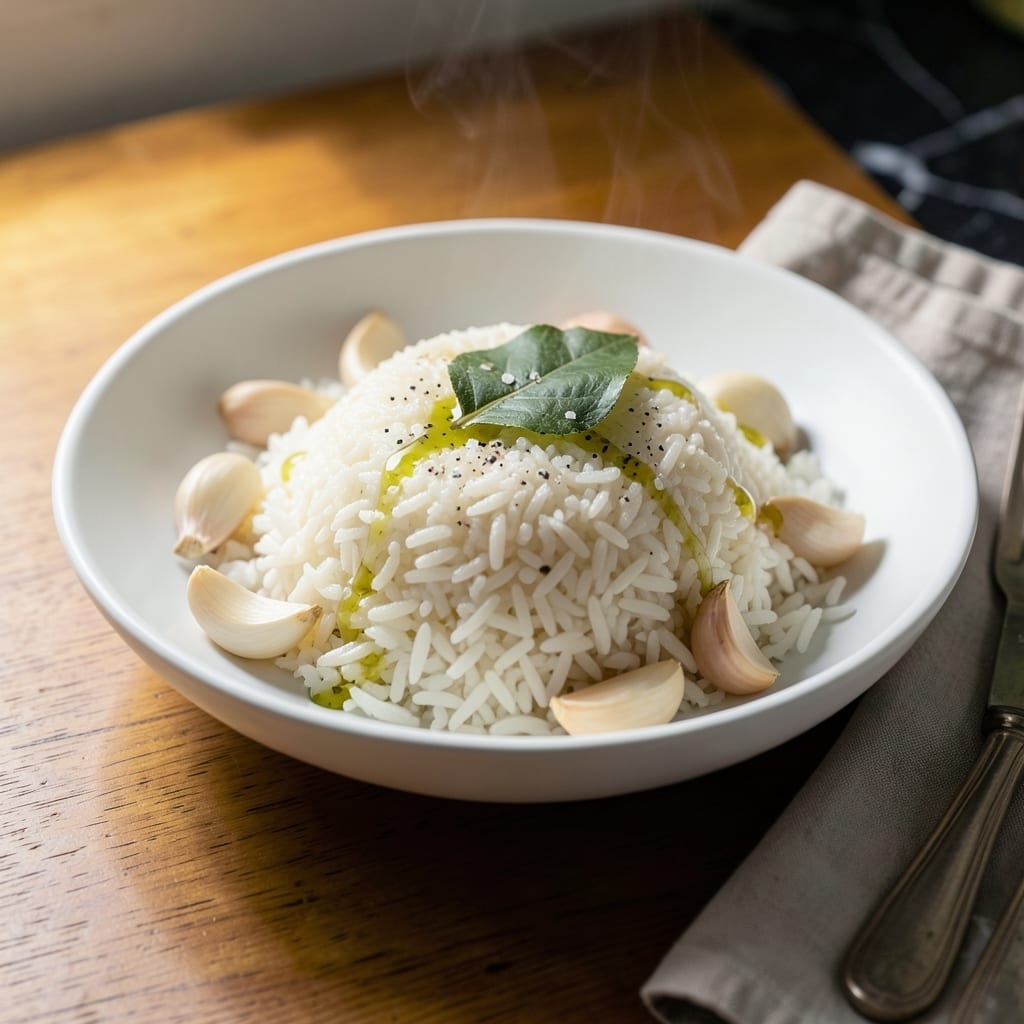
Achieving perfect white rice is simpler than you might think. The key lies in the precise ratio of water to rice and proper cooking technique.
I’ve tested countless methods to find the most reliable approach. This technique delivers fluffy, separate grains without sticking or mushiness every time.
With just a few steps and minimal ingredients, you’ll have rice that pairs beautifully with any meal. The process is straightforward yet foolproof.
No special equipment is needed—just a pot, water, and rice. This is the foundation of countless dishes, done right.
Ingredients for Perfect White Rice
Minimal ingredients, maximum results. The foundation of countless meals starts here.
| Ingredient | Amount | Notes |
|---|---|---|
| Long-Grain White Rice 🌾 | 2 cups | Jasmine or basmati preferred |
| Water 💧 | 4 cups | Filtered for best results |
| Kosher Salt 🧂 | 1 tsp | Diamond Crystal preferred |
| Neutral Oil 🫒 | 1 tbsp | Avocado or vegetable oil |
| Garlic Cloves 🧄 | 2 cloves | Minced, optional for flavor |
| Bay Leaves 🍃 | 1 whole | Optional for aroma |
| Fresh Cilantro 🌿 | ¼ cup | Chopped, for garnish |
| Lime 🍋 | 1 whole | Zested and juiced, optional |
| Toasted Sesame Oil 🫒 | ½ tsp | Optional for finishing |
| Scallions 🧅 | 2 whole | Thinly sliced for garnish |
The rice itself is critical—Jasmine or basmati yields the fluffiest grains. Look for unbroken grains with a vibrant white color at Whole Foods or any Asian market. Water quality affects texture, so filtered water is ideal. Avoid instant rice, which lacks the structure needed for separate grains. The salt should be Diamond Crystal kosher for even seasoning without overpowering.
No jasmine or basmati? Long-grain white rice works fine—just avoid short-grain varieties. For extra flavor, toasted sesame oil adds depth as a finisher. Fresh herbs can be swapped—parsley or green onions work if cilantro isn’t your thing. The lime zest brightens the dish, but lemon works equally well. Skip the garlic and bay leaves if simplicity is the goal.
Cooked rice keeps 4-5 days refrigerated in an airtight container. Freeze for up to 3 months in portioned bags. Reheat with a splash of water to restore moisture. Always rinse rice before cooking—removes excess starch for perfect separation.
Why You’ll Love This Recipe
- Set It and Forget: I just rinse the rice, add water and a pinch of salt, then let the pot do all the work.
- Garlic Magic: The sizzle of garlic in that hot oil before adding rice fills my kitchen with the most comforting smell—simple but so flavorful.
- Pairs With Anything: It’s my go-to side for stir-fries, grilled chicken, or even just a fried egg on top. Honestly, it never gets old.
- Budget Stretch: A 2-pound bag of long-grain rice costs pennies and makes enough for multiple meals. I’ll be real: it’s my wallet’s best friend.
Step-by-Step Instructions for Perfect White Rice
Master the technique for consistently fluffy, separate grains with minimal effort.
Step 1: Rinse and Prepare the Rice
Place the 2 cups Long-Grain White Rice in a fine-mesh strainer and rinse under cold running water until the water runs clear. This critical step removes excess starch, which is the primary cause of sticky, clumped rice. I always give it a good shake in the strainer to ensure thorough rinsing.
While the rice drains, combine the 4 cups Water, 1 tsp Kosher Salt, 1 tbsp Neutral Oil, 2 cloves Garlic Cloves, and 1 whole Bay Leaves in your cooking pot. The oil helps prevent sticking, while the garlic and bay leaf add subtle aromatic depth to the finished dish.
Step 2: Cook with Precise Heat Control
Bring the water mixture to a rolling boil over high heat. Once boiling, add the drained rice and stir gently to distribute the grains evenly. Return to a boil, then immediately reduce the heat to low, cover with a tight-fitting lid, and begin timing for 15 minutes.
Resist the urge to lift the lid during this cooking period. Steam is your ally here, and releasing it prematurely can lead to uneven cooking. You should see gentle steam escaping from the lid’s edges—this confirms the proper temperature is maintained.
Step 3: Rest and Steam Off Heat
After 15 minutes, turn off the heat but keep the pot covered. Let it rest undisturbed for an additional 10 minutes. This steaming period is when the magic happens—the grains absorb the remaining moisture and firm up, while the residual heat ensures even doneness throughout.
You’ll notice the rice has absorbed all the water when you lift the lid. The surface should appear dry with small steam holes where the grains have expanded. If there’s any remaining liquid, replace the lid and let it sit for 2-3 more minutes.
Step 4: Fluff and Finish
Use a fork to gently fluff the rice from the bottom up, breaking apart any clumps and aerating the grains. This step separates the individual pieces and releases excess steam, preventing sogginess. The rice should be tender with a slight bite, and the grains should hold their shape without sticking together.
For serving, transfer to a bowl and garnish with 0.25 cup Fresh Cilantro, a squeeze of 1 whole Lime, a drizzle of 0.5 tsp Toasted Sesame Oil, and 2 whole Scallions. These finishing touches add brightness and freshness that elevate the dish from simple side to standout accompaniment.
Pro Tips For Making Perfect White Rice
- Rinse the rice: I learned this the hard way—skipping the rinse leaves your rice gummy. Swirl it in a fine-mesh strainer under cold water until the water runs clear.
- Toast the grains: Heat the rice in the oil for 2-3 minutes before adding liquid. Sounds weird, but it works—adds a subtle nutty depth.
- Use the right ratio: For long-grain white rice, stick to 1:1.5 rice-to-water ratio. After burning three batches, I finally figured out precise measurements matter most.
- Let it steam: Once cooked, turn off the heat and let it sit covered for 10 minutes. My grandmother swore by this, and she was right—it guarantees fluffy, separate grains.
Flavor Customization for This perfect white rice
Citrus and Herb
Add zest from 1 lime and 2 tbsp chopped cilantro directly to the cooking water for a bright, fresh flavor. The citrus oils infuse the rice during cooking. Finish with an extra squeeze of lime juice before serving.
Garlic and Aromatic
Sauté 2 minced garlic cloves in the 1 tbsp neutral oil before adding water and rice. Toss in 1 bay leaf for subtle depth. This creates a fragrant base that makes the rice taste like it’s from a restaurant.
Asian-Inspired
Swap water for an equal amount of low-sodium chicken broth and add ½ tsp toasted sesame oil to the finished rice. Garnish with 2 sliced scallions for a clean, savory twist that pairs perfectly with stir-fries.
Spiced and Warm
Stir in ½ tsp turmeric or ½ tsp cumin into the water before cooking for a golden hue and earthy flavor. A pinch of saffron (about 5 threads) adds luxury if you’re feeling fancy. 💛
Simple and Classic
Skip all add-ins and focus on perfect technique. Use filtered water and Diamond Crystal salt for the purest flavor. Sometimes the simplest version is the most versatile for pairing with any cuisine.
Coconut Rice
Replace 1 cup water with 1 cup coconut milk for a rich, slightly sweet variation. The grains absorb the coconut flavor beautifully, making this ideal for tropical-inspired meals. 🌴
Nutrition Facts
Frequently Asked Questions
What’s the ideal water-to-rice ratio?
Use a 2:1 ratio of water to rice. For 2 cups rice, you’ll need 4 cups water. This ensures proper absorption for fluffy results every time.
Should I rinse the rice before cooking?
Always rinse until the water runs clear. This removes excess starch that can make rice sticky. Skipping this step often leads to clumpy, less fluffy results.
How long should I let it rest after cooking?
Let it sit covered for 10 minutes off heat. This allows the grains to steam and firm up completely. Lifting the lid too soon releases valuable steam.
Can I use a rice cooker instead?
Use the same 2:1 ratio and follow your cooker’s instructions. Most have automatic settings that handle the timing and resting for you.

- 6 Egg Cake Recipe with Oil: Light as Air With Buttery Moisture - October 4, 2026
- 4 Bean Casserole Recipe: One-Pan Heartiness With Smoky Paprika Depth - October 4, 2026
- 3-Ingredient Keto Mug Cake Recipe: Microwave Magic in 2 Minutes - October 4, 2026