
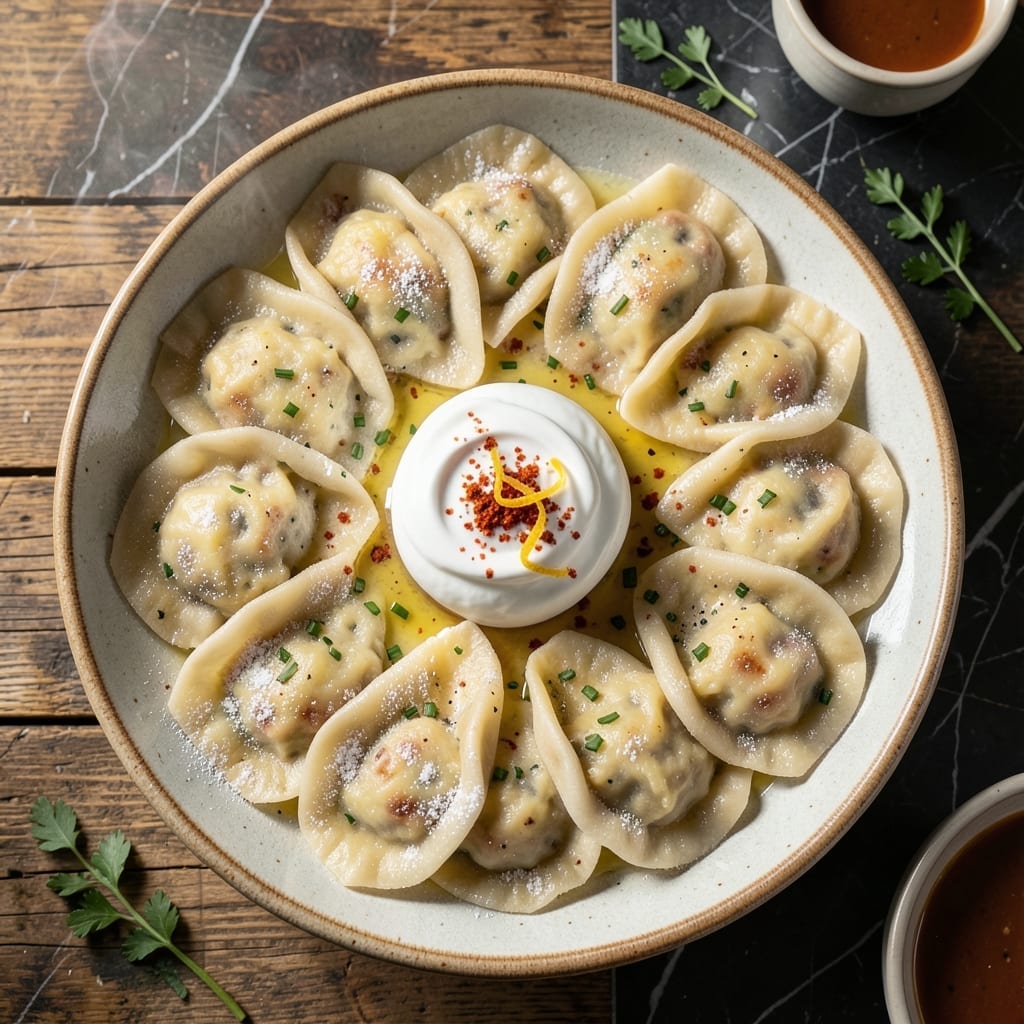
These soft dumplings represent the heart of Eastern European comfort food, with a pillowy dough hugging a rich potato and cheese center. I developed this method to ensure the perfect texture every time.
The dough comes together with simple pantry staples, while the filling uses mashed potatoes and farmer’s cheese for authentic flavor. The key is keeping the dough thin but not translucent for that ideal tender bite.
Boiling first sets the shape, then pan-frying creates a golden crust that contrasts beautifully with the creamy filling. Each bite delivers that traditional taste and texture.
Serve with sour cream and caramelized onions for the classic presentation, or try modern twists with different fillings. This method never fails to deliver restaurant-quality results at home.
Ingredients for Perogie
Simple pantry staples and fresh ingredients create these pillowy Eastern European dumplings with rich potato-cheese filling.
| Ingredient | Amount | Notes |
|---|---|---|
| All-Purpose Flour 🌾 | 3 cups | Plus extra for dusting |
| Warm Water 💧 | ¾ cup | Approximately 110°F |
| Large Egg 🥚 | 1 whole | Room temperature |
| Unsalted Butter 🧈 | 2 tbsp | Melted and cooled |
| Salt 🧂 | 1 tsp | Divided between dough and filling |
| Russet Potatoes 🥔 | 2 whole | Medium-sized, peeled and cubed |
| Farmer's Cheese 🧀 | 1 cup | Dry cottage cheese works too |
| Yellow Onion 🧅 | 1 whole | Finely diced for filling |
| Sour Cream 🥛 | ½ cup | For serving, full-fat preferred |
| Unsalted Butter 🧈 | 4 tbsp | For pan-frying perogies |
| Yellow Onions 🧅 | 2 whole | Thinly sliced for caramelizing |
| Olive Oil 🫒 | 1 tbsp | For sautéing onions |
| Black Pepper 🌶️ | ½ tsp | Freshly ground for filling |
The flour is paramount for achieving the correct dough consistency. King Arthur all-purpose is ideal for its reliable protein content, but any standard brand works. The farmer’s cheese is non-negotiable for authenticity—find it at Polish delis or specialty grocers like Whole Foods. If unavailable, dry cottage cheese (drained thoroughly) is a suitable substitute, though the texture will differ slightly.
No farmer’s cheese? Dry cottage cheese at full quantity or ricotta with half the moisture pressed out works in a pinch. For the potatoes, Russets yield the fluffiest filling, but Yukon Golds add natural buttery flavor. The dough must be thin enough to fold easily but not so thin it tears—1/8-inch thickness is optimal. If the dough resists rolling, let it rest 10 minutes longer.
Unused dough can be wrapped tightly and refrigerated for 24 hours. Cooked perogies freeze beautifully on a tray before bagging—3 months maximum. Caramelize extra onions and store in the fridge for 5 days; they reheat perfectly and save time for future batches.
Why You’ll Love This Recipe
- Minimal Ingredients: I love that this only needs flour, water, egg, butter, and salt—no fancy pantry items.
- Buttery Comfort: That rich unsalted butter in the dough makes every bite melt-in-your-mouth tender.
- Freezer Friendly: I make a double batch and freeze half for lazy dinners. Honestly, they reheat like a dream.
- Budget Stretcher: A pound of flour and a few basics yields dozens of perogies—feeds my family for days.
Step-by-Step Instructions for Pillowy Potato And Cheese Pockets
Master the technique for these Eastern European dumplings with perfectly tender dough and flavorful filling.
Step 1: Prepare the Dough
In a large mixing bowl, combine the 3 cups All-Purpose Flour with ½ teaspoon Salt. Create a well in the center and add the 1 whole Large Egg, 2 tbsp Unsalted Butter, and 0.75 cup Warm Water.
Mix with a wooden spoon until a shaggy dough forms, then turn it out onto a lightly floured surface. Knead for 8-10 minutes until smooth and elastic. The dough should spring back when pressed lightly—this develops the gluten for that perfect chewy texture.
Wrap the dough in plastic and let it rest at room temperature for 30 minutes. This relaxation period makes rolling much easier and prevents shrinking when you cut the circles.
Step 2: Make the Filling
Boil the 2 whole Russet Potatoes in salted water until fork-tender, about 15-20 minutes. Drain and return them to the pot to steam dry for 2 minutes, then mash until completely smooth with no lumps.
In a skillet, heat the 1 tbsp Olive Oil over medium heat and sauté the 1 whole Yellow Onion (finely diced) until translucent and sweet, about 8-10 minutes. Mix the onions into the potatoes along with the 1 cup Farmer’s Cheese, remaining ½ teaspoon Salt, and 0.5 tsp Black Pepper.
The filling should be thick enough to hold its shape when spooned. Let it cool completely before assembling to prevent the dough from becoming soggy.
Step 3: Assemble the Perogies
On a floured surface, roll the rested dough to ⅛-inch thickness. Use a 3-inch round cutter to cut circles, re-rolling scraps as needed. Keep unused dough covered with a damp towel to prevent drying.
Place 1 teaspoon of filling in the center of each circle. Fold the dough over to form a half-moon, press the edges firmly to seal, then crimp with your fingers or a fork. The seal must be tight to prevent bursting during cooking—test one in boiling water first if unsure.
Step 4: Cook and Serve
Bring a large pot of salted water to a gentle boil. Drop in the perogies in batches, stirring gently to prevent sticking. Cook for 3-4 minutes after they float to the surface—they should be slightly puffed with translucent dough.
Remove with a slotted spoon and, if desired, pan-fry in 4 tbsp Unsalted Butter over medium heat for 2-3 minutes per side until golden brown. Serve immediately with the 0.5 cup Sour Cream and remaining caramelized 2 whole Yellow Onions.
Pro Tips For Making Perogie
- Knead Until Smooth: Work the dough for at least 5 minutes until it’s silky—any less and your perogies will crack when boiling. I learned this the hard way after my first three batches fell apart in the pot.
- Use Lukewarm Water: Too hot and you’ll cook the egg, too cold and the flour won’t bind properly. Aim for about 110°F, like warm bathwater.
- Don’t Overfill: A teaspoon of filling per dumpling max, or they’ll burst while cooking. Sounds fussy, but it’s the only way to keep them intact.
- Butter Generously: Toss the boiled perogies in melted butter right away—about 2 tablespoons—to prevent sticking and add flavor. My grandmother swore by this, and she was right.
Best Sauces and Condiments for perogie
Classic Sour Cream
Full-fat sour cream is non-negotiable for authenticity. Its tangy richness perfectly balances the creamy potato filling. I use Breakstone’s or Knudsen brands for their thick texture. Serve it chilled to create a refreshing contrast with the warm perogies. 💛
Caramelized Onions
Slow-cook 2 thinly sliced yellow onions in 1 tbsp olive oil over low heat for 30-40 minutes until deep golden brown. The sweetness complements the savory filling beautifully. I always make a double batch—they keep well in the fridge for 5 days.
Buttery Garlic Sauce
Melt 4 tbsp butter with 3 minced garlic cloves and 1 tbsp fresh parsley. Drizzle this aromatic sauce over pan-fried perogies for an extra layer of flavor. The garlic infuses the butter with a fragrant kick that elevates each bite.
Spicy Mustard Dip
Mix 2 tbsp Dijon mustard with 1 tbsp honey and ½ tsp paprika. This sweet-spicy combination adds a zesty contrast to the rich filling. I prefer Grey Poupon for its smooth texture and bold flavor.
Adjust the sweetness by adding more honey to taste. ✨
Bacon and Chive
Crisp 4 slices bacon and crumble over your perogies, then sprinkle with 2 tbsp chopped fresh chives. The salty-smoky bacon pairs wonderfully with the creamy filling, while chives add a fresh, oniony bite.
Nutrition Facts
Frequently Asked Questions
Can I use a different type of potato?
Russets work best for fluffy filling, but Yukon Golds add natural buttery flavor. Avoid waxy varieties like red potatoes as they won’t mash as smoothly.
Why did my perogies burst while cooking?
This usually happens if the dough is too thin or the filling too wet. Seal edges tightly and ensure filling is thick. Test one first to check.
Can I bake instead of pan-fry?
Yes! Toss boiled perogies with 1 tbsp oil and bake at 400°F for 15-20 minutes, flipping halfway. They’ll be crispy but less buttery.
How do I store leftover perogies?
Cooked perogies keep in the fridge for 3-4 days in an airtight container. Reheat by pan-frying or microwaving with a damp paper towel.

- 6 Egg Cake Recipe with Oil: Light as Air With Buttery Moisture - October 4, 2026
- 4 Bean Casserole Recipe: One-Pan Heartiness With Smoky Paprika Depth - October 4, 2026
- 3-Ingredient Keto Mug Cake Recipe: Microwave Magic in 2 Minutes - October 4, 2026