
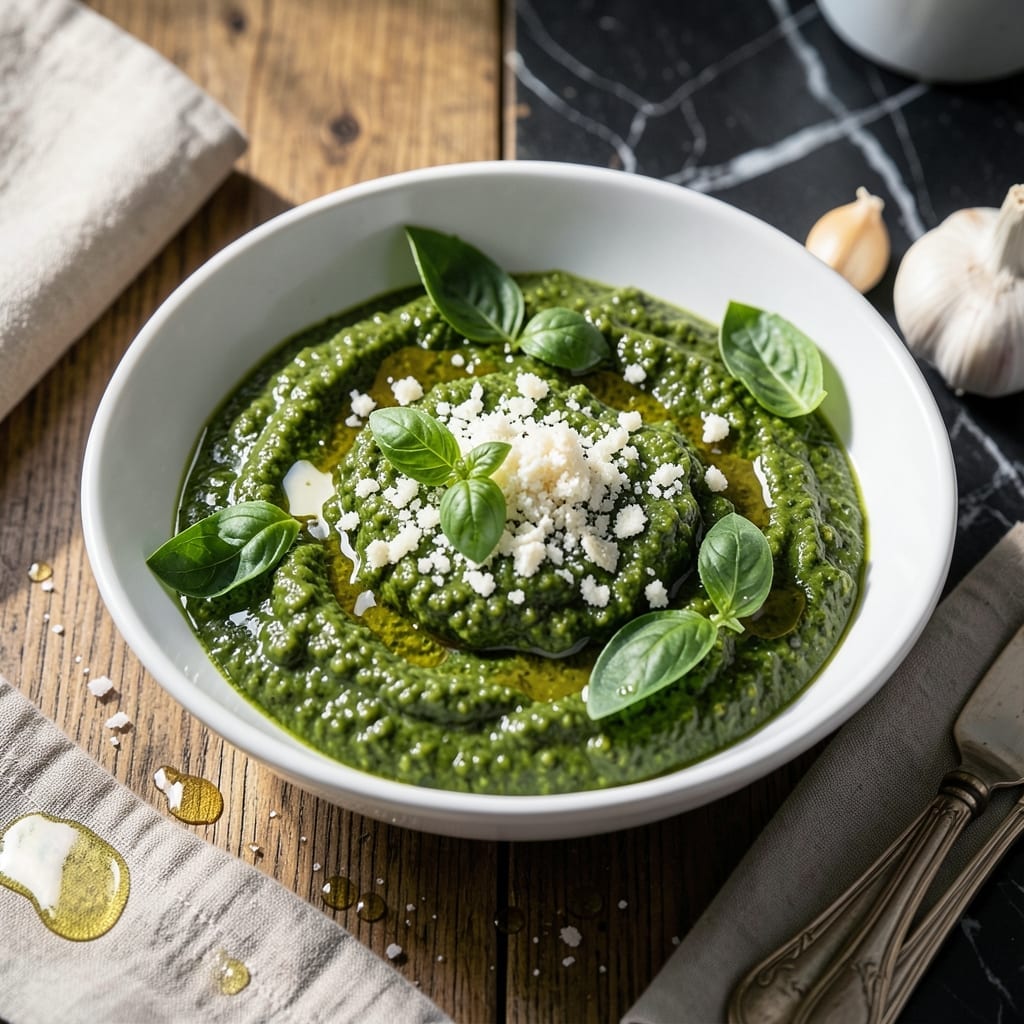
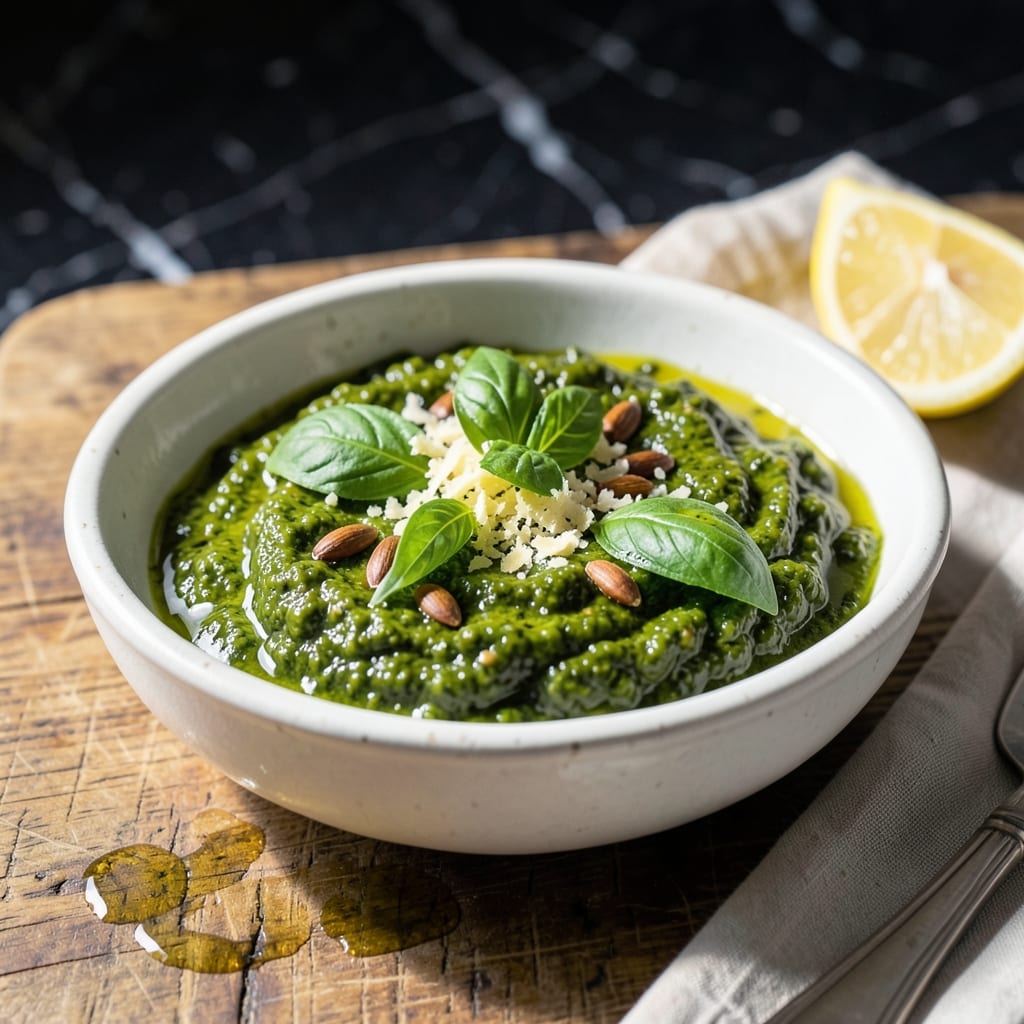
This nut-free pesto delivers the same vibrant basil flavor and creamy texture you expect from traditional versions. The secret lies in using sunflower seeds as a base, which blend into a smooth, rich sauce without overpowering the herbs.
It comes together in 5 minutes with simple ingredients, and works beautifully as a pasta sauce, sandwich spread, or vegetable dip. The bright, herby taste stays fresh for days in the refrigerator.
Ingredients for Pesto Recipe No Nuts
Eight simple ingredients create this vibrant, nut-free basil sauce in minutes.
| Ingredient | Amount | Notes |
|---|---|---|
| Fresh Basil Leaves 🌿 | 2 cups | Packed, stems removed |
| Sunflower Seeds 🌻 | ½ cup | Raw, unsalted preferred |
| Garlic Cloves 🧄 | 3 cloves | Peeled, rough chopped |
| Parmesan Cheese 🧀 | ¾ cup | Freshly grated from block |
| Extra-Virgin Olive Oil 🫒 | ¾ cup | High quality, fruity |
| Lemon Juice 🍋 | 1 tbsp | Freshly squeezed preferred |
| Sea Salt 🧂 | ½ tsp | Fine grain preferred |
| Black Pepper 🌶️ | ¼ tsp | Freshly ground preferred |
The basil must be fresh—farmers market or well-stocked grocery stores carry the best. Sunflower seeds are the game-changer here; raw and unsalted ensure the cleanest flavor. For Parmesan, Parmigiano-Reggiano is non-negotiable for authentic depth. Grate it yourself from a wedge (pre-grated lacks texture). A quality extra-virgin olive oil with peppery notes elevates the entire blend.
No sunflower seeds? Pumpkin seeds (pepitas) work beautifully with a slightly earthier taste. For a vegan version, nutritional yeast at half the amount replaces Parmesan. Short on basil? Stretch with fresh parsley (max 25%). The lemon juice brightens everything—Meyer lemons add a floral note if available.
Store in an airtight container with a thin olive oil layer on top to prevent browning. Keeps for 1 week refrigerated or 6 months frozen. Portion into ice cube trays for easy single servings.
Why You’ll Love This Recipe
- 5-Minute Blend: I toss everything in the blender—basil, sunflower seeds, garlic—and it’s ready before I can even set the table.
- Bright & Zesty: The sunflower seeds add this rich nuttiness, while the garlic and Parmesan give it that sharp, fresh kick I crave.
- Spreads Everywhere: I slather it on sandwiches, mix it into pasta, or dollop it on eggs—honestly, it works on almost anything.
- Budget-Friendly Batch: Sunflower seeds cost pennies compared to pine nuts, and I can freeze extras for weeks without losing flavor.
Step-by-Step Instructions for Nut-Free Pesto
This method ensures a smooth, vibrant sauce with balanced flavor from start to finish.
Step 1: Toast the Sunflower Seeds
In a dry skillet over medium heat, add the 0.5 cup Sunflower Seeds. Toast for 3-4 minutes, stirring frequently, until they turn light golden brown and emit a nutty aroma.
Watch closely—sunflower seeds can burn quickly. I transfer them to a plate immediately after toasting to prevent carryover cooking. This step enhances their natural oils and adds depth to the final pesto.
Step 2: Blend Basil and Garlic
In a food processor, combine the 2 cups Fresh Basil Leaves and 3 cloves Garlic Cloves. Pulse until finely chopped, about 15-20 seconds. Stop and scrape down the sides as needed to ensure even processing.
The mixture should look like a coarse paste with visible flecks of basil. Avoid over-processing at this stage, as the basil can turn bitter if blended for too long.
Step 3: Incorporate Toasted Seeds and Cheese
Add the toasted Sunflower Seeds and 0.75 cup Parmesan Cheese to the food processor. Pulse again until fully combined, about 10-15 seconds. The texture should be thick and slightly grainy.
This is where the sunflower seeds replace traditional nuts, providing a similar richness and body. The Parmesan adds a sharp, salty depth that complements the basil beautifully.
Step 4: Emulsify with Olive Oil and Seasonings
With the food processor running, slowly drizzle in the 0.75 cup Extra-Virgin Olive Oil through the feed tube. Process for 30-45 seconds until the mixture is smooth and creamy.
Add the 1 tbsp Lemon Juice, 0.5 tsp Sea Salt, and 0.25 tsp Black Pepper, then pulse briefly to incorporate. Taste and adjust seasoning if needed—the lemon juice brightens the flavors, while the salt and pepper enhance the overall balance.
For the best texture, I scrape down the sides halfway through blending to ensure all ingredients are fully emulsified. The pesto should be thick but pourable.
Pro Tips For Making Pesto Recipe No Nuts
- Toast the Seeds: Lightly toast the sunflower seeds in a dry pan for 2-3 minutes until fragrant—this brings out their nutty flavor to compensate for the missing nuts.
- Blanch the Basil: Dunk the basil leaves in boiling water for 10 seconds, then shock in ice water to lock in the bright green color and prevent browning in your pesto.
- Skip the Overfill: I learned this the hard way—don’t overcrowd the food processor; pulse in batches if needed to avoid a chunky, uneven texture.
- Grate Fresh Parm: Use freshly grated Parmesan instead of pre-shredded—it melts better and avoids the anti-caking agents that can make your pesto grainy.
Regional Styles of These Flavors
🌿 Ligurian Style
The classic Ligurian pesto from Genoa, Italy, traditionally includes pine nuts, but a nut-free version keeps the same vibrant spirit. This style relies on fresh Genovese basil, Pecorino or Parmigiano-Reggiano cheese, and garlic, all blended with extra virgin olive oil. The key is pounding the ingredients with a mortar and pestle to release the basil’s aromatic oils. Historically, this method dates back to the 16th century, where simple, fresh ingredients were celebrated.
🍅 Sicilian Style
In Sicily, pesto takes on a bolder, more rustic twist. Known as pesto alla Trapanese, this variation often includes tomatoes and almonds, but a nut-free adaptation can use sun-dried tomatoes or roasted red peppers for depth. The sauce is coarser in texture, with a bright, tangy flavor from the tomatoes. This style reflects Sicily’s love for blending Arab and Italian culinary influences, making it a unique take on the classic.
🧄 Roman Style
Roman pesto, or pesto alla Romana, is less common but equally delicious. It often features mint or parsley alongside basil, with a sharp kick from Pecorino Romano cheese. The nut-free version keeps it simple, focusing on the herbs and cheese. This style is lighter and often used in dishes like pasta alla Gricia, showcasing Rome’s ability to elevate minimal ingredients.
🌶️ Calabrian Style
For those who love heat, Calabrian pesto brings the fire. This version incorporates Calabrian chili peppers for a spicy kick, balanced by basil and garlic. A nut-free adaptation might add roasted bell peppers for texture. This style is a testament to Calabria’s bold flavors and love for all things spicy, perfect for adding a punch to pasta or sandwiches.
Nutrition Facts

- 6 Egg Cake Recipe with Oil: Light as Air With Buttery Moisture - October 4, 2026
- 4 Bean Casserole Recipe: One-Pan Heartiness With Smoky Paprika Depth - October 4, 2026
- 3-Ingredient Keto Mug Cake Recipe: Microwave Magic in 2 Minutes - October 4, 2026