
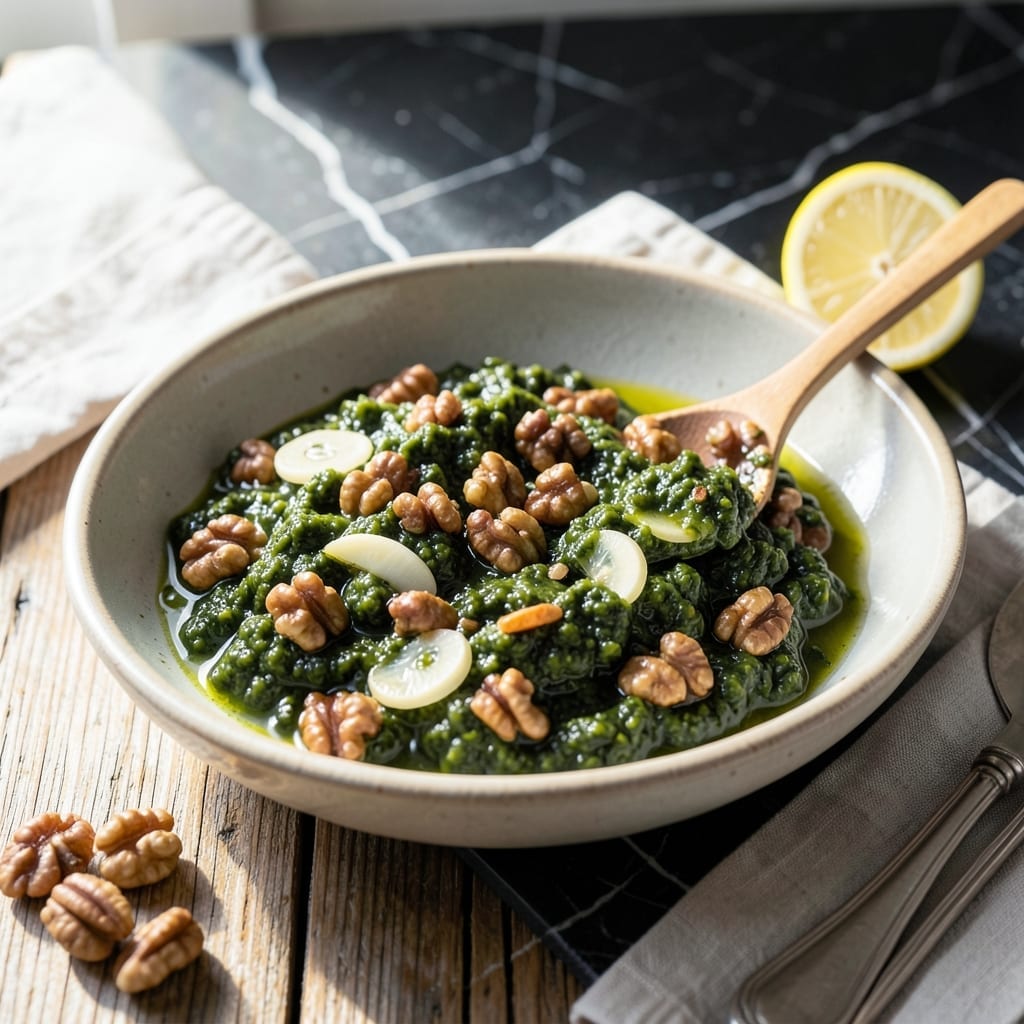
Don’t toss those carrot tops—this pesto transforms them into a bright, herbaceous sauce that rivals traditional basil versions. A zero-waste solution for your kitchen, it’s packed with fresh flavor without the guilt.
With just a handful of ingredients and 5 minutes, you’ll have a vibrant, vegan-friendly condiment perfect for pasta, sandwiches, or dipping. The result is surprisingly rich and aromatic.
Ingredients for Pesto Recipe with Carrot Tops
Transform carrot tops into a bright, herbaceous sauce with this simple list.
| Ingredient | Amount | Notes |
|---|---|---|
| Carrot Tops 🥕 | 2 cups | Packed, stems removed |
| Raw Walnuts 🥜 | ½ cup | Toasted for richness |
| Garlic Cloves 🧄 | 3 cloves | Peeled, rough chopped |
| Nutritional Yeast 🧀 | ¼ cup | For cheesy depth |
| Extra-Virgin Olive Oil 🫒 | ¾ cup | High quality, fruity |
| Lemon Juice 🍋 | 1 tbsp | Freshly squeezed |
| Sea Salt 🧂 | ½ tsp | Fine grain preferred |
| Black Pepper 🌶️ | ¼ tsp | Freshly ground |
| Dijon Mustard 🟡 | 1 tsp | Optional for tang |
Carrot tops are the star here—use the freshest, most vibrant greens you can find (the kind still attached to carrots with firm stems). Farmers markets often sell them separately if you don’t have your own. Walnuts add body and richness; Costco or Trader Joe’s have the best prices for bulk. Nutritional yeast gives that cheesy depth without dairy—Bragg is a solid brand if you’re just starting out.
No carrot tops? Fresh parsley or arugula work in a pinch (adjust to taste). Walnuts can be swapped for almonds, cashews, or sunflower seeds—one-for-one ratio. If you’re out of lemon juice, apple cider vinegar at half the amount adds a similar brightness. The olive oil matters here, so use something you’d actually drizzle on bread.
This keeps 5 days in the fridge if covered with a thin layer of oil. Freeze in ice cube trays for 3 months—perfect for single-serving portions. The flavor actually deepens after a day, so make it ahead if you can.
Why You’ll Love This Recipe
- Minimal Effort: I toss everything in the blender—carrot tops, walnuts, garlic—no fancy prep, just pulse and done.
- Surprisingly Rich: The walnuts and nutritional yeast give it this deep, savory kick that’s way more interesting than basil pesto.
- Endless Uses: I slather it on toast, mix into pasta, or dollop on roasted veggies—honestly, it works everywhere.
- Zero Waste: Between us, I used to toss carrot tops until I realized they make this pesto for pennies.
Step-by-Step Instructions for Carrot Top Pesto
Here’s the method. Straightforward, tested, works every time.
Step 1: Toast the Walnuts for Depth
Heat a dry skillet over medium heat. Add the 0.5 cup raw walnuts and stir frequently for 5-7 minutes until they turn fragant and golden brown. Keep a close eye—they burn quickly once they start browning.
Toasted walnuts bring out their natural oils and add a rich, nutty depth that raw walnuts just can’t match. Transfer them to a plate and let cool completely—hot nuts will warm the oil and affect the texture of your pesto.
Step 2: Process the Carrot Tops and Aromatics
In a food processor, combine the 2 cups carrot tops (stems removed), 3 cloves garlic cloves, and cooled 0.5 cup raw walnuts. Pulse for 20-30 seconds in short bursts until finely chopped but not puréed—you want some texture.
Scrape down the sides as needed to ensure everything gets evenly processed. The carrot tops should look like coarse crumbs at this stage. Don’t over-process here, or you’ll end up with a bitter, muddy pesto.
Step 3: Emulsify with Oil and Seasonings
With the processor running, slowly drizzle in the 0.75 cup extra-virgin olive oil through the feed tube. This slow addition creates a creamy, well-emulsified base. Stop and scrape the sides, then add the 0.25 cup nutritional yeast, 0.5 tsp sea salt, 0.25 tsp black pepper, and 1 tsp Dijon mustard.
Pulse until the mixture is smooth but still has some visible texture. Here’s the thing—I always taste at this point and adjust the sea salt or black pepper if needed. The Dijon mustard adds a subtle tang that balances the earthiness of the carrot tops.
Step 4: Finish with Lemon and Rest
Transfer the mixture to a bowl and stir in the 1 tbsp lemon juice. The acidity brightens all the flavors and cuts through the richness of the oil. Give it a final taste and adjust seasoning if needed.
Let the pesto rest for 10-15 minutes before using. This allows the flavors to meld together. You’ll notice the texture thickens slightly as it sits. If it’s too thick, stir in a splash of water to reach your desired consistency. This pesto keeps in the fridge for up to 5 days in an airtight container.
Pro Tips For Making Pesto Recipe With Carrot Tops
- Blanch the Greens: I learned this the hard way—blanching carrot tops for 30 seconds in boiling water before blending tames their bitterness and keeps the pesto from turning brown.
- Toast the Walnuts: Toss raw walnuts in a dry pan over medium-low for 3-4 minutes until fragrant; it deepens their flavor and removes any raw edge.
- Skip the Stem: Resist the urge to use the tough stems of the carrot tops—strip and use only the feathery leaves for a smoother, less fibrous pesto.
- Drizzle Slowly: Add the olive oil in a thin stream while pulsing to emulsify properly, or you’ll end up with a greasy, separated mess instead of a creamy sauce.
Essential Equipment for Perfect Results
Must-Have Tools
To whip up a delicious pesto recipe with carrot tops, a few key tools are non-negotiable. A food processor or blender is essential for achieving that smooth, vibrant texture. Brands like Cuisinart or Ninja offer reliable models that handle greens effortlessly. 🥘
You’ll also need a sharp chef’s knife and a cutting board to prep your carrot tops and other ingredients. A microplane or fine grater comes in handy for garlic and hard cheeses like Parmesan.
Nice-to-Have
For extra convenience, consider a mortar and pestle if you prefer a rustic, chunkier pesto. A kitchen scale ensures precise measurements, especially for nuts and cheese. If you love fresh flavors, a citrus juicer can help extract lemon juice without the mess.
Budget Alternatives
No food processor? A handheld immersion blender works in a pinch, though it may require more effort. For chopping, a mezzaluna (a curved blade herb cutter) is an affordable way to finely mince carrot tops. Mason jars can also double as a makeshift blender with a bit of elbow grease!
Nutrition Facts

- 6 Egg Cake Recipe with Oil: Light as Air With Buttery Moisture - October 4, 2026
- 4 Bean Casserole Recipe: One-Pan Heartiness With Smoky Paprika Depth - October 4, 2026
- 3-Ingredient Keto Mug Cake Recipe: Microwave Magic in 2 Minutes - October 4, 2026