
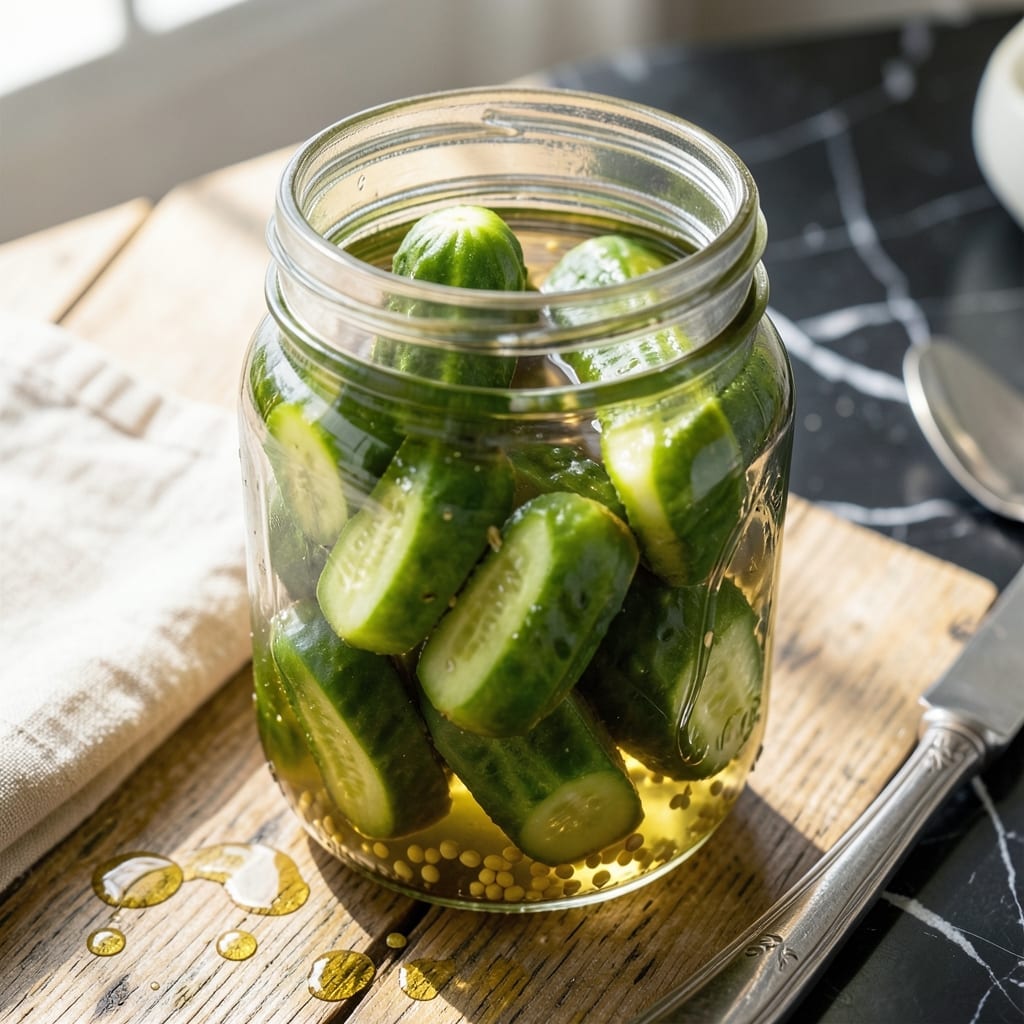
I developed this tangy pickle recipe to prove that crisp results don’t require dill. Mustard seeds and garlic deliver bold flavor without overpowering the cucumbers.
The process is simple but precise: a hot brine ensures crunchy texture, while sterilized jars prevent spoilage. Ferment for 3 days on the counter, then refrigerate for long-term storage.
Each bite offers a perfect balance of vinegar’s sharpness and spice warmth. The mustard seeds add subtle heat, while black peppercorns provide depth.
This method works for cucumbers, green beans, or even carrots. The brine keeps vegetables crisp for weeks in the fridge.
Ingredients for Pickle Recipe Without Dill
Crisp cucumbers meet bold spices in this tangy, dill-free brine with mustard seed zing.
| Ingredient | Amount | Notes |
|---|---|---|
| Kirby Cucumbers 🥒 | 2 lb | Small, firm, unblemished |
| White Vinegar 💧 | 3 cups | 5% acidity minimum |
| Water 💧 | 3 cups | Filtered preferred |
| Pickling Salt 🧂 | 2 tbsp | Non-iodized, fine grain |
| Granulated Sugar 🍚 | 2 tbsp | Organic cane preferred |
| Yellow Mustard Seeds 🌿 | 2 tbsp | Whole, not ground |
| Black Peppercorns 🌶️ | 1 tbsp | Whole, lightly crushed |
| Garlic Cloves 🧄 | 8 cloves | Peeled, smashed |
| Red Pepper Flakes 🔥 | 1 tsp | Adjust for heat preference |
| Bay Leaves 🍃 | 4 pieces | Dried, whole |
| Coriander Seeds 🌿 | 1 tbsp | Whole, optional for depth |
The cucumbers are everything here. Kirby or Persian varieties stay crunchy—avoid waxy supermarket cucumbers (they’re bred for slicing, not pickling). I source mine from farmers markets in peak season when they’re abundant and cheap. The vinegar needs to be 5% acidity to ensure safety; Heinz or store-brand white vinegar both work perfectly. Pickling salt is non-negotiable—iodized table salt will turn your brine cloudy.
No mustard seeds? Brown mustard seeds work identically. Out of black peppercorns? White peppercorns at the same ratio keep the flavor profile clean. For garlic, fresh is mandatory—jarred minced garlic lacks the punch. Want more complexity? Add 1 tsp celery seeds or 1-inch piece of fresh ginger. The sugar can be swapped for maple syrup, but reduce by half to avoid over-sweetening.
These keep 4-6 weeks refrigerated once fermented. Always use clean utensils to grab pickles—contamination shortens shelf life. The brine can be reused once for a fresh batch if you boil it first. For longer storage, process in a water bath for 10 minutes.
Why You’ll Love This Recipe
- No-Fuss Brine: I just mix vinegar, water, salt, and sugar—no fancy herbs or hunting for fresh dill.
- Crunch in Every Bite: Kirby cucumbers stay crisp, and the tangy-sweet balance hits just right.
- Fridge Staple: I keep a jar ready for sandwiches, snacks, or a quick side with dinner.
- Pennywise Pickles: A bag of cucumbers and pantry basics turn into quarts of pickles for less than store-bought.
Step-by-Step Instructions for Pickle Recipe Without Dill
Master the brine-to-jar technique for consistent, crisp results every time.
Step 1: Prepare the Kirby Cucumbers
Thoroughly wash the 2 lb Kirby Cucumbers under cold water to remove any dirt or residue. Pat them completely dry with a clean kitchen towel—excess moisture will dilute your brine and soften the pickles.
Trim off and discard the blossom end (about ⅛ inch) of each cucumber, as it contains enzymes that can make pickles mushy. Leave the stem end intact. For uniform flavor penetration, slice the cucumbers into ¼-inch rounds or leave them whole if they’re small. Pack them tightly into clean, sterilized quart jars.
Step 2: Create the Pickling Brine
In a medium saucepan, combine the 3 cups White Vinegar, 3 cups Water, 2 tbsp Pickling Salt, and 2 tbsp Granulated Sugar. Heat over medium-high heat and stir until the salt and sugar dissolve completely—this ensures even distribution in your brine.
Bring the mixture to a gentle boil, then immediately reduce to a simmer. The brine should be clear with no visible salt or sugar crystals. This step guarantees your pickles will have consistent flavor from the first bite to the last.
Step 3: Toast and Combine the Aromatics
While the brine simmers, lightly toast the 2 tbsp Yellow Mustard Seeds, 1 tbsp Black Peppercorns, and 1 tbsp Coriander Seeds in a dry skillet over medium heat for 1-2 minutes. You’ll notice their aroma intensify—this is your cue to remove them from heat to prevent burning.
Add the toasted spices to the brine along with the 8 cloves Garlic Cloves, 1 tsp Red Pepper Flakes, and 4 pieces Bay Leaves. Let the mixture steep off heat for 5 minutes to infuse the liquid with their flavors before pouring over the cucumbers.
Step 4: Fill Jars and Process
Carefully ladle the hot brine mixture over the cucumbers in the jars, ensuring the cucumbers are completely submerged. Tap the jars gently on the counter to remove any air bubbles—this prevents spoilage and ensures even pickling.
Leave ½ inch headspace at the top of each jar. Wipe the rims with a clean, damp cloth to remove any residue that might prevent a proper seal. Secure the lids fingertip-tight and let the jars cool to room temperature at room temperature for 1 hour.
Step 5: Store and Achieve Optimal Flavor
Once cooled, refrigerate the jars. For the best flavor development, wait at least 48 hours before tasting. The pickles will continue to develop their tangy, spiced character over time, reaching peak flavor after 2-3 weeks.
Check that the cucumbers remain fully submerged in brine during storage. If needed, add a small glass weight or a zip-top bag filled with water to keep them under the liquid. This maintains their crunch and prevents mold growth.
Pro Tips For Making Pickle Recipe Without Dill
- Slice Evenly: Cut Kirby cucumbers into 1/4-inch thick spears or chips—any thicker and they won’t absorb the brine properly, leaving you with limp or unevenly flavored pickles.
- Boil the Brine: Heat your white vinegar, water, pickling salt, and sugar until the sugar fully dissolves; otherwise, you’ll get gritty, unevenly seasoned pickles.
- Skip the Tap Water: Use filtered or distilled water in your brine—tap water’s minerals can react with the pickling salt and turn your pickles mushy or discolored.
- Let Them Rest: Give your pickles at least 48 hours in the fridge before tasting—I learned this the hard way after digging into a jar too soon and getting vinegar with a cucumber garnish.
Best Sauces and Condiments for This Dish
Classic Pairings
These pickles shine alongside rich, smoky meats. I love serving them with slow-cooked pulled pork sandwiches or grilled brats—the vinegar cuts through the fat perfectly. The mustard seed flavor bridges beautifully with Dijon mustard on a sandwich. 🌟
Cheese Board Addition
Add them to charcuterie boards with sharp cheddar or aged Gouda. The tang contrasts wonderfully with creamy cheeses. I always include water crackers and sliced salami for a complete spread.
Sandwich Game-Changer
A slice of pickle transforms a simple turkey and Swiss into a deli-style masterpiece. The crunch adds texture, while the brine’s acidity brightens every bite. I use sourdough bread for extra contrast.
Dip companions
These pickles are incredible with ranch dressing or blue cheese dip. I also love them chopped into creamy potato salad for extra zing. The mustard seeds echo the flavors in honey mustard perfectly.
Cocktail Pairings
Serve with a Bloody Mary—the spice in the drink complements the pickles’ heat. For beer lovers, a cold pilsner cleanses the palate between bites. I always keep a jar in my fridge for happy hour. 🍺
Nutrition Facts
Frequently Asked Questions
Can I use regular table salt instead of pickling salt?
No, table salt contains iodine and anti-caking agents that can make your brine cloudy. Use non-iodized pickling salt for clear results and proper fermentation.
How long do these pickles stay crisp in the fridge?
They’ll keep their crunch for 4-6 weeks when fully submerged in brine. Use clean utensils to avoid contamination and maintain texture.
What if my brine didn’t cover all the cucumbers?
Add a small glass weight or a zip-top bag filled with water to keep them submerged. This prevents mold growth and ensures even pickling.
Can I reuse the brine for another batch?
Yes, but only once. Boil the used brine first, then pour it over fresh cucumbers. Flavor will be milder the second time.

- 6 Egg Cake Recipe with Oil: Light as Air With Buttery Moisture - October 4, 2026
- 4 Bean Casserole Recipe: One-Pan Heartiness With Smoky Paprika Depth - October 4, 2026
- 3-Ingredient Keto Mug Cake Recipe: Microwave Magic in 2 Minutes - October 4, 2026