
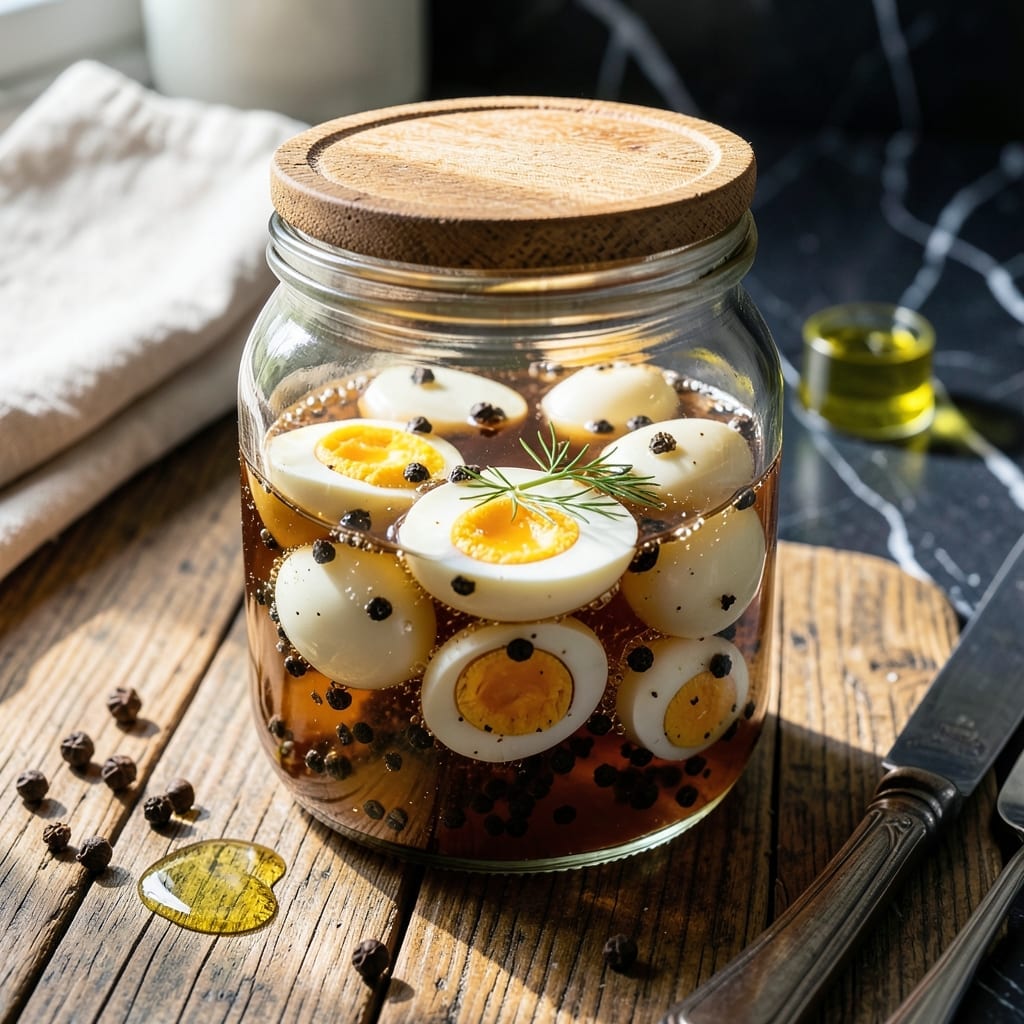
These delicate eggs transform into a sophisticated appetizer with minimal effort. The pickling process enhances their natural richness while adding a vibrant tang that complements any charcuterie board.
I perfected this method by balancing vinegar, sugar, and spices to create a brine that preserves the eggs’ tender texture. The small size of quail eggs means they absorb flavor quickly, ready in just 24 hours.
Serve them whole as a garnish or halved for an elegant presentation. Their bright flavor cuts through rich dishes like pâté or cured meats.
Store in the fridge for up to a month, allowing the taste to deepen over time.
Ingredients for Pickled Quail Egg
Eleven ingredients create these tangy, sophisticated pickled quail eggs with vibrant depth.
| Ingredient | Amount | Notes |
|---|---|---|
| Quail Eggs 🥚 | 24 whole | Fresh, room temperature for peeling |
| White Vinegar 💧 | 1 ½ cups | Distilled for clean flavor |
| Apple Cider Vinegar 🍎 | ½ cup | Adds fruity depth to brine |
| Granulated Sugar 🧂 | 2 tbsp | Balances vinegar acidity |
| Kosher Salt 🧂 | 1 tbsp | Diamond Crystal preferred |
| Black Peppercorns 🌶️ | 1 tsp | Whole, lightly crushed |
| Mustard Seeds 🌿 | 1 tsp | Yellow or brown variety |
| Dried Red Pepper Flakes 🌶️ | ½ tsp | Adjust for heat preference |
| Fresh Dill Sprigs 🌿 | 2 whole | Optional for aromatic brine |
| Garlic Cloves 🧄 | 3 cloves | Smashed, peeled |
| Bay Leaves 🍃 | 2 whole | Dried, for depth |
| Water 💧 | 1 cup | Filtered for best results |
The eggs are everything here. Fresh quail eggs (available at Whole Foods or Asian markets) peel far easier than older ones—test one first to check quality. For the vinegar, distilled white gives that classic pickle bite, while apple cider vinegar adds fruity complexity. Look for Diamond Crystal kosher salt; its coarse texture dissolves perfectly in brines without over-salting.
No quail eggs? Small chicken eggs work but need 48 hours to absorb flavors. Swap mustard seeds for coriander seeds if you prefer a citrusy note. For heat, fresh jalapeño slices can replace red pepper flakes. The dill is optional but highly recommended—fresh is best, but dried works at one-third the amount (don’t skip toasting it first).
Brined eggs keep in the fridge for 1 month, with flavors intensifying over time. Store in a glass jar with a tight lid, ensuring eggs stay fully submerged. For presentation, peel just before serving—their delicate texture stays intact longer this way.
Why You’ll Love This Recipe
- 5-Minute Brine: I just boil the quail eggs, mix vinegar with sugar and salt, and they’re pickling before the kettle cools.
- Tangy Pop: That first bite—the sharp vinegar hits, then the sweetness rounds it out perfectly.
- Fancy Appetizer: I set these out with toothpicks and suddenly my weekday lunch feels like a charcuterie night.
- Fridge Staple: They keep for weeks, so I always have a protein-packed snack ready to grab.
Step-by-Step Instructions for Pickled Quail Eggs
This method ensures perfectly tangy eggs with a delicate crunch and vibrant flavor profile.
Step 1: Hard-Boil and Peel the Quail Eggs
Place the 24 whole Quail Eggs in a small saucepan and cover with cold water by about 1 inch. Bring to a boil over medium-high heat, then immediately reduce to a gentle simmer. Cook for exactly 3 minutes—this precise timing prevents the yolks from developing that unappealing gray ring.
Drain the eggs and transfer them to an ice bath for 5 minutes to halt the cooking process. The rapid cooling also makes peeling easier. Gently tap each egg on a hard surface, then roll between your fingers to crack the shell all over before peeling under a thin stream of running water for best results.
Step 2: Prepare the Pickling Brine
In a medium saucepan, combine the 1.5 cups White Vinegar, 0.5 cup Apple Cider Vinegar, 1 cup Water, 2 tbsp Granulated Sugar, and 1 tbsp Kosher Salt. Bring to a boil over medium-high heat, stirring until the sugar and salt fully dissolve—you should see no visible grains remaining.
Once boiling, remove from heat and add the 1 tsp Black Peppercorns, 1 tsp Mustard Seeds, 0.5 tsp Dried Red Pepper Flakes, 2 whole Fresh Dill Sprigs, 3 cloves Garlic Cloves, and 2 whole Bay Leaves. Let the brine steep for 10 minutes to allow the spices to infuse their flavors.
Step 3: Combine Eggs and Brine
Arrange the peeled quail eggs in a clean, 16-ounce glass jar or divide them evenly between two smaller jars. Pour the strained brine over the eggs, ensuring they are completely submerged. Use a small weight or a zip-top bag filled with water to keep them under the liquid if needed.
The eggs should be fully covered by at least ½ inch of brine to prevent spoilage and ensure even pickling. Any eggs floating above the brine surface will develop uneven flavor and may not preserve properly.
Step 4: Refrigerate and Wait for Perfection
Seal the jar tightly and refrigerate for at least 24 hours before tasting. For optimal flavor development, I recommend waiting 48-72 hours. The longer they sit, the more pronounced the tangy, spiced notes will become.
Check the eggs after 24 hours—the whites should have transformed from translucent to opaque, and the brine will take on a slightly cloudy appearance. The texture should be firm with a satisfying snap when bitten into, and the flavor will balance bright acidity with the warmth of spices.
Pro Tips For Making Pickled Quail Egg
- Boil Gently: I learned this the hard way—quail eggs crack easily if boiled too hard, so keep the water at a gentle simmer for 3-4 minutes to avoid cloudy whites.
- Peel Under Water: Sounds weird, but it works: peel the eggs under a thin stream of cool water to help separate the membrane from the shell more cleanly.
- Skip the Old Vinegar: After a batch turned out dull, I realized fresh vinegar matters—old vinegar loses acidity, so use newly opened bottles for that bright tang.
- Warm the Brine: Dissolve the sugar and salt in warm vinegar first—about 1 minute on low heat—then cool before adding eggs to prevent uneven pickling.
Flavor Customization for This Dish
Spicy Heat Boost
For extra kick, increase the dried red pepper flakes to 1 tsp or add 2 sliced jalapeños to the brine. The heat will intensify over time, so taste after 24 hours and adjust for your preference. I love this version for tacos. 🌶️
Sweet and Tangy Twist
Add 1 tbsp honey or maple syrup to the brine for a subtle sweetness that pairs beautifully with the vinegar. This variation works wonders with charcuterie boards, balancing salty meats and cheeses.
Herb-Infused Depth
Swap the fresh dill for rosemary sprigs or thyme for an earthy, aromatic profile. I also like adding 1 tsp coriander seeds for a citrusy, floral note that brightens the eggs.
Asian-Inspired Fusion
Replace apple cider vinegar with rice vinegar and add 1 tsp grated ginger, 1 star anise pod, and 1 cinnamon stick. This version is perfect for topping ramen or rice bowls.
Garlic Lover’s Batch
Double the garlic cloves to 6 cloves for a bold, punchy flavor. Roast the garlic first for a milder, sweeter taste. This is my go-to for garnishing deviled eggs or adding to salads. 💡
Citrus Zing Addition
Add 2 strips of lemon or orange peel to the brine for a bright, citrusy lift. The oils from the peel infuse the eggs with a refreshing zing that cuts through richness beautifully.
Nutrition Facts
Frequently Asked Questions
How long do pickled quail eggs last in the fridge?
They stay fresh for up to 1 month when stored in an airtight glass jar with brine covering the eggs. The flavor deepens over time, so wait at least 24 hours before eating.
Can I use chicken eggs instead of quail eggs?
Yes, but use small chicken eggs and extend pickling time to 48 hours. The larger size needs more time to absorb the brine flavors fully.
Why did my eggs turn greenish?
This happens when eggs are overcooked before pickling. Stick to exactly 3 minutes of boiling for quail eggs to prevent the yolk from developing that unappealing color.
Do I need to sterilize the jars?
For short-term fridge storage, clean jars with hot soapy water are fine. For longer storage, sterilize by boiling jars and lids for 10 minutes before use.

- 6 Egg Cake Recipe with Oil: Light as Air With Buttery Moisture - October 4, 2026
- 4 Bean Casserole Recipe: One-Pan Heartiness With Smoky Paprika Depth - October 4, 2026
- 3-Ingredient Keto Mug Cake Recipe: Microwave Magic in 2 Minutes - October 4, 2026