
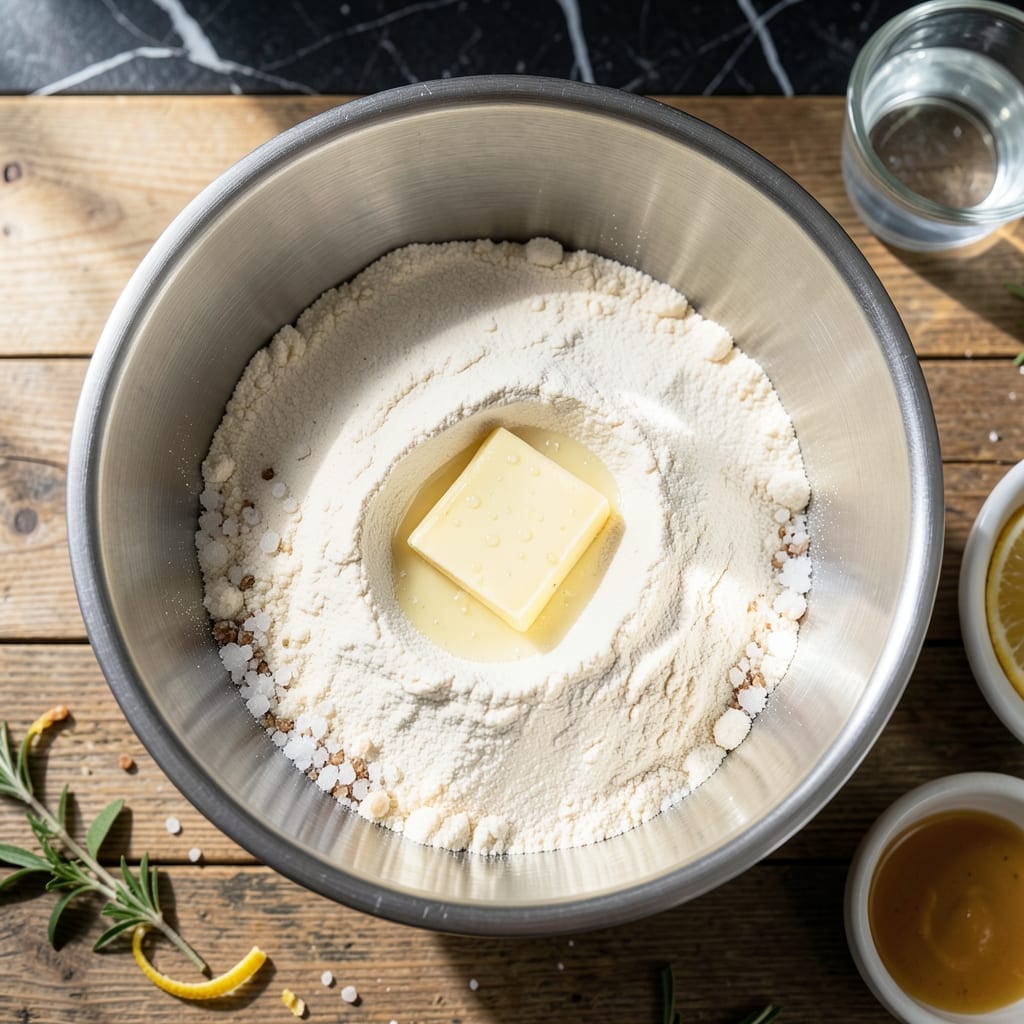
A buttery, flaky pie crust is the foundation of any great pecan pie. This recipe delivers a tender pastry that holds up to the rich, gooey filling without getting soggy.
The secret lies in using cold ingredients and minimal handling to create those perfect layers. The result is a crust that bakes up golden and crisp, providing the ideal contrast to the sweet, syrupy pecan filling.
Ingredients for Pie Crust Recipe for Pecan Pie
Cold butter and minimal handling create the flaky foundation for this classic pastry.
| Ingredient | Amount | Notes |
|---|---|---|
| All-Purpose Flour 🌾 | 2 ½ cups | Sifted, plus extra for dusting |
| Unsalted Butter 🧈 | 1 cup | Cold, cubed into 1/2-inch pieces |
| Ice Water 💧 | ¼ cup | Plus 1 tbsp as needed |
| Granulated Sugar 🍚 | 1 tbsp | For subtle sweetness |
| Fine Sea Salt 🧂 | 1 tsp | Enhances all flavors |
| White Vinegar 🍋 | 1 tsp | Or apple cider vinegar |
| Shortening 🧈 | ¼ cup | Cold, for extra flakiness |
| Large Egg Yolk 🥚 | 1 whole | Optional, for richness |
The butter is everything here. Use a high-fat European-style butter like Plugrá or Kerrygold—their lower water content makes a difference. The flour should be all-purpose, nothing fancy. I always keep a bag of King Arthur on hand for baking. If you’re making this in summer, chill your bowl and pastry cutter too (the dough gets warm fast).
No butter? Vegan butter sticks like Miyoko’s work in a pinch, but the flavor won’t be quite the same. Out of vinegar? Lemon juice at the same amount does the job. The egg yolk is optional but adds richness—skip it if you’re vegan. Shortening can be swapped for more butter, but the crust might be slightly less tender.
The dough can rest in the fridge for up to 2 days or freeze for 1 month. Wrap it tightly in plastic, then foil. If freezing, thaw overnight in the fridge before rolling. Baked crusts keep 1 week at room temp in an airtight container.
Why You’ll Love This Recipe
- 5-Minute Mix: I can have this crust ready before the oven preheats—just flour, butter, and a splash of ice water.
- Buttery, Flaky Layers: The cold butter creates pockets that turn golden and crisp, holding up to pecan pie’s gooey filling.
- Holiday Hero: From Thanksgiving to Sunday suppers, this crust handles any pie occasion with ease.
- Pantry Staples: Flour, butter, salt—things I always have on hand. No special trips to the store.
Step-by-Step Instructions for Pie Crust for Pecan Pie
This method ensures a flaky, sturdy base that won’t turn soggy under your pecan filling.
Step 1: Mix Dry Ingredients and Cut in Fats
In a large bowl, whisk together the 2.5 cups All-Purpose Flour, 1 tbsp Granulated Sugar, and 1 tsp Fine Sea Salt. The sugar adds subtle sweetness that complements the pecan pie, while the salt enhances all the flavors in the crust.
Add the 1 cup Unsalted Butter (cold, cubed into 1/2-inch pieces) and 0.25 cup Shortening (also cold). Use a pastry cutter or your fingertips to work the fats into the flour until the mixture resembles coarse crumbs with pea-sized pieces of butter and shortening visible. This uneven texture is key for flakiness.
Step 2: Incorporate Wet Ingredients Gently
Create a well in the center of the flour mixture. Add the 0.25 cup Ice Water, 1 tsp White Vinegar, and 1 whole Large Egg Yolk. The vinegar tenderizes the gluten, while the egg yolk adds richness and structure, making the crust sturdy enough to hold the dense pecan filling.
Use a fork to gently mix the wet ingredients into the flour until the dough just begins to come together. Stop as soon as it forms a shaggy mass—overworking will develop gluten, making the crust tough rather than tender.
Step 3: Chill the Dough for Optimal Texture
Turn the dough out onto a lightly floured surface and gently shape it into a disk about 1 inch thick. Wrap it tightly in plastic wrap and refrigerate for at least 1 hour or up to 2 days. Chilling relaxes the gluten and solidifies the fats, which prevents shrinkage during baking and ensures distinct flaky layers.
If the dough feels too dry, add up to 1 tbsp of the reserved ice water, but avoid adding too much—this crust should be just moist enough to hold together when pressed.
Step 4: Roll and Fit the Crust
On a well-floured surface, roll the chilled dough into a 12-inch circle, about 1/8 inch thick. Dust your rolling pin and surface as needed to prevent sticking. The dough should be smooth but not elastic—if it springs back, let it rest for 5 minutes before continuing.
Transfer the rolled dough to a 9-inch pie dish. Press it gently into the bottom and up the sides, avoiding stretching, which can cause shrinkage. Trim the edges, leaving a slight overhang, then crimp decoratively. For extra insurance against a soggy bottom, blind bake the crust at 375°F for 12-15 minutes until lightly golden before adding the filling.
Pro Tips For Making Pie Crust Recipe For Pecan Pie
- Chill the Butter: Keep your butter ice cold until the very last moment—cut it into small cubes and pop it back in the fridge between steps. I learned this the hard way after ending up with a tough, greasy crust instead of that perfect flaky texture.
- Use Ice Water: Fill a glass with water and ice cubes, then measure from that—this keeps the dough cold as you mix. Sounds fussy, but it prevents the butter from melting prematurely and ruining the layers.
- Don’t Overwork It: Mix just until the dough comes together, even if it looks a little shaggy. After burning three batches, I finally figured out that overworking develops gluten, and that means a chewy crust instead of a tender one.
- Blind Bake First: Pre-bake your crust for 10-12 minutes at 375°F before adding the pecan filling—this keeps the bottom from getting soggy. My grandmother swore by this, and she was right: it’s the only way to get that crisp base under all that gooey filling.
Common Mistakes When Making Great pie crust recipe for pecan pie
🔪 Overworking the Dough
Kneading or rolling pie dough too much develops gluten, making the crust tough instead of tender and flaky. This is a common mistake when aiming for a perfect base for pecan pie.
Fix: Handle the dough gently. Mix just until the ingredients come together, and roll it out with minimal pressure. Chill the dough between steps to relax the gluten.
⏰ Skipping the Chill Time
Rushing the process by skipping the resting period in the fridge can lead to shrinking or misshapen crusts. Cold butter is key for flaky layers, and chilling helps maintain structure.
Fix: Refrigerate the dough for at least 1 hour (or up to 2 days) before rolling. Also, chill the shaped crust for 15-30 minutes before baking.
🌡️ Blind Baking Without Weights
Pre-baking (blind baking) the crust without pie weights or dried beans can cause it to puff up or slump. This ruins the crisp base needed to hold the pecan filling.
Fix: Line the crust with parchment paper, fill with weights or beans, and bake for 10-12 minutes. Remove weights and bake until golden.
🍳 Overbaking the Crust
Leaving the crust in the oven too long can make it dry and brittle, especially since it bakes further with the pecan filling. A burnt crust overpowers the sweet, nutty flavors.
Fix: Bake the crust just until lightly golden. For pecan pie, par-bake it slightly underdone, as it will finish baking with the filling.
Nutrition Facts

- 6 Egg Cake Recipe with Oil: Light as Air With Buttery Moisture - October 4, 2026
- 4 Bean Casserole Recipe: One-Pan Heartiness With Smoky Paprika Depth - October 4, 2026
- 3-Ingredient Keto Mug Cake Recipe: Microwave Magic in 2 Minutes - October 4, 2026