
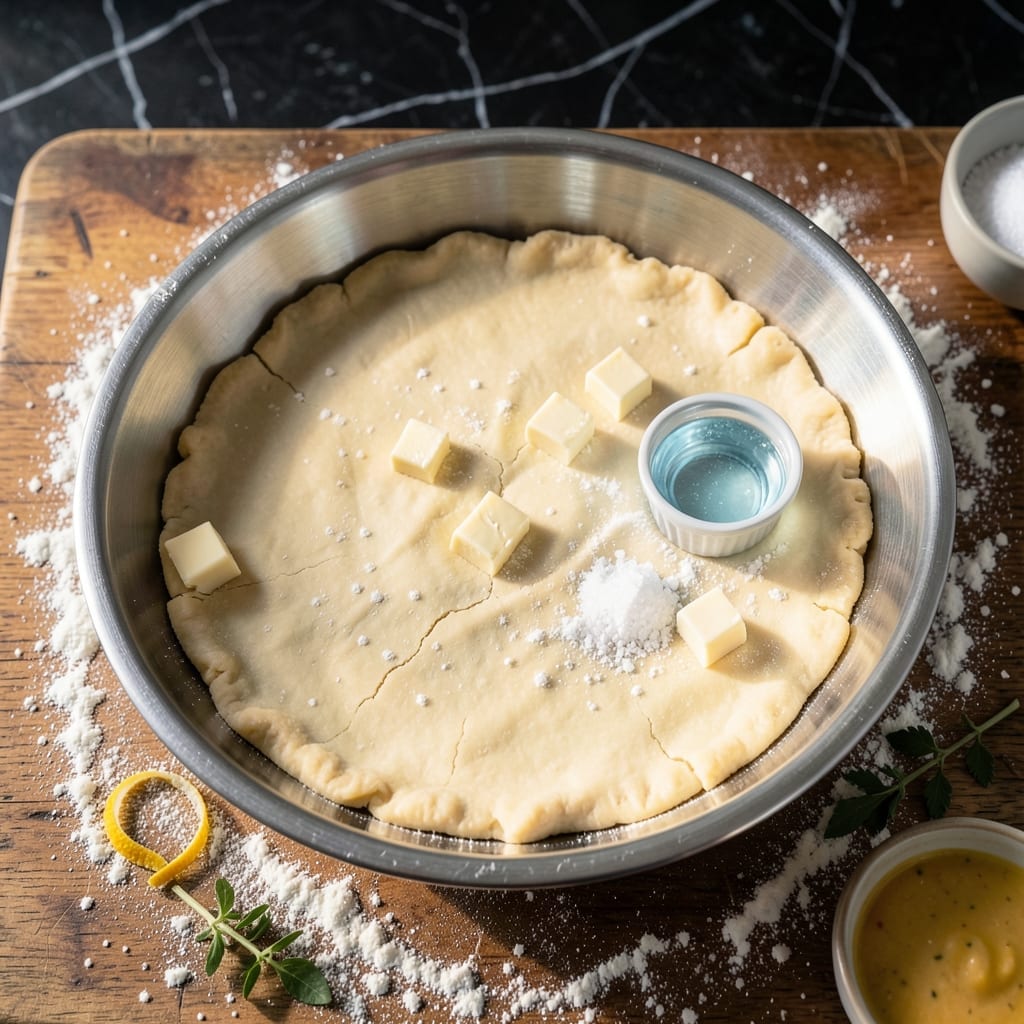
There’s a science to crafting the flaky base that cradles a perfect quiche. This method delivers consistent results with minimal effort, ensuring a crisp, golden foundation that holds its shape under any filling.
The secret lies in cold butter and precise handling. By keeping ingredients chilled and avoiding overworking, the dough develops layers that puff into delicate, buttery sheets during baking. It’s a foolproof approach for home cooks.
What emerges from the oven is a shell so tender it shatters at the touch, yet sturdy enough to support creamy custards without turning soggy. The texture is the star—light, airy, and irresistibly crisp.
This crust sets the stage for any quiche, from classic Lorraine to vegetable-packed variations. Let’s begin with the foundation every great quiche deserves.
Ingredients for Pie Crust Recipe for Quiche
Cold butter, precise flour, and minimal handling create that perfect flaky base for any filling.
| Ingredient | Amount | Notes |
|---|---|---|
| All-Purpose Flour 🌾 | 2 ½ cups | Spoon and level, plus more for dusting |
| Unsalted Butter 🧈 | 1 cup | Cold, cut into small cubes |
| Fine Sea Salt 🧂 | 1 tsp | Diamond Crystal preferred |
| Granulated Sugar 🍚 | 1 tsp | Optional, enhances browning |
| Ice Water 💧 | ½ cup | Plus 1 tbsp as needed |
| Vodka 🍸 | ¼ cup | Optional, for extra flakiness |
| Shortening 🧈 | ¼ cup | Cold, for additional flake |
| Large Egg Yolk 🥚 | 1 whole | For richness and structure |
| Apple Cider Vinegar 🍎 | 1 tsp | Enhances tenderness of crust |
| Vanilla Extract 🌿 | ½ tsp | Optional, for subtle sweetness |
The butter must stay cold—cut it into small cubes and return to the fridge between prep steps. King Arthur Flour is ideal for its consistent protein content, but any all-purpose works. Use European-style butter if available for higher fat content and superior layers. The flour should be measured by spooning into the cup, not scooping directly from the bag, to avoid compacting.
No vodka? Skip it—ice water alone works fine. Out of shortening? Additional cold butter in the same quantity substitutes well. For a richer crust, swap the egg yolk for a whole egg. The vinegar adds tenderness but can be omitted if needed. Avoid overworking the dough to maintain those delicate, flaky layers.
Dough can be refrigerated for up to 3 days or frozen for 1 month. Bring to room temperature before rolling for best texture. Baked crust keeps at room temperature for 1 day or in the freezer for 1 week.
Why You’ll Love This Recipe
- Five Minute Mix: I can have this crust ready before the oven preheats—just flour, butter, and a splash of ice water.
- Buttery Crisp: The cold butter creates flaky layers that shatter with every bite, while the sugar adds just a hint of sweetness.
- Weekend Brunch Star: It’s my go-to for quiches, tarts, or even a quick galette when friends pop over.
Step-by-Step Instructions for Pie Crust for Quiche
Master this technique to achieve a perfectly flaky base that complements creamy fillings without fail.
Step 1: Combine Dry Ingredients and Cold Fats
In a large bowl, whisk together the 2.5 cups All-Purpose Flour, 1 tsp Fine Sea Salt, and 1 tsp Granulated Sugar until evenly distributed. The sugar enhances browning while the salt strengthens the gluten structure just enough for stability.
Add the 1 cup Unsalted Butter (cold, cubed) and 0.25 cup Shortening (also cold) to the flour mixture. Using a pastry cutter or your fingers, work the fats into the flour until the mixture resembles coarse crumbs with pea-sized pieces visible. This uneven texture is critical—it creates the flaky layers that make this crust exceptional.
Step 2: Incorporate Wet Ingredients Strategically
In a small bowl, whisk together the 0.5 cup Ice Water, 1 whole Large Egg Yolk, 1 tsp Apple Cider Vinegar, and 0.25 cup Vodka. The vodka and vinegar inhibit gluten formation, ensuring tenderness, while the egg yolk adds richness and structure.
Create a well in the center of the flour-fat mixture and pour in the wet ingredients. Using a fork, gently stir until the dough just begins to come together. Avoid overworking—you should still see streaks of flour. The dough will look shaggy, but this prevents toughness.
Step 3: Chill and Laminate for Maximum Flake
Turn the dough onto a lightly floured surface and gently knead it into a cohesive ball, handling it as little as possible. Divide the dough in half, shape each into a disc, and wrap tightly in plastic wrap. Refrigerate for at least 1 hour or up to 24 hours.
This resting period allows the 1 cup Unsalted Butter and 0.25 cup Shortening to rechill, which is essential for creating distinct layers during rolling. The 0.5 cup Ice Water also fully hydrates the 2.5 cups All-Purpose Flour, preventing a dry, crumbly crust.
Step 4: Roll Out and Blind Bake the Crust
On a floured surface, roll one disc of dough into a 12-inch circle, about ⅛-inch thick. Transfer to a 9-inch pie dish, press gently into the bottom and up the sides, then trim the edges, leaving a slight overhang. Crimp decoratively if desired.
For a quiche, blind bake the crust: line it with parchment paper, fill with pie weights or dried beans, and bake at 375°F for 15 minutes. Remove the weights and parchment, then bake for another 10-12 minutes until the edges are light golden brown. This prevents a soggy bottom when the creamy filling is added.
Let the crust cool completely before adding your filling. The 1 tsp Granulated Sugar will have caramelized slightly, adding subtle sweetness that balances savory quiche fillings beautifully.
Pro Tips For Making Pie Crust Recipe For Quiche
- Chill the Butter: Cut your unsalted butter into small cubes and refrigerate for 15 minutes before mixing—this keeps it cold so it doesn’t melt into the flour, which is what gives you that flaky texture.
- Use Ice Water: Fill a cup with water and ice cubes, then measure from that—using truly ice-cold water prevents the dough from developing gluten, which can make your crust tough.
- Don’t Overwork It: Mix just until the dough comes together, even if it looks a little shaggy. I learned this the hard way—overmixing makes the crust dense instead of light and crisp.
- Blind Bake First: Pre-bake your crust for 10 minutes at 375°F before adding the quiche filling to avoid a soggy bottom—yes, even if you’re in a hurry.
Perfect Pairings for This Recipe
Savory Side Pairings
A simple mixed greens salad with a Dijon vinaigrette cuts through the richness perfectly. I toss 5 oz baby arugula with 1 tbsp whole-grain mustard, 3 tbsp olive oil, and 1 tsp honey for balance. 🥗
Wine Pairings
A crisp white wine like Sauvignon Blanc from New Zealand complements the buttery crust beautifully. For red lovers, a light Pinot Noir from Oregon offers earthy notes that pair well with savory quiches. Avoid heavy tannins that overpower delicate flavors.
Breakfast Additions
Serve with roasted breakfast potatoes for a hearty meal. Toss 1 lb diced Yukon Golds with 1 tbsp rosemary and roast at 400°F for 25 minutes. The crispy edges contrast wonderfully with creamy fillings.
Herb Garnishes
Fresh herbs add vibrant color and flavor. I love sprinkling chopped chives or tarragon over the finished quiche. A pinch of flaky sea salt like Maldon enhances all the flavors beautifully.
Beverage Alternatives
For non-alcoholic options, sparkling water with a squeeze of lemon cleanses the palate. A chilled hibiscus iced tea adds a floral note that pairs surprisingly well with cheesy quiches. 💫
Nutrition Facts
Frequently Asked Questions
Why do I need to blind bake the crust for quiche?
Blind baking prevents a soggy bottom. Baking at 375°F for 25-27 minutes creates a sturdy barrier against wet fillings. Without this step, the crust absorbs moisture from the custard.
Can I make the dough ahead of time?
Yes! Wrapped tightly, dough keeps refrigerated for 3 days or frozen for 1 month. Thaw overnight in the fridge before rolling for best texture and flakiness.
What’s the best fat ratio for extra flaky layers?
Use 1 cup cold butter plus 0.25 cup shortening. The butter adds flavor while shortening creates superior flake. Keep both ice-cold for perfect results.
How do I prevent the edges from over-browning?
Cover crust edges with foil or a pie shield during the final 10-12 minutes of blind baking. This protects them while the bottom fully cooks.

- 6 Egg Cake Recipe with Oil: Light as Air With Buttery Moisture - October 4, 2026
- 4 Bean Casserole Recipe: One-Pan Heartiness With Smoky Paprika Depth - October 4, 2026
- 3-Ingredient Keto Mug Cake Recipe: Microwave Magic in 2 Minutes - October 4, 2026