
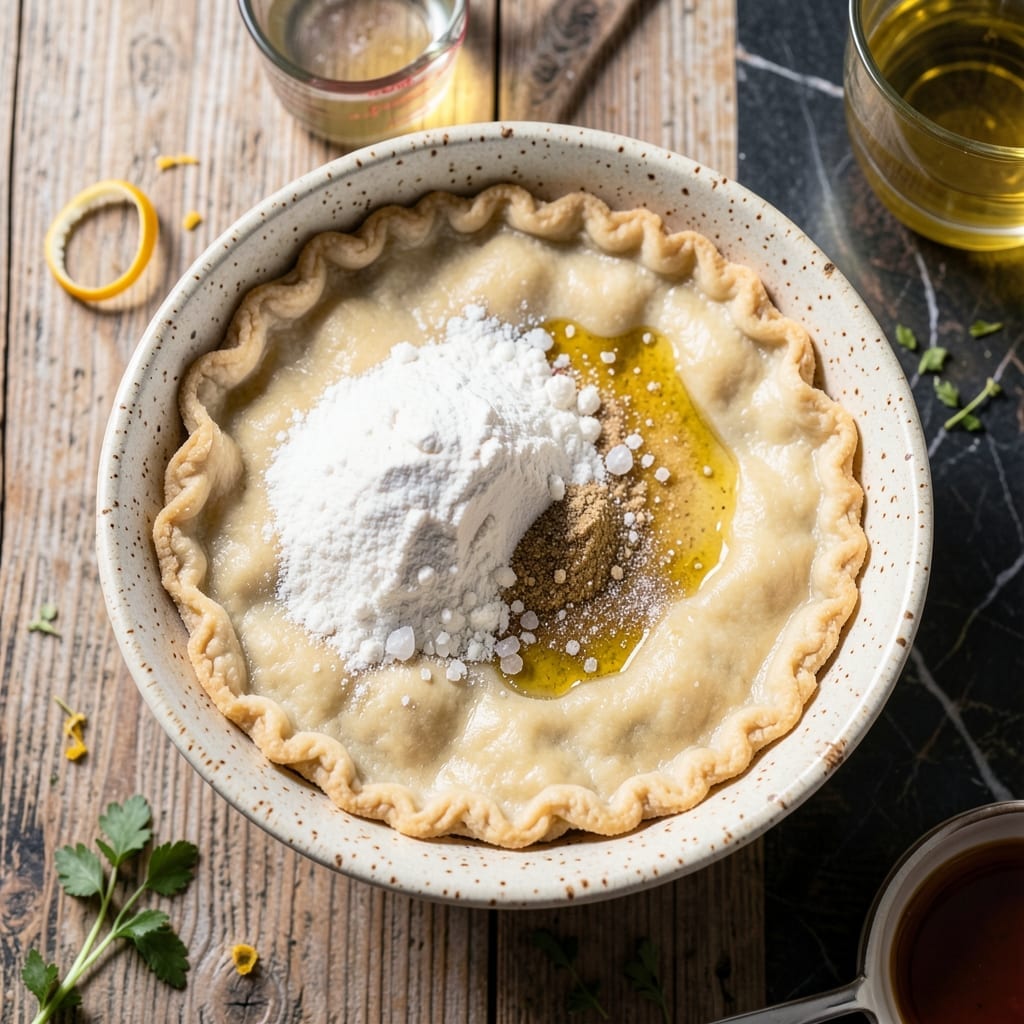
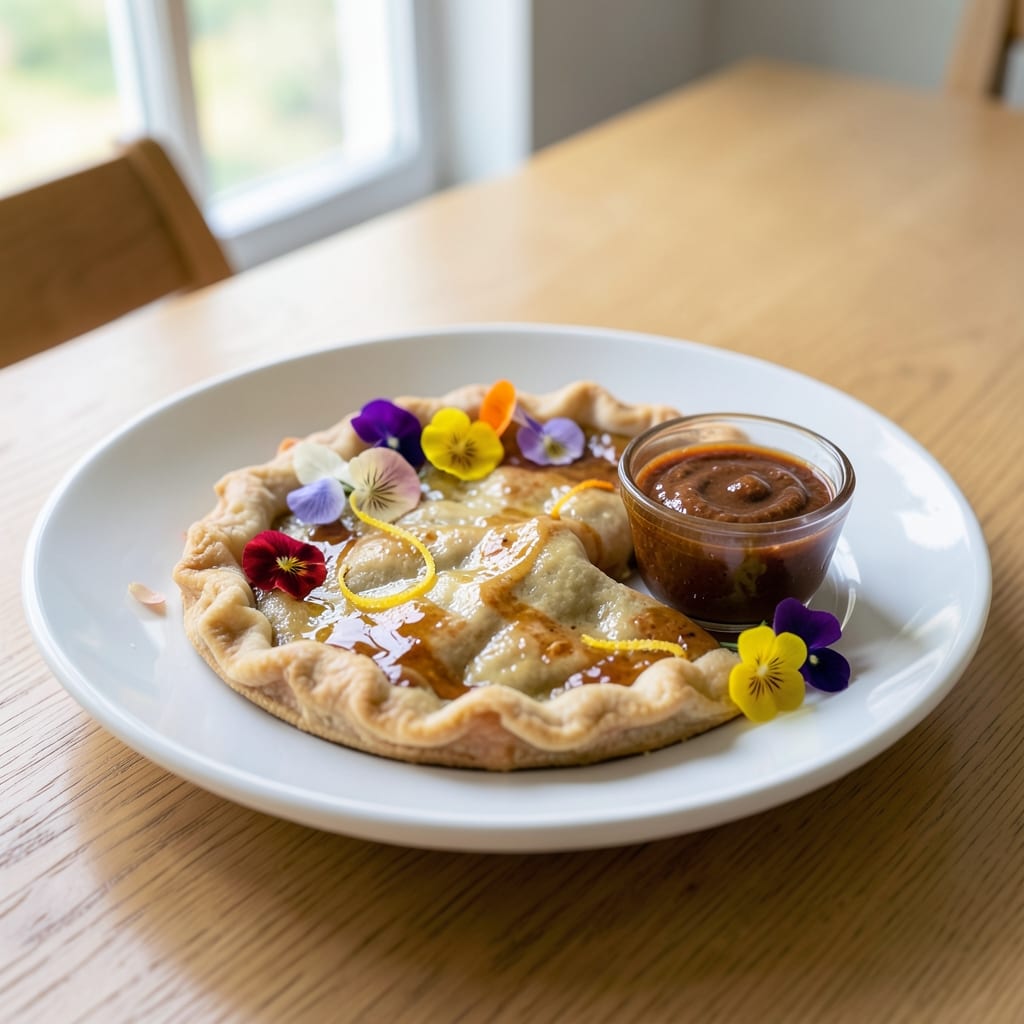
This oil-based pie crust delivers flaky layers without the fuss of chilled butter.
With just a few simple ingredients and a precise mixing method, you’ll achieve a tender, golden crust that holds its shape beautifully.
Ingredients for Pie Crust Recipe with Oil
Seven simple ingredients transform into a flaky, golden crust with zero butter required.
| Ingredient | Amount | Notes |
|---|---|---|
| All-Purpose Flour 🌾 | 2 ½ cups | Sifted for even texture |
| Vegetable Oil 🫒 | ¾ cup | Neutral flavor, like canola or avocado |
| Fine Sea Salt 🧂 | 1 tsp | Diamond Crystal preferred |
| Ice Water 💧 | ⅓ cup | Chilled thoroughly before use |
| Granulated Sugar 🍚 | 1 tbsp | Optional, for sweet crusts |
| Baking Powder 🧂 | ½ tsp | Ensures tender layers |
| White Vinegar 🍋 | 1 tbsp | Tenderizes the gluten |
[recipeingredientscaler]
The oil is critical here. Neutral-flavored vegetable oil—like canola or avocado—ensures the crust stays tender without overpowering the filling. Costco’s Kirkland brand is my go-to for bulk, but any supermarket variety works. The flour should be all-purpose, unbleached for optimal texture. Always sift it first to avoid dense spots in the crust.
Out of vegetable oil? Melted coconut oil (refined, odorless) works in a pinch, though it may add slight flavor. For a whole wheat crust, swap up to half the all-purpose flour for white whole wheat. The vinegar can be apple cider or lemon juice—just ensure it’s acidic enough to tenderize the gluten properly.
The dough keeps 2-3 days tightly wrapped in the fridge. For longer storage, freeze for up to 3 months. Thaw in the fridge overnight before rolling. This crust holds its shape beautifully, so no need to blind-bake for custard fillings.
Why You’ll Love This Recipe
- No Fuss Mixing: I just stir the oil into the flour with a fork—no cutting in cold butter, no pastry blender, no stress.
- Crisp & Tender: The oil makes it flaky without being tough, and a pinch of sugar gives it that subtle sweetness I crave.
- Endless Uses: Sweet pies, savory quiches, even hand pies—this crust handles whatever I throw at it.
- Pantry Staples: Flour, oil, salt, water—things I always have on hand, so I can make pie crust whenever the mood strikes.
Step-by-Step Instructions for Pie Crust With Oil
This method delivers consistently flaky layers using a simple oil-based technique.
Step 1: Combine Dry Ingredients for Uniform Base
In a large mixing bowl, whisk together the 2.5 cups All-Purpose Flour, 1 tsp Fine Sea Salt, 1 tbsp Granulated Sugar, and 0.5 tsp Baking Powder. I sift the flour first to eliminate lumps, which ensures a smooth, even texture in the final crust.
This dry mixture creates the structural foundation. The baking powder adds subtle lift for tender layers, while the salt enhances flavor and strengthens the gluten network just enough. The sugar, though optional, adds a touch of sweetness that balances savory fillings beautifully.
Step 2: Create the Oil-Water Emulsion
In a separate bowl, combine the 0.75 cup Vegetable Oil, 0.33 cup Ice Water, and 1 tbsp White Vinegar. Whisk vigorously for 30 seconds until the mixture thickens slightly and turns a pale, creamy color. The vinegar helps tenderize the gluten, while the cold water prevents the oil from separating.
This emulsion is critical—it distributes the oil evenly throughout the flour, which mimics the effect of cut-in butter. The result is a crust with distinct flaky layers rather than a dense, mealy texture. I always use chilled ingredients here to maintain the integrity of the layers during mixing.
Step 3: Bring the Dough Together
Pour the oil-water mixture into the dry ingredients. Using a fork, gently stir until the flour is just moistened and the dough begins to come together in shaggy clumps. You’ll notice the mixture transform from dry and crumbly to a cohesive mass that holds when pressed.
At this point, I switch to my hands and lightly knead the dough 4-5 times just until it forms a smooth ball. Overworking the dough develops too much gluten, which makes the crust tough. The dough should feel slightly tacky but not sticky—if it’s too wet, chill it for 10 minutes to firm up.
Step 4: Roll and Shape the Crust
Divide the dough into two equal portions for a double-crust pie or use as one single crust. On a lightly floured surface, roll each portion into a circle about ⅛-inch thick and 12 inches in diameter. I roll from the center outward, rotating the dough 45 degrees after each pass to maintain an even thickness.
Check frequently for sticking—if the dough resists, sprinkle a bit more flour underneath. The edges should be smooth and slightly rounded. For a pre-baked crust, transfer the rolled dough to your pie dish, crimp the edges, and prick the bottom all over with a fork to prevent puffing during baking.
Pro Tips For Making Pie Crust Recipe With Oil
- Chill the Oil: I learned this the hard way—warm oil makes tough crust. Pop your vegetable oil in the freezer for 10 minutes before mixing.
- Measure Water Precisely: Sounds weird, but it works: use exactly 3 tablespoons of ice water for every 1.5 cups flour to avoid a sticky mess.
- Skip Overmixing: After burning three batches, I finally figured out that stirring just until the dough clumps is enough—no need for smooth perfection.
- Use a Fork: My grandmother swore by this, and she was right: cut the oil into the flour with a fork until it looks like coarse crumbs for the flakiest texture.
Common Mistakes When Making pie crust recipe with oil
🔥 Using the Wrong Type of Oil
Not all oils are created equal for pie crust. Using an oil with a strong flavor, like olive oil, can overpower the crust’s taste. Similarly, oils with a low smoke point may not hold up well during baking.
Fix: Stick to neutral-flavored oils with a high smoke point, such as vegetable, canola, or refined coconut oil.
🍳 Overmixing the Dough
Overworking the dough develops gluten, which makes the crust tough instead of flaky. This is a common issue when trying to incorporate the oil fully, leading to a dense texture.
Fix: Mix just until the dough comes together. It’s okay if it looks slightly crumbly—it will hold when pressed.
⏰ Skipping the Chill Time
Oil-based pie crusts benefit from chilling to firm up the fat, which helps create flaky layers. Skipping this step can result in a crust that spreads too much or loses its shape.
Fix: Chill the dough for at least 30 minutes before rolling it out. This makes it easier to handle and improves texture.
🎯 Incorrect Oil-to-Flour Ratio
Too much oil can make the crust greasy, while too little will leave it dry and crumbly. Finding the right balance is key to achieving a tender, flaky result.
Fix: Use ⅓ cup of oil for every 2 cups of flour as a starting point, and adjust slightly if needed based on your recipe.
Nutrition Facts

- 6 Egg Cake Recipe with Oil: Light as Air With Buttery Moisture - October 4, 2026
- 4 Bean Casserole Recipe: One-Pan Heartiness With Smoky Paprika Depth - October 4, 2026
- 3-Ingredient Keto Mug Cake Recipe: Microwave Magic in 2 Minutes - October 4, 2026