
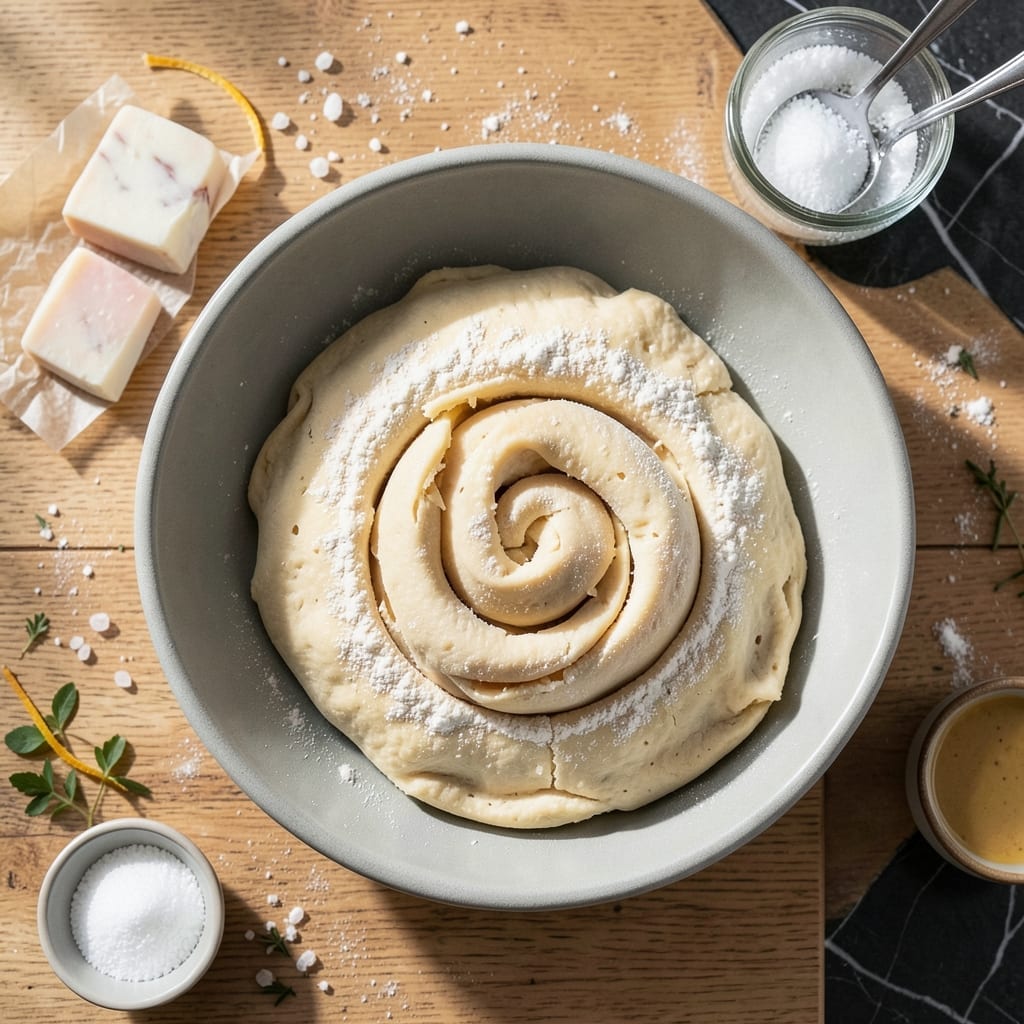
This recipe delivers perfectly flaky pastry every time using a simple lard-based dough. The result is tender, golden layers that hold their shape beautifully in the oven.
With just a few pantry staples and 30 minutes of resting time, you’ll achieve bakery-quality results that elevadoate any pie filling to new heights.
Ingredients for Pie Pastry Recipe with Lard
A few simple ingredients create that coveted flaky texture. Lard is the secret star here.
| Ingredient | Amount | Notes |
|---|---|---|
| All-Purpose Flour 🌾 | 3 cups | Plus extra for dusting surface |
| Lard 🧈 | ¾ cup | Chilled, leaf or block type |
| Ice Water 💧 | ⅓ cup | Plus 1 tbsp as needed |
| Fine Sea Salt 🧂 | 1 tsp | Diamond Crystal preferred |
| Granulated Sugar 🍚 | 1 tbsp | Optional, for sweet pastry |
| Unsalted Butter 🧈 | 4 tbsp | Chilled, for extra flakiness |
| White Vinegar 🍶 | 1 tbsp | Helps prevent gluten formation |
| Large Egg 🥚 | 1 whole | Optional, for richer dough |
[recipeingredientscaler]
The lard is non-negotiable for authentic flakiness. Leaf lard from Fatworks or Snow Cap yields the cleanest flavor and best texture. Avoid hydrogenated shortening—it lacks the same melting properties. Store-bought lard from Walmart or Kroger works in a pinch, but check for additives. The flour should be unbleached for optimal structure, and always measure by weight if you have a scale for precision.
No lard? Shortening is the closest substitute, though the flavor won’t be as rich. For a lighter option, coconut oil (solid, not melted) works but imparts a slight coconut taste. The vinegar can be swapped for lemon juice—both tenderize the gluten. If you’re avoiding eggs, simply omit; the pastry will still be flaky. The sugar is purely optional—skip it for savory applications.
The dough requires 30 minutes chilling to relax the gluten and firm the fat. Wrapped tightly, it keeps 3 days refrigerated or 3 months frozen. For best results, use within 48 hours—the lard can start to oxidize, affecting flavor. Always bring the dough to room temperature slightly before rolling to prevent cracking.
Why You’ll Love This Recipe
- Five Ingredients: I just dump flour, lard, ice water, salt, and sugar—no fancy stuff.
- Buttery Flavor: Lard gives it that rich, melt-in-your-mouth taste my old butter crust never quite hit.
- Endless Possibilities: Sweet pies, savory quiches, even hand pies—this pastry does it all without fuss.
- Pennywise Perfection: Lard costs less than butter, and one batch makes two crusts. Honestly, my wallet thanks me.
Step-by-Step Instructions for Pie Pastry With Lard
Master the technique for creating layers of flaky perfection with this proven method.
Step 1: Combine Dry Ingredients and Chill Fat
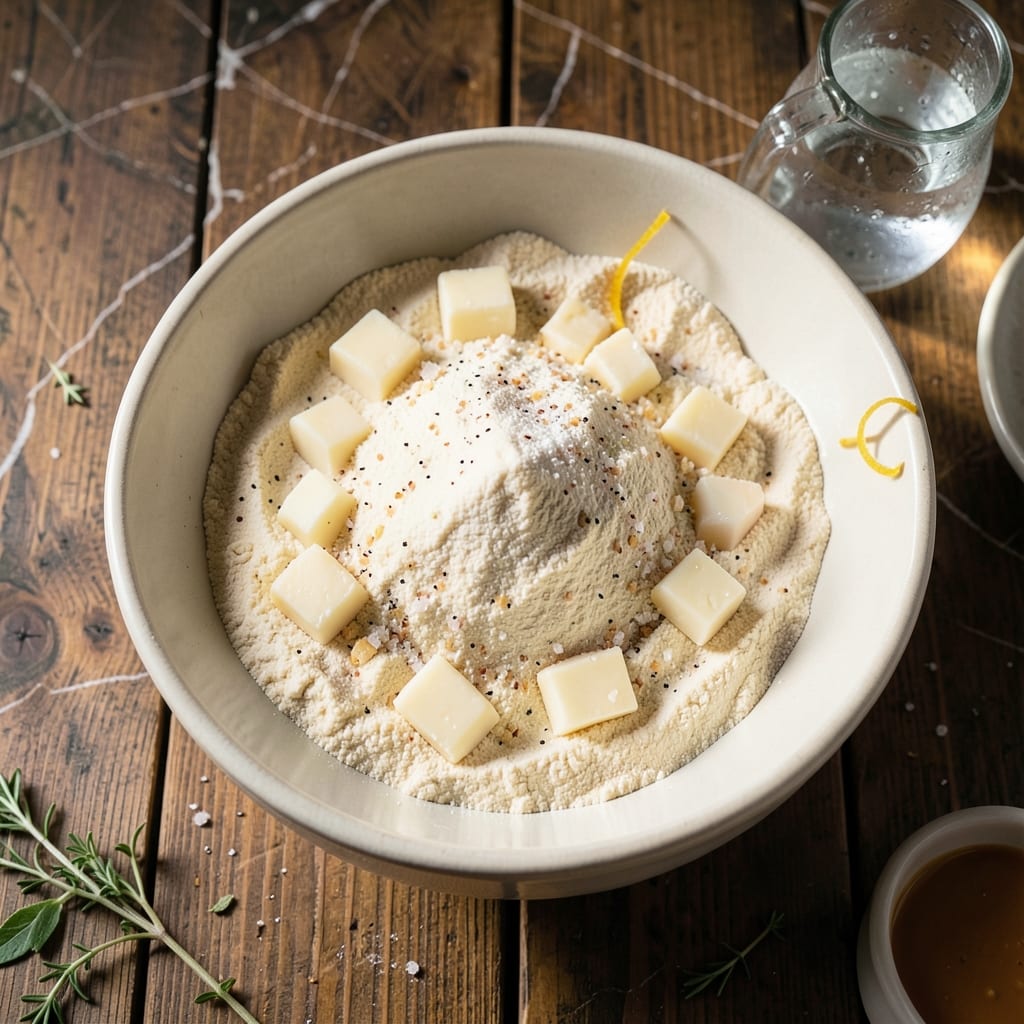
In a large mixing bowl, whisk together the 3 cups All-Purpose Flour, 1 tsp Fine Sea Salt, and 1 tbsp Granulated Sugar until evenly distributed. The sugar adds subtle sweetness for dessert pies, but feel free to omit for savory applications.
Cut the 0.75 cup Lard and 4 tbsp Unsalted Butter (both chilled) into small cubes and place them in the freezer for 10-15 minutes. The key to flaky layers is keeping the fat extremely cold—this prevents it from melting into the flour prematurely, which would toughen the pastry.
Step 2: Cut Fat Into Flour Until Pea-Sized
Add the chilled lard and butter cubes to the flour mixture. Using a pastry cutter or your fingertips, work the fat into the flour until the mixture resembles coarse crumbs with pea-sized pieces of fat visible throughout. This uneven texture creates the flaky layers when baked.
Avoid overworking the dough at this stage—you should still see distinct bits of lard and butter. If the fat begins to soften or smear into the flour, return the bowl to the refrigerator for 5-10 minutes to rechill before proceeding.
Step 3: Add Liquid Ingredients and Form Dough
In a small bowl, whisk together the 0.33 cup Ice Water, 1 tbsp White Vinegar, and 1 whole Large Egg (if using). The vinegar tenderizes the gluten, while the egg adds richness and structure to the pastry.
Create a well in the center of the flour-fat mixture and pour in the liquid ingredients. Using a fork, gently toss the mixture until it just begins to come together. The dough will appear shaggy—this is correct. Turn it out onto a lightly floured surface and press it into a cohesive ball, handling it as little as possible to maintain flakiness.
Step 4: Chill and Rest the Dough
Divide the dough in half and shape each portion into a disc about 1 inch thick. Wrap both discs tightly in plastic wrap and refrigerate for at least 1 hour (or up to 48 hours). This resting period allows the flour to fully hydrate and the gluten to relax, making the dough easier to roll out.
Proper chilling also prevents the fat from melting during rolling, which would compromise the flaky texture. If the dough feels too firm after chilling, let it sit at room temperature for 5-10 minutes before rolling to prevent cracking.
Step 5: Roll and Shape for Your Pie
On a lightly floured surface, roll one disc of dough into a circle about ⅛ inch thick and 12-14 inches in diameter. Use light, even strokes with your rolling pin, starting from the center and working outward. Rotate the dough 45 degrees after each stroke to maintain an even thickness.
For a double-crust pie, transfer the rolled dough to your pie dish, press it gently into the bottom and sides, then trim the edges, leaving a ½-inch overhang. Repeat with the second disc for the top crust. For a single-crust pie, crimp the edges decoratively and proceed with your filling. The dough is now ready for blind baking or filling as your recipe requires.
Pro Tips For Making Pie Pastry Recipe With Lard
- Chill the Lard: Cut the lard into small cubes and refrigerate for 30 minutes before mixing—I learned this the hard way after my first few crusts turned out greasy instead of flaky.
- Ice Water Only: Use the coldest water possible, right from the ice bath, and measure it precisely (about 6-8 tablespoons for 2 cups flour). Warm water makes tough pastry.
- Don’t Overwork It: Stop mixing as soon as the dough comes together, even if it looks shaggy. Overworking develops gluten, and nobody wants a tough pie crust.
- Rest Before Rolling: Let the dough rest in the fridge for at least 1 hour—yes, even if you’re impatient like me. It relaxes the gluten and makes rolling a breeze.
Storing and Reheating This Recipe
🍳 Refrigerator Storage
Your lard-based pie pastry can stay fresh in the refrigerator for 3-4 days. Store it in an airtight container or tightly wrapped in plastic wrap to prevent it from absorbing odors or drying out. For best results, keep it in the coldest part of your fridge, usually the back of the shelf.
❄️ Freezer Storage
For longer storage, freeze your pie pastry for up to 2-3 months. Wrap it securely in plastic wrap, then place it in a heavy-duty freezer bag or airtight container. Label with the date to keep track of freshness. This method preserves the flaky texture beautifully.
🔥 Reheating Methods
To reheat, preheat your oven to 350°F (175°C) and warm the pastry for 10-15 minutes until crisp. Avoid microwaving, as it can make the pastry soggy. For a smoky touch, use a smoker set to 275°F (135°C) for 20-25 minutes.
💡 Quality Preservation
To maintain moisture and flakiness, avoid thawing at room temperature. Instead, transfer the pastry from the freezer to the fridge and let it thaw overnight. If reheating from frozen, add a few extra minutes to the cooking time. Always check for a golden-brown crust to ensure perfect results.
Nutrition Facts

- 6 Egg Cake Recipe with Oil: Light as Air With Buttery Moisture - October 4, 2026
- 4 Bean Casserole Recipe: One-Pan Heartiness With Smoky Paprika Depth - October 4, 2026
- 3-Ingredient Keto Mug Cake Recipe: Microwave Magic in 2 Minutes - October 4, 2026