
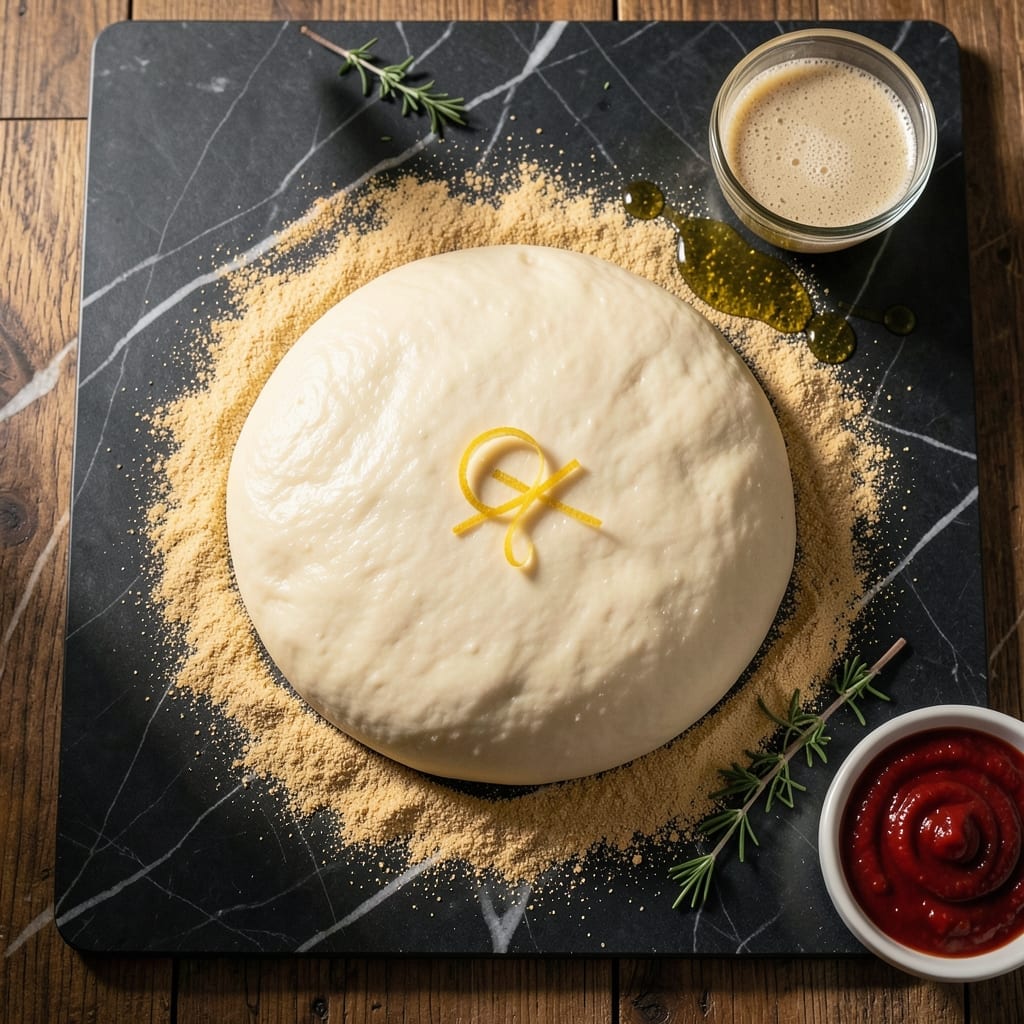
There’s an art to achieving pizza crust that snaps with every bite, and this professional method delivers exactly that. The technique focuses on high-hydration dough and proper gluten development for a crisp yet chewy texture.
I’ve refined this approach through years of testing to create a foundation that bakes up golden with those coveted air pockets. The key lies in the precise balance of flour, water, yeast, and a touch of olive oil.
The result is a dough that stretches easily without tearing, then transforms in the oven into a crisp base with just the right amount of chew. It’s the kind of crust that makes every topping taste better.
This method works for both home ovens and pizza stones, with a fermentation process that develops deep flavor. The dough handles beautifully and bakes to perfection every time.
Ingredients for Pizza Dough Recipe Bobby Flay
High-hydration dough built on flour, water, yeast, and olive oil for that signature snap.
| Ingredient | Amount | Notes |
|---|---|---|
| Bread Flour 🌾 | 3 ½ cups | High-protein for chewiness |
| Water 💧 | 1 ½ cups | Warm, about 110°F |
| Active Dry Yeast 🍞 | 2 ¼ tsp | One packet, proofed in water |
| Extra-Virgin Olive Oil 🫒 | 2 tbsp | For dough elasticity |
| Kosher Salt 🧂 | 2 tsp | Diamond Crystal preferred |
| Sugar 🍚 | 1 tsp | Activates yeast |
| Semolina Flour 🌾 | ½ cup | For dusting work surface |
| All-Purpose Flour 🌾 | ½ cup | For adjusting dough consistency |
| Cornmeal 🌽 | ¼ cup | For pizza peel dusting |
The flour matters most here. Bread flour delivers the chew and structure this dough needs—King Arthur or Bob’s Red Mill are reliable choices at any grocery store. Don’t skip the high-protein content; all-purpose alone won’t give you that crisp snap. The yeast should be fresh (check the expiration date) or it won’t proof properly in the warm water.
No bread flour? All-purpose plus 1 tbsp vital wheat gluten per cup mimics the protein boost. Out of semolina? Fine cornmeal works for dusting. The olive oil can be any extra-virgin you trust—California Olive Ranch is a solid supermarket pick. Sugar substitutes like honey work too (though this is vegetarian, not vegan), but plain white sugar dissolves most reliably in the proofing stage.
Dough balls keep in the fridge for 3 days or freeze for 1 month. Let chilled dough come to room temp before stretching—cold dough tears. Fermented dough develops more flavor overnight, so don’t rush the rise.
Why You’ll Love This Recipe
- Minimal Effort: I mix flour, water, yeast, oil and salt—no fancy steps, just let it rise while I prep toppings.
- Crisp Chewy Bite: The bread flour gives that perfect chew, and the olive oil adds a subtle richness I crave.
- Endless Toppings: Honestly, I’ve used this dough for margherita, BBQ chicken, even dessert pizzas with Nutella.
- Budget Stretcher: Five basic ingredients make four pizzas, and leftovers freeze beautifully for busy nights.
Step-by-Step Instructions for Bobby Flay Pizza Dough
This method delivers a crisp, snappy crust with a chewy interior every time.
Step 1: Activate the Yeast and Mix the Dough
In a large bowl, combine the 1.5 cups Water (warm, about 110°F) with the 1 tsp Sugar and 2.25 tsp Active Dry Yeast. Let it sit for 5-10 minutes until the mixture becomes frothy and cloudy—this confirms the yeast is active.
Add the 2 tbsp Extra-Virgin Olive Oil and 2 tsp Kosher Salt, then gradually mix in the 3.5 cups Bread Flour. Stir with a wooden spoon until a shaggy dough forms. The dough will look rough, but that’s exactly what you want at this stage.
Step 2: Knead the Dough to Develop Gluten
Turn the dough out onto a surface lightly dusted with 0.5 cup Semolina Flour. Knead for 8-10 minutes by hand, using the heel of your palm to push the dough away, then fold it back over itself. The dough will start sticky but becomes smooth and elastic as gluten develops.
If the dough feels too sticky, sprinkle in some of the 0.5 cup All-Purpose Flour, 1 tablespoon at a time, until it reaches a workable consistency. You want the dough to be slightly tacky but not adhere to your hands or the work surface.
Step 3: First Rise for Flavor Development
Lightly oil a large bowl and place the kneaded dough inside. Cover the bowl with a damp kitchen towel or plastic wrap and let it rise in a warm, draft-free spot for 1-2 hours, or until doubled in size. The dough should spring back slowly when poked with a finger.
This first rise allows the yeast to ferment the sugars, developing the complex flavors that make this dough special. Don’t rush it—proper rising time ensures a light, airy texture in the finished crust.
Step 4: Divide and Second Rise for Structure
Punch down the risen dough to release the air, then divide it into 4 equal portions for individual pizzas. Shape each portion into a ball and place them on a surface dusted with the remaining 0.5 cup Semolina Flour. Cover and let rest for another 30-45 minutes.
This second rise relaxes the gluten, making the dough easier to stretch without snapping back. You’ll notice the dough balls puff up slightly and become softer to the touch, indicating they’re ready for shaping.
Step 5: Shape and Prepare for Baking
Dust your pizza peel or work surface with the 0.25 cup Cornmeal to prevent sticking. Take one dough ball and press it gently with your fingertips, starting from the center and working outward to form a 12-inch round. Leave a slightly thicker rim for the crust.
The cornmeal not only prevents sticking but also adds a subtle texture and flavor to the crust’s underside. Stretch the dough just before baking for best results—this ensures it retains its shape and doesn’t shrink in the oven.
Pro Tips For Making Pizza Dough Recipe Bobby Flay
- Proof the Yeast: Always bloom your active dry yeast in warm water (about 110°F) with a pinch of sugar for 5-10 minutes until foamy. I learned this the hard way—dormant yeast means flat, sad dough.
- Use Bread Flour: Skip all-purpose flour; bread flour’s higher protein content (12-14%) gives Bobby Flay’s dough that chewy, elastic texture you’re after.
- Don’t Over-Knead: Mix just until the dough comes together—overworking it develops too much gluten, making your crust tough instead of tender.
- Olive Oil the Bowl: Coat your rising bowl with about 1 tablespoon of that extra-virgin olive oil before the first rise. Sounds small, but it keeps the dough from sticking and adds a subtle richness.
Creative Variations of These Flavors
Garlic-Herb Infused
Mix 2 minced garlic cloves and 1 tbsp fresh rosemary into the water before adding flour. The herbs infuse the dough with aromatic notes that pair beautifully with olive oil and tomato sauces. I love the subtle fragrance this adds. 🌿
Spicy Kick Version
Add 1 tsp red pepper flakes or ½ tsp cayenne pepper to the dry ingredients for a dough that delivers heat in every bite. This works especially well for meat-heavy pizzas like spicy sausage. The heat builds as the dough bakes.
Whole Wheat Blend
Replace 1 cup Bread Flour with whole wheat flour for a nuttier, heartier crust. The dough will be denser, so add 1-2 tbsp extra water if needed. This variation adds fiber while keeping the signature snap.
Cheesy Stuffed Crust
After the first rise, roll 4 string cheese sticks into each dough ball before the second rise. When baked, the cheese melts into the crust, creating that irresistible pull-apart effect. Use low-moisture mozzarella to avoid a soggy crust.
Gluten-Free Adaptation
Swap Bread Flour for a gluten-free blend with xanthan gum (I use King Arthur). Add 1 extra tbsp olive oil for elasticity. The texture differs, but it still bakes up crisp with proper handling. 💛
Sourdough Starter
Replace ½ cup Water and ½ tsp yeast with ½ cup active sourdough starter. The longer fermentation develops a tangy depth that’s incredible with simple toppings. Let it rise overnight in the fridge.
Nutrition Facts
Frequently Asked Questions
Can I use all-purpose flour instead of bread flour?
Yes, but add 1 tbsp vital wheat gluten per cup to mimic bread flour’s high protein. All-purpose alone may yield a less chewy crust. The dough will still work, just with slightly different texture.
How long should I let the dough rise?
First rise: 1-2 hours until doubled. Second rise: 30-45 minutes after dividing. Warm spots speed this up, but don’t rush—proper rising develops flavor.
Why is my dough tearing when I stretch it?
Likely too cold or under-rested. Let chilled dough sit at room temp for 30 minutes before shaping. If it resists, give it another 10-15 minutes to relax.
Can I make this dough ahead of time?
Refrigerate for up to 3 days or freeze for 1 month. Thaw overnight in the fridge before using. Cold fermentation enhances flavor.

- 6 Egg Cake Recipe with Oil: Light as Air With Buttery Moisture - October 4, 2026
- 4 Bean Casserole Recipe: One-Pan Heartiness With Smoky Paprika Depth - October 4, 2026
- 3-Ingredient Keto Mug Cake Recipe: Microwave Magic in 2 Minutes - October 4, 2026