
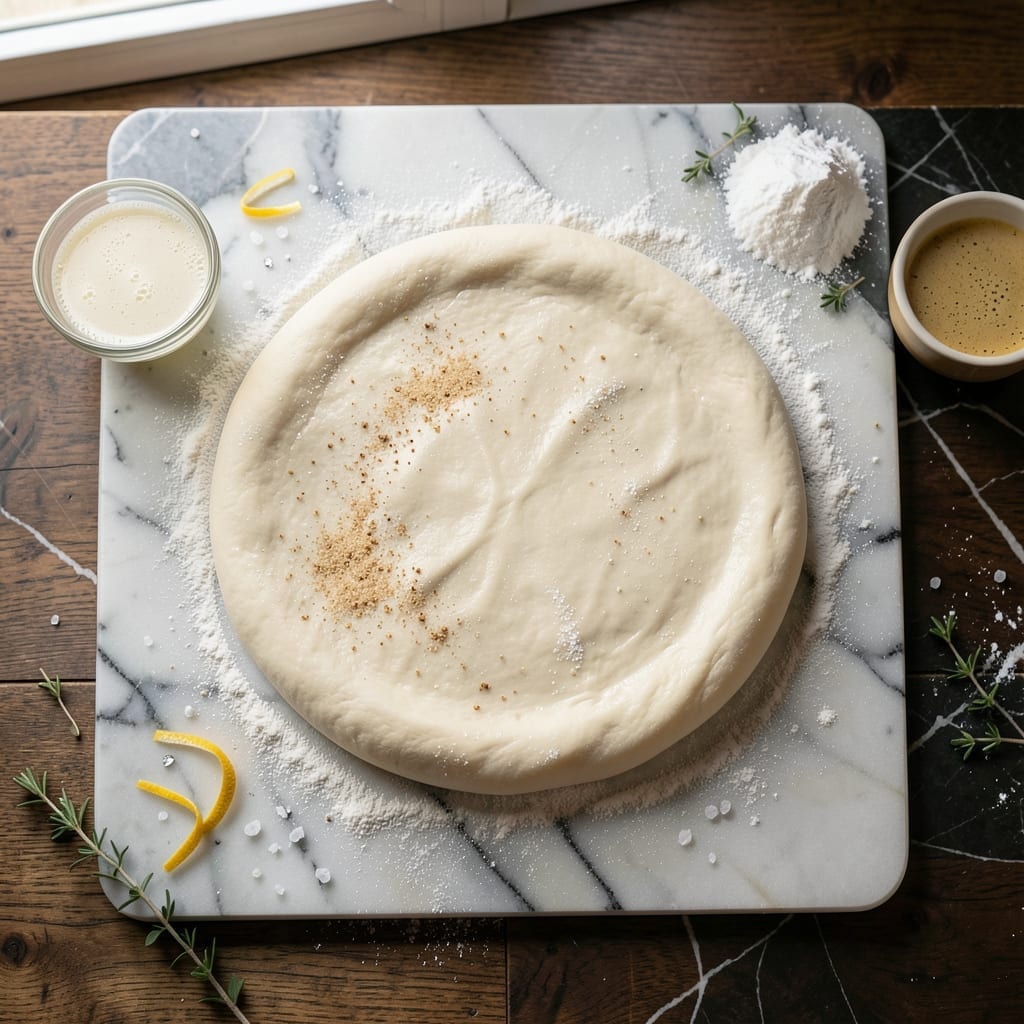
This recipe delivers authentic Neapolitan-style pizza dough with a chewy, airy crust that’s crispy on the outside and tender inside.
Using 00 flour creates a silky texture that’s impossible to achieve with regular flour, while a slow rise develops complex flavors.
Ingredients for Pizza Dough Recipe Using 00 Flour
Eight ingredients create this authentic Neapolitan-style dough with airy, chewy texture you cannot achieve otherwise.
| Ingredient | Amount | Notes |
|---|---|---|
| 00 Flour 🌾 | 3 ½ cups | Caputo or Antimo brand preferred |
| Active Dry Yeast 🍞 | ¼ oz | One packet, proofed in warm water |
| Sea Salt 🧂 | 1 ½ tsp | Fine grain for even distribution |
| Extra-Virgin Olive Oil 🫒 | 2 tbsp | High-quality, fruity notes preferred |
| Lukewarm Water 💧 | 1 ½ cups | 110-115°F for yeast activation |
| Granulated Sugar 🍚 | 1 tsp | Feeds yeast for fermentation |
| Semolina Flour 🌾 | ½ cup | For dusting work surface |
| All-Purpose Flour 🌾 | ¼ cup | Optional, for adjustment |
The 00 flour is non-negotiable for authentic texture. Caputo or Antimo brands are gold standard, available at Amazon or specialty stores like Eataly. Sea salt should be fine grain for even distribution throughout the dough. Don’t substitute table salt—it lacks the mineral complexity that enhances flavor development during the slow rise.
No 00 flour? Bread flour at a 1:1 ratio works in a pinch, though the crust won’t be as tender. Active dry yeast can be swapped for instant yeast at 25% less quantity. For a richer flavor, replace the sugar with honey (same amount). The olive oil can be any high-quality extra-virgin—California Olive Ranch is a reliable grocery store option.
Dough can rest in the fridge for up to 48 hours—longer rises develop more flavor. Store flour in airtight containers to prevent moisture absorption. Baked dough freezes well for 3 months if par-baked first. Always bring ingredients to room temperature before mixing for best results.
Why You’ll Love This Recipe
- No-Fuss Mixing: I just dump the 00 flour, yeast, salt, and oil in a bowl, add water, and it comes together in minutes.
- That Authentic Taste: The 00 flour gives it that thin, crispy crust with a chewy center—honestly, it tastes like my favorite pizzeria.
- Endless Topping Fun: I’ve used this dough for margherita, white pizza, even calzones—it handles everything beautifully.
- Budget-Friendly Batch: Five simple ingredients, and I get enough for two large pizzas that cost less than delivery.
Step-by-Step Instructions for Pizza Dough Using 00 Flour
This method ensures a perfectly chewy, Neapolitan-style crust with minimal effort.
Step 1: Activate the Yeast
In a small bowl, combine the 1.5 cups lukewarm water, 0.25 oz active dry yeast, and 1 tsp granulated sugar. Stir gently and let sit for 5-10 minutes until the mixture becomes frothy and cloudy.
This proofing step confirms the yeast is alive and ready to ferment. If no bubbles appear after 10 minutes, your water may have been too hot or cold—start over with fresh yeast and properly tempered water. The sugar accelerates activation, ensuring a strong start to fermentation.
I always use an instant-read thermometer to verify the water temperature hovers between 110-115°F. Too hot will kill the yeast; too cold will delay activation.
Step 2: Mix and Knead the Dough
In a stand mixer fitted with the dough hook, combine the 3.5 cups 00 flour, 1.5 tsp sea salt, and the proofed yeast mixture. Add the 2 tbsp extra-virgin olive oil and mix on low speed for 2 minutes until the dough comes together.
Increase the speed to medium and knead for 8-10 minutes until the dough is smooth, elastic, and slightly tacky. If the dough feels too sticky, add the 0.25 cup all-purpose flour 1 tablespoon at a time—this adjustment ensures consistency without compromising texture.
The finished dough should pull away from the bowl but still cling slightly to your fingers. Over-kneading can make the dough tough, so stop once it passes the windowpane test: stretch a small piece thinly to see light through it without tearing.
Step 3: First Rise for Flavor Development
Transfer the dough to a lightly oiled bowl, turning to coat all sides. Cover with a damp kitchen towel or plastic wrap and let rise in a warm, draft-free spot for 1.5 to 2 hours, or until doubled in volume.
I place the bowl in an oven with the light on (no heat) to create an ideal 75-80°F environment. The dough should spring back slowly when pressed gently with a finger. If it doesn’t rise, check your yeast freshness or ambient temperature.
This first rise develops the gluten structure and allows fermentation to begin, which contributes to the dough’s signature chewy texture.
Step 4: Shape and Second Rise
Punch down the dough to release excess air and divide it into 4 equal portions for individual pizzas. Lightly dust your work surface with the 0.5 cup semolina flour—this prevents sticking and adds a subtle nutty flavor to the crust.
Shape each portion into a ball by tucking the edges under, creating surface tension. Place the balls on a lightly floured tray, cover, and let rest for 30-60 minutes at room temperature. This second rise relaxes the gluten, making the dough easier to stretch.
The dough balls should puff up slightly but not double in size. At this stage, they’re ready to be stretched into rounds or stored in the refrigerator for up to 48 hours for deeper flavor development.
Step 5: Final Preparation for Baking
Preheat your oven to its highest setting, ideally 550°F or higher, with a pizza stone or inverted baking sheet inside. While the oven heats, stretch one dough ball on a lightly floured surface to your desired thickness, using your knuckles to avoid pressing out the air.
Transfer the stretched dough to a piece of parchment paper for easy sliding onto the hot stone. If the dough resists stretching, let it rest for 5 minutes to relax the gluten before trying again. The semolina flour helps prevent sticking during this process.
Add your toppings quickly and bake for 8-12 minutes until the crust is golden brown with charred spots. The high heat mimics a wood-fired oven, creating a crisp yet chewy texture that defines Neapolitan-style pizza.
Pro Tips For Making Pizza Dough Recipe Using 00 Flour
- Proof Properly: Let the dough rise at room temperature for at least 2 hours, or until doubled in size—I learned this the hard way when my first few pizzas came out dense and flat.
- Measure Water Temperature: Use a thermometer to ensure your lukewarm water is between 105°F and 110°F; any hotter and you risk killing the yeast before it can activate.
- Skip Cold Ingredients: Make sure your 00 flour and water are at room temperature before mixing; cold ingredients can slow down yeast activity and lead to inconsistent rising.
- Use Olive Oil Wisely: Add the extra-virgin olive oil slowly while mixing—about 1 tablespoon at a time—to avoid over-oiling, which can make the dough too sticky to handle.
Common Mistakes When Making This Recipe
🍕 Overworking the Dough
Kneading 00 flour dough too much develops excess gluten, making your crust tough instead of light and chewy. This common mistake strips away the airy texture that defines Neapolitan-style pizza.
Fix: Knead just until the dough comes together (about 8-10 minutes by hand or 5-6 in a mixer). Let the autolyse (resting) phase do the work for you.
⏰ Skipping the Resting Time
Rushing the fermentation process prevents the dough from developing flavor and proper texture. 00 flour needs time to hydrate and rise for that signature extensibility.
Fix: Allow the dough to rest at room temperature for 1-2 hours, then refrigerate for at least 24 hours (up to 72) for cold fermentation.
🌡️ Using the Wrong Water Temperature
Water that’s too hot can kill the yeast, while cold water slows fermentation. Both lead to dense, underproofed dough that won’t rise properly.
Fix: Use lukewarm water (around 95–105°F). Test it on your wrist—it should feel warm but not hot.
🥘 Measuring Flour Incorrectly
Scooping flour directly from the bag compacts it, leading to dry, stiff dough. 00 flour is finely milled and requires precise measurements for the right hydration.
Fix: Weigh your flour (use 60% hydration for Neapolitan-style) or spoon it into a measuring cup and level it off. A kitchen scale is your best friend here.
Nutrition Facts

- 6 Egg Cake Recipe with Oil: Light as Air With Buttery Moisture - October 4, 2026
- 4 Bean Casserole Recipe: One-Pan Heartiness With Smoky Paprika Depth - October 4, 2026
- 3-Ingredient Keto Mug Cake Recipe: Microwave Magic in 2 Minutes - October 4, 2026