
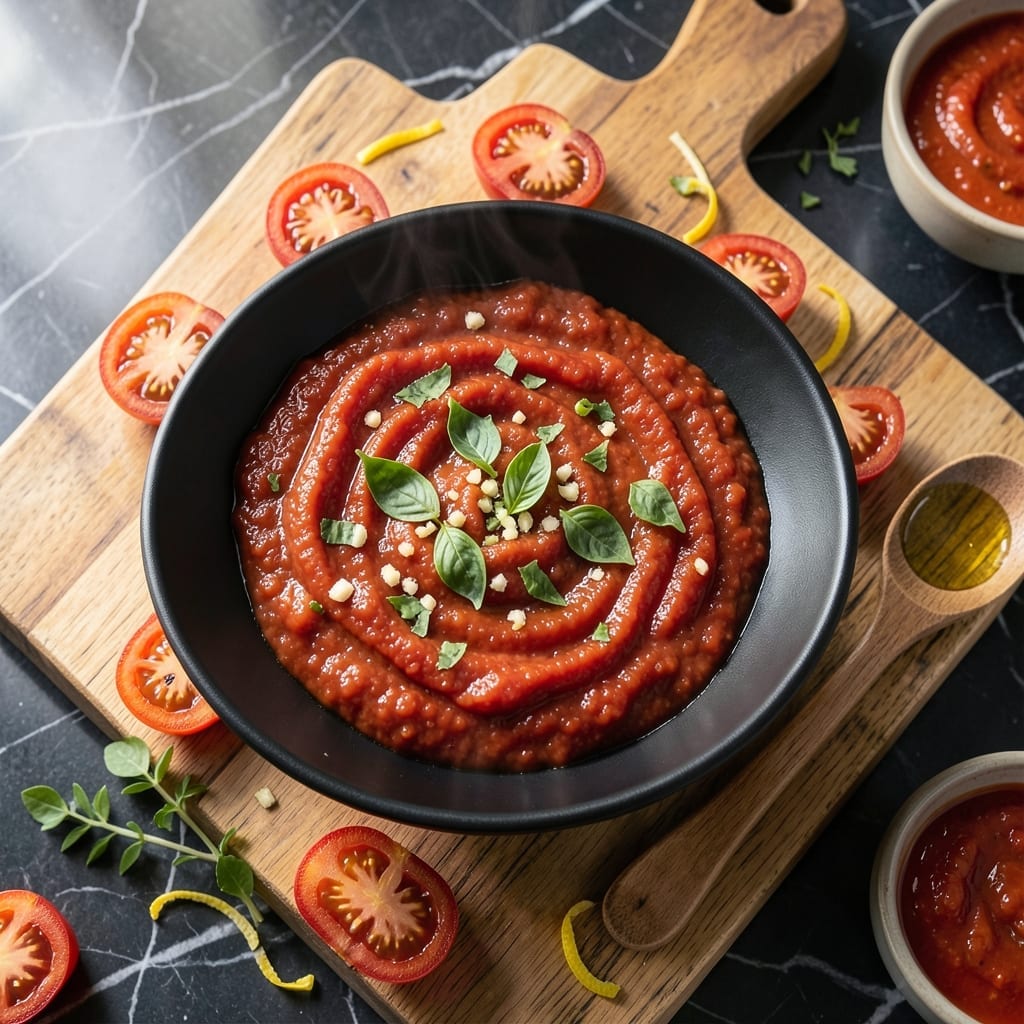
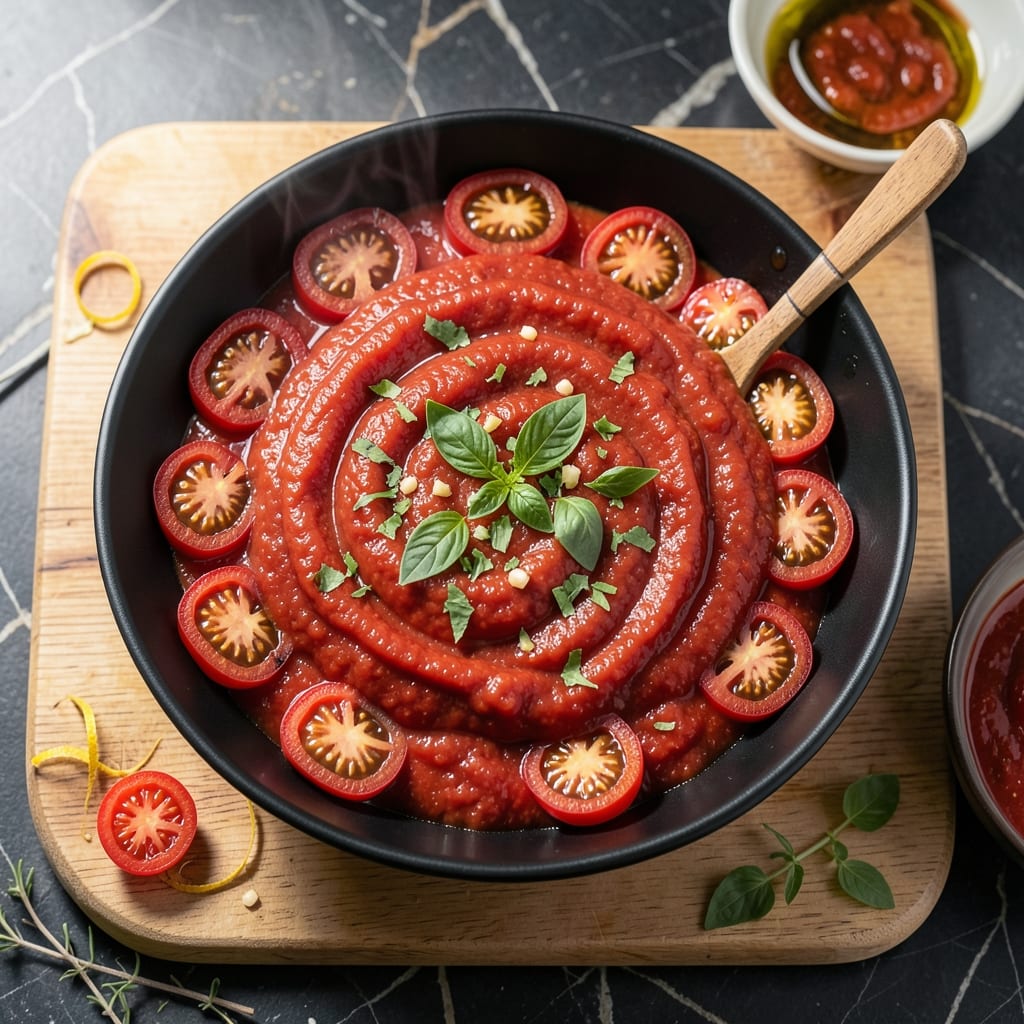
This fresh tomato sauce transforms any pizza into a restaurant-quality masterpiece. The secret lies in slow simmering to concentrate the natural sweetness and acidity of ripe tomatoes.
With just a few simple ingredients and 30 minutes, you’ll create a vibrant, homemade base that’s far superior to store-bought versions. Perfect for both thin and thick crust pies.
Ingredients for Pizza Sauce Recipe Fresh Tomatoes
Nine vibrant ingredients for a restaurant-quality homemade pizza sauce base.
| Ingredient | Amount | Notes |
|---|---|---|
| Ripe Roma Tomatoes 🍅 | 2 lb | Cored and quartered |
| Extra-Virgin Olive Oil 🫒 | 2 tbsp | High-quality cold-pressed |
| Garlic Cloves 🧄 | 4 cloves | Peeled and minced |
| Fresh Basil Leaves 🌿 | ¼ cup | Loosely packed, chopped |
| Sea Salt 🧂 | 1 tsp | Fine grain preferred |
| Black Pepper 🌶️ | ½ tsp | Freshly cracked |
| Red Pepper Flakes 🔥 | ½ tsp | Adjust for heat preference |
| Tomato Paste 🍅 | 2 tbsp | For depth of flavor |
| Balsamic Vinegar 🍷 | 1 tbsp | Aged for complexity |
The tomatoes are non-negotiable here. Roma or San Marzano varieties offer the best balance of meaty texture and low moisture. Farmers markets in late summer yield the sweetest, most flavorful fruit. Avoid refrigerated tomatoes—they lose acidity and sweetness. If using canned, San Marzano DOP from Eataly or Whole Foods provides consistent quality for off-season cooking.
No fresh tomatoes? High-quality canned crushed tomatoes (28 oz can) work perfectly—drain excess liquid first. Short on basil? Dried oregano at one-third the amount maintains the Italian profile. For a sweeter sauce, add a pinch of sugar or caramelize 1 tbsp of tomato paste with the garlic. The balsamic vinegar can be swapped for red wine vinegar if needed.
Sauce keeps 5 days in an airtight container in the fridge. For longer storage, freeze in ice cube trays (up to 6 months). The flavor deepens after 24 hours, making it ideal for meal prep. Always bring to room temperature before using on pizza.
Why You’ll Love This Recipe
- No-Cook Blend: Honestly, I just toss the Roma tomatoes, garlic, and basil into the blender with olive oil—no pre-cooking, no fuss.
- Sun-Kissed Taste: That fresh tomato sweetness with the sharp kick of raw garlic? It’s the closest I’ve gotten to a napoli pizzeria at home.
- Freezer Friendly: I make a double batch and freeze it in jars—pizza night becomes a 5-minute assembly job.
- Pantry Savior: Between us, this costs less than a store-bought jar and tastes like it should be triple the price.
Step-by-Step Instructions for Pizza Sauce
Master this technique to create a vibrant, professional-quality base for your homemade pizzas.
Step 1: Roast the Tomatoes with Aromatics
Preheat your oven to 400°F. Toss the 2 lb Ripe Roma Tomatoes with the 2 tbsp Extra-Virgin Olive Oil on a rimmed baking sheet. The oil should coat the tomatoes evenly without pooling.
Sprinkle the 4 cloves Garlic Cloves and 0.25 cup Fresh Basil Leaves over the tomatoes. Roast for 25-30 minutes until the tomatoes collapse and develop deep caramelized edges. This intensifies their natural sweetness and removes excess moisture.
Step 2: Blend the Roasted Mixture
Transfer the roasted tomatoes, garlic, and basil to a blender or food processor. Add the 2 tbsp Tomato Paste, 1 tbsp Balsamic Vinegar, 1 tsp Sea Salt, 0.5 tsp Black Pepper, and 0.5 tsp Red Pepper Flakes.
Pulse until smooth, stopping to scrape down the sides as needed. The texture should be velvety with no visible chunks—this ensures even distribution on your pizza crust. Taste and adjust the seasoning if necessary, though the listed amounts should yield perfect balance.
Step 3: Reduce to Ideal Consistency
Pour the blended mixture into a saucepan and simmer over medium-low heat for 10-15 minutes. Stir frequently with a wooden spoon to prevent sticking as the sauce thickens.
You’re aiming for a spreadable consistency that holds its shape on a spoon but isn’t watery. The sauce should reduce by about one-third. Watch for it to turn from a bright red to a deeper, richer hue—this visual cue signals the flavors have concentrated properly.
Step 4: Cool and Store for Future Use
Remove the sauce from heat and let it cool to room temperature. This step is crucial—hot sauce on pizza dough can create a soggy crust. The sauce will continue to thicken slightly as it cools.
Transfer to an airtight container. This recipe yields enough for 4 pizzas, so you can refrigerate for up to 5 days or freeze for 3 months. For best results, let chilled sauce come to room temperature before using it on your pizza.
Pro Tips For Making Pizza Sauce Recipe Fresh Tomatoes
- Simmer Uncovered: Let the sauce reduce for 20-25 minutes uncovered—this thickens it naturally and intensifies the tomato flavor without watering it down.
- Seed the Tomatoes: Scoop out the seeds and excess juice from the Roma tomatoes before cooking; it prevents a watery sauce that slides right off your pizza.
- Mince Garlic Fine: Chop the garlic into a near-paste consistency so it melts into the sauce rather than leaving bitter, undercooked chunks.
- Add Basil Last: Stir in the fresh basil leaves just before using the sauce—adding it earlier turns them bitter and dulls that bright, herbal punch.
Flavor Customization for This Dish
🔥 Make it Spicier
For a sauce with a kick, add 2 tsp cayenne pepper or 1 tbsp red pepper flakes while simmering. This boosts the heat without overpowering the fresh tomato base, giving your pizza a bold, fiery character. Balance it with a pinch of sugar if the spice feels too intense.
🍯 Add Sweetness
If your tomatoes are a bit tart, sweeten the sauce with 1 tbsp honey or 1 tsp brown sugar. This rounds out the acidity and enhances the natural fruitiness of the tomatoes, creating a more harmonious flavor profile.
🍋 Tangy Twist
For a brighter, zingier sauce, stir in 1 tbsp lemon juice or 2 tbsp balsamic vinegar at the end of cooking. The acidity lifts the flavors and adds a refreshing contrast to the richness of the tomatoes.
🌫️ Extra Smoky
Achieve a deep, smoky depth by adding ½ tsp smoked paprika or 1 tsp liquid smoke. This works especially well for BBQ-style pizzas or those with grilled toppings, adding a subtle, wood-fired aroma.
🎯 Umami Boost
Enhance the savory notes with 1 tbsp tomato paste, 1 tsp soy sauce, or 1 chopped anchovy fillet. These ingredients amplify the umami, making the sauce richer and more complex, perfect for meat-heavy or veggie-loaded pizzas.
Nutrition Facts

- 6 Egg Cake Recipe with Oil: Light as Air With Buttery Moisture - October 4, 2026
- 4 Bean Casserole Recipe: One-Pan Heartiness With Smoky Paprika Depth - October 4, 2026
- 3-Ingredient Keto Mug Cake Recipe: Microwave Magic in 2 Minutes - October 4, 2026