
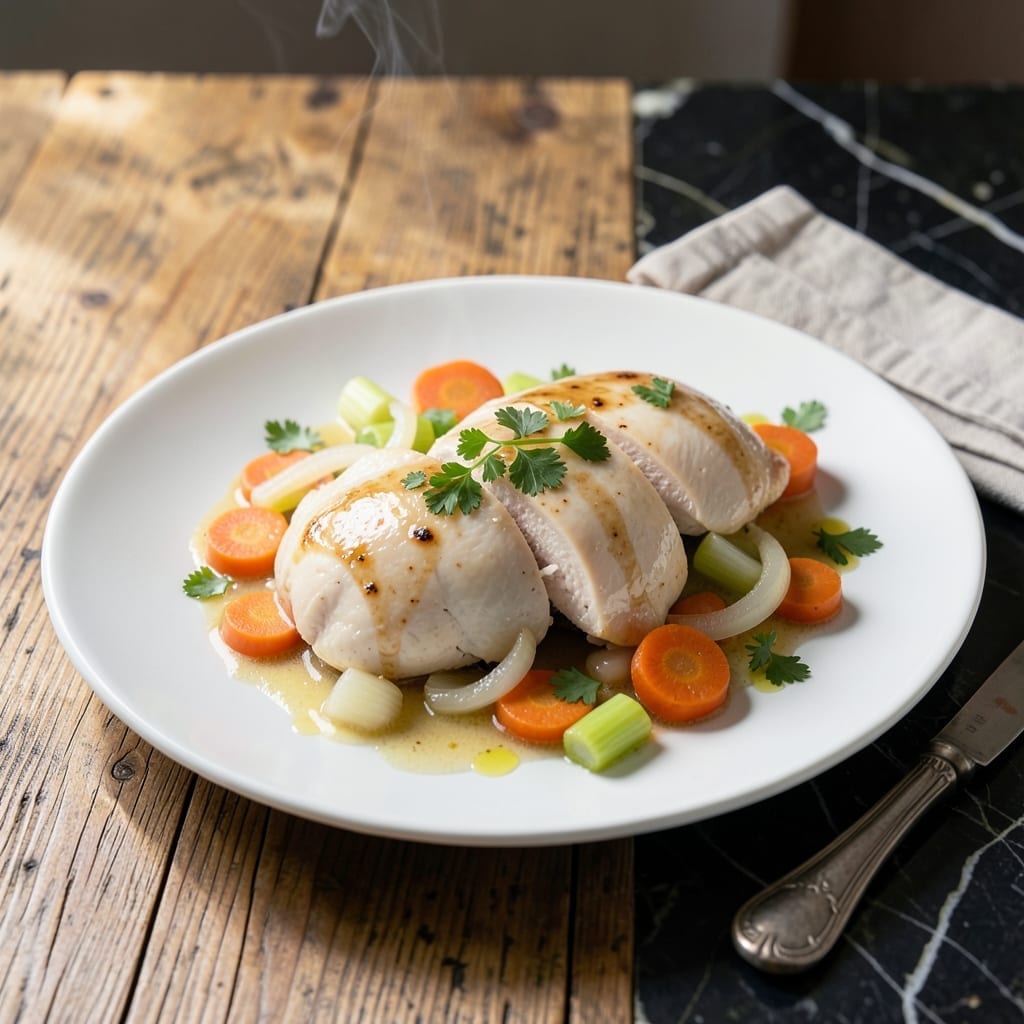
Mastering poached chicken opens up endless possibilities for light, protein-packed meals. This gentle cooking method yields silky, tender meat every time.
The technique is simple yet precise: simmer in flavorful liquid until just cooked through. I’ve refined this approach to ensure consistent results, whether for salads or soups.
What you’ll get is moist chicken with a clean flavor that absorbs dressings and broths beautifully. The meat stays juicy and holds its shape when sliced or shredded.
Use this as a base for grain bowls, tacos, or sandwiches. The versatility makes it a staple in my kitchen rotation.
Ingredients for Poached Chicken Recipe Ideas
Simple ingredients yield restaurant-quality poached chicken every single time with silky texture.
| Ingredient | Amount | Notes |
|---|---|---|
| Boneless, Skinless Chicken Breasts 🍗 | 1 ½ lb | Pounded to even thickness |
| Water 💧 | 8 cups | For poaching liquid base |
| Chicken Stock 🍲 | 2 cups | Low-sodium preferred for control |
| White Wine Vinegar 🍷 | 2 tbsp | Adds brightness to liquid |
| Yellow Onion 🧅 | 1 whole | Quartered for aromatics |
| Carrots 🥕 | 2 whole | Cut into chunks |
| Celery Stalks 🌿 | 2 whole | Roughly chopped for flavor |
| Garlic Cloves 🧄 | 4 cloves | Smashed to release flavor |
| Bay Leaves 🍃 | 2 pieces | Dried, for aromatic depth |
| Black Peppercorns 🌶️ | 1 tsp | Crushed lightly for infusion |
| Kosher Salt 🧂 | 1 tbsp | Diamond Crystal brand preferred |
| Fresh Parsley Sprigs 🌿 | 4 whole | For garnish and aroma |
| Fresh Thyme Sprigs 🌿 | 3 whole | Optional but recommended |
| Lemon Slices 🍋 | 2 slices | For finishing acidity |
The chicken quality is paramount here. Air-chilled, free-range breasts provide superior texture and flavor. Whole Foods or Trader Joe’s offer excellent options without additives. For the stock, homemade yields the cleanest flavor, but quality store-bought (like Better Than Bouillon) works well. Ensure your vegetables are fresh—they infuse the liquid with subtle sweetness that enhances the final product.
No white wine vinegar? Apple cider vinegar at the same amount provides similar acidity. Short on fresh herbs? Dried thyme or parsley at one-third the quantity works, though fresh offers better aroma. The bay leaves are essential—don’t substitute. For the liquid base, all stock can replace water for more concentrated flavor, though the ratio of salt may need adjustment.
Poached chicken keeps beautifully. Store in its liquid in the fridge for up to 4 days, or freeze portions in their broth for 3 months. The cooking liquid doubles as a light stock—strain and save for soups or sauces. Always cool completely before refrigerating to maintain texture.
Why You’ll Love This Recipe
- Set and Forget: I just drop the chicken in the stock with onion and vinegar, then walk away—no flipping, no fuss.
- Tender Every Time: The gentle poach keeps the breasts juicy, never dry, with a subtle tang from the white wine vinegar.
- Meal Prep MVP: I shred it for salads, slice for sandwiches, or cube for soups all week long.
- Budget Stretch: One batch makes four meals for my family, and the broth doubles as soup base.
Step-by-Step Instructions for Poached Chicken
This gentle cooking method yields perfectly tender chicken for any recipe.
Step 1: Prepare the Poaching Liquid Base
In a large pot, combine the 8 cups water and 2 cups chicken stock. Add the 2 tbsp white wine vinegar, which provides a subtle brightness to balance the richness of the broth.
This liquid volume ensures the 1.5 lb boneless, skinless chicken breasts will be fully submerged. The ratio of water to stock creates a light but flavorful foundation without being overly concentrated.
Step 2: Build the Aromatic Foundation
Add the 1 whole yellow onion (quartered), 2 whole carrots (cut into chunks), 2 whole celery stalks (roughly chopped), and 4 cloves garlic cloves (smashed) to the pot. These vegetables form a classic mirepoix that infuses the liquid with deep, savory notes.
Include the 2 pieces bay leaves, 1 tsp black peppercorns (lightly crushed), 1 tbsp kosher salt, 4 whole fresh parsley sprigs, and 3 whole fresh thyme sprigs. The herbs and spices should be added whole to prevent bitterness while still imparting their aromatic qualities.
Step 3: Poach the Chicken Gently
Bring the liquid to a bare simmer over medium heat—you should see small bubbles occasionally breaking the surface, not a rolling boil. Carefully submerge the chicken breasts, ensuring they are fully covered by the liquid.
Poach at this gentle simmer for 12-15 minutes until the chicken reaches an internal temperature of 165°F. The surface should appear opaque with no pink remaining, and the meat should feel firm yet still tender when pierced with a knife tip.
Step 4: Rest and Finish with Acid
Using a slotted spoon, transfer the chicken to a cutting board or plate. Add the 2 slices lemon slices to the poaching liquid during the last 2 minutes of cooking to infuse a subtle citrus note.
Let the chicken rest for 5 minutes before slicing or shredding. This brief rest allows the juices to redistribute, ensuring maximum tenderness. The poaching liquid can be strained and reserved for soups, sauces, or grains, as it now carries the essence of all the aromatics and the chicken itself.
Pro Tips For Making Poached Chicken Recipe Ideas
- Keep It Simmering: Maintain a gentle simmer, not a boil—aggressive bubbling toughens the chicken. I learned this the hard way when my breasts turned rubbery.
- Slice the Onion Thin: Thinly slice the yellow onion so it infuses the poaching liquid fast. Sounds fussy, but it actually changes the outcome.
- Skip Cold Chicken: Start with room-temperature chicken breasts to guarantee even cooking. I skip this when I’m lazy, but the texture suffers.
- Use the Vinegar: Don’t skip the white wine vinegar—about 2 tablespoons brightens the stock and keeps the chicken tender. My grandmother swore by this, and she was right.
Common Mistakes When Making poached chicken recipe ideas
Boiling Instead of Simmering
A vigorous boil will toughen the chicken and make it rubbery. Keep the heat at a gentle simmer where small bubbles occasionally break the surface. I maintain medium-low heat to ensure perfect results every time. 🌡️
Skipping the Vinegar
That 2 tbsp white wine vinegar isn’t just for flavor—it helps break down proteins for tender meat. Without it, your chicken may turn out stringy. The acidity also brightens the poaching liquid for better overall taste.
Overcrowding the Pot
Your 1.5 lb chicken breasts need room to cook evenly. If the pot is too small, the liquid won’t circulate properly. I use a 5-quart pot to ensure each piece has space to cook uniformly.
Underseasoning the Liquid
The poaching liquid should taste well-seasoned. With 1 tbsp kosher salt and aromatics, taste and adjust before adding chicken. Remember, the meat absorbs these flavors as it cooks.
Rushing the Rest
Those 5 minutes of resting time are crucial. Slicing too soon causes juices to escape, leaving you with dry meat. I always set a timer to resist the urge to cut early. ✨
Ignoring Internal Temperature
Don’t guess—use a meat thermometer. The chicken is done at 165°F internal temperature. Any higher and it starts to dry out. I check the thickest part of the breast for accuracy.
Nutrition Facts
Frequently Asked Questions
What’s the best way to use leftover poaching liquid?
Strain and use it as a light stock for soups or risotto. It’s packed with flavor from the chicken and aromatics. Store in the fridge for up to 3 days or freeze for longer use.
Can I poach chicken with bones and skin?
Yes, but adjust the cooking time to 20-25 minutes. Bone-in pieces take longer to reach 165°F. The skin may become rubbery, so it’s best to remove it afterward.
How do I keep poached chicken moist?
Don’t overcook—remove it from the liquid as soon as it hits 165°F. Let it rest in the warm broth for 5 minutes to retain juices.
Why add vinegar to the poaching liquid?
The 2 tbsp vinegar tenderizes the meat and brightens the flavor. It also helps prevent the chicken from turning gray.

- 6 Egg Cake Recipe with Oil: Light as Air With Buttery Moisture - October 4, 2026
- 4 Bean Casserole Recipe: One-Pan Heartiness With Smoky Paprika Depth - October 4, 2026
- 3-Ingredient Keto Mug Cake Recipe: Microwave Magic in 2 Minutes - October 4, 2026