
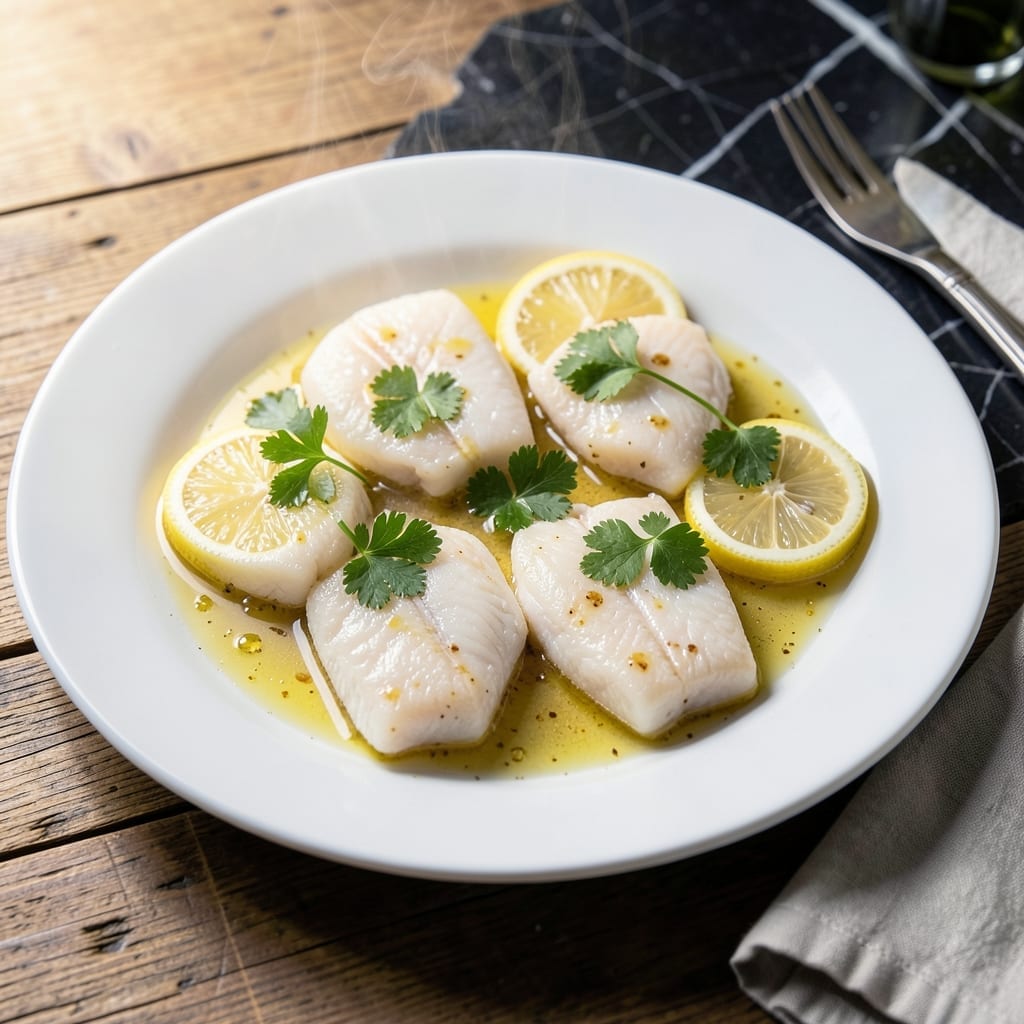
There’s a simple elegance to perfectly poached haddock that transforms a humble fish into something extraordinary. This method guarantees a silky texture every time, with delicate flakes that melt in your mouth.
The key lies in gentle heat and precise timing. A flavorful broth of white wine, lemon, and fresh herbs infuses the fish with bright, aromatic notes without overpowering its natural sweetness.
What emerges from the poaching liquid is tender, moist haddock with a subtle citrus undertone. The technique is foolproof once you understand the basics of liquid temperature and cooking time.
Serve with a drizzle of the poaching liquid for extra flavor. This is restaurant-quality seafood made simple at home.
Ingredients for Poached Haddock
Fresh haddock, white wine, and herbs create this delicate seafood dish with ease.
| Ingredient | Amount | Notes |
|---|---|---|
| Haddock Fillets 🐟 | 1 ½ lb | Fresh, skinless, boneless preferred |
| Dry White Wine 🍷 | 2 cups | Sauvignon Blanc or Pinot Grigio |
| Water 💧 | 2 cups | For poaching liquid base |
| Fresh Lemon Juice 🍋 | ¼ cup | About 2-3 lemons |
| Lemon Slices 🍋 | 4 slices | For garnish and infusion |
| Fresh Parsley Sprigs 🌿 | 4 sprigs | Plus extra for garnish |
| Fresh Dill Sprigs 🍃 | 4 sprigs | Stems removed |
| Bay Leaves 🌿 | 2 whole | Dried or fresh |
| Black Peppercorns 🌶️ | 1 tsp | Lightly crushed |
| Kosher Salt 🧂 | 1 tbsp | Diamond Crystal preferred |
| Shallot 🧅 | 1 whole | Thinly sliced |
| Unsalted Butter 🧈 | 2 tbsp | Optional, for finishing |
The haddock must be the freshest you can find—look for translucent, pearly flesh with no fishy odor. Whole Foods or a trusted fishmonger is ideal, but most supermarket seafood counters will have fresh fillets if you ask early in the day. Skinless, boneless fillets save time, but skin-on works if you’re comfortable removing it yourself. The wine should be dry and crisp—nothing oaky or overly sweet.
No white wine? Substitute with additional water and 1 tbsp of white wine vinegar. Fresh herbs are non-negotiable for the best flavor (dried will taste muted), but if you must, use one-third the amount of dried parsley and dill. For a richer finish, heavy cream or crème fraîche can replace the butter. The lemon juice can be bottled in a pinch, but fresh is noticeably brighter.
Poached haddock is best served immediately but holds for 1-2 days in the fridge. Store it in the poaching liquid to keep it moist. The liquid itself makes a fantastic base for risotto or soup—freeze it for up to 3 months.
Why You’ll Love This Recipe
- One Pot Simplicity: I just drop the haddock in the wine-lemon broth and walk away—no flipping, no fuss.
- Bright Citrus Flavor: That fresh lemon juice and wine combo makes the fish taste so clean and vibrant, never fishy.
- Weeknight Hero: Honestly, it’s ready before I can set the table, yet fancy enough for company.
- Stretches the Budget: One fillet goes a long way, and leftovers make killer fish tacos the next day.
Step-by-Step Instructions for Poached Haddock
Here’s the method. Straightforward, tested, works every time.
Step 1: Prepare the Poaching Liquid
In a wide, heavy saucepan, combine the 2 cups dry white wine, 2 cups water, 0.25 cup fresh lemon juice, and 1 tbsp kosher salt. Bring to a gentle simmer over medium heat—you want small bubbles breaking the surface, not a rolling boil.
Add the thinly sliced shallot, 2 whole bay leaves, 1 tsp black peppercorns, 4 sprigs fresh parsley sprigs, and 4 sprigs fresh dill sprigs. This aromatic base infuses the haddock with bright, herbaceous flavor during cooking.
Step 2: Poach the Haddock Fillets
Once the liquid simmers, reduce heat to low to maintain a temperature between 160-180°F. Gently lower the 1.5 lb haddock fillets into the pan, ensuring they’re fully submerged. If your pan isn’t wide enough, use a smaller pot with taller sides.
Poach for 8-10 minutes until the fish flakes easily with a fork and turns opaque white throughout. Resist the urge to stir or prod the fillets—this prevents breakage. The surface of the liquid should barely tremble with tiny bubbles.
Step 3: Add Finishing Touches
Using a slotted spatula, carefully transfer the haddock fillets to a serving platter. Arrange the 4 slices lemon slices around the fish for a vibrant presentation. This is also the moment to add elegance to your dish.
If using, whisk the 2 tbsp unsalted butter into the hot poaching liquid until melted. Spoon this enriched broth over the fillets to keep them moist and add a glossy sheen. The butter creates a silky finish that complements the delicate fish.
Step 4: Serve with Aromatic Broth
Ladle some of the warm poaching liquid around the haddock, ensuring each serving gets a portion of the fragrant broth. The liquid should be light golden in color, infused with the herbs and citrus notes. Discard the bay leaves and peppercorns before serving.
Garnish with additional fresh parsley or dill if desired. The fish should be tender and moist, with a clean, bright flavor that lets the haddock shine. Serve immediately while hot, as poached fish loses its delicate texture as it cools.
Pro Tips For Making Poached Haddock
- Keep the Simmer Gentle: Poach the haddock at just below a simmer—tiny bubbles, not a rolling boil. I learned this the hard way after my first few fillets turned rubbery from aggressive heat.
- Pat Fillets Dry: Blot the haddock with paper towels before poaching, even if they look dry. Sounds weird, but it works: excess moisture dilutes the wine and lemon flavor in the liquid.
- Skip the Overcrowding: Use a pan wide enough to hold the fillets in a single layer. After burning three batches, I finally figured out that crammed fish cooks unevenly.
- Use Room-Temp Wine: Take the dry white wine out of the fridge 10 minutes before starting. My grandmother swore by this, and she was right: cold wine slows the cooking process and mutes the flavor.
Make-Ahead Tips for poached haddock
Prep the Broth Early
I always make the poaching liquid 1-2 hours ahead and let it cool. This allows the shallot, bay leaves, and peppercorns to infuse fully. Store it covered at room temperature until ready to use. 💡
Par-Cook the Fish
For stress-free entertaining, poach the haddock for just 6-7 minutes until slightly underdone, then transfer to a plate. At serving time, submerge in the reheated broth for 2-3 minutes to finish cooking perfectly.
Store in Liquid
Leftover haddock stays moist for 1-2 days when submerged in its poaching liquid in the fridge. Use an airtight container to prevent absorption of other odors.
Freeze the Broth
The strained poaching liquid freezes beautifully for up to 3 months. I freeze it in 1-cup portions for future seafood dishes or risotto bases. Label with the date to track freshness.
Reheat Gently
To serve leftovers, warm the fish in its liquid over low heat for 3-4 minutes until just heated through. Avoid boiling, which can toughen the delicate fillets.
For microwave reheating, use 50% power in 30-second intervals with the liquid.
Nutrition Facts
Frequently Asked Questions
What temperature should the poaching liquid be?
Keep it between 160-180°F with just tiny bubbles breaking the surface. Never let it boil, as this will make the haddock tough and rubbery.
Can I use a different type of fish?
Yes, this method works beautifully with other firm white fish like cod, halibut, or pollock. Adjust cooking time slightly: thicker fillets may need up to 12 minutes.
How do I know when the haddock is done?
The fish is ready when it turns opaque white and flakes easily with a fork. This usually takes 8-10 minutes in properly heated liquid.
What can I use instead of white wine?
Substitute with 2 cups water plus 1 tbsp white wine vinegar for acidity. Seafood stock also adds depth if you have it on hand.

- 6 Egg Cake Recipe with Oil: Light as Air With Buttery Moisture - October 4, 2026
- 4 Bean Casserole Recipe: One-Pan Heartiness With Smoky Paprika Depth - October 4, 2026
- 3-Ingredient Keto Mug Cake Recipe: Microwave Magic in 2 Minutes - October 4, 2026