
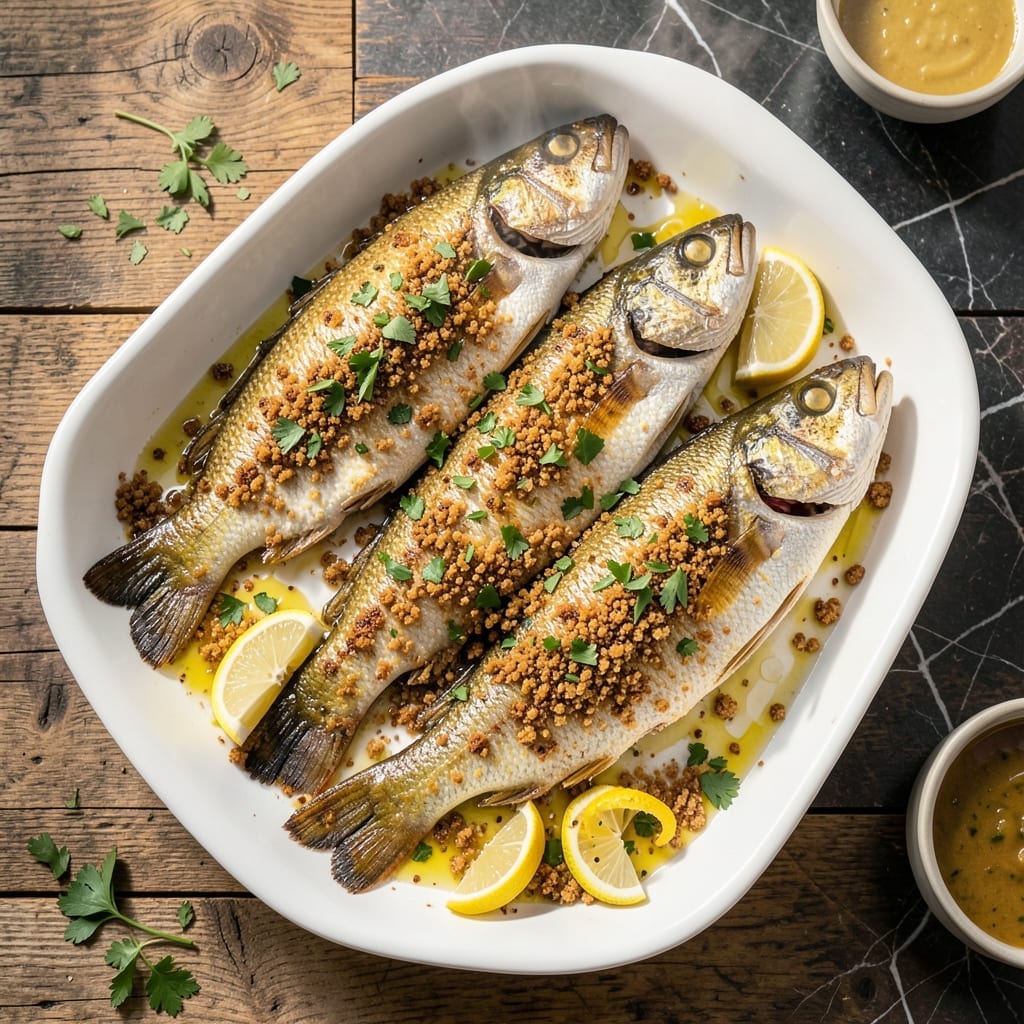
There’s a reason pompano is a prized catch—its delicate, buttery flesh practically melts on the tongue. This baked preparation highlights its natural richness with minimal effort.
The secret lies in a simple yet precise technique: high heat, a light seasoning, and a lemon-kissed crust that locks in moisture. No fancy tools needed—just a hot oven and fresh fish.
What emerges is flaky, tender pompano with a golden, crisp exterior, each bite balanced by bright citrus notes. The result is elegant enough for guests but simple enough for a weeknight.
Pair with roasted vegetables or a light salad to let the fish shine. Here’s how to achieve restaurant-quality results at home.
Ingredients for Pompano Recipe Baked
Elegant yet simple ingredients showcase pompano’s natural richness with bright citrus accents.
| Ingredient | Amount | Notes |
|---|---|---|
| Whole Pompano Fish 🐟 | 4 whole | Cleaned, scaled, 1-1.5 lb each |
| Lemon 🍋 | 2 whole | Zested, juiced, thinly sliced |
| Extra-Virgin Olive Oil 🫒 | ¼ cup | Divided for fish and crust |
| Unsalted Butter 🧈 | 4 tbsp | Melted for lemon crust |
| Panko Breadcrumbs 🍞 | ½ cup | For crispy topping texture |
| Fresh Parsley 🌿 | ¼ cup | Finely chopped for garnish |
| Garlic Cloves 🧄 | 3 cloves | Minced finely for crust |
| Kosher Salt 🧂 | 1 ½ tsp | Divided for seasoning fish |
| Freshly Ground Black Pepper 🌶️ | 1 tsp | Divided for seasoning fish |
| Dry White Wine 🍷 | ¼ cup | For baking liquid (optional) |
| Dijon Mustard 🟡 | 1 tbsp | For crust binding |
| Fresh Thyme Sprigs 🌿 | 4 whole | For aromatic baking |
The pompano must be impeccably fresh—look for bright, clear eyes and firm, glossy flesh at a trusted seafood counter. Whole fish between 1-1.5 lb each are ideal for even cooking. Wild-caught Florida pompano is prized, but farm-raised works well too. Ask your fishmonger to clean and scale if you’re not comfortable doing it yourself (worth the extra minute).
No white wine? Dry vermouth or chicken broth works in a pinch. Panko can be swapped for regular breadcrumbs at a 1:1 ratio, though the texture won’t be as crisp. Fresh herbs are key here—dried thyme at one-third the amount if necessary. The lemon is non-negotiable; its acidity balances the fish’s natural richness.
Bake immediately after prepping to maintain freshness. Leftovers keep for 1-2 days in the fridge—reheat gently to avoid drying. The crust loses crispness over time, so it’s best served fresh from the oven. Always check for pin bones before baking.
Why You’ll Love This Recipe
- One Pan Wonder: I just toss the pompano with olive oil, lemon, and panko, then bake—no flipping, no fuss.
- Buttery Crunch: That panko-butter topping gets golden and crispy while the fish stays juicy underneath.
- Dinner Party Star: I serve this whole baked fish at gatherings, and it always looks impressive with zero extra effort.
- Leftovers Win: The flavors taste even better the next day, so I make extra for easy lunches.
Step-by-Step Instructions for Baked Pompano
This method ensures tender flakes and a golden crust with precise timing and technique.
Step 1: Prepare the Pompano
Rinse the 4 whole Whole Pompano Fish and pat thoroughly dry inside and out. Season each cavity with ½ tsp Kosher Salt and ¼ tsp Freshly Ground Black Pepper. Brush the exterior of each fish with 1 tbsp Extra-Virgin Olive Oil from the 0.25 cup.
Make 3 diagonal slashes on each side of the fish—this allows heat to penetrate evenly and prevents curling during baking. Arrange the fish on a parchment-lined baking sheet. Here’s the thing—dry fish means crispy skin, so don’t skip the thorough patting.
Step 2: Create the Lemon-Kissed Crust
In a bowl, combine the remaining 0.25 cup minus 1 tbsp Extra-Virgin Olive Oil, 4 tbsp Unsalted Butter (melted), 0.5 cup Panko Breadcrumbs, 3 cloves Garlic Cloves (minced), 1 tbsp Dijon Mustard, and the zest from 1 of the 2 whole Lemon.
Mix until the crumbs are evenly coated and the mixture resembles wet sand. This crust will bake into a fragrant, crispy topping that contrasts beautifully with the tender fish. I’ve found that pressing the mixture gently onto the fish helps it adhere better during cooking.
Step 3: Assemble and Bake
Stuff each fish cavity with thin slices from 1 of the 2 whole Lemon and 1 Fresh Thyme Sprig per fish. Top each fish with equal portions of the crust mixture, pressing lightly to form an even layer. Pour the 0.25 cup Dry White Wine into the baking sheet around the fish—not over them—to create steam.
Bake in a preheated 400°F oven for 18-20 minutes until the crust is golden brown and the fish flakes easily when tested with a fork. The wine will reduce slightly, adding aromatic depth without overpowering the delicate pompano flavor.
Step 4: Garnish and Serve
Remove the fish from the oven and let rest for 5 minutes. This allows the juices to redistribute. Garnish with the remaining 0.25 cup Fresh Parsley (finely chopped) and the remaining Fresh Thyme Sprigs.
Serve each fish whole at the table for dramatic presentation, or carefully fillet and plate with the crispy crust intact. The combination of buttery fish, tangy lemon, and herbaceous crust delivers a restaurant-quality dish with minimal effort. Real talk: the wine in the pan isn’t just for flavor—it keeps the fish moist during baking.
Pro Tips For Making Pompano Recipe Baked
- Score the Fish: Make 3-4 diagonal slashes on each side of the pompano before baking—this lets the heat penetrate evenly and helps the lemon-butter mixture seep deep into the flesh.
- Skip Cold Butter: Let the unsalted butter sit at room temperature for 10 minutes before mixing with panko; it blends better and creates a crispier topping.
- Watch the Oven Temp: Bake at 400°F, not higher—I learned this the hard way after drying out two pompanos at 425°F. The flesh stays moist but still flakes perfectly.
- Double the Lemon: Use one lemon for the cavity and another sliced thin for the top; the extra acid brightens the rich fish and cuts through the buttery panko.
Essential Equipment for Perfect Results
Baking Sheet
A sturdy half-sheet pan (18×13 inches) is essential for even heat distribution. I use Nordic Ware Naturals for its nonstick surface and durability. Line it with parchment paper for easy cleanup—this prevents the fish from sticking and the crust from burning.
Mixing Bowls
For the lemon crust, a medium mixing bowl (about 2-quart capacity) gives plenty of room to combine ingredients without spills. I prefer stainless steel bowls—they’re lightweight and easy to clean. A fork works better than a spoon for mixing the crust evenly. 💡
Citrus Tools
A microplane grater is perfect for zesting the lemons finely without including the bitter pith. Pair it with a reamer or handheld juicer to extract every drop of juice. I’ve found these tools make the prep faster and more precise.
Basting Brush
Use a silicone basting brush to evenly coat the fish with olive oil before adding the crust. It’s heat-resistant and won’t shed bristles like some natural fiber brushes. A 1-inch wide brush gives the best control for this delicate work.
Fish Spatula
A thin, flexible fish spatula helps lift the pompano off the baking sheet without breaking the crispy crust. I recommend Mercer Culinary’s 12-inch offset spatula for its strength and precision. It’s also perfect for serving whole fish at the table. 🔥
Oven Thermometer
Don’t trust your oven’s built-in thermometer—use an oven-safe digital thermometer like ThermoWorks’ Oven Alarm to confirm the 400°F temperature. This ensures your pompano bakes evenly and the crust crisps perfectly every time.
Nutrition Facts
Frequently Asked Questions
What oven temperature works best?
Use a preheated 400°F oven for even cooking and a crisp crust. This temperature ensures the fish cooks through while the topping browns beautifully without burning.
Can I use fillets instead of whole fish?
Yes, but reduce baking time to 12-15 minutes. Use skin-on fillets for best results, and adjust the crust amount to cover the smaller surface area evenly.
How do I know when it’s done?
The fish is ready when the crust is golden brown and the flesh flakes easily with a fork. The internal temperature should reach 145°F at the thickest part.
What if my crust isn’t crispy?
Broil for 1-2 minutes at the end, watching closely. Also, ensure the oven is fully preheated and the fish is thoroughly dry before adding the topping.

- 6 Egg Cake Recipe with Oil: Light as Air With Buttery Moisture - October 4, 2026
- 4 Bean Casserole Recipe: One-Pan Heartiness With Smoky Paprika Depth - October 4, 2026
- 3-Ingredient Keto Mug Cake Recipe: Microwave Magic in 2 Minutes - October 4, 2026