
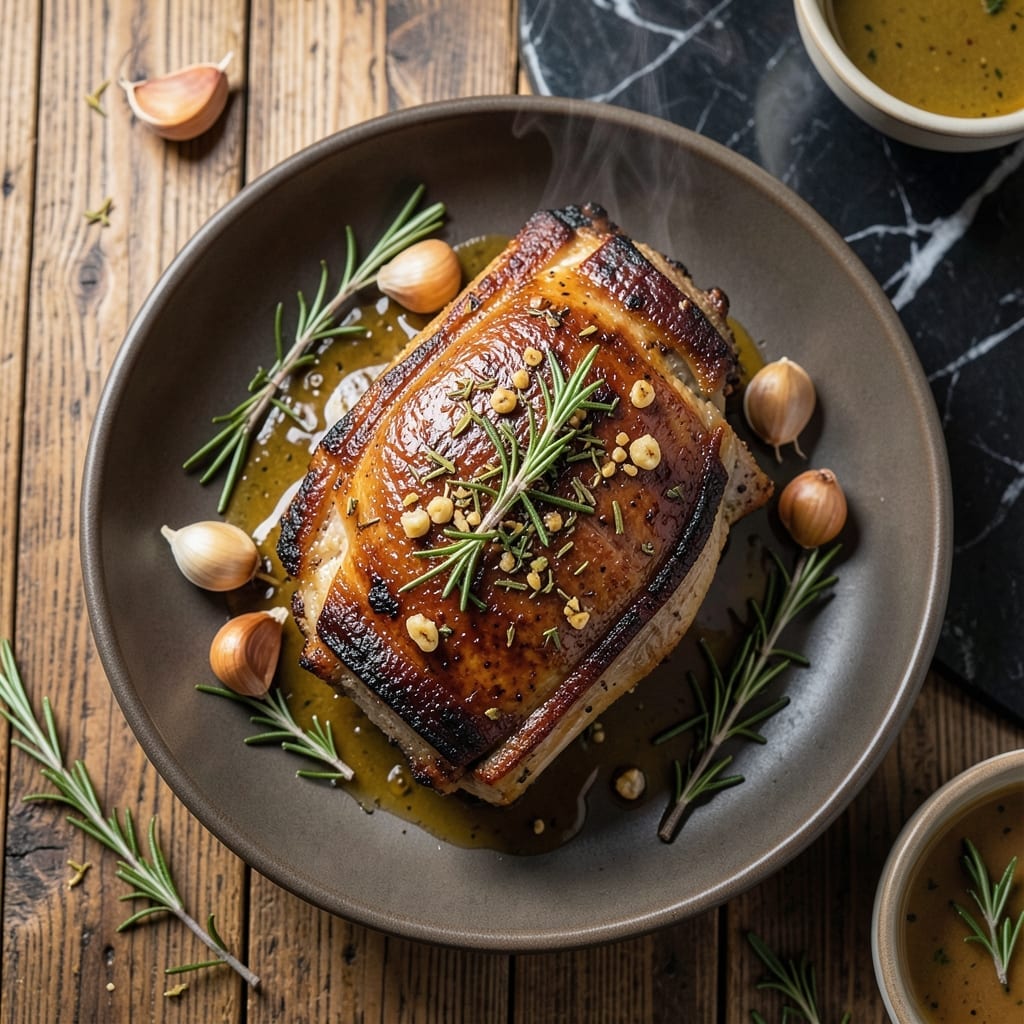
This pork rib roast delivers juicy, flavorful results every time with a simple but impressive garlic-rosemary crust.
I developed this method after years of testing, focusing on a precise cooking technique that locks in moisture while creating a golden, herb-infused exterior.
The secret is a high-heat start followed by a gentle finish, ensuring the meat remains tender throughout. The garlic and rosemary form a crust that adds depth to each bite.
Perfect for Sunday dinners or special occasions, this recipe guarantees a centerpiece dish that’s as delicious as it is beautiful.
Ingredients for Pork Rib Roast
Quality pork, fresh herbs, and a few pantry staples create this impressive centerpiece dish.
| Ingredient | Amount | Notes |
|---|---|---|
| Bone-In Pork Rib Roast 🥩 | 4 lb | Rib bones frenched for presentation |
| Fresh Rosemary Sprigs 🌿 | 4 whole | Leaves stripped and finely chopped |
| Garlic Cloves 🧄 | 8 cloves | Peeled and minced to paste |
| Extra-Virgin Olive Oil 🫒 | 3 tbsp | Divided for crust and searing |
| Kosher Salt 🧂 | 2 tsp | Diamond Crystal preferred for texture |
| Freshly Ground Black Pepper 🌶️ | 1 ½ tsp | Coarse grind for crust adhesion |
| Dijon Mustard 🟡 | 2 tbsp | Whole grain for texture variation |
| Dry White Wine 🍷 | ½ cup | For deglazing and au jus |
| Low-Sodium Chicken Stock 🥣 | 1 cup | Homemade or high-quality boxed |
| Unsalted Butter 🧈 | 2 tbsp | Cold, cubed for finishing |
| Shallot 🧅 | 1 whole | Finely minced for sauce base |
| Fresh Thyme Sprigs 🍃 | 6 whole | Leaves only for garnish |
The pork rib roast quality is paramount. Source from a trusted butcher like Whole Foods or a local purveyor—look for even marbling and a thick fat cap. Bone-in provides superior flavor and moisture. Ask for the chine bone to be removed for easier carving. The rosemary and garlic should be vibrant and aromatic; avoid any herbs with yellowing leaves or soft stems.
No fresh rosemary? Dried at one-third the amount works in a pinch, though fresh delivers superior crust texture. White wine can be substituted with apple cider vinegar plus water (1:3 ratio) for deglazing. For a non-alcoholic option, additional chicken stock with a splash of lemon juice mimics the acidity. The Dijon mustard is essential for crust adhesion—whole grain provides visual appeal.
Store the raw roast on a rack in the coldest part of your refrigerator for up to 3 days. For longer storage, vacuum-seal and freeze for up to 6 months. Bring to room temperature before cooking. Leftover cooked roast keeps 4-5 days refrigerated or freezes beautifully for 3 months.
Why You’ll Love This Recipe
- Hands-Off Cooking: I just rub it with olive oil, salt, garlic, and rosemary, then let the oven do the work.
- Herb-Infused Crust: The rosemary and garlic form a crust so fragrant it fills the kitchen before the roast even hits the table.
- Feeds a Crowd: One bone-in pork rib roast serves eight—ideal for Sunday dinner with family.
- Leftovers Level Up: Honestly, the sliced pork makes the best next-day sandwiches with a little mustard and crusty bread.
Step-by-Step Instructions for Pork Rib Roast
Achieve perfectly juicy results with this refined technique for herb-crusted roast pork.
Step 1: Prepare the Herb Crust
Finely chop the leaves from the 4 whole Fresh Rosemary Sprigs and mince the 8 cloves Garlic Cloves to a paste. In a small bowl, combine these with 2 tbsp Dijon Mustard, 2 tsp Kosher Salt, 1.5 tsp Freshly Ground Black Pepper, and 2 tbsp Extra-Virgin Olive Oil. The mixture should form a thick, spreadable paste.
This aromatic blend creates a robust crust that seals in moisture while adding complex flavor layers. I always let this mixture sit for 10 minutes at room temperature to allow the flavors to meld before application.
Step 2: Sear and Crust the Roast
Pat the 4 lb Bone-In Pork Rib Roast completely dry with paper towels. This critical step ensures proper browning. Heat the remaining 1 tbsp Extra-Virgin Olive Oil in a large oven-safe pan over medium-high heat until shimmering.
Sear the roast on all sides for 2-3 minutes per side until golden brown. Remove from heat and brush the herb mixture evenly over the entire surface, pressing gently to adhere. The seared crust should be deep amber and fragrant.
Step 3: Roast to Perfection
Preheat your oven to 375°F. Transfer the seared roast to the oven and cook for 1 hour to 1 hour 15 minutes, or until an instant-read thermometer inserted into the thickest part registers 145°F.
Baste the roast with pan juices every 20 minutes during cooking. This not only enhances browning but also contributes to the juiciness promised by this method. The exterior should develop a deep mahogany crust.
Step 4: Create the Au Jus
Transfer the roast to a cutting board and tent with foil. Place the pan on the stovetop over medium heat. Add the finely minced 1 whole Shallot and cook for 1 minute until softened.
Deglaze with 0.5 cup Dry White Wine, scraping up all browned bits. Reduce by half, then add 1 cup Low-Sodium Chicken Stock. Simmer for 5-7 minutes until slightly thickened. Remove from heat and whisk in 2 tbsp Unsalted Butter until glossy.
Step 5: Rest and Serve
Let the roast rest for 15-20 minutes before carving. This allows the juices to redistribute, ensuring each slice remains moist. Carve between the bones into individual chops.
Strain the au jus and pour over the sliced roast. Garnish with leaves from the 6 whole Fresh Thyme Sprigs for a fresh herbal note. The meat should be blush pink in the center and wonderfully juicy.
Pro Tips For Making Pork Rib Roast
- Dry the Roast: Pat the pork rib roast thoroughly dry with paper towels before seasoning—this guarantees a better crust and helps the salt stick properly.
- Slash the Garlic: Instead of mincing, slice the garlic cloves into thin slivers and insert them into small cuts in the meat; they’ll infuse flavor without burning.
- Start High, Finish Low: Sear the roast at 450°F for 20 minutes to brown the outside, then drop the oven to 325°F to cook it through without drying it out.
- Rest It Right: After roasting, let it rest under loose foil for 15-20 minutes—this keeps the juices inside where they belong, not on your cutting board.
Common Mistakes When Making This Recipe
Skipping the Dry
Never skip patting the roast completely dry before searing—this is non-negotiable. Excess moisture prevents proper browning and creates steam that boils the meat instead of searing it. I use 3-4 paper towels and press firmly on all surfaces. 💡
Cold from Fridge
Don’t put a cold roast directly into a hot pan. The temperature shock causes uneven cooking and can warp the meat. Always let it sit at room temperature for 45-60 minutes before starting. This ensures even cooking throughout.
Overcrowded Pan
Using a pan that’s too small means the roast won’t sear properly. Choose a heavy-bottomed pan like Lodge cast iron that’s large enough to accommodate the roast with 2 inches of space around it. This allows for proper heat circulation.
Ignoring the Thermometer
Guessing doneness leads to disaster. Invest in a good instant-read thermometer—I use ThermoWorks Mk4. Pull the roast at 145°F; it will rise to 150-155°F while resting. Pork is safe at 145°F and stays juicy. 🌡️
Skipping the Rest
Cutting too soon lets all the juices escape. Tent the roast with foil and rest for 15-20 minutes. This allows muscle fibers to relax and reabsorb juices. I set a timer to resist the urge to peek.
Neglecting the Au Jus
Don’t discard those flavorful pan drippings. The au jus takes 10 minutes and elevates the dish. Reduce the wine by half before adding stock, then finish with cold butter for a glossy, restaurant-quality sauce.
Nutrition Facts
Frequently Asked Questions
How do I know when the roast is done?
Use an instant-read thermometer inserted into the thickest part. Pull it at 145°F—it will rise to 150-155°F while resting. The meat should be blush pink inside and juicy.
Can I use boneless instead of bone-in?
Yes, but bone-in provides better flavor and moisture. For boneless, reduce cooking time by about 15 minutes and check the temperature early. The crust technique remains the same.
What if I don’t have white wine for the au jus?
Substitute with apple cider vinegar plus water (1:3 ratio) or use additional chicken stock with a splash of lemon juice. The acidity helps deglaze the pan properly.
How long can I store leftovers?
Cooked roast keeps refrigerated for 4-5 days or frozen for up to 3 months. Reheat gently in the au jus to maintain moisture. Always store in an airtight container.

- 6 Egg Cake Recipe with Oil: Light as Air With Buttery Moisture - October 4, 2026
- 4 Bean Casserole Recipe: One-Pan Heartiness With Smoky Paprika Depth - October 4, 2026
- 3-Ingredient Keto Mug Cake Recipe: Microwave Magic in 2 Minutes - October 4, 2026