
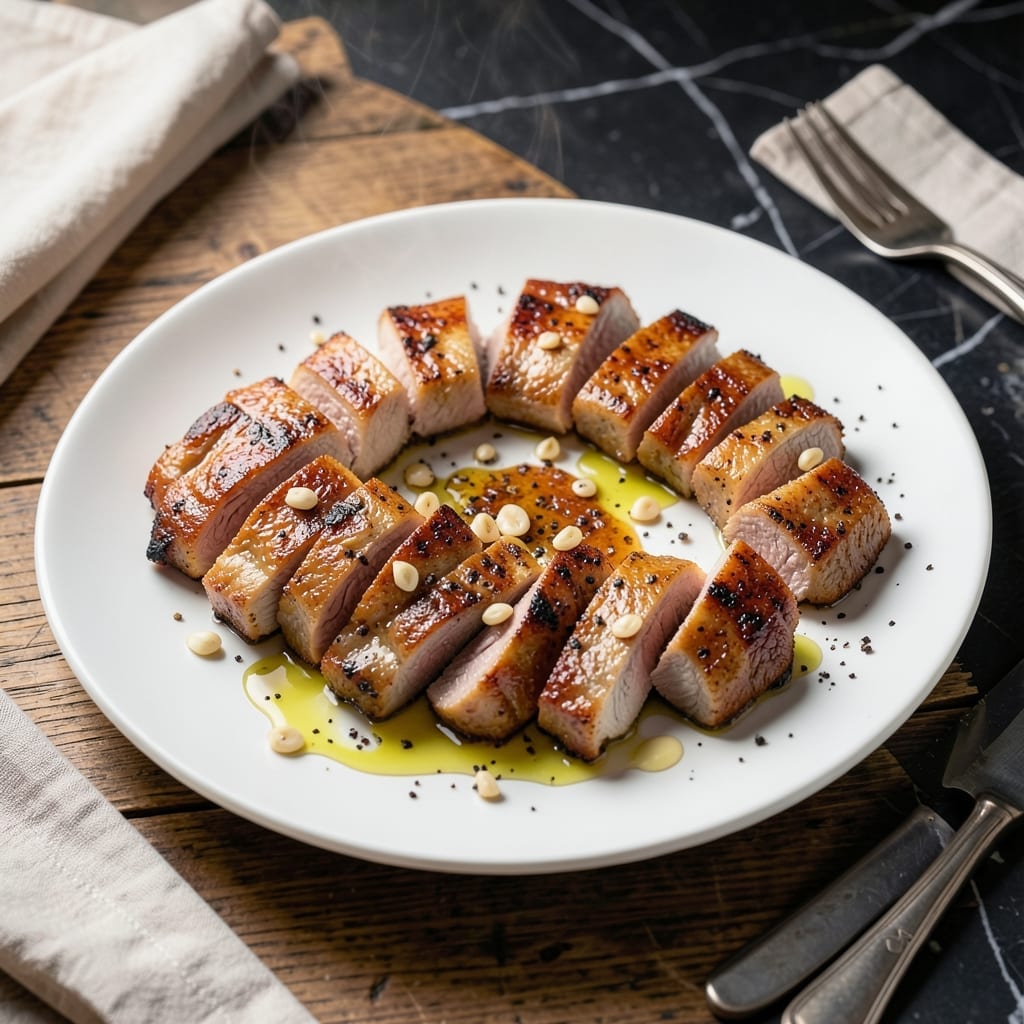
This pan-seared pork strips recipe delivers restaurant-quality results in under 20 minutes, making it the perfect weeknight solution.
The secret lies in a simple technique: high heat searing followed by a quick finish in garlic butter. This creates tender, juicy strips with a golden crust and rich, aromatic flavor.
You’ll end up with perfectly cooked pork that’s crispy on the edges yet tender inside, all coated in a velvety garlic butter sauce. The aroma alone will have everyone gathering around the kitchen.
Serve these versatile strips over rice, in tacos, or alongside your favorite vegetables for a complete meal that never disappoints.
Ingredients for Pork Strips
Restaurant-quality pork strips start with these fresh, flavorful ingredients ready in no time.
| Ingredient | Amount | Notes |
|---|---|---|
| Pork Tenderloin 🥩 | 1 ½ lb | Trimmed of excess fat, cut into strips |
| Kosher Salt 🧂 | 1 ½ tsp | Diamond Crystal preferred for even seasoning |
| Black Pepper 🌶️ | 1 tsp | Freshly ground for best flavor |
| Garlic Cloves 🧄 | 4 cloves | Minced finely for even distribution |
| Unsalted Butter 🧈 | 6 tbsp | Divided for searing and finishing |
| Olive Oil 🫒 | 2 tbsp | High smoke point for searing |
| Fresh Thyme Sprigs 🌿 | 4 whole | Leaves stripped, stems discarded |
| Fresh Rosemary Sprig 🍃 | 1 whole | Finely chopped for aroma |
| All-Purpose Flour 🌾 | ¼ cup | For light dredging of pork |
| Dijon Mustard 🟡 | 1 tbsp | For depth in garlic butter |
| Lemon Juice 🍋 | 1 tbsp | Freshly squeezed for brightness |
| Chicken Broth 🥣 | ½ cup | Low-sodium preferred for control |
The pork tenderloin is key here—look for even marbling and a rosy color at Whole Foods or your butcher. Avoid pre-cut strips; they dry out faster. I grab mine from Costco for consistency (and price). The herbs? Fresh makes all the difference—farmers market thyme and rosemary have more punch than grocery store bundles. Don’t skip the Diamond Crystal kosher salt; its texture clings better to the pork.
No fresh herbs? Dried thyme and rosemary at half the amount work in a pinch. Out of Dijon? Whole-grain mustard adds nice texture. For a richer sauce, swap the chicken broth for white wine (whatever’s open). The flour dredge can be skipped if you’re gluten-free—just pat the pork very dry first. And if you’re out of lemon, a splash of apple cider vinegar brightens just as well.
Pork strips keep 3-4 days in the fridge, sealed tight. Freeze for up to 3 months—just thaw in the fridge overnight. The garlic butter sauce? Make extra—it’s amazing on rice or veggies (or straight from the spoon, no shame).
Why You’ll Love This Recipe
- 20-Minute Meal: I can get these pork strips from fridge to table faster than ordering takeout.
- Buttery Garlic Bite: The butter and garlic turn simple pork tenderloin into something ridiculously good.
- Kid-Approved Dinner: My picky eaters clean their plates with these strips—no complaints.
- Leftovers for Days: Honestly, they taste even better reheated the next day for lunch.
Step-by-Step Instructions for Pan-Seared Pork Strips
These quick-seared bites come together fast—just follow my tested method for juicy, flavorful pork.
Step 1: Season and Dredge the Pork Strips
Pat the pork tenderloin strips dry with paper towels—this ensures a good sear. Season them evenly with all the kosher salt and black pepper, pressing the seasoning into the meat so it adheres well.
Place the all-purpose flour in a shallow dish. Lightly dredge each strip in the flour, shaking off any excess. The flour creates a delicate crust while keeping the pork tender. Don’t over-dredge; a thin, even coating is all you need for that perfect texture.
Step 2: Sear the Pork to Golden Perfection
Heat the olive oil in a large skillet over medium-high heat until it shimmers but doesn’t smoke. Add the dredged pork strips in a single layer, working in batches if necessary to avoid crowding the pan. Crowding steams the pork instead of searing it.
Sear the strips for about 3-4 minutes per side until they develop a deep golden-brown crust and reach an internal temperature of 145°F. Transfer the seared pork to a plate and tent with foil to keep warm.
Step 3: Make the Garlic Butter Sauce
Reduce the heat to medium and add 4 tbsp of the unsalted butter to the same skillet. Once melted, add the minced garlic cloves, fresh thyme leaves, and chopped fresh rosemary sprig. Sauté for 1-2 minutes until the garlic is fragrant but not browned.
Pour in the chicken broth, Dijon mustard, and lemon juice. Stir to combine, scraping up any browned bits from the bottom of the pan. Let the mixture simmer for 2-3 minutes until it reduces slightly and thickens into a glossy sauce.
Step 4: Finish with Remaining Butter and Serve
Remove the skillet from heat and stir in the remaining 2 tbsp unsalted butter until fully melted and incorporated. This gives the sauce a luxurious, velvety finish.
Return the pork strips to the skillet and spoon the garlic butter sauce over them, coating each piece evenly. Let them sit in the sauce for 1-2 minutes to absorb all the flavors. Serve immediately while hot—the pork should be juicy and tender with a rich, aromatic sauce clinging to every bite.
Pro Tips For Making Pork Strips
- Slice Against Grain: Cut the tenderloin into strips against the grain for maximum tenderness—this shortens the muscle fibers and makes each bite easier to chew.
- Dry the Pork: Pat the strips completely dry before seasoning; wet pork steams instead of searing, and you’ll lose that golden crust.
- Don’t Overcrowd Pan: Cook the strips in batches if needed—crowding drops the pan temp and turns your sear into a sad, gray boil.
- Bast With Butter: Tilt the pan at the end, add cold butter and crushed garlic, then spoon that browned goodness over the pork for a quick flavor boost.
Best Sauces and Condiments for These Flavors
Classic Garlic Butter
The built-in sauce for this dish is already perfect, but I often double the recipe to have extra for dipping. The Dijon mustard and lemon juice balance the richness beautifully, creating a velvety coating that clings to each strip. 💛
Creamy Horseradish
Mix ½ cup sour cream with 2 tbsp prepared horseradish and 1 tsp lemon zest for a tangy kick that cuts through the pork’s richness. This pairing works especially well if you prefer a little heat with your meal.
Sweet and Tangy
Whisk together ¼ cup apple cider vinegar, 2 tbsp honey, and 1 tsp smoked paprika for a quick glaze. Drizzle over the pork strips just before serving—it adds a bright, caramelized finish that complements the savory flavors. ✨
Spicy Sriracha Mayo
Combine ½ cup mayonnaise with 1-2 tbsp Sriracha (adjust to taste) and 1 tsp lime juice. This creamy, spicy dip adds a bold contrast that takes these strips to the next level.
Herb-Infused Chimichurri
Blend 1 cup fresh parsley, ¼ cup cilantro, 3 garlic cloves, ¼ cup olive oil, and 2 tbsp red wine vinegar for a fresh, vibrant sauce. It’s a game-changer for adding a pop of color and herbaceous brightness.
Nutrition Facts
Frequently Asked Questions
What cut of pork works best for strips?
Pork tenderloin is ideal due to its tenderness and leanness. 1.5 lb yields perfect portions for 4 servings. Avoid tougher cuts like shoulder, which can become chewy.
Can I make this without flour?
Yes! Skip the dredge and pat the pork very dry before searing. The crust won’t be as crispy, but the flavor remains excellent. Works well for gluten-free diets.
How do I know when the pork is done?
Use a meat thermometer—it’s done at 145°F internally. The strips should be golden-brown with no pink inside. Overcooking makes them dry, so pull them off heat promptly.
Can I use a different sauce?
Try teriyaki, BBQ, or even a simple soy-ginger glaze. The pork’s mild flavor pairs well with most sauces. Just adjust seasoning to taste.

- 6 Egg Cake Recipe with Oil: Light as Air With Buttery Moisture - October 4, 2026
- 4 Bean Casserole Recipe: One-Pan Heartiness With Smoky Paprika Depth - October 4, 2026
- 3-Ingredient Keto Mug Cake Recipe: Microwave Magic in 2 Minutes - October 4, 2026