
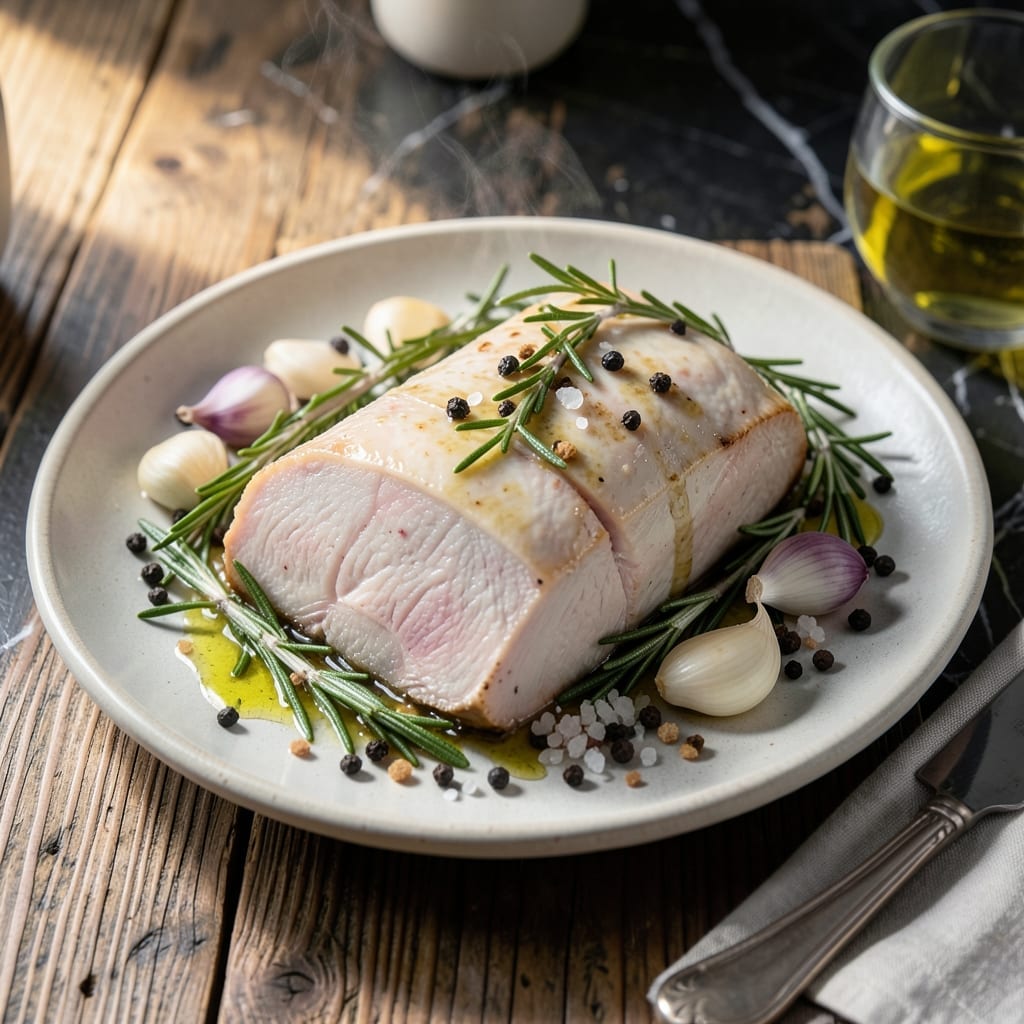
This simple brine transforms lean pork tenderloin into impossibly tender and moist results every time. The saltwater solution works by breaking down muscle fibers while helping the meat retain its natural juices during cooking.
With just salt, sugar, and water as the base, this method requires minimal effort for maximum impact. Optional aromatics like garlic, herbs, or citrus can be added for extra flavor without complicating the process.
Whether you’re grilling, roasting, or pan-searing, a quick soak in this brine guarantees juicy pork that stays succulent from the first bite to the last. The science behind it is simple but the results are anything but ordinary.
Ready in minutes, this preparation step makes all the difference in your final dish. The meat absorbs just enough seasoning to enhance its natural flavor without overpowering it.
Ingredients for Pork Tenderloin Brine
Eight ingredients create this moisture-locking solution for perfectly seasoned pork every time.
| Ingredient | Amount | Notes |
|---|---|---|
| Water 💧 | 4 cups | Cold, filtered preferred |
| Kosher Salt 🧂 | ½ cup | Diamond Crystal recommended |
| Granulated Sugar 🍚 | ¼ cup | Balances saltiness effectively |
| Garlic Cloves 🧄 | 4 cloves | Smashed, peeled optional |
| Black Peppercorns 🌶️ | 1 tbsp | Whole, lightly crushed |
| Fresh Rosemary Sprigs 🌿 | 2 whole | Optional aromatic enhancement |
| Bay Leaves 🍃 | 2 whole | Dried, for depth |
| Lemon Slices 🍋 | 2 slices | Thin, for brightness |
The salt is non-negotiable—Diamond Crystal kosher salt dissolves cleanly and seasons evenly without overpowering. Water should be cold (ice water works too) to prevent the pork from cooking during brining. For best results, use filtered water if your tap has strong chlorine or mineral notes. Whole Foods or Costco carry Diamond Crystal in bulk, making it cost-effective for frequent brining.
No kosher salt? Table salt at half the amount (it’s denser), but dissolve it completely first. Sugar can be swapped for brown sugar or maple syrup for subtle depth. Missing fresh rosemary? Dried thyme at one-third the amount works well. The aromatics are optional but recommended—even just garlic and peppercorns make a noticeable difference. For citrus, lime or orange slices offer great variations.
Brine keeps in the fridge for 24 hours before use. Discard after brining—never reuse. The pork can soak for 2-12 hours (longer for larger cuts). Always brine in a non-reactive container like glass or stainless steel.
Why You’ll Love This Recipe
- 5-Minute Mix: I just stir water, salt, sugar, garlic, and peppercorns in a pot—no fancy tools, no fuss.
- Juicy Every Time: The brine locks in moisture so the pork stays tender, with garlic and peppercorns adding a subtle kick.
- Meal Prep Magic: I brine a few tenderloins on Sunday and roast them fresh all week—dinner’s halfway done before it starts.
- Budget Stretch: A cheap cut turns luxurious with this simple soak, and leftovers make killer sandwiches. Honestly, it’s my wallet’s best friend.
Step-by-Step Instructions for Pork Tenderloin Brine
Here’s the method for ensuring maximum moisture and tenderness every time.
Step 1: Combine Water, Salt, and Sugar Base
In a medium saucepan, combine the 4 cups Water with the 0.5 cup Kosher Salt and 0.25 cup Granulated Sugar. The sugar isn’t just for flavor—it helps balance the salt’s intensity while aiding moisture retention in the pork.
Bring the mixture to a gentle simmer over medium heat, stirring just until the salt and sugar fully dissolve. This creates a clear brine base without any undissolved crystals that could settle unevenly on the meat. Remove from heat immediately once dissolved to avoid unnecessary evaporation.
Step 2: Infuse with Aromatics
Add the 4 cloves Garlic Cloves, 1 tbsp Black Peppercorns, 2 whole Fresh Rosemary Sprigs, 2 whole Bay Leaves, and 2 slices Lemon Slices to the warm brine. The residual heat will begin extracting their essential oils and flavors into the liquid.
Let the mixture steep for 15-20 minutes until completely cooled to room temperature. This waiting period allows the aromatics to fully infuse the brine while preventing any risk of partially cooking the pork when submerged. The liquid should be aromatic but not scalding hot when you proceed.
Step 3: Submerge and Brine the Pork
Transfer the cooled brine and all aromatics to a large resealable bag or container. Submerge the pork tenderloin completely in the liquid, ensuring no portions remain exposed to air. This full submersion is critical for even flavor distribution and moisture absorption.
Seal and refrigerate for 12-24 hours. The longer time frame allows for deeper penetration of the brine into the meat’s fibers, while the shorter duration still provides noticeable improvement in tenderness. The pork should appear slightly plumped when removed from the brine, indicating successful moisture absorption.
Step 4: Rinse and Prepare for Cooking
Remove the pork from the brine and discard the liquid and aromatics. Rinse the tenderloin briefly under cold water to remove any surface salt crystals, then pat thoroughly dry with paper towels. This drying step is crucial for achieving proper browning when cooking.
The brined pork is now ready for your preferred cooking method, whether roasting, grilling, or searing. You’ll notice the meat maintains its moisture remarkably well during cooking, with the brine’s flavors subtly enhancing the pork’s natural taste without overpowering it. Always cook to a safe internal temperature of 145°F for medium-rare doneness.
Pro Tips For Making Pork Tenderloin Brine
- Brining Time Matters: Give the pork tenderloin at least 4 hours in the brine—overnight is even better. I learned this the hard way after pulling it out too early and ending up with dry meat.
- Crush the Peppercorns: Lightly crush the black peppercorns before adding them to the brine. Sounds weird, but it works: it releases more flavor into the liquid.
- Skip the Table Salt: Use kosher salt only—table salt can make the brine too harsh and overpower the pork. My grandmother swore by this, and she was right.
- Dissolve First: Heat 1-2 cups of the water with the salt and sugar until fully dissolved before adding the rest. This guarantees no gritty undissolved bits cling to the meat.
Troubleshooting Perfect Results
Brine Too Salty?
If your pork tastes overly salty after cooking, you likely used table salt instead of kosher salt or brined for too long. Table salt is about twice as salty by volume. Stick to Diamond Crystal kosher salt and limit brining to 12-24 hours for tenderloin. 💧
Pork Not Tender
When the meat isn’t tender, it usually means the brine didn’t fully penetrate. Ensure the pork is completely submerged and use a non-reactive container. For larger pieces, extend the brining time to 24 hours and consider adding more sugar to help with moisture retention.
Cloudy Brine Solution
Cloudiness in your brine often comes from undissolved salt or sugar. Always simmer the mixture until both are fully dissolved before cooling. If you’re using hard water, try filtered water to prevent mineral deposits from making the brine appear murky.
Pork Looks Gray
Grayish pork after brining is normal—it’s the salt reacting with the meat’s proteins. Don’t worry; the color doesn’t affect flavor or safety. Just pat the meat dry and cook as usual. For better appearance, add lemon slices to the brine for a slight brightening effect.
Brine Not Flavorful
If your brine lacks aroma, the issue is usually insufficient steeping time. Let the brine cool with aromatics for at least 20 minutes. I also recommend crushing the peppercorns and smashing the garlic cloves to release more flavor. 🌿
Storage Concerns
Never reuse brine or store it for more than 24 hours in the fridge. The raw meat juices make it unsafe. For best results, make fresh brine each time. If you need to brine in advance, prepare the solution without the pork and add the meat just before refrigerating.
Nutrition Facts
Frequently Asked Questions
How long should I brine pork tenderloin?
For best results, brine pork tenderloin for 12-24 hours. This timeframe allows the salt solution to fully penetrate the meat without over-salting it.
Can I skip the sugar in the brine?
You can, but sugar helps balance the salt and aids moisture retention. If omitting, reduce salt slightly and add other flavorings like herbs or citrus to compensate.
Why is my brined pork gray?
Gray color is normal after brining. It’s caused by salt reacting with meat proteins. The color doesn’t affect flavor or safety—just pat dry and cook as usual.
Can I reuse leftover brine?
Never reuse brine after it’s touched raw meat. The liquid can harbor bacteria. Always discard used brine and make fresh for each batch.

- 6 Egg Cake Recipe with Oil: Light as Air With Buttery Moisture - October 4, 2026
- 4 Bean Casserole Recipe: One-Pan Heartiness With Smoky Paprika Depth - October 4, 2026
- 3-Ingredient Keto Mug Cake Recipe: Microwave Magic in 2 Minutes - October 4, 2026