
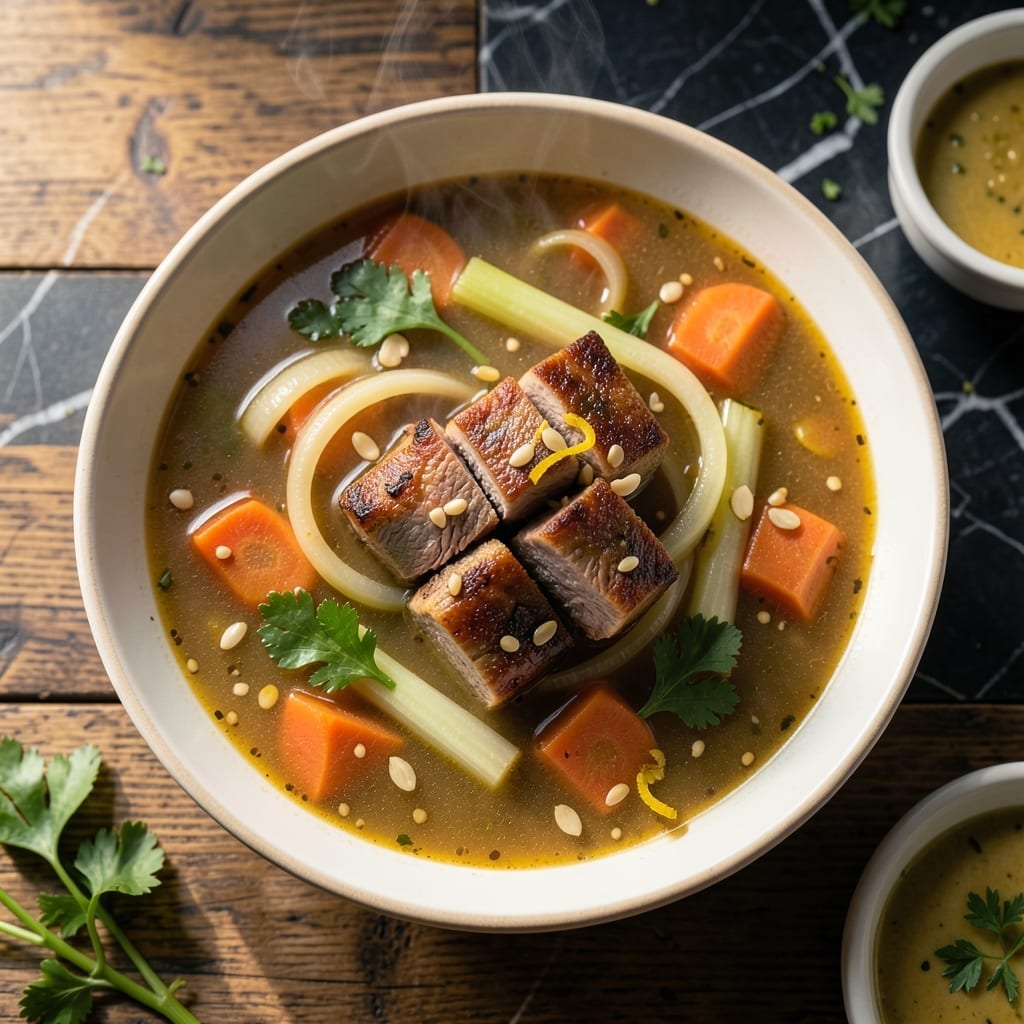
There’s something deeply satisfying about a slow-simmered soup that transforms humble ingredients into a meal with restaurant-quality depth. This pork tenderloin version builds layers of flavor through careful technique and patience.
The key is browning the pork first to develop a rich fond, then simmering it with aromatic vegetables until the meat becomes fall-apart tender. Each spoonful delivers savory broth, perfectly cooked pork, and vegetables that have absorbed all the flavor.
I developed this recipe to prove that impressive soups don’t require fancy ingredients—just time and attention to detail. The pork becomes so tender it nearly dissolves in your mouth, while the broth gains complexity from the slow cooking process.
Serve with crusty bread to soak up every last drop of that rich broth. This is comfort food at its most refined.
Ingredients for Pork Tenderloin Soup
Transform humble staples into a deeply savory soup with these carefully selected ingredients.
| Ingredient | Amount | Notes |
|---|---|---|
| Pork Tenderloin 🥩 | 1 ½ lb | Trimmed of silver skin, cut into 1-inch cubes |
| Olive Oil 🫒 | 2 tbsp | Divided for browning and finishing |
| Yellow Onion 🧅 | 1 whole | Medium, finely diced |
| Carrots 🥕 | 2 whole | Peeled, sliced into rounds |
| Celery Stalks 🌿 | 2 whole | Sliced into 1/2-inch pieces |
| Garlic Cloves 🧄 | 4 cloves | Minced for aromatic depth |
| Low-Sodium Chicken Broth 🍲 | 6 cups | Homemade or high-quality store-bought |
| Diced Tomatoes 🍅 | 1 can | 14.5 oz, with juices |
| Dried Thyme 🍃 | 1 tsp | Or 1 tbsp fresh thyme leaves |
| Bay Leaf 🌿 | 1 whole | For slow-simmered depth |
| Kosher Salt 🧂 | 1 ½ tsp | Adjust to taste at finish |
| Black Pepper 🌶️ | 1 tsp | Freshly ground preferred |
| Fresh Parsley 🌿 | ¼ cup | Chopped, for garnish |
| All-Purpose Flour 🌾 | 2 tbsp | For thickening broth if desired |
The pork tenderloin is the foundation here. Optimal quality requires well-marbled, fresh cuts—avoid pre-packaged pieces with excess moisture. Whole Foods or a trusted butcher will provide the best texture for fall-apart results. The vegetables should be vibrant and firm; avoid any with soft spots or wilting. For the broth, low-sodium allows you to control the seasoning precisely.
No pork tenderloin? Pork shoulder cut into chunks offers even richer flavor but requires longer simmering. For a quicker option, chicken thighs work well with reduced cooking time. Dried thyme can be swapped for fresh rosemary at equal volume. If avoiding gluten, cornstarch slurry replaces flour for thickening—use 1 tbsp cornstarch mixed with 1 tbsp cold water per cup of broth.
This soup develops more complexity overnight. Store in an airtight container in the refrigerator for up to 4 days or freeze for 3 months. Reheat gently on the stove to preserve texture. The pork will continue to absorb the broth flavors with time (worth the extra minute).
Why You’ll Love This Recipe
- One Pot Wonder: I can sear the tenderloin, sauté the onion, carrots, and celery, then simmer it all in the same pot—minimal cleanup, maximum flavor.
- Rich, Hearty Depth: The pork tenderloin soaks up the sweetness of the carrots and the earthy bite of celery, making every spoonful ridicously satisfying.
- Meal Prep Magic: I make a big batch on Sunday, and it reheats beautifully for lunches all week—honestly, it tastes even better the next day.
- Budget Stretcher: A single pork tenderloin feeds my family for two meals, and the veggies are pantry staples I always have on hand.
Step-by-Step Instructions for Pork Tenderloin Soup
Build layers of flavor through proper browning and slow simmering for optimal tenderness.
Step 1: Sear the Pork Tenderloin for Depth
Heat 1 tablespoon olive oil in a Dutch oven over medium-high heat until shimmering. Add the 1.5 lb pork tenderloin cubes in a single layer, working in batches if necessary to avoid crowding the pan.
Sear undisturbed for 3-4 minutes per side until deep golden brown on all surfaces. This browning creates the Maillard reaction, developing complex flavors that will infuse the broth. Transfer the seared pork to a plate and set aside.
Step 2: Build the Aromatic Base
In the same pot, add the remaining 1 tablespoon olive oil and reduce heat to medium. Add the finely diced yellow onion, sliced carrots, and sliced celery stalks. Cook for 6-8 minutes until the vegetables soften and the onion becomes translucent.
Add the minced garlic cloves and cook for 30 seconds until fragrant, stirring constantly to prevent burning. This aromatic foundation is crucial for developing the soup’s characteristic depth.
Step 3: Simmer to Perfection
Return the seared pork to the pot along with any accumulated juices. Add the 6 cups low-sodium chicken broth, 1 can diced tomatoes with juices, 1 tsp dried thyme, and 1 whole bay leaf. Season with 1.5 tsp kosher salt and 1 tsp black pepper.
Bring to a boil, then reduce heat to low, cover, and simmer for 45-60 minutes until the pork is fork-tender and the flavors have melded together beautifully. This slow simmering process ensures the meat becomes meltingly tender while infusing the broth with rich, savory notes.
Step 4: Thicken and Finish
For a slightly thicker consistency, whisk the 2 tbsp all-purpose flour with ¼ cup of the hot broth in a small bowl until smooth. Stir this slurry into the soup and simmer for an additional 5 minutes until slightly thickened.
Remove the bay leaf and taste for seasoning, adjusting with additional salt if needed. The soup should have a velvety texture with visible chunks of tender pork and vegetables throughout.
Step 5: Garnish and Serve
Ladle the hot soup into bowls and garnish with the chopped 0.25 cup fresh parsley. The parsley adds a bright, fresh contrast to the rich, savory broth. Serve immediately while hot, with crusty bread for dipping if desired.
The pork should be so tender it falls apart with minimal pressure, and the vegetables should be soft but still retain some texture. This soup rewards patience with its deep, complex flavor profile.
Pro Tips For Making Pork Tenderloin Soup
- Sear the Pork First: Brown the tenderloin in olive oil over medium-high heat before adding liquids—this builds a flavor base that simmers into the soup. I learned this the hard way after making bland batches without it.
- Cut Evenly: Slice the carrots, celery, and onion into uniform, bite-sized pieces so they cook at the same rate. Sounds fussy, but it prevents some veggies from turning mushy while others stay crunchy.
- Skip the Boiling: Keep the soup at a gentle simmer, not a rolling boil, to avoid toughening the pork. After ruining a pot by overcooking, I now watch the heat like a hawk.
- Use the Trim: If your tenderloin has any silverskin or fat, render it in the pot first for extra richness. It’s a free upgrade that deepens the broth’s flavor.
Creative Variations of This Dish
Asian-Inspired Twist
Swap the thyme and bay leaf for 1 tbsp fresh ginger and 2 star anise pods. Add 3 cups coconut milk with the broth for a creamy base. Finish with 2 tbsp fish sauce and 1 lime’s juice for that bright, umami depth I crave. 🌟
Hearty Stew Version
Add 1 lb diced potatoes and 1 cup sliced mushrooms when simmering. Use beef broth instead of chicken for richer flavor. The potatoes soak up the savory liquid beautifully, making it a complete meal in itself.
Spicy Southwestern
Stir in 1 tbsp chili powder, 1 tsp cumin, and 1 chopped chipotle in adobo. Top with ¼ cup cilantro and avocado slices. This variation adds smoky heat that contrasts perfectly with the tender pork. 🔥
Creamy Bisque Style
Blend half the soup until smooth after cooking, then stir back in. Add ½ cup heavy cream at the end. The velvety texture feels luxurious while keeping the pork chunks intact for texture contrast.
Mediterranean Flavor
Add 1 tsp dried oregano and ½ cup kalamata olives during simmering. Finish with ¼ cup crumbled feta and a drizzle of extra virgin olive oil. The briny olives cut through the richness beautifully.
Quick Pressure Cooker
Use an Instant Pot: Sear pork, sauté veggies, then pressure cook on high for 15 minutes. Natural release for 10 minutes. You’ll get the same fall-apart tenderness in a fraction of the time without sacrificing depth. ⚡
Nutrition Facts
Frequently Asked Questions
Can I use a different cut of pork?
Yes! Pork shoulder works well but needs 1-2 hours to become tender. Avoid lean cuts like loin as they dry out.
How do I prevent the pork from drying out?
Don’t overcook—simmer just until fork-tender (about 45-60 minutes). Use enough liquid to keep it partially submerged.
Can I make this in a slow cooker?
Brown the pork first, then cook on low for 6-8 hours or high for 4 hours.
What’s the best way to store leftovers?
Cool completely, then refrigerate in an airtight container for up to 4 days. Freeze for 3 months.

- 6 Egg Cake Recipe with Oil: Light as Air With Buttery Moisture - October 4, 2026
- 4 Bean Casserole Recipe: One-Pan Heartiness With Smoky Paprika Depth - October 4, 2026
- 3-Ingredient Keto Mug Cake Recipe: Microwave Magic in 2 Minutes - October 4, 2026