
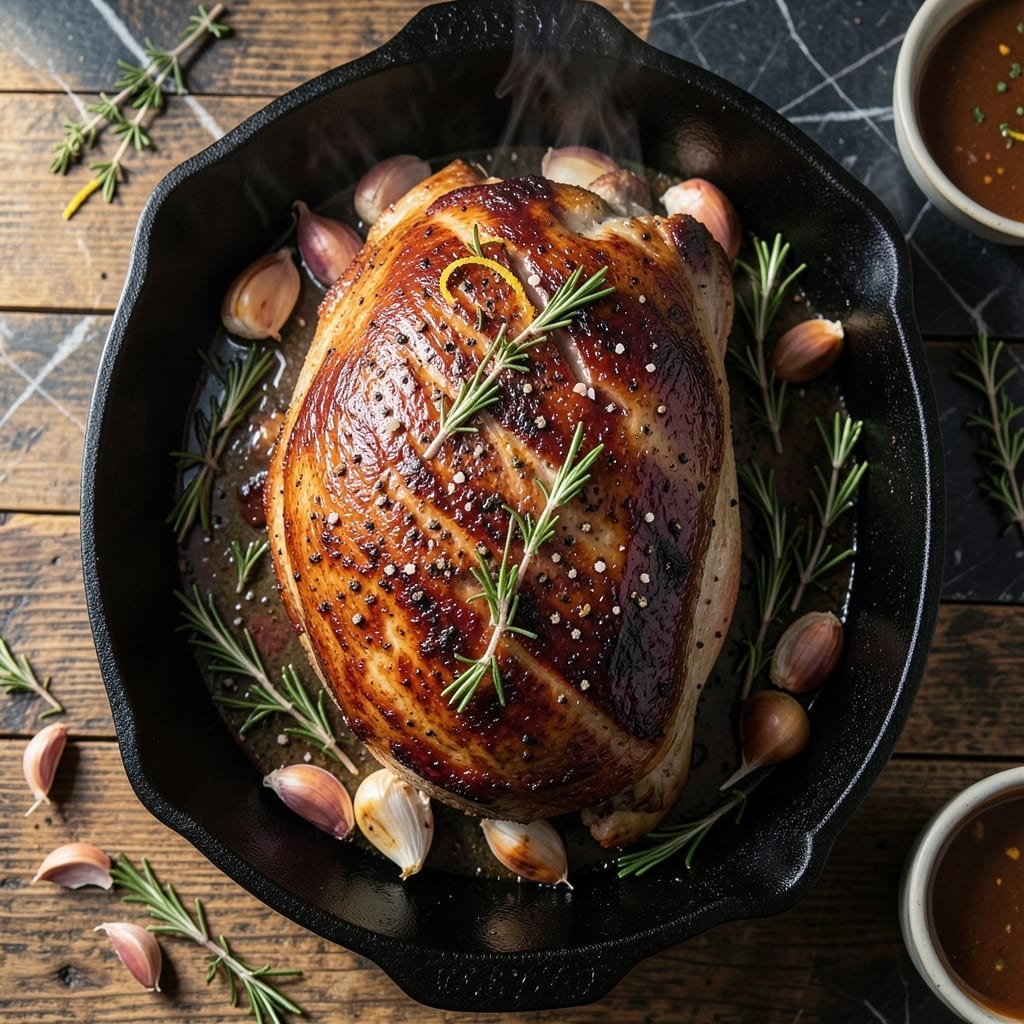
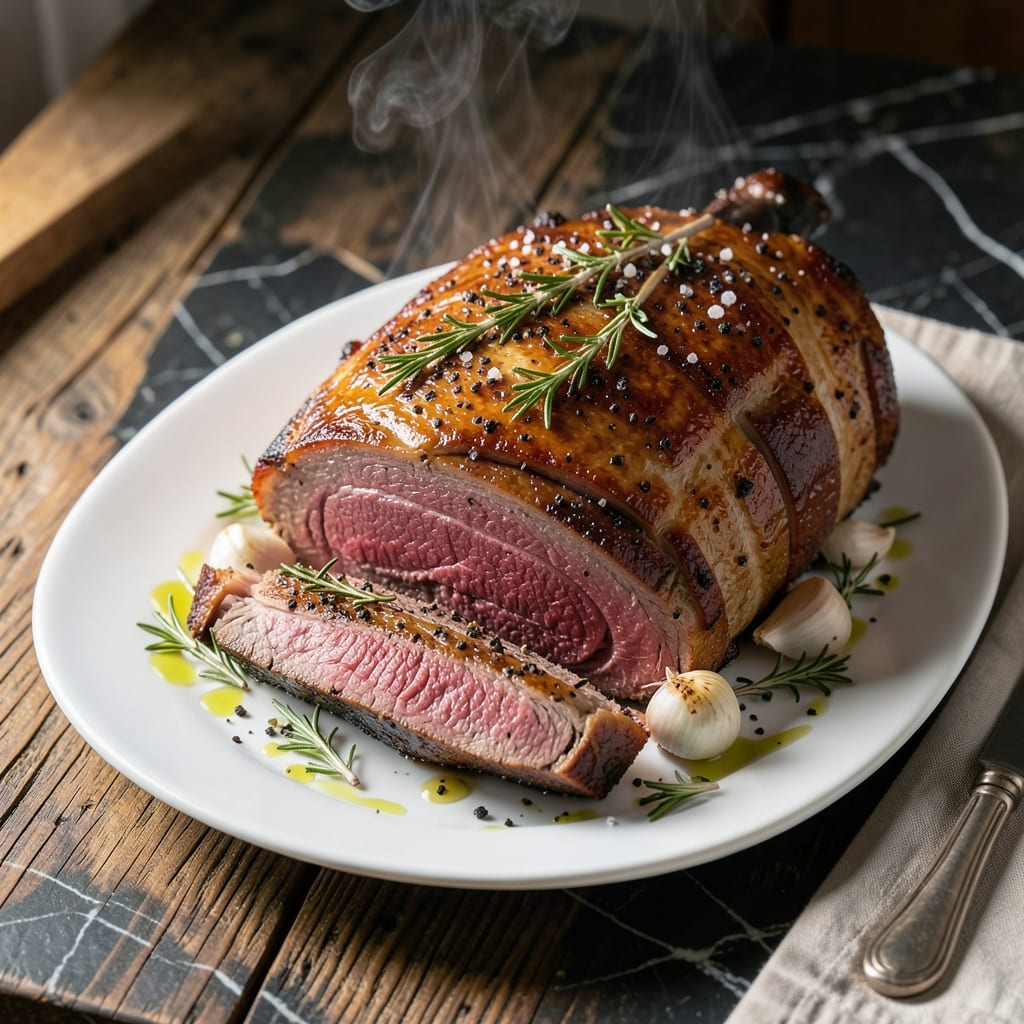
Achieve perfectly pink centers with this prime rib method that delivers restaurant-quality results at home. The herb crust forms a flavorful seal that locks in juices while creating a beautiful golden exterior.
This technique ensures even cooking and maximum tenderness. The result is a show-stopping centerpiece with rich, beefy flavor in every bite. Ideal for special occasions or Sunday dinners.
Ingredients for Prime Rib Roast Recipe Oven
Restaurant-quality prime rib requires just these premium ingredients for herb-crusted perfection every time.
| Ingredient | Amount | Notes |
|---|---|---|
| Prime Rib Roast 🥩 | 4 lb | Bone-in, well-marbled preferred |
| Kosher Salt 🧂 | 2 tbsp | Diamond Crystal preferred for texture |
| Black Pepper 🌶️ | 2 tbsp | Freshly cracked, coarse grind |
| Fresh Rosemary 🌿 | 3 tbsp | Finely chopped, stems discarded |
| Fresh Thyme 🍃 | 3 tbsp | Leaves stripped from stems |
| Garlic Cloves 🧄 | 6 cloves | Minced to fine paste consistency |
| Dijon Mustard 🟡 | 2 tbsp | Whole grain preferred for texture |
| Olive Oil 🫒 | ¼ cup | Extra-virgin for richness |
| Unsalted Butter 🧈 | 4 tbsp | Softened to room temperature |
| Red Wine 🍷 | 1 cup | Dry variety like Cabernet Sauvignon |
| Beef Stock 🥩 | 1 cup | Low-sodium preferred for control |
| All-Purpose Flour 🌾 | 2 tbsp | For thickening pan juices |
The prime rib itself is non-negotiable. USDA Prime grade delivers the marbling that guarantees juiciness—Choice grade works but requires more precision. Source from Whole Foods or a trusted butcher who can provide bone-in cuts with the fat cap intact. The fat cap should be at least 1/4-inch thick to protect the meat during roasting. Ask your butcher to French the bones for an impressive presentation.
For the herb crust, fresh herbs are mandatory—dried simply won’t create the proper seal. No fresh rosemary? Fresh sage at equal volume works, though the flavor profile shifts. Out of Dijon? Whole-grain mustard at the same amount maintains texture. The red wine can be substituted with additional beef stock plus 1 tbsp balsamic vinegar for acidity. Always use unsalted butter to control seasoning precisely.
The uncooked roast keeps 3-4 days in the fridge, though it’s best cooked within 48 hours of purchase for peak freshness. Leftovers (if any remain) store beautifully for 4-5 days and actually improve in flavor. The herb mixture can be prepped 1 day ahead and refrigerated—bring to room temperature before applying to the roast.
Why You’ll Love This Recipe
- Set It and Forget: I rub the roast with salt, pepper, and fresh herbs, pop it in the oven, and let it do its thing—no babysitting required.
- Herb Crust Heaven: The rosemary and thyme form this insane crust that makes every bite taste like a steakhouse special.
- Holiday Hero: Between us, this is my secret weapon for Christmas dinner or any Sunday when I want to feel fancy.
- Next-Day Magic: Honestly, the leftovers make killer sandwiches, tacos, or even a quick hash for breakfast the next morning.
Step-by-Step Instructions for Prime Rib Roast
Master the reverse sear technique for an evenly cooked roast with a flavorful herb crust.
Step 1: Prepare and Season the Roast
Remove the 4 lb Prime Rib Roast from the refrigerator 1 hour before cooking to bring it to room temperature. Pat it completely dry with paper towels—this ensures the seasoning adheres properly and promotes even browning.
In a small bowl, combine the 2 tbsp Kosher Salt, 2 tbsp Black Pepper, 3 tbsp Fresh Rosemary, 3 tbsp Fresh Thyme, and 6 cloves Garlic Cloves with the 2 tbsp Dijon Mustard and 0.25 cup Olive Oil. Stir until a thick paste forms, then rub it evenly over the entire surface of the roast, pressing firmly to create a crust.
Step 2: Slow Roast in the Oven
Preheat your oven to 250°F. Place the seasoned Prime Rib Roast bone-side down on a wire rack set over a rimmed baking sheet. This setup allows heat to circulate evenly, ensuring uniform cooking.
Roast for approximately 2 to 2.5 hours, or until the internal temperature reaches 120-125°F for medium-rare. Use a meat thermometer inserted into the thickest part of the roast, avoiding the bone. The low-and-slow method guarantees a perfectly pink center from edge to edge.
Step 3: Sear for a Crust
Remove the roast from the oven and increase the temperature to 450°F. Return the roast to the oven and sear for 10-15 minutes, or until the external crust is deeply browned and the internal temperature rises to 130°F for medium-rare.
Watch closely during this phase to prevent overcooking. The crust should be deeply caramelized, adding a rich, savory depth to each slice. Transfer the roast to a cutting board and tent loosely with foil.
Step 4: Make the Pan Sauce
Place the baking sheet on the stovetop over medium heat. Add the 4 tbsp Unsalted Butter to the pan drippings and stir to melt. Sprinkle the 2 tbsp All-Purpose Flour over the mixture and whisk continuously for 1-2 minutes to create a roux.
Gradually pour in the 1 cup Red Wine and 1 cup Beef Stock, whisking constantly to avoid lumps. Simmer for 5-7 minutes until the sauce thickens enough to coat the back of a spoon. Strain through a fine-mesh sieve for a silky finish.
Step 5: Rest and Serve
Let the roast rest for 15-20 minutes before carving. This allows the juices to redistribute, ensuring every slice is moist and tender. Carve between the ribs for elegant, bone-in portions.
Serve the prime rib with the pan sauce spooned over the top. The sauce’s rich, wine-infused depth complements the herb-crusted roast, creating a sophisticated centerpiece worthy of any special occasion.
Pro Tips For Making Prime Rib Roast Recipe Oven
- Dry the Roast: Pat the prime rib completely dry with paper towels before seasoning—I learned this the hard way after my first roast steamed instead of seared in the oven.
- Salt Generously: Use at least 1 tablespoon of kosher salt per pound, pressing it into the meat the night before; it’s the only way to get that deep, flavorful crust.
- Start High, Finish Low: Blast it at 450°F for 30 minutes to build a crust, then drop to 250°F to finish—this combo guarantees a perfect medium-rare without overcooking.
- Rest Under Foil: Tent it loosely with foil and let it rest for 20-30 minutes after roasting; skipping this makes all the juices run out when you slice into it.
Wine and Beer Pairings for This Recipe
Beer Pairings
For a hearty prime rib roast, rich and robust beers complement the dish beautifully. A Stout like Guinness offers deep, roasted malt flavors with notes of coffee and chocolate, balancing the meat’s richness. If you prefer something lighter, a Porter such as Deschutes Black Butte brings caramel and toffee undertones that pair well with the herb crust. For a hoppy contrast, an Amber Ale like Fat Tire adds a touch of citrus and pine to cut through the fat.
Wine Pairings
A classic Cabernet Sauvignon like Caymus Vineyards is a perfect match, with bold tannins and dark fruit flavors that stand up to the prime rib’s intensity. For a smoother option, try a Merlot such as Chateau Ste. Michelle, which offers plummy, velvety notes that enhance the dish’s savory elements. If you enjoy a bit of spice, a Syrah like Penfolds Bin 28 delivers peppery, smoky accents that elevate the herb crust.
Non-Alcoholic Options
Not a fan of alcohol? A sparkling apple cider like Martinelli’s Gold adds a crisp, sweet contrast to the rich flavors. For a deeper profile, a black cherry soda such as Boyert’s offers a bold, fruity pairing that complements the roast’s umami. Both options bring a refreshing balance to the meal without overpowering it.
Nutrition Facts

- 6 Egg Cake Recipe with Oil: Light as Air With Buttery Moisture - October 4, 2026
- 4 Bean Casserole Recipe: One-Pan Heartiness With Smoky Paprika Depth - October 4, 2026
- 3-Ingredient Keto Mug Cake Recipe: Microwave Magic in 2 Minutes - October 4, 2026