
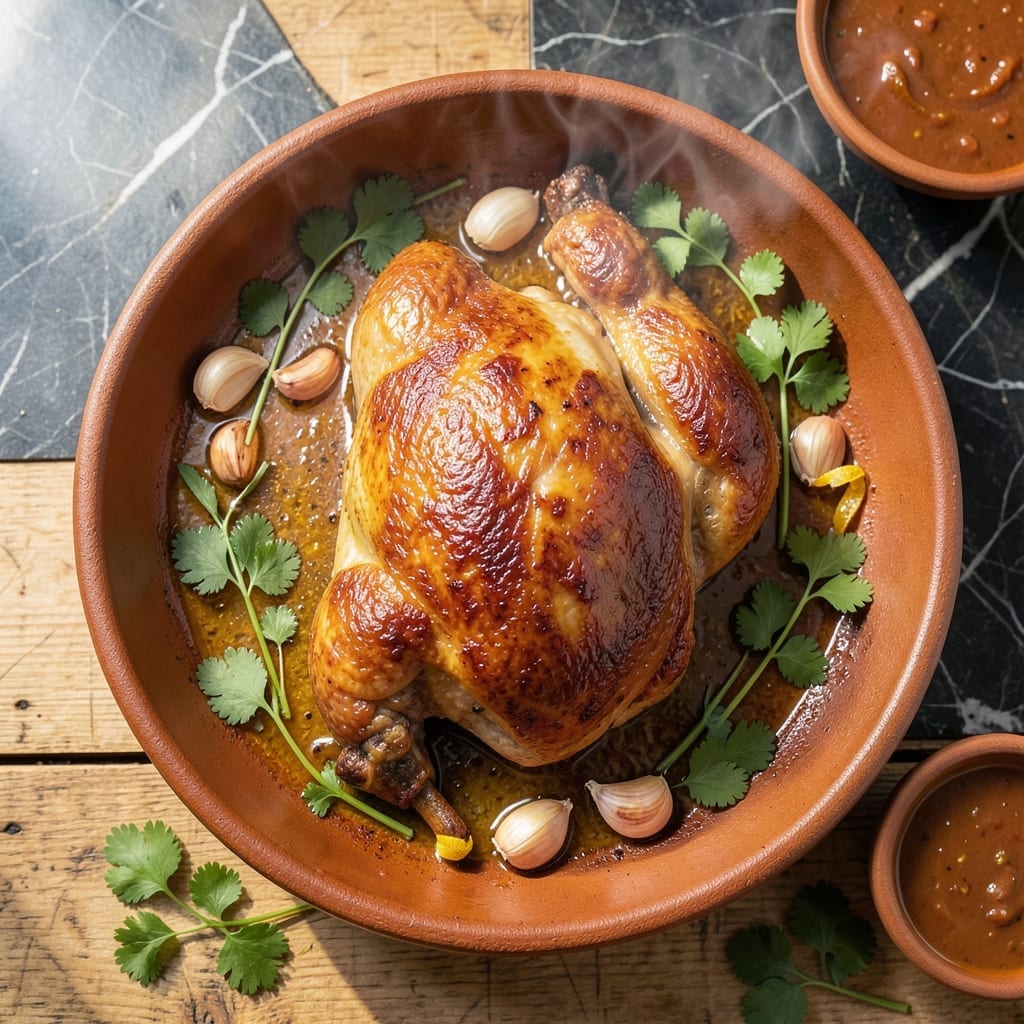
This traditional method transforms pork into a centerpiece worthy of any celebration. The slow-roasting process over open flame or in a pit yields tender, juicy meat with crispy skin that’s impossible to resist.
The marinade, called adobo, combines garlic, citrus, and herbs to infuse every bite with bold, authentic flavor. I’ve refined the technique to ensure the pork stays moist while developing a deep, caramelized exterior.
What emerges is a dish that’s rich with tradition—succulent, aromatic, and perfectly seasoned. The citrus and garlic create a balance that’s both vibrant and deeply satisfying.
Serve it with rice, beans, or plantains for a true Puerto Rican feast. This is how you bring the island’s flavors to your table.
Ingredients for Puerto Rican Bbq Recipe Lechon
Traditional Puerto Rican flavors start with pork, citrus, and bold seasonings for authentic lechon.
| Ingredient | Amount | Notes |
|---|---|---|
| Pork Shoulder 🥩 | 4 lb | Bone-in, skin-on for crispiness |
| Garlic Cloves 🧄 | 12 cloves | Peeled and minced finely |
| Sour Orange Juice 🍊 | 1 cup | Freshly squeezed, or sub lime/orange mix |
| Fresh Oregano 🍃 | ¼ cup | Chopped, stems removed |
| Fresh Cilantro 🌿 | ¼ cup | Chopped, stems removed |
| Ground Black Pepper 🌶️ | 2 tbsp | Freshly ground for best flavor |
| Kosher Salt 🧂 | 2 tbsp | Diamond Crystal preferred |
| Dried Bay Leaves 🍃 | 4 whole | For marinade infusion |
| Ground Cumin 🌿 | 1 tbsp | Toasted for deeper aroma |
| Olive Oil 🫒 | ½ cup | Extra-virgin for marinade |
| White Vinegar 💧 | ¼ cup | For acidity balance |
| Lime Zest 🍋 | 1 tbsp | Freshly grated from 2 limes |
| Orange Zest 🍊 | 1 tbsp | Freshly grated from 1 orange |
The pork shoulder is non-negotiable here. Bone-in, skin-on gives you that signature crispy exterior and juicy interior. Source it from a Latin market if possible—they often carry the right cut pre-marinated. For the citrus, sour orange juice is traditional, but a mix of lime and orange juice (2:1 ratio) works in a pinch. Fresh oregano and cilantro should be vibrant green with no wilting (the good stuff, not the pre-packaged kind).
No sour oranges? Equal parts lime and orange juice gets you close. Fresh herbs are ideal, but dried oregano at half the amount works. If you can’t find pork shoulder, pork butt is a decent substitute—just watch the fat content. The vinegar balances the richness, but apple cider vinegar can stand in if that’s what you have. Skip the pre-minced garlic in jars—fresh is essential for the adobo.
Marinate the pork overnight for maximum flavor penetration—12-24 hours is ideal. The adobo keeps in the fridge for up to 3 days, but use it fresh for best results. Leftovers? Shred for sandwiches or tacos and store in the fridge for up to 4 days.
Why You’ll Love This Recipe
- Minimal Chopping Required: I just toss the garlic, oregano, and cilantro in the food processor—no knife skills needed.
- Next-Level Zest: That sour orange juice cuts through the richness of the pork shoulder like nothing else.
- Feeds a Crowd: Honestly, I’ve served this at birthdays and it’s the first thing to disappear.
- Budget-Friendly Feast: Pork shoulder stays affordable, and the leftovers make killer tacos the next day.
Step-by-Step Instructions for Pit-Roasted Pork with Garlic and Citrus
Master the art of traditional Puerto Rican lechon with this precise, time-tested approach.
Step 1: Create the Mojo Criollo Marinade
In a large bowl, combine the 1 cup Sour Orange Juice, 0.5 cup Olive Oil, 0.25 cup White Vinegar, 12 cloves Garlic Cloves, 2 tbsp Kosher Salt, 2 tbsp Ground Black Pepper, 1 tbsp Ground Cumin, 0.25 cup Fresh Oregano, and 0.25 cup Fresh Cilantro.
Add the 1 tbsp Lime Zest and 1 tbsp Orange Zest, then whisk vigorously until fully emulsified. The mixture should be fragrant with visible flecks of herb and citrus. This is your mojo criollo—the soul of authentic lechon flavor.
Stir in the 4 whole Dried Bay Leaves and let the marinade rest for 10 minutes to allow the flavors to meld. The bay leaves will infuse their subtle earthiness during this brief steeping period.
Step 2: Marinate the Pork Shoulder Thoroughly
Place the 4 lb Pork Shoulder skin-side up in a large roasting pan or food-safe container. Using a sharp knife, make 1-inch deep incisions all over the meat, creating pockets for the marinade to penetrate deeply.
Pour the mojo criollo over the pork, ensuring it covers the entire surface. Rub the marinade into every crevice, working it into the incisions. The skin should glisten with oil and citrus, and the garlic and herbs should cling to the surface.
Cover and refrigerate for at least 12 hours, preferably 24 hours. I always marinate overnight—this extended time allows the acidic citrus to tenderize the meat while the garlic and spices infuse every bite with complex flavor.
Step 3: Prepare for Slow Roasting
Remove the pork from the refrigerator and let it sit at room temperature for 1 hour. This ensures even cooking throughout the thick cut. Preheat your oven to 300°F during this time.
Transfer the pork and all its marinade to a heavy roasting pan. The liquid should come about ¼ inch up the sides of the meat. This creates a moist environment for the initial cooking phase while allowing the skin to crisp later.
Position the pork skin-side up. The fat cap will render during cooking, basting the meat from above while the marinade works from below. This dual action is what creates the signature texture of proper lechon.
Step 4: Roast Low and Slow to Perfection
Roast uncovered for 3 hours. After this initial period, increase the oven temperature to 400°F and continue roasting for 1 to 1.5 hours until the skin develops a deep mahogany crust and the internal temperature reaches 195°F.
Baste the pork with its pan juices every 45 minutes during the first phase. This keeps the exterior moist as it renders fat and develops color. You’ll notice the skin transforming from pale to golden to that coveted crispy dark brown.
The pork is done when a fork inserted into the thickest part twists easily and the meat pulls apart with minimal resistance. The skin should crackle when pressed, and the juices should run clear with a rich, garlicky aroma.
Step 5: Rest and Shred for Service
Transfer the pork to a large cutting board and let it rest for 20 minutes. This allows the juices to redistribute throughout the meat. Tent it loosely with foil to keep it warm, but don’t seal it completely—the steam would soften that beautiful crispy skin.
Using two forks, shred the meat into large chunks, mixing the crispy skin pieces throughout. The texture should be a mix of tender pulled pork and crispy bits. Serve with some of the reduced pan juices spooned over the top for extra moisture and flavor.
The final dish should have a perfect balance of succulent meat, crispy skin, and the bright, garlicky notes of the mojo criollo. This is lechon as it’s meant to be—rich, complex, and deeply satisfying.
Pro Tips For Making Puerto Rican Bbq Recipe Lechon
- Marinate Overnight: I learned this the hard way—pork shoulder needs at least 12 hours in the sour orange, garlic, and herb mix to really soak up the flavors. Anything less and you’re just tasting the surface.
- Score the Skin: Use a sharp knife to cut 1-inch slits all over the pork before marinating. This lets the garlic, oregano, and cilantro penetrate deep, not just sit on top.
- Skip the Dried Herbs: Fresh oregano and cilantro are non-negotiable here. Dried versions won’t give you that bright, vibrant taste that makes lechon stand out.
- Baste Often: Every 30 minutes while cooking, brush the pork with extra marinade or its own juices. It keeps the meat moist and builds that sticky, caramelized crust everyone fights over.
Make-Ahead Tips for puerto rican bbq recipe lechon
Marinade Prep
Make the mojo criollo up to 3 days ahead—store in an airtight container in the fridge. The flavors deepen over time as the garlic and herbs infuse the citrus. I often prep this the night before for maximum impact.
Pork Seasoning
Score and marinate the pork the day before cooking. The 12-hour minimum allows the acidic citrus to tenderize the meat while the spices penetrate deeply. Cover tightly with plastic wrap to prevent fridge odors from seeping in.
Overnight Refrigeration
Let the marinated pork sit overnight in the fridge at 38-40°F. This slow marinating process is key for authentic flavor. I use a large zip-top bag to save space and ensure even coverage. 💡
Morning Prep
Take the pork out 1 hour before cooking to bring it to room temperature. This ensures even cooking throughout the thick cut. Use this time to preheat your oven to 300°F and prep any side dishes.
Partial Cooking
You can roast the pork at 300°F for 3 hours the day before, then refrigerate it overnight in its juices. Finish the next day at 400°F to crisp the skin—this saves time while maintaining flavor.
Pan Juices
Strain and save the pan juices after cooking. They’ll keep in the fridge for 3 days or can be frozen for up to 1 month. Reheat gently and drizzle over the pork before serving for extra moisture. ❄️
Nutrition Facts
Frequently Asked Questions
Can I use pork loin instead of shoulder?
Pork shoulder is ideal for its fat content and connective tissue, which breaks down beautifully during slow roasting. Pork loin is leaner and will dry out. If you must substitute, add extra fat like bacon on top to baste the meat.
What if I don’t have sour oranges?
Mix 2 parts lime juice with 1 part orange juice for a close substitute. The acidity and citrus notes will still tenderize the meat and brighten the marinade. Always use fresh juice for best flavor.
How do I get the skin extra crispy?
Pat the skin dry before roasting and increase the oven to 400°F for the final 1-1.5 hours. Baste with pan juices during the first phase, but avoid it in the last hour to let the skin crisp fully.
Can I cook this in a slow cooker?
Yes, but the texture will differ. Cook on low for 8-10 hours, then transfer to a baking sheet and broil for 5-10 minutes to crisp the skin. The flavor will be great, but the skin won’t be as crackly.

- 6 Egg Cake Recipe with Oil: Light as Air With Buttery Moisture - October 4, 2026
- 4 Bean Casserole Recipe: One-Pan Heartiness With Smoky Paprika Depth - October 4, 2026
- 3-Ingredient Keto Mug Cake Recipe: Microwave Magic in 2 Minutes - October 4, 2026