
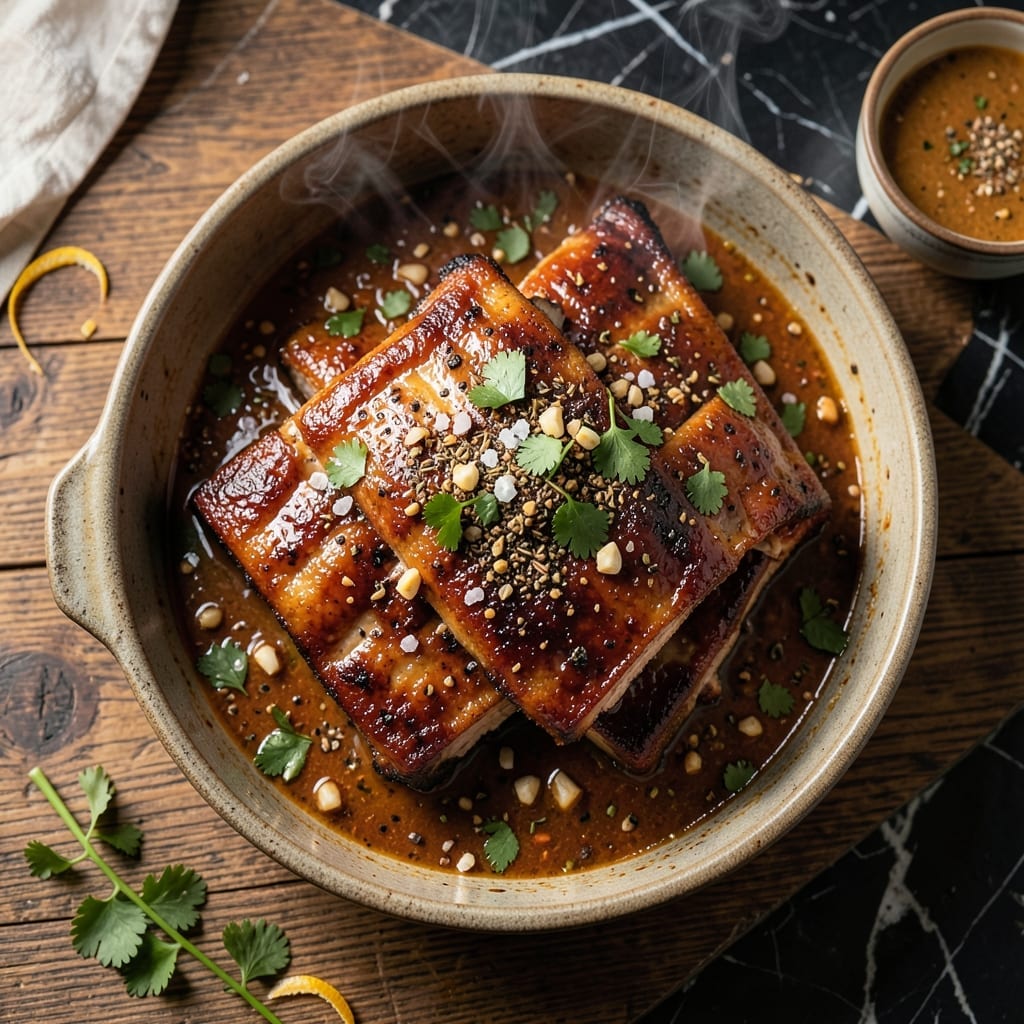
This oven method delivers fall-off-the-bone ribs with the vibrant flavors of Puerto Rican adobo and sofrito. The slow-roasting process allows the spices to deeply penetrate the meat while keeping it tender.
The secret lies in the marinade—a bold blend of garlic, oregano, and citrus that defines island cooking. I’ve perfected the timing to ensure the ribs are infused with flavor without drying out.
You’ll get juicy, flavorful ribs with a caramelized crust, all achieved in your oven. No grill required, just a proven technique and a few hours of patience.
Perfect for family dinners or when you crave restaurant-quality ribs at home. Here’s how to make it happen.
Ingredients for Puerto Rican Ribs Recipe in Oven
Bold island flavors start with these ribs, citrus, and a spice blend you already love.
| Ingredient | Amount | Notes |
|---|---|---|
| Pork Baby Back Ribs 🥩 | 3 lb | Full rack, membrane removed |
| Garlic Cloves 🧄 | 10 cloves | Peeled and minced |
| Dried Oregano 🌿 | 2 tbsp | Mexican oregano preferred |
| Ground Black Pepper 🌶️ | 2 tsp | Freshly ground |
| Kosher Salt 🧂 | 2 tsp | Diamond Crystal preferred |
| Ground Cumin 🌿 | 1 tbsp | Toasted for depth |
| Sofrito 🍅 | ½ cup | Homemade or store-bought |
| Lime Juice 🍋 | ¼ cup | Freshly squeezed |
| Orange Juice 🍊 | ¼ cup | Freshly squeezed |
| Olive Oil 🫒 | ¼ cup | Extra-virgin preferred |
| Apple Cider Vinegar 🍯 | 2 tbsp | For acidity balance |
| Brown Sugar 🍚 | 2 tbsp | Light or dark |
| Fresh Cilantro 🌿 | ¼ cup | Chopped for garnish |
The ribs are everything here. Baby back ribs give you that tender, fall-off-the-bone texture—avoid spare ribs (they’re tougher). I grab mine from Costco for the best value, but any butcher with good quality pork works. Ask them to remove the membrane if you’re not comfortable doing it yourself. The sofrito is the soul of this dish—Goya makes a solid store-bought version if you’re short on time.
No sofrito? Blitz bell peppers, onions, and garlic in a food processor—close enough. Fresh out of oregano? Dried marjoram at the same amount works in a pinch. The citrus juices are non-negotiable though—they tenderize the meat and brighten the spices. Don’t use bottled lime juice; it tastes flat. If you can’t find Mexican oregano, regular oregano is fine (just use a little extra).
Marinate the ribs overnight if you can—12 hours max or the acid starts breaking down the meat too much. Leftovers keep 4-5 days in the fridge, freeze for 3 months. Always reheat gently to keep the meat from drying out.
Why You’ll Love This Recipe
- Hands-Off Cooking: I just season the ribs, pop them in the oven, and let the dry rub of garlic, oregano, and salt work its magic—no babysitting required.
- Flavor Explosion: That first bite with the crispy edges and the punchy garlic-oregano combo? Honestly, it’s the reason I make these every other week.
- Feeds a Crowd: One rack of baby back ribs stretches easily for a family dinner or a casual get-together with friends.
- Next-Day Magic: Between us, the leftovers taste even better reheated, and they keep perfectly for up to four days.
Step-by-Step Instructions for Puerto Rican Ribs in Oven
This slow-roasting method infuses every bite with island flavors and fall-off-the-bone tenderness.
Step 1: Create the Puerto Rican Marinade
In a large bowl, combine the 0.5 cup sofrito, 0.25 cup lime juice, 0.25 cup orange juice, 0.25 cup olive oil, 2 tbsp apple cider vinegar, and 2 tbsp brown sugar. Whisk until the brown sugar dissolves completely and the mixture looks uniform.
Add the 10 cloves garlic cloves (minced), 2 tbsp dried oregano, 1 tbsp ground cumin, 2 tsp kosher salt, and 2 tsp ground black pepper. Stir well—you should see the flecks of garlic and herbs evenly distributed. Let this marinade sit for 5 minutes to allow the flavors to meld before using.
Step 2: Coat and Marinate the Ribs
Place the 3 lb pork baby back ribs in a large baking dish or heavy-duty resealable bag. Pour the marinade over the ribs, making sure they’re completely coated on all sides. I like to use my hands for this—massage the marinade into the meat, getting it into every nook and cranny.
Cover the dish or seal the bag and refrigerate for at least 4 hours, but overnight is ideal. The longer they marinate, the deeper the flavors penetrate. You’ll notice the ribs start to take on a slightly grayish hue from the acid in the citrus—that’s normal and means the marinade is working.
Step 3: Slow-Roast the Ribs
Preheat your oven to 275°F. This low and slow temperature is key for tender ribs. Remove the ribs from the marinade (reserve the marinade) and place them meat-side up on a foil-lined baking sheet. Pour the reserved marinade around—not over—the ribs to prevent steaming.
Cover the entire baking sheet tightly with foil, creating a sealed environment. Roast for 2.5 to 3 hours. About halfway through, check that there’s still liquid in the pan—if it looks dry, add ¼ cup water to maintain moisture. The ribs are done when the meat shrinks back from the bones by about ½ inch.
Step 4: Finish and Serve
Carefully remove the foil—watch for steam—and increase the oven temperature to 400°F. Return the ribs to the oven, uncovered, for 10-15 minutes to caramelize the surface. You want to see the edges of the ribs turn a deep, rich brown and the marinade reduce to a glossy glaze.
Remove from the oven and let rest for 10 minutes before cutting. Sprinkle with the 0.25 cup fresh cilantro just before serving. The meat should pull away from the bone cleanly with just a gentle tug. Serve with the pan juices spooned over the top for maximum flavor.
Pro Tips For Making Puerto Rican Ribs Recipe In Oven
- Low and Slow Wins: Cook the ribs at 275°F for 2.5-3 hours—this low temp keeps them tender while the dry rub of oregano, garlic, and black pepper builds deep flavor.
- Score the Membrane: Peel off the tough membrane on the bone side and score the meat lightly with a knife so the salt, garlic, and oregano penetrate better.
- Don’t Overcrowd: Lay the ribs in a single layer on the rack with space between them, or they’ll steam instead of roast and lose that crisp edge.
- Rest Before Serving: Let the ribs rest 10 minutes under foil after baking so the juices redistribute—cutting too soon sends all the flavor onto the cutting board.
Creative Variations of These Flavors
Mojo-Inspired Citrus
Swap the sofrito for 1 cup fresh mojo sauce—blend ½ cup orange juice, ¼ cup lime juice, 6 garlic cloves, 1 tsp cumin, and 1 tsp oregano. This Cuban twist brightens the ribs with a tangy, herbaceous punch. I love how the citrus cuts through the richness of the pork. 🌟
Spicy Adobo Kick
Add 1 tbsp goya adobo seasoning and 1 tsp cayenne pepper to your marinade for heat lovers. The adobo blends seamlessly with the existing spices, while the cayenne delivers a slow-building warmth. Perfect for those who crave a little fire with their island flavors.
Coconut Milk Braise
Replace ¼ cup water with ½ cup coconut milk when roasting. This adds a subtle sweetness and creamy texture to the sauce. The ribs absorb the coconut flavor beautifully, creating a tropical twist that pairs wonderfully with rice and beans.
Pineapple Glaze Finish
In the last 15 minutes of cooking, brush the ribs with a glaze of ½ cup crushed pineapple, 2 tbsp brown sugar, and 1 tbsp lime juice. The natural sugars caramelize, creating a sticky, sweet-tangy crust that’s irresistible. 🔥
Smoked Paprika Rub
Before marinating, pat the ribs dry and rub with a mix of 1 tbsp smoked paprika, 1 tsp garlic powder, and 1 tsp onion powder. This adds a deep, smoky layer that complements the Puerto Rican spices without overpowering them.
Beer-Marinated Ribs
Use ½ cup dark beer (like Medalla Light) in place of orange juice in the marinade. The maltiness enhances the caramelization, while the carbonation helps tenderize the meat. It’s a trick I picked up from a San Juan food truck.
Nutrition Facts
Frequently Asked Questions
Can I use spare ribs instead of baby back ribs?
Baby backs are ideal for tenderness, but spare ribs work if you adjust the cooking time. Add 30-45 minutes to the roasting time since they’re thicker. They’ll still absorb the Puerto Rican flavors beautifully.
What if I don’t have sofrito?
Blend ½ cup bell peppers, ¼ cup onion, and 4 garlic cloves as a quick substitute. It won’t be identical, but it’ll capture the essence. Store-bought sofrito also works in a pinch.
How do I know when the ribs are done?
Look for the meat to shrink back from the bones by about ½ inch. A fork should slide in easily, and the internal temp should reach 195°F. Don’t rush it—low and slow is key.
Can I make this ahead of time?
Marinate the ribs overnight, then roast as directed. They’ll keep 4-5 days in the fridge or freeze for 3 months. Reheat gently in the oven to preserve moisture.

- 6 Egg Cake Recipe with Oil: Light as Air With Buttery Moisture - October 4, 2026
- 4 Bean Casserole Recipe: One-Pan Heartiness With Smoky Paprika Depth - October 4, 2026
- 3-Ingredient Keto Mug Cake Recipe: Microwave Magic in 2 Minutes - October 4, 2026