
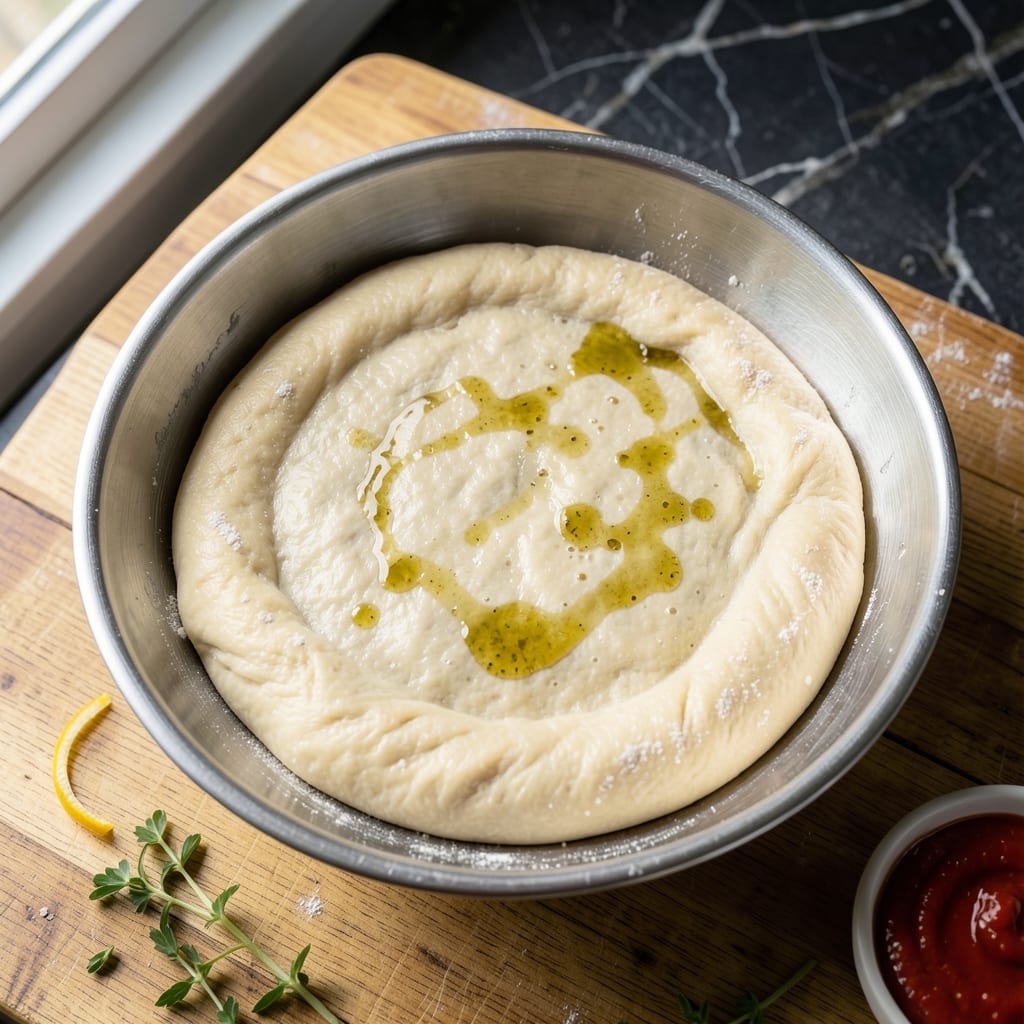
This pizza dough recipe delivers a light, airy crust with minimal effort and maximum reward. The secret lies in the perfect balance of hydration and resting time, creating bubbles that puff beautifully in the oven.
With just 5 basic ingredients and 10 minutes of active prep, you’ll have dough ready to shape. The extended rest allows gluten to develop naturally, ensuring a tender yet sturdy base for your toppings.
The result is a golden, puffy crust with a crisp exterior and soft, chewy interior. It’s versatile enough for classic Margherita or loaded with creative toppings.
No special equipment needed—just patience and a hot oven. Here’s how to achieve bakery-quality results at home.
Ingredients for Puffy Pizza Dough
Five fundamental ingredients transform into bakery-quality dough with minimal effort and maximum fluff.
| Ingredient | Amount | Notes |
|---|---|---|
| Bread Flour 🌾 | 3 ½ cups | High-protein for structure and chew |
| Active Dry Yeast 🍞 | 2 ¼ tsp | One standard packet, proofed in warm water |
| Kosher Salt 🧂 | 2 tsp | Diamond Crystal preferred for consistency |
| Olive Oil 🫒 | 2 tbsp | Extra-virgin for subtle depth |
| Warm Water 💧 | 1 ½ cups | 105-110°F for yeast activation |
The flour is critical here. King Arthur Bread Flour delivers consistent high-protein content (12.7%) for optimal gluten development. Bob’s Red Mill works too, but may require slightly more water. Yeast freshness is non-negotiable—check the expiration date and store unopened packets in the freezer for maximum viability. Salt should be fine-grained for even distribution throughout the dough.
No bread flour? All-purpose flour at a 1:1 ratio yields a slightly less chewy crust but still puffs nicely. Instant yeast can replace active dry at the same quantity—skip the proofing step. For a whole wheat option, substitute up to 50% whole wheat flour and add an extra tablespoon of water. The olive oil can be swapped for any neutral oil, but may affect flavor complexity.
Dough can rest in the fridge for up to 48 hours for deeper flavor development. Store yeast in an airtight container in the freezer for 1-2 years. Flour keeps indefinitely in a cool, dry pantry, but use within 6 months for peak freshness.
Why You’ll Love This Recipe
- One Bowl Wonder: I mix everything right in the same bowl—no fancy equipment, just bread flour, yeast, and warm water doing the work.
- Crave-Worthy Crust: That olive oil gives it a golden, crispy edge with a fluffy center. Honestly, it’s the kind of dough I’d eat plain.
- Endless Toppings: From margherita night to breakfast pizza with eggs, this dough handles it all without complaining.
- Dough for Days: I make a double batch and freeze half—saves me from last-minute takeout when plans change.
Step-by-Step Instructions for Puffy Pizza Dough
Master the technique for creating a light, airy crust with minimal effort.
Step 1: Activate the Yeast in Warm Water
Begin by combining the 2.25 tsp Active Dry Yeast with the 1.5 cups Warm Water in a large mixing bowl. The water temperature should be between 105-110°F—too hot will kill the yeast, too cold will prevent activation. Stir gently and let it sit for 5-10 minutes.
You’ll know the yeast is active when the mixture becomes frothy and slightly bubbly. This step is crucial for developing the gas that will make your dough rise. If the yeast doesn’t bubble, your water may have been too hot or cold, or the yeast may be expired—start over with fresh ingredients.
Step 2: Form the Dough Base
Add the 3.5 cups Bread Flour and 2 tsp Kosher Salt to the yeast mixture. Use a wooden spoon to combine until a shaggy dough forms. The high-protein content of bread flour is essential for creating the gluten structure needed for a puffy, chewy crust.
At this stage, the dough will be sticky and rough. Don’t be tempted to add more flour—this initial stickiness is normal and will resolve as the gluten develops. The salt, meanwhile, regulates yeast activity and enhances flavor, so don’t omit it.
Step 3: Incorporate Olive Oil and Knead
Drizzle in the 2 tbsp Olive Oil and mix until fully incorporated. The oil adds subtle depth to the flavor and helps create a tender crumb. Turn the dough out onto a lightly floured surface and begin kneading by hand for 8-10 minutes.
Kneading develops the gluten network, which traps air and gives the dough its puffy texture. Press the dough with the heel of your hand, fold it over, and repeat. The dough is ready when it becomes smooth, elastic, and slightly tacky. If it’s too sticky, add a teaspoon of flour at a time, but avoid over-flouring.
Step 4: First Rise Until Doubled
Place the kneaded dough in a lightly oiled bowl, turning it once to coat all sides. Cover with a damp kitchen towel or plastic wrap and let it rise in a warm, draft-free place for 1-2 hours, or until doubled in size.
For best results, I place the bowl in a turned-off oven with the light on, creating an ideal 80-85°F environment. The dough should spring back slowly when poked gently with a finger. If it springs back quickly, it needs more time to rise.
Step 5: Shape and Second Rise
Punch down the dough to deflate it, then turn it out onto a floured surface. Shape it into a ball for a round pizza or a rectangle for a sheet pan. Place the shaped dough on a baking sheet, cover loosely, and let it rise again for 30-45 minutes.
This second rise ensures an even lighter texture. The dough should look puffy and slightly jiggly when shaken gently. Once risen, it’s ready to be stretched, topped, and baked into a perfect, airy crust.
Pro Tips For Making Puffy Pizza Dough
- Proof in Warmth: Let the dough rise in a turned-off oven with a bowl of boiling water on the lower rack—this creates the perfect 80-85°F environment for maximum puff.
- Use Bread Flour: I learned this the hard way: all-purpose flour just doesn’t cut it. Bread flour’s higher protein content gives you that airy, chewy texture you want.
- Skip Cold Water: Warm water (around 110°F) wakes up the yeast properly—any colder and your dough won’t rise, any hotter and you’ll kill the yeast entirely.
- Oil the Bowl: Coat your rising bowl with about 1 tablespoon of olive oil before adding the dough. This prevents sticking and makes the first punch-down way easier.
Make-Ahead Tips for puffy pizza dough
Cold Fermentation
For the best flavor development, prepare your dough the night before. After the first rise, punch it down and refrigerate in an airtight container for 12-24 hours. The slow fermentation enhances the dough’s taste and texture significantly. 💡
Room Temperature Rest
If you’re short on time, let the dough rest at room temperature for up to 4 hours after shaping. Cover it loosely with a damp towel to prevent drying. This method works well for same-day pizza nights.
Freezing for Later
To store longer, divide the dough into portions and freeze in ziplock bags for up to 3 months. Thaw overnight in the fridge before using. I recommend labeling with the date to track freshness.
Pre-Shaped Balls
Shape the dough into individual balls before refrigerating. This saves time later and ensures even baking. Place each ball in a separate container with 1 tbsp olive oil to prevent sticking.
Morning Prep
Start the dough in the morning and let it rise all day in the fridge. By evening, it’ll be ready to shape and bake. This method yields a beautifully puffy crust with minimal hands-on time.
Warm Water Trick
To speed up the final rise, place your dough near a warm (not hot) spot in your kitchen. I often use the top of my refrigerator. The gentle warmth encourages the dough to puff up quickly for last-minute meals.
Nutrition Facts
Frequently Asked Questions
Why didn’t my dough puff up?
Check your yeast freshness and water temperature first. Yeast needs 105-110°F water to activate. If your kitchen is cold, try placing the dough in an oven with the light on for a warm 80-85°F environment.
Can I use all-purpose flour instead?
Yes, but expect a slightly less chewy texture. Bread flour’s higher protein creates better gluten structure for puffiness. For best results with all-purpose, add 1 extra tbsp of water per cup.
How do I get more air bubbles?
Longer fermentation is key. After kneading, let the dough rise for 2 hours at room temperature, then refrigerate for 12-24 hours. The cold, slow rise maximizes air pocket formation.
Can I make this without kneading?
Mix the ingredients, cover, and let rest for 18-24 hours in the fridge. The extended rest develops gluten naturally, though the texture may be slightly different.

- 6 Egg Cake Recipe with Oil: Light as Air With Buttery Moisture - October 4, 2026
- 4 Bean Casserole Recipe: One-Pan Heartiness With Smoky Paprika Depth - October 4, 2026
- 3-Ingredient Keto Mug Cake Recipe: Microwave Magic in 2 Minutes - October 4, 2026