
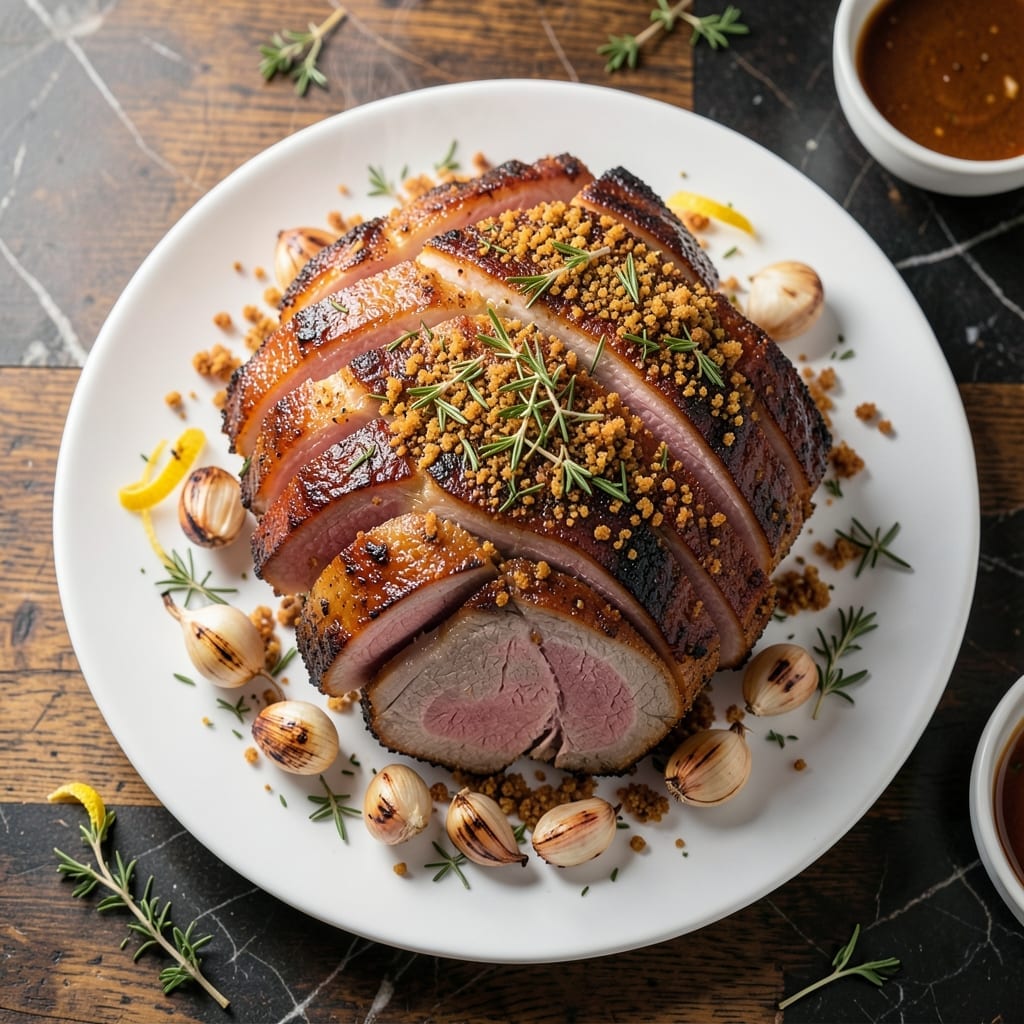
This herb-crusted rack of pork transforms an ordinary cut into a restaurant-quality centerpiece that impresses every guest. The secret lies in a foolproof combination of fresh herbs, garlic, and breadcrumbs that forms a golden crust as it roasts.
I developed this method after years of testing different seasoning blends and cooking techniques. The result is tender, juicy meat with a crispy exterior that locks in flavor. A meat thermometer ensures perfect doneness without overcooking.
What you get is a dish that looks and tastes like it came from a professional kitchen. The herb crust adds texture and aroma, while the pork remains succulent and full of natural richness.
Serve with roasted vegetables and a wine reduction for a complete, elegant meal. This preparation never fails to deliver.
Ingredients for Rack of Pork
Eleven premium ingredients create this elegant herb-crusted pork centerpiece for four lucky diners.
| Ingredient | Amount | Notes |
|---|---|---|
| Pork Rib Roast 🥩 | 2 lb | Bone-in, frenched for presentation |
| Fresh Rosemary 🌿 | 2 tbsp | Finely chopped, stems discarded |
| Fresh Thyme Leaves 🍃 | 2 tbsp | Stems removed, loosely packed |
| Garlic Cloves 🧄 | 6 cloves | Minced to fine paste |
| Dijon Mustard 🟡 | 3 tbsp | Whole grain preferred for texture |
| Panko Breadcrumbs 🍞 | 1 cup | Unseasoned for neutral base |
| Extra-Virgin Olive Oil 🫒 | 3 tbsp | Divided for crust and searing |
| Kosher Salt 🧂 | 1 ½ tsp | Diamond Crystal brand preferred |
| Freshly Ground Black Pepper 🌶️ | 1 tsp | Coarse grind for texture |
| Dry White Wine 🍷 | ½ cup | For deglazing pan, drinkable quality |
| Unsalted Butter 🧈 | 2 tbsp | Cubed, for finishing sauce |
| Shallot 🧅 | 1 whole | Finely minced for sauce |
The pork rib roast is non-negotiable for this preparation. Source bone-in, frenched racks from a quality butcher like Whole Foods or Local specialty meat markets—avoid pre-cut chops. Look for even fat marbling and a bright pink color. The fresh herbs must be vibrant; wilting rosemary or thyme won’t deliver the aromatic punch this crust demands. Organic herbs from Trader Joe’s consistently exceed supermarket quality.
No fresh herbs? Dried at one-third the quantity works in a pinch, though texture suffers. Panko substitutes can include fresh breadcrumbs from a stale baguette—pulse in a processor for consistency. For the wine, any dry white (Sauvignon Blanc, Pinot Grigio) is perfect. Short on Dijon? Whole grain mustard adds welcome texture, while yellow mustard falls flat.
Prep the herb crust up to 12 hours ahead—refrigerate covered. The roast itself can rest at room temperature 1 hour before cooking. Leftover pork keeps 4 days refrigerated or freezes beautifully for 3 months. Always carve between the bones for elegant presentation.
Why You’ll Love This Recipe
- One Pan Wonder: I just rub the roast with Dijon, press on the garlic and herbs, then let the oven do the rest.
- Herb-Crusted Perfection: That rosemary and thyme crust forms this insane golden seal that locks in all the juices.
- Sunday or Tuesday: Honestly, it feels fancy enough for company but I make it on random weeknights too.
- Leftovers for Days: One roast feeds us for two meals, and the cold slices make killer sandwiches the next day.
Step-by-Step Instructions for Herb-Crusted Rack of Pork
Master the technique for a perfectly seared, herb-encrusted roast with a velvety pan sauce.
Step 1: Prepare the Herb Crust and Season the Roast
In a small bowl, combine the 2 tbsp fresh rosemary, 2 tbsp fresh thyme leaves, 6 cloves garlic cloves, 3 tbsp Dijon mustard, 1 cup panko breadcrumbs, 1 tbsp extra-virgin olive oil, 1.5 tsp kosher salt, and 1 tsp freshly ground black pepper. Mix until the breadcrumbs are evenly coated and the mixture forms a thick paste.
Pat the 2 lb pork rib roast dry with paper towels to ensure a good sear. This step is critical—any moisture will steam the meat instead of browning it. Season the roast lightly with a pinch of the kosher salt and freshly ground black pepper to enhance the natural flavor of the pork.
Step 2: Sear the Roast and Apply the Herb Crust
Heat 2 tbsp extra-virgin olive oil in a large oven-safe skillet over medium-high heat until shimmering. Sear the pork rib roast on all sides, including the ends, for 2-3 minutes per side until deeply browned. You’re aiming for a rich, caramelized crust that will form the base of your herb encasement.
Once seared, remove the skillet from heat. Brush the herb-breadcrumb mixture generously over the top and sides of the roast, pressing it gently to adhere. The crust should coat the meat evenly, creating a thick, aromatic layer that will crisp up beautifully in the oven.
Step 3: Roast to Perfect Doneness
Preheat your oven to 375°F. Transfer the skillet with the crust-coated roast to the oven and cook for 25-30 minutes, or until the internal temperature reaches 145°F. Use a meat thermometer to check the thickest part of the roast, avoiding the bone.
The crust should be golden brown and the pork should feel slightly firm to the touch but still yield to gentle pressure. If the crust begins to darken too quickly, loosely tent the roast with aluminum foil to prevent burning while allowing the meat to finish cooking.
Step 4: Rest and Prepare the Pan Sauce
Transfer the roast to a cutting board and tent loosely with foil. Let it rest for 10-15 minutes—this allows the juices to redistribute, ensuring every slice is moist and flavorful. Meanwhile, return the skillet to medium heat and add the 1 whole shallot, minced. Sauté for 1-2 minutes until softened.
Deglaze the pan with the 0.5 cup dry white wine, scraping up any browned bits with a wooden spoon. Simmer for 2-3 minutes until the liquid reduces by half. Stir in the 2 tbsp unsalted butter, one cube at a time, until the sauce is smooth and slightly thickened. Strain if desired for a refined finish.
Step 5: Slice and Serve
Carve the roast between the bones into individual chops. Arrange on a platter and spoon the pan sauce over the top or serve it on the side for dipping. The pork should be tender and juicy, with a crisp, fragrant herb crust that complements the savory pan sauce.
Serve immediately while the crust is still crisp and the sauce is warm. The combination of textures and flavors—tender pork, crunchy crust, and velvety sauce—makes this dish a showstopper for any special occasion.
Pro Tips For Making Rack Of Pork
- Start Hot, Finish Low: Sear the pork rib roast at 450°F for 20 minutes to get a golden crust, then drop to 325°F—this keeps the herbs from burning while cooking the meat evenly.
- Slash the Fat: Score the fat cap in a diamond pattern before seasoning; it renders the fat better and lets the rosemary, thyme, and Dijon mustard penetrate deeper.
- Don’t Rush the Rest: Let the roast rest 15 minutes after cooking—skipping this means all those juices will end up on the cutting board instead of in your pork.
- Crush the Garlic: Smash the garlic cloves before rubbing them on the meat; it releases more flavor than just slicing and keeps the aroma from overpowering the rosemary and thyme.
Common Mistakes When Making This Dish
Skipping the Thermometer
Never guess doneness with this dish. I’ve seen too many dry, overcooked racks from people relying on time alone. Use a meat thermometer to hit 145°F internal temperature precisely. The difference between perfect and ruined is just a few degrees.
Wet Meat in Pan
Pat the pork completely dry before searing or the crust won’t brown properly. Any moisture creates steam, which boils the meat instead of creating that beautiful golden crust. I use 3-4 paper towels to ensure every surface is bone-dry.
Overcrowding the Crust
Pressing too much herb mixture onto the roast causes it to fall off during cooking. Aim for a ¼-inch thick layer maximum. The crust should cling naturally, not be packed on. I learned this the hard way with my first herb-crusted failure.
Resting Too Briefly
Let the roast rest for the full 10-15 minutes after cooking. Cutting too soon sends all those precious juices onto your cutting board instead of staying in the meat. Tent with foil to keep it warm while the juices redistribute.
Using Room-Temp Wine
Always deglaze with cold white wine from the fridge. Room temperature wine reduces too quickly and can taste flat in your pan sauce. The cold liquid helps lift all those beautiful browned bits from the pan.
Neglecting the Pan Sauce
Don’t skip the sauce—it transforms good pork into restaurant-quality. Simmer the wine until it reduces by half, then whisk in the cold butter off heat for a silky finish. This step takes 5 minutes but makes all the difference. 💛
Nutrition Facts
Frequently Asked Questions
How do I know when it’s done cooking?
Use a meat thermometer to check the thickest part. It’s ready at 145°F internal temperature. The crust should be golden brown and the meat slightly firm.
Can I prepare the herb crust ahead of time?
Yes! Mix the crust up to 12 hours in advance and refrigerate covered. Apply just before cooking for best texture and flavor.
What if my crust falls off during cooking?
Press the mixture gently to adhere, using no more than a ¼-inch thick layer. Overloading causes it to slide off. Also ensure the roast is patted completely dry first.
Can I use dried herbs instead of fresh?
Dried herbs work in a pinch, but use one-third the amount. Fresh herbs provide superior aroma and texture, which is key for this dish.

- 6 Egg Cake Recipe with Oil: Light as Air With Buttery Moisture - October 4, 2026
- 4 Bean Casserole Recipe: One-Pan Heartiness With Smoky Paprika Depth - October 4, 2026
- 3-Ingredient Keto Mug Cake Recipe: Microwave Magic in 2 Minutes - October 4, 2026