
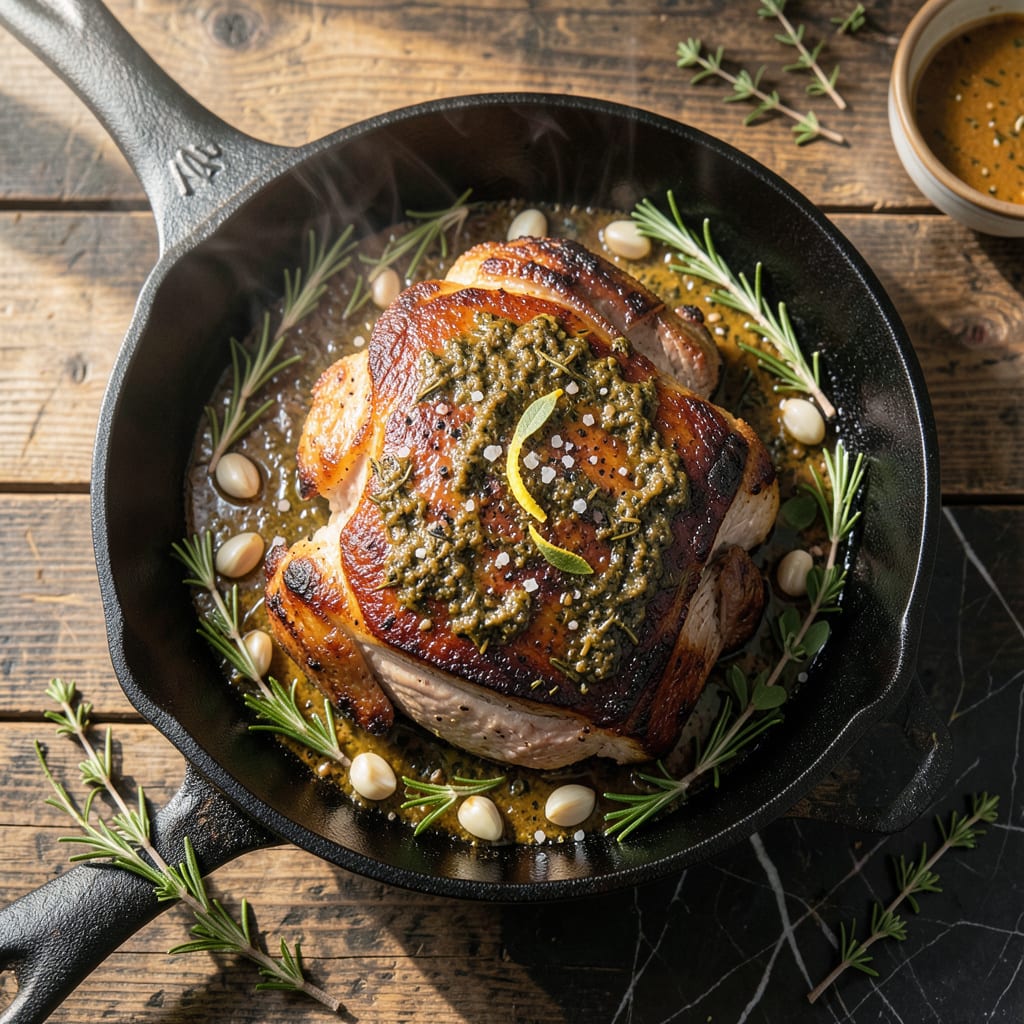
This rack of pork roast brings Sunday supper elegance to your table with minimal effort. A fragrant herb crust and precise roasting technique guarantee tender, juicy meat every time.
The method is straightforward yet impressive, using simple seasonings and a reliable oven temperature to create a centerpiece worthy of special occasions. The result is consistently perfect.
Ingredients for Rack of Pork Roast
Simple ingredients elevate this centerpiece to Sunday supper perfection with minimal effort required.
| Ingredient | Amount | Notes |
|---|---|---|
| Pork Rib Roast 🥩 | 2 ½ lb | Bone-in, frenched for presentation |
| Kosher Salt 🧂 | 1 ½ tsp | Diamond Crystal preferred for texture |
| Black Pepper 🌶️ | 1 tsp | Freshly cracked for best flavor |
| Fresh Rosemary 🌿 | 2 tbsp | Finely chopped, stems discarded |
| Fresh Thyme 🍃 | 2 tbsp | Leaves stripped from stems |
| Garlic Cloves 🧄 | 4 cloves | Minced to fine paste consistency |
| Dijon Mustard 🟡 | 2 tbsp | Whole grain preferred for texture |
| Olive Oil 🫒 | 2 tbsp | Extra-virgin for richness |
| Dry White Wine 🍷 | ½ cup | Crisp variety like Sauvignon Blanc |
| Unsalted Butter 🧈 | 2 tbsp | Softened to room temperature |
| All-Purpose Flour 🌾 | ¼ cup | For dredging herb mixture |
| Chicken Stock 🥘 | ½ cup | Low-sodium for controlled seasoning |
The pork rib roast is non-negotiable for texture and presentation. Bone-in, frenched racks from Whole Foods or a quality butcher shop ensure even cooking and elegant plating. Look for vibrant pink color with good marbling—this fat renders down for juiciness. The fresh herbs must be organic if possible; their oils are what create that signature crust. Avoid pre-ground black pepper—it lacks the aromatic punch of freshly cracked.
No white wine? Dry vermouth or apple cider vinegar with a splash of water works in a pinch. Fresh thyme and rosemary can be swapped for dried at one-third the quantity, but fresh is strongly preferred. For a more robust crust, add 1 tsp of chopped sage. The Dijon mustard can be replaced with whole-grain mustard for a coarser texture. If avoiding alcohol entirely, additional chicken stock maintains moisture.
Store the pork roast unopened in its packaging for up to 3 days in the fridge, or freeze for 6-12 months. The herb crust mixture can be prepped a day ahead—keep it refrigerated in an airtight container. Leftovers, if any, reheat beautifully in a 300°F oven for 15-20 minutes to restore crispness.
Why You’ll Love This Recipe
- One Pan Wonder: I love that this only requires a roasting pan, the herbs, and salt—no complicated steps, just season and roast.
- Herb Crust Perfection: That combination of fresh rosemary and thyme with the pork creates the most aromatic, savory crust I’ve ever tasted.
- Sunday Dinner Star: It’s my go-to for special occasions, but honestly, I make it just because it feels fancy without the fuss.
- Leftovers for Days: The best part? A single rack gives us multiple meals—sandwiches, tacos, you name it.
Step-by-Step Instructions for Herb-Crusted Pork Rib Roast
This method ensures a perfectly crisp herb crust with tender, juicy meat every time.
Step 1: Prepare the Herb Paste and Season the Roast
Finely chop the 2 tbsp fresh rosemary and 2 tbsp fresh thyme, then combine with the minced 4 cloves garlic cloves, 2 tbsp Dijon mustard, and 2 tbsp olive oil in a small bowl. Stir until it forms a thick, aromatic paste.
Pat the 2.5 lb pork rib roast dry with paper towels, then season generously with the 1.5 tsp kosher salt and 1 tsp black pepper. Rub the herb paste evenly over the entire surface of the roast, pressing it into the meat. This layer will create a flavorful crust as it roasts.
Step 2: Sear the Roast for a Golden Crust
Preheat your oven to 400°F. Heat a large oven-safe skillet or roasting pan over medium-high heat. Add the 2 tbsp unsalted butter and let it melt and foam. Sear the pork rib roast, fat-side down first, for 3-4 minutes per side until deeply browned all over.
The searing step is crucial for developing a rich, caramelized crust and deep flavor. Turn the roast carefully using tongs to avoid piercing the meat. Once browned, transfer the pan with the roast directly to the preheated oven.
Step 3: Roast to Perfect Doneness
Roast the pork in the oven for 25-30 minutes or until an instant-read thermometer inserted into the thickest part of the meat (avoiding the bone) registers 145°F. The crust should be deep golden brown and the meat should feel slightly firm but still springy to the touch.
For even cooking, rotate the pan halfway through the roasting time. If the crust begins to darken too quickly, tent the roast loosely with aluminum foil. This ensures the exterior doesn’t burn before the interior reaches the perfect temperature.
Step 4: Rest and Prepare the Pan Sauce
Transfer the pork rib roast to a cutting board and let it rest for 15 minutes before carving. This allows the juices to redistribute, ensuring every slice is moist and flavorful. Tent it loosely with foil to keep it warm.
Place the roasting pan on the stovetop over medium heat and add the 0.5 cup dry white wine. Scrape up all the browned bits from the bottom of the pan with a wooden spoon. Stir in the 0.25 cup all-purpose flour to thicken, then gradually whisk in the 0.5 cup chicken stock. Simmer for 3-4 minutes until the sauce thickens slightly. Strain and serve alongside the roast.
Step 5: Carve and Serve
Using a sharp carving knife, slice the roast between the ribs to separate into individual chops. Each slice should reveal a perfectly pink interior with a thick, fragrant herb crust.
Arrange the chops on a platter, drizzle with some of the pan sauce, and serve immediately. The sauce adds a rich, savory finish that complements the herbal notes of the crust. This dish is ideal for a Sunday supper, offering elegance with minimal effort.
Pro Tips For Making Rack Of Pork Roast
- Dry the Roast: Pat the pork rib roast completely dry with paper towels before seasoning—I learned this the hard way after my first few attempts had a steamed, pale crust instead of that perfect golden-brown finish.
- Salt Overnight: Rub the roast with kosher salt at least 12 hours ahead; it pulls moisture to the surface first, then reabsorbs for deeper seasoning and a juicier result.
- Don’t Overcrowd Herbs: Use a light hand with the fresh rosemary and thyme—too much can burn and turn bitter, and I’ve ruined a roast by packing on a full bunch like it was a Thanksgiving turkey.
- Rest Before Carving: Let the roast rest 15-20 minutes under foil after pulling it from the oven—sounds tedious, but it keeps all those juices from running onto the cutting board instead of staying in the meat.
Make-Ahead Tips for Leftovers
Herb Paste Prep
Mix your 2 tbsp fresh rosemary, 2 tbsp fresh thyme, and 4 minced garlic cloves with 2 tbsp Dijon mustard and 2 tbsp olive oil up to 24 hours ahead. Store in an airtight container in the fridge. The flavors meld beautifully overnight. 💡
Pork Seasoning
Pat the 2.5 lb pork rib roast dry and season with 1.5 tsp kosher salt and 1 tsp black pepper the morning of cooking. Keep it uncovered in the fridge for 4-6 hours to develop a tacky surface that grabs the herb paste better.
Pan Sauce Base
Measure out your 0.5 cup dry white wine and 0.5 cup chicken stock the day before. Combine in a jar and refrigerate. This saves precious minutes when you’re making the pan sauce after roasting.
Oven Setup
Preheat your oven to 400°F 30 minutes before cooking. Place your roasting pan in the oven during preheating to get it screaming hot. This ensures a perfect sear when you add the pork.
Resting Space
Set up your serving platter with a wire rack or clean cutting board nearby. After roasting, transfer the pork here to rest for the full 15 minutes while you make the sauce. Tent with foil to keep warm. ⏰
Make-Ahead Timeline
Complete all prep work the night before: trim the roast, make the herb paste, and measure all ingredients. On cooking day, you’ll only need to season, sear, and roast. This cuts active cooking time in half.
Nutrition Facts
Frequently Asked Questions
What internal temperature should I aim for?
Use a meat thermometer and remove from oven at 145°F. The temperature will rise to 150°F during resting. This ensures juicy, perfectly cooked pork every time.
Can I use dried herbs instead of fresh?
Yes, but use 1/3 the amount since dried herbs are more concentrated. For best results, rehydrate them in 1 tbsp warm water before mixing with other crust ingredients.
How long should I let it rest before slicing?
Rest for the full 15 minutes after roasting. This allows juices to redistribute, preventing dry meat when carved. Tent loosely with foil to keep warm.
What if my crust burns before the meat is done?
If the crust darkens too quickly, tent the roast with foil and continue cooking. For even better results, lower oven temperature to 375°F after searing.

- 6 Egg Cake Recipe with Oil: Light as Air With Buttery Moisture - October 4, 2026
- 4 Bean Casserole Recipe: One-Pan Heartiness With Smoky Paprika Depth - October 4, 2026
- 3-Ingredient Keto Mug Cake Recipe: Microwave Magic in 2 Minutes - October 4, 2026