
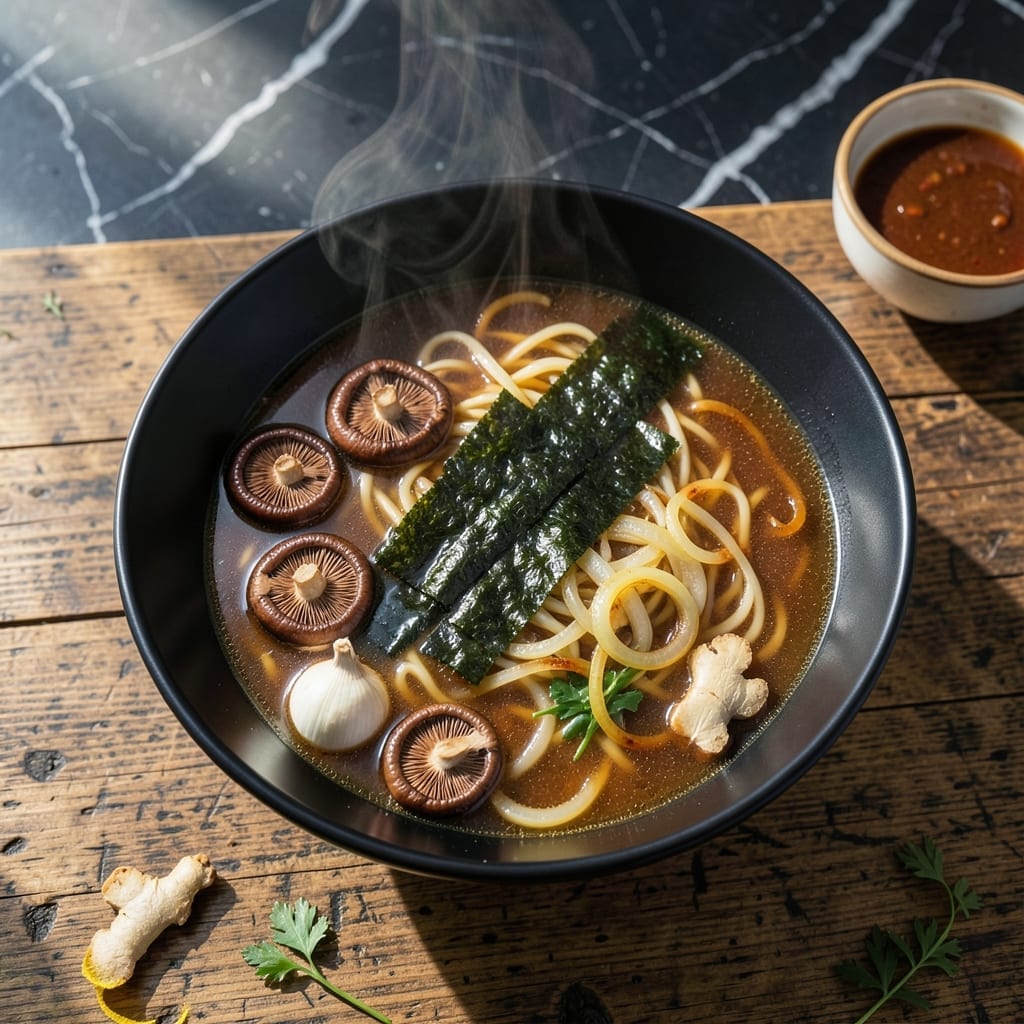
Creating a vegetarian ramen broth with authentic depth is simpler than you might expect. This recipe relies on a combination of dried mushrooms, seaweed, and slow-simmered aromatics to build layers of umami without any meat.
The process begins with toasting the mushrooms and seaweed to intensify their flavors before simmering them with onions, garlic, and ginger. A touch of soy sauce and miso paste adds complexity, while a splash of rice vinegar brightens the finish.
What results is a rich, savory broth that stands up to any traditional ramen base. It’s versatile enough to pair with noodles, tofu, or vegetables, and it freezes beautifully for future meals.
Perfect for meal prep or a comforting weeknight dinner. Here’s how to make it.
Ingredients for Ramen Broth Recipe Vegetarian
Nine ingredients transform into a deeply savory broth with authentic Japanese character.
| Ingredient | Amount | Notes |
|---|---|---|
| Dried Shiitake Mushrooms 🍄 | 1 oz | For toasty umami depth |
| Dried Kombu Seaweed 🌊 | ½ oz | Rinsed before toasting |
| Yellow Onion 🧅 | 1 whole | Halved and charred |
| Garlic Cloves 🧄 | 6 cloves | Smashed, unpeeled |
| Fresh Ginger 🌿 | 3 oz | Sliced thick, unpeeled |
| Soy Sauce 🫙 | ¼ cup | Low-sodium preferred |
| White Miso Paste 🥣 | 2 tbsp | Fermented, smooth variety |
| Rice Vinegar 🍚 | 1 tbsp | For bright acidity |
| Sesame Oil 🫒 | 1 tsp | Toasted for aroma |
| Vegetable Stock 🥕 | 8 cups | Low-sodium for control |
The mushrooms and seaweed are non-negotiable for umami. Dried shiitake mushrooms from Asian markets or Whole Foods have the most intense flavor—avoid pre-sliced as they lack depth. Kombu seaweed should be thick and dark green, not brittle or faded. For the aromatics, charring the onion and ginger adds a smoky depth that mimics traditional meat-based broths.
No kombu? Nori sheets at double the amount work in a pinch. Swap shiitake for dried porcini if needed. Miso varieties matter—white miso is milder than red, so adjust to taste. The soy sauce can be tamari for gluten-free. If you lack rice vinegar, apple cider vinegar adds similar brightness without overpowering.
Broth keeps 5 days refrigerated or 3 months frozen. Strain and cool completely before storing. For best results, skim off any fat that rises to the surface after chilling. Reheat gently to preserve delicate flavors.
Why You’ll Love This Recipe
- Set and Forget: The kombu and shiitake steep like tea—no stirring, no fuss, just rich umami building while I fold laundry.
- Deep Umami Bomb: Honestly, the garlic and ginger hit differently after simmering with those dried mushrooms. It’s savory with a quiet depth.
- Meal Prep MVP: I make a big batch Sunday and it fuels noodles, soups, even grain bowls all week.
- Pantry Hero: Between us, it costs pennies per bowl and those dried ingredients last for months in my cupboard.
Step-by-Step Instructions for Vegetarian Ramen Broth
This method delivers deep, complex umami flavor through careful layering and extraction techniques.
Step 1: Toast and Bloom the Umami Base
Begin by toasting the 1 oz Dried Shiitake Mushrooms and 0.5 oz Dried Kombu Seaweed in a dry skillet over medium heat for 2-3 minutes until fragrant. This step intensifies their natural glutamates, creating the foundation of your broth’s depth.
Add the 1 whole Yellow Onion (halved), 6 cloves Garlic Cloves (smashed, unpeeled), and 3 oz Fresh Ginger (sliced thick, unpeeled). Toast for another 3-4 minutes, pressing down occasionally to char the surfaces. The blackened edges contribute smoky complexity to your broth.
Step 2: Simmer for Maximum Extraction
Transfer the toasted ingredients to a large pot and add the 8 cups Vegetable Stock. Bring to a boil, then reduce to a gentle simmer. Partially cover and cook for 45-60 minutes to allow the flavors to meld and intensify.
The broth should develop a rich amber color and pronounced aroma. Skim off any foam that rises to the surface during the first 10 minutes of simmering to maintain clarity. The kombu and shiitake will swell as they release their essence into the liquid.
Step 3: Strain and Season the Broth
Carefully strain the broth through a fine-mesh sieve, pressing gently on the solids to extract every bit of flavor. Discard the spent aromatics—their work is done. Return the strained liquid to a clean pot over low heat.
Whisk in the 2 tbsp White Miso Paste until fully dissolved. I add it off direct heat first to prevent clumping. Then stir in the 0.25 cup Soy Sauce, which should deepen the color to a mahogany hue. This is where the broth transforms from simple stock to complex ramen base.
Step 4: Finish with Bright and Aromatic Notes
Remove the pot from heat and stir in the 1 tbsp Rice Vinegar and 1 tsp Sesame Oil. The vinegar adds the essential bright contrast that balances the rich umami, while the sesame oil contributes its nutty aroma.
Let the broth rest for 5-10 minutes to allow the flavors to marry completely. Taste and adjust seasoning if needed, though the combination of miso and soy should provide sufficient depth. The finished broth should be deeply savory with a subtle sweetness from the vegetables and a lingering aroma from the sesame.
Pro Tips For Making Ramen Broth Recipe Vegetarian
- Soak Mushrooms First: Cover dried shiitakes in hot water for at least 30 minutes before cooking—this extracts their deep umami flavor that defines a good vegetarian ramen broth.
- Skip the Boil: Never let kombu reach a rolling boil or it turns slimy and bitter; keep it at a gentle simmer, just under 200°F, to coax out clean, oceanic sweetness.
- Char the Onion: Blacken the halved yellow onion over an open flame or under the broiler for 5-7 minutes—it adds a smoky depth that mimics traditional pork-based broths.
- Strain Twice: After the initial strain, run the broth through a coffee filter or cheesecloth to remove fine bits of ginger and mushroom grit that can make the broth cloudy.
Wine and Beer Pairings for This Dish
Crisp White Wines
A dry Riesling from Washington State offers citrus notes that cut through the broth’s richness. I love how its minerality enhances the umami. Look for Chateau Ste. Michelle—it’s widely available and consistently excellent. 🍷
Light Bodied Reds
For red wine lovers, try a chilled Pinot Noir from Oregon. The earthy notes complement the mushrooms and seaweed beautifully. A to Z Wineworks makes a reliable, budget-friendly option that won’t overpower your dish.
Japanese Beers
Sapporo or Asahi Super Dry are classic pairings with ramen. Their crisp, clean profiles refresh your palate between sips. I always keep a few bottles on hand for ramen night. 🍺
Craft Beer Options
A Belgian-style witbier like Hoegaarden brings citrusy coriander notes that work surprisingly well. For hop lovers, a light pilsner such as Firestone Walker Pivo offers enough bitterness to balance the broth’s saltiness.
Non-Alcoholic Pairings
Sparkling yuzu juice or ginger beer provide refreshing alternatives. I particularly enjoy Fever-Tree Ginger Beer—its spicy kick contrasts beautifully with the savory depth of this dish.
Nutrition Facts
Frequently Asked Questions
Can I use fresh mushrooms instead of dried?
Fresh mushrooms work but won’t deliver the same depth. Dried shiitake have concentrated umami that fresh can’t match. If using fresh, double the amount and roast first to intensify flavor.
Why char the onion and ginger?
Charring creates smoky notes that mimic traditional meat-based broths. It adds complexity through caramelization. The blackened bits dissolve into the broth during simmering.
How long does the broth keep?
It stays fresh for 5 days refrigerated or 3 months frozen. Cool completely before storing. Skim any fat after chilling for best texture.
Can I make this gluten-free?
Yes! Swap regular soy sauce for tamari. Check that your miso is gluten-free too. All other ingredients are naturally gluten-free.

- 6 Egg Cake Recipe with Oil: Light as Air With Buttery Moisture - October 4, 2026
- 4 Bean Casserole Recipe: One-Pan Heartiness With Smoky Paprika Depth - October 4, 2026
- 3-Ingredient Keto Mug Cake Recipe: Microwave Magic in 2 Minutes - October 4, 2026