
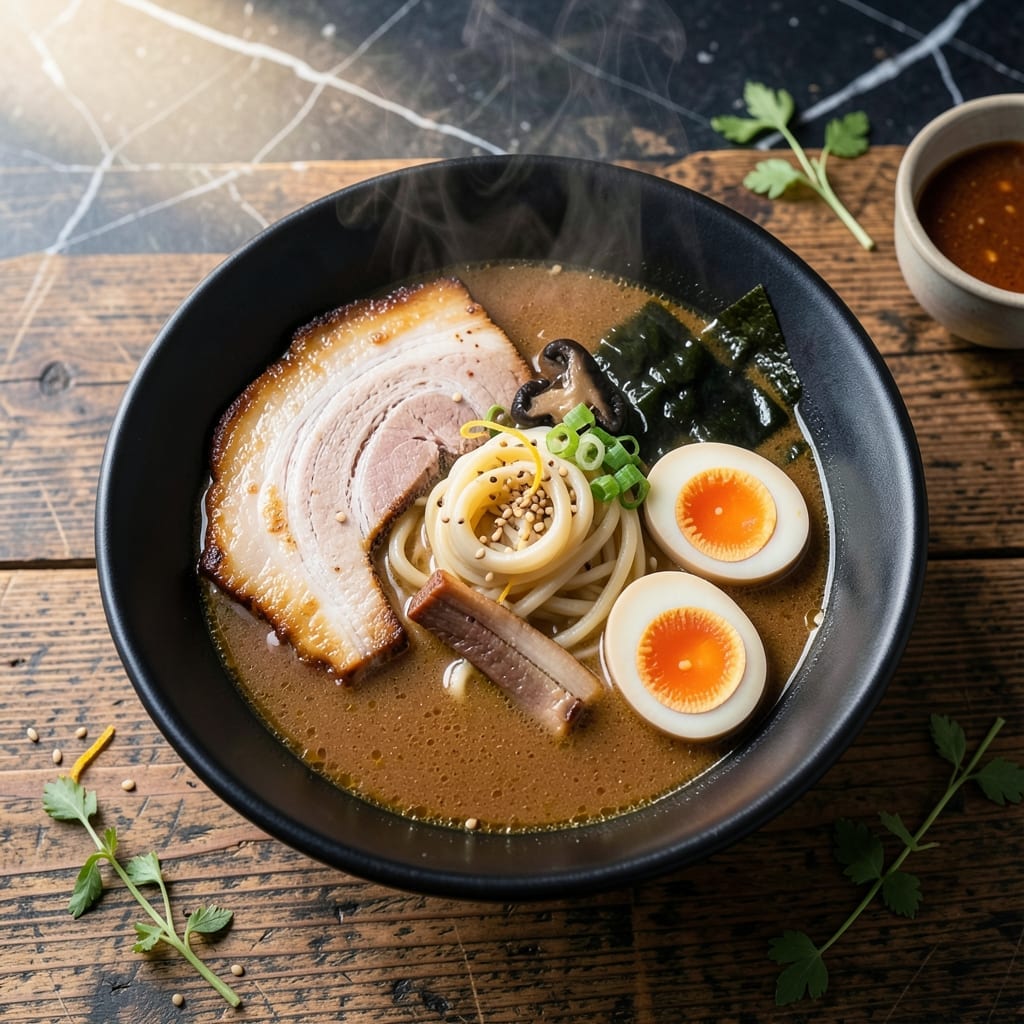
Authentic ramen is a labor of love that rewards patience with restaurant-quality results at home.
This traditional Japanese dish combines rich, slow-simmered broth with chewy noodles and carefully selected toppings. The key is building layers of flavor through proper stock preparation and precise timing for each component.
What sets this version apart is its commitment to genuine techniques—no shortcuts, just the time-honored methods that create perfectly balanced bowls. The broth develops deep umami through hours of gentle simmering.
You’ll achieve traditional ramen with springy noodles, tender chashu, and all the classic garnishes that make this dish unforgettable.
Ingredients for Ramen Recipe Authentic
Building authentic ramen starts with quality bones, pork, and a few Japanese pantry staples. No corners cut here.
| Ingredient | Amount | Notes |
|---|---|---|
| Pork Belly 🥩 | 1 lb | For chashu, rolled and tied |
| Chicken Carcasses 🍗 | 2 whole | For tonkotsu-paitan hybrid broth |
| Pork Femur Bones 🦴 | 2 lb | For collagen-rich broth |
| Dried Shiitake Mushrooms 🍄 | ½ oz | For umami depth |
| Kombu Seaweed 🌊 | 2 pieces | 4-inch squares, wiped clean |
| Ramen Noodles 🍜 | 1 lb | Fresh or dried, alkaline preferred |
| Soy Sauce 🥢 | ¼ cup | Japanese shoyu variety |
| Mirin 🍶 | 2 tbsp | Sweet cooking rice wine |
| Sake 🍶 | 2 tbsp | Dry Japanese rice wine |
| Fresh Ginger 🌿 | 2 oz | Peeled and sliced |
| Garlic Cloves 🧄 | 6 cloves | Smashed, skins on |
| Green Onions 🧅 | 4 whole | Thinly sliced for garnish |
| Soft-Boiled Eggs 🥚 | 4 whole | Marinated in soy-mirin mixture |
| Nori Seaweed Sheets 🌊 | 4 sheets | Toasted, cut in half |
| Menma Bamboo Shoots 🌿 | ½ cup | Canned or fresh, sliced |
The broth is everything, so don’t skimp on the bones. Pork femur bones from a good butcher (or Asian markets for pre-cut) give that rich, collagen-heavy base. Chicken carcasses add depth without overpowering. For the pork belly, look for well-marbled pieces—Costco often has good options. Dried shiitakes should be plump and fragrant, not dusty or shriveled.
No pork femur bones? Pork neck bones work almost as well. Swap chicken carcasses for chicken feet if you want extra gelatin. Can’t find fresh ramen noodles? Dried works (just don’t overcook). Tamari instead of soy sauce for gluten-free. The mirin and sake are non-negotiable for authentic flavor—look for them in the international aisle or H Mart. Menma can be skipped, but it adds that classic crunch.
Broth keeps in the fridge for 3 days or freezes beautifully for 3 months. Chashu holds for 5 days in its braising liquid. Prep garnishes fresh—nori loses crispness, eggs dry out. Leftovers? Reheat broth and noodles separately (trust me on this one).
Why You’ll Love This Recipe
- One Pot Magic: The broth simmers with chicken carcasses and pork bones while I do other things—minimal active time for maximum payoff.
- Deep Umami Bomb: Pork belly, shiitake, and kombu create a rich, layered broth that tastes like it took days to develop.
- Freezer Friendly: I double the batch and freeze portions for instant gourmet meals on busy nights.
- Budget Stretcher: Chicken carcasses and pork bones are cheap, but the flavor they deliver feels like a restaurant splurge.
Step-by-Step Instructions for Traditional Japanese Ramen
Here’s the method I use to create authentic ramen with rich broth and perfect toppings every time.
Step 1: Prepare the Tonkotsu-Paitan Hybrid Broth Base
In a large stockpot, combine the 2 whole chicken carcasses, 2 lb pork femur bones, 0.5 oz dried shiitake mushrooms, and 2 pieces kombu seaweed. Cover with cold water by about 2 inches and bring to a gentle boil over medium-high heat.
Once boiling, reduce to a simmer and skim off any foam that rises to the surface. Add the 2 oz fresh ginger and 6 cloves garlic cloves (skins on for depth of flavor). Simmer uncovered for 8-10 hours to extract maximum collagen and gelatin, which gives the broth its signature rich, creamy texture.
Strain the broth through a fine-mesh sieve, discarding the solids. You should have about 8 cups of concentrated broth. This forms the foundation of your ramen base.
Step 2: Prepare the Chashu Pork Belly
Roll the 1 lb pork belly into a tight log and tie with kitchen twine at 1-inch intervals. In a pot, cover the pork belly with water and add 2 tbsp soy sauce, 2 tbsp mirin, and 2 tbsp sake. Bring to a simmer over medium heat.
Reduce heat to low, cover, and cook for 2-2.5 hours until the pork is fork-tender. Turn the pork occasionally to ensure even cooking. Once done, let it cool in the liquid, then slice thinly against the grain. This creates melt-in-your-mouth chashu that’s a staple in authentic ramen.
Step 3: Cook and Prepare the Noodles
Bring a large pot of water to a rolling boil. Add the 1 lb ramen noodles and cook according to package instructions (usually 3-4 minutes for fresh, 4-5 minutes for dried). Stir occasionally to prevent sticking.
Drain the noodles well and rinse briefly under cold water to stop the cooking process and remove excess starch. Divide the noodles evenly among 4 serving bowls. The noodles should be al dente—firm to the bite but fully cooked.
Step 4: Marinate the Soft-Boiled Eggs
Peel the 4 whole soft-boiled eggs and place them in a bowl with the remaining soy sauce and mirin from the chashu cooking liquid. Let them marinate for at least 1 hour (or up to 4 hours in the refrigerator) to infuse the whites with flavor.
Slice each egg in half lengthwise just before serving to reveal the creamy yolk. The marinade turns the egg whites a beautiful golden-brown color while keeping the yolks runny.
Step 5: Assemble and Serve the Ramen
Ladle about 2 cups of the hot broth into each bowl over the noodles. Arrange 2-3 slices of chashu pork, half of a marinated soft-boiled egg, ¼ cup menma bamboo shoots, and half a sheet of toasted nori seaweed on top of each serving.
Garnish with thinly sliced green onions for a fresh finish. Serve immediately while hot—the noodles should be submerged in the rich broth with all toppings visible. Each bowl should offer a balance of textures and flavors that define authentic ramen.
Pro Tips For Making Ramen Recipe Authentic
- Blanch the Bones: Parboil the chicken carcasses and pork femur bones for 10 minutes first—this removes impurities and keeps your broth crystal clear, not murky.
- Toast the Mushrooms: Quickly dry-toast the dried shiitakes in a hot pan before adding to the stock; it deepens their umami flavor and prevents a raw, earthy taste.
- Skip the Boil: Never let the broth come to a rolling boil with the kombu in it—keep it at a gentle simmer to avoid bitterness from the seaweed.
- Chill the Pork Belly: Slice the pork belly when it’s slightly chilled, not hot, so the fat doesn’t smear and your chashu stays neat and tender.
Best Sauces and Condiments for These Flavors
Classic Tare Sauces
For shoyu ramen, mix 3 tbsp soy sauce, 1 tbsp mirin, and 1 tsp sugar per bowl. This creates the perfect salty-sweet base that complements the rich broth without overpowering it. I always keep Kikkoman soy sauce on hand for this.
Spicy Miso Paste
Combine 2 tbsp red miso paste with 1 tbsp chili oil and 1 tsp sesame oil for a bold, umami-packed kick. Stir this into your bowl before adding broth to create a spicy miso ramen variation. The heat builds beautifully with each spoonful. 🌶️
Garlic Chili Oil
Drizzle 1-2 tsp of homemade garlic chili oil over finished bowls for instant flavor elevation. I make mine with ½ cup neutral oil, 6 crushed garlic cloves, and 2 tbsp crushed red pepper, simmered for 10 minutes on low.
Fresh Garnish Essentials
Always have pickled ginger and chopped cilantro ready to add brightness. A sprinkle of toasted sesame seeds adds nutty depth. These small touches take your ramen from great to extraordinary.
Citrus Zest Boost
Add yuzu zest or regular lemon zest right before serving for a bright contrast to the rich broth. Just ½ tsp per bowl wakes up all the flavors. This trick comes from my favorite Tokyo ramen shop. 💡
Butter Corn Topping
For a Hokkaido-style touch, add 1 tbsp corn kernels and ½ tsp butter to each bowl. The sweetness and creaminess pair surprisingly well with the savory broth. This combination became famous at Sapporo ramen stalls.
Nutrition Facts
Frequently Asked Questions
How long does the broth need to simmer?
Simmer the broth for 8-10 hours to extract maximum collagen and gelatin. This creates the signature rich, creamy texture essential for authentic flavor.
Can I use a different cut of pork for chashu?
Yes, pork shoulder or pork loin work as alternatives. Shoulder stays juicier, while loin offers a leaner option. Cook time may vary slightly.
Why are the eggs marinated in soy-mirin?
The marinade infuses the whites with flavor and turns them golden-brown. It also helps balance the richness of the broth with a touch of sweetness.
What if my noodles turn mushy?
Rinse them briefly under cold water after cooking to stop the cooking process. Use 1 minute less than package instructions for perfect texture.

- 6 Egg Cake Recipe with Oil: Light as Air With Buttery Moisture - October 4, 2026
- 4 Bean Casserole Recipe: One-Pan Heartiness With Smoky Paprika Depth - October 4, 2026
- 3-Ingredient Keto Mug Cake Recipe: Microwave Magic in 2 Minutes - October 4, 2026